
Reviewed · SERENGETI SAFARIS
Tanzania safari with guide in Italian, the great Migration of the Serengeti
The main draw here is the chance to follow the Serengeti migration during its northern run, when huge herds of wildebeest and zebras move toward the Mara River. I like the small maximum of six people, which gives you a better chance of seeing from both sides of the 4×4, and I like the route’s variety, from crater grasslands to alkaline lake shores and baobab country.
The Italian-speaking guide is a real plus if you want animal behavior and local details explained in your own language. Guides who have led this safari have included Jo, Naftal, Omari, Mussa, Martini, Kahim, and Michael. The main caution is pace: you cover a lot of ground in eight days, and the rough route to Lake Natron can make this feel like an expedition rather than a soft holiday.
Key points at a glance
- Migration timing: The northern Serengeti and Mara River section is planned for the July to October period, when the herds may be in this part of the ecosystem.
- Small-group format: The 4×4 holds no more than six participants, a useful limit on long game-drive days.
- Italian-speaking support: The guide explains the wildlife, parks, and daily plans in Italian, with several experienced guides named in past trip accounts.
- Four very different parks: Lake Manyara, Ngorongoro, Serengeti, and Tarangire each offer a distinct setting and wildlife experience.
- Lake Natron detour: You trade some extra Serengeti time for flamingos, volcanic scenery, and a walk near one of Tanzania’s most unusual lakes.
- Strong practical package: Park fees, full board, transfers, AMREF insurance, water, and 4×4 transport are included in the $4,100 price.
Why this route is about more than the migration
The migration is the headline, but the route works because it gives you several different versions of northern Tanzania. You begin with forest and lake country at Manyara, descend into the Ngorongoro Crater, spend two days around the Serengeti and Mara River, then leave the main park circuit for the stark volcanic country of Lake Natron before finishing among Tarangire’s elephants and baobabs.
I like that mix. If the herds are not exactly where you hoped on the day you arrive, you still have a strong safari ahead of you. You might see monkeys and elephants at Manyara, lions and hippos in the crater, big cats and plains game in the Serengeti, flamingos at Natron, and elephant herds in Tarangire.
At $4,100 per person, this is not a budget trip. But the price covers the costly parts of a northern Tanzania safari: park fees, 4×4 transport, transfers, full board, water, and a guide for a small group. International and local flights, visas, drinks at lodges, and personal spending are extra, so you should add those costs before comparing it with other safaris.
More Serengeti Safaris in Arusha
- Balloon Safari & Bush Breakfast in Serengeti – Miracle Experience
★ 5.0 · 1,646 reviews - 3 Days Serengeti & Ngorongoro Group Camping Safari
★ 5.0 · 574 reviews - 5-Day Highlights mid-Range Crater, Serengeti, Tarangire
★ 5.0 · 296 reviews
Day 1: A simple arrival in Arusha
Your first day is deliberately easy. You arrive at Kilimanjaro International Airport or Arusha Airport, complete entry formalities, meet the guide, and transfer to Arusha. The airport transfer is listed at about one hour.
That short first day matters. After a long international flight, you do not want to begin with a six-hour drive and a game drive. Use the time to sort your luggage, check your passport and camera gear, and get ready for early starts.
The booking process requires your mobile number, passport details, and arrival and departure flight information. Confirmation is issued within 48 hours, subject to availability. You receive a paper ticket, and pickup is offered.
Day 2: Lake Manyara’s compact wildlife mix
Lake Manyara National Park is smaller than the Serengeti, but it packs several habitats into a tight area. The park lies below the Rift Valley escarpment and includes groundwater forest, open grassland, marsh, and the lake itself.
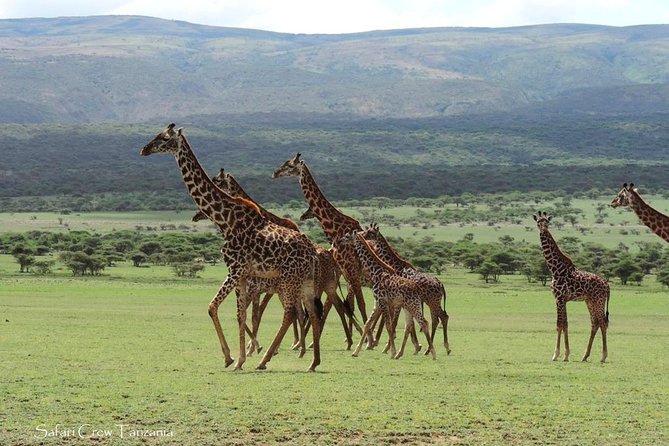
I like Manyara as an opening safari day because the scenery changes quickly. You might move from dense forest with large troops of baboons and other monkeys into open areas where giraffes and elephants are easier to spot. The park also has about 380 bird species, making it a good place to slow down and watch smaller life instead of chasing only the famous animals.
Pink flamingos are seasonal here. Large groups are usually present from December to March, then move toward Lake Natron between June and October. That means the timing of your trip affects what you see at Manyara, especially if flamingos are high on your list.
The planned visit lasts about eight hours, with the park entrance included. Expect a full day in the vehicle. Manyara is not the place to judge the entire safari by the number of large predators you see. Its value is the quick change of habitats and the chance to begin with birds, monkeys, elephants, and giraffes.
Day 3: Into the Ngorongoro Crater
The Ngorongoro Crater is one of the most remarkable stops on this route. It formed when a huge volcanic cone collapsed roughly 2.5 million years ago. Today, the caldera measures about 16 to 20 kilometers across, with walls rising around 600 meters above the crater floor.
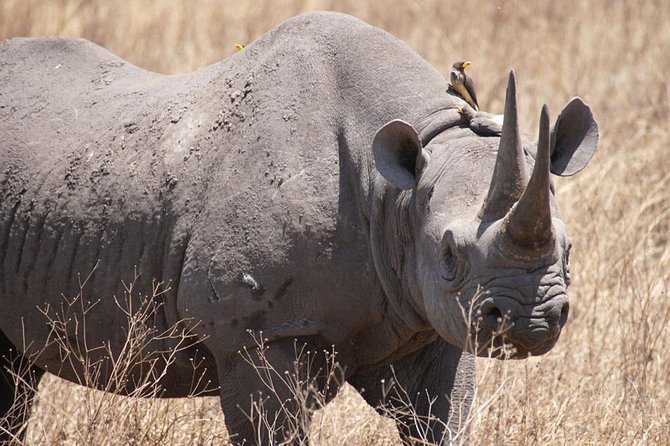
More than 25,000 large animals live inside this enclosed setting. You can find most of the region’s typical species here, including lions, elephants, buffaloes, zebras, wildebeest, hippos, and many antelopes. Giraffes are the notable exception because the crater does not offer them the food they need.
The crater floor can feel wonderfully concentrated. You may see several kinds of wildlife in one broad view, rather than spending hours crossing empty ground. That makes this one of the most rewarding days for someone on a first safari.
The tradeoff is traffic and timing. The crater is famous, so sightings can attract several vehicles. Your guide’s judgment matters here. A good guide such as Michael or Kahim, both named in accounts of this company’s safaris, can help you understand what you are seeing rather than simply rushing from one animal to the next.
The crater sits high, with the rim reaching about 2,300 meters. If you are sensitive to altitude, cold mornings, or winding roads, bring layers and take the day at a steady pace. The game drive lasts about seven hours, with park admission included.
Same country, a completely different kind of safari:
- Tanzania Classic – 7 Days
★ 5.0 · 1,151 reviews - 4 Days Group Camping Safari
★ 5.0 · 1,101 reviews - 5 Days Group Camping Safari
★ 5.0 · 730 reviews - Materuni Waterfalls, coffee tour & Kikuletwa Hot Springs
★ 5.0 · 643 reviews
Days 4 and 5: Serengeti, Seronera, and the Mara River
Day 4 takes you into Serengeti National Park, beginning around the Seronera area. The park covers about 15,000 square kilometers and forms only part of a much larger ecosystem that includes the Ngorongoro plains and other adjoining areas.
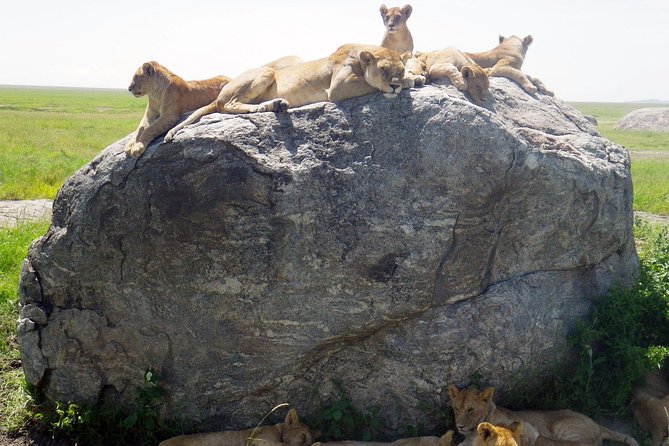
This is the classic open-country safari. The Serengeti supports about 1.5 million wildebeest, 300,000 zebras, and 500,000 Thomson’s gazelles, along with lions, leopards, cheetahs, elephants, giraffes, ostriches, crocodiles, hippos, and more than 400 bird species.
The numbers are impressive, but they do not guarantee a particular sighting. Wildlife moves, and the distances are large. You could spend part of a day watching a single pride of lions or tracking a small group of cheetahs, then suddenly come upon a huge spread of wildebeest.
Day 5 focuses on the Mara River and the northern Serengeti. From July through October, this region can be part of the Great Migration’s northern movement. The herds are searching for water and fresh grazing, and river crossings may occur when conditions and animal movement line up.
That last point is important. A crossing is never scheduled like a train. The wildebeest may gather for hours, turn back, cross at another point, or move after you have left. You should choose this safari for the chance to see the migration in a broad natural setting, not because anyone can promise a dramatic crossing on a specific morning.
The two Serengeti days are among the longest, at about eight hours each. You will spend much of that time in the 4×4 on rough tracks. The small group limit helps here. Six people is still a full vehicle, but it is far more manageable than a large coach or crowded shared safari.
The Italian guide can shape the whole trip
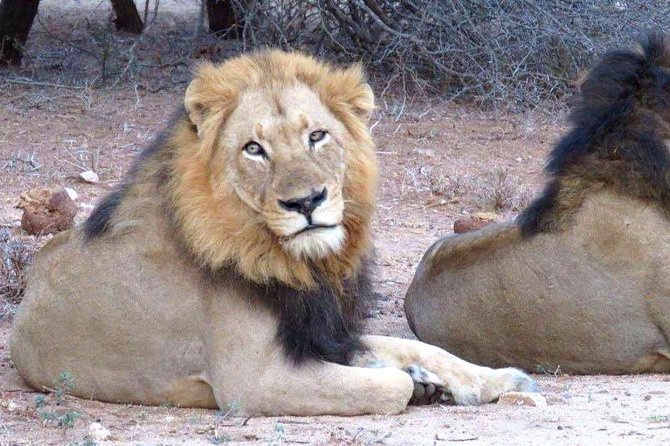
A safari guide does much more than point at animals. Your guide sets the pace, explains tracks and behavior, handles the daily route, and helps you decide when a sighting deserves ten minutes or an hour.
This trip is designed for Italian-speaking support. Past guides have included Jo, Naftal, Omari, Mussa, Martini, Kahim, and Michael. Naftal was praised for speaking perfect Italian, while Mussa was singled out for making the game drives enjoyable. Martini was described as tireless, and Michael was credited with finding repeated wildebeest crossings and many other animals.
You should still confirm who will guide your departure, since the named guide is not guaranteed in the trip details. If discussing wildlife in Italian is central to your choice, ask this before paying.
Day 6: Leaving the Serengeti for Lake Natron
Day 6 changes the mood. You begin with a final game drive in the northeastern Serengeti, then follow a difficult track toward the Lake Natron region. The route is scenic, but it is also rough and remote.
Lake Natron is an alkaline lake about 50 kilometers long and 25 kilometers wide. It sits in a Rift Valley depression surrounded by rugged volcanic country and dry open ground. Millions of pink flamingos use the lake as a nesting area, feeding on cyanobacteria in the highly alkaline water.
This is a very different experience from the Serengeti. You are not simply adding another game drive. You are seeing how water, volcanoes, salt, and birds shape an environment that feels almost lunar in places.
The nearby volcano, Ol Doinyo Lengai, is sacred to the Maasai people and rises to almost 3,000 meters. It is the only volcano in the world known for natro-carbonatitic lava. The program does not include a summit trek, and the route has not been used for organized ascents since the 2007 to 2008 eruption made the climb harder.
Instead, you take a walking excursion near Engare Sero and the lake area. The walk is listed at about four hours. Wear practical footwear, carry water, and expect a more basic, exposed setting than at a lodge near the main parks.
Day 7: A walking morning, then Tarangire
The next morning continues at Lake Natron with a walk along the shore. The route passes through dry volcanic scenery and a valley shaped by Rift Valley earthquakes before continuing toward Mto wa Mbu and Tarangire National Park.
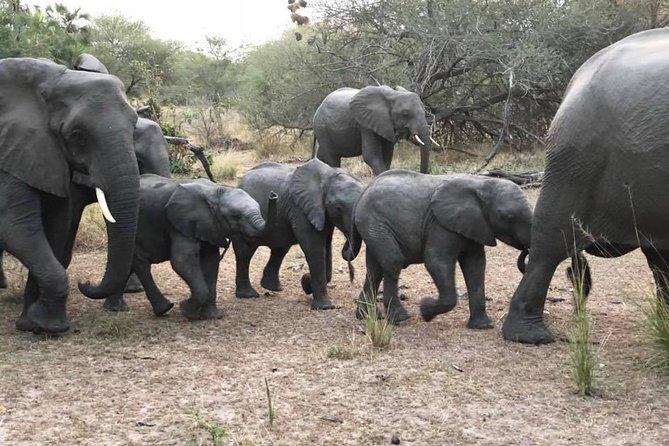
Tarangire is an excellent final park because it looks and feels different from the Serengeti. It covers about 2,600 square kilometers and is known for huge baobabs, large elephant herds, and the Tarangire River. During the dry season, the river and Silale Marsh can become the main water sources, drawing many animals together.
The park supports lions, leopards, buffaloes, zebras, wildebeest, antelopes, gazelles, and about 500 bird species. I especially like the chance to focus on elephants here. The baobabs also give your photographs a strong sense of place that differs from the wide grasslands farther north.
The afternoon game drive lasts about four hours. That shorter drive is welcome after the long transfer from Natron. Still, the day combines walking, road travel, and a safari, so it is not a lazy final afternoon.
Day 8: One last game drive and the return to Arusha
You begin with an early game drive in Tarangire, listed at about four hours. Early starts are standard on safari because animals are often active before the heat of the day.
After the drive, you return to Arusha for lunch and transfer to the airport. Be careful when booking your onward flight. The schedule includes a park drive and a road transfer, so do not assume you can catch a very early departure from Kilimanjaro or Arusha.
The return transfer marks the end of a route that covers a great deal of northern Tanzania. You see four major protected areas, the migration zone, a volcanic lake, and a Maasai sacred mountain in eight days.
What the $4,100 price really covers
The cost includes:
- 4×4 safari transport
- A small group of up to six
- Italian-speaking guide service
- Full board
- Park fees
- Airport and other transfers
- AMREF insurance
- Water on board
- Breakfast on eight days
- Lunch and dinner on seven days
- Taxes and other listed fees
That is a solid package for a private-style northern Tanzania route, though the group is shared rather than fully private. The most important value comes from the included park fees and transport. Those expenses can add up quickly on a multi-park safari.
You pay extra for international and local flights, your entry visa, drinks at the lodges, and personal purchases. Lodging types are not fully detailed in the information provided, though past trips included comfortable rentals, lodges, and tented camps. Ask for the exact accommodation list before booking, especially if room style and location matter to you.
Who should book this safari?
I would choose this trip if you want the major northern Tanzania parks in one organized package and prefer to travel with Italian-speaking support. It suits couples, families, and small groups who want help with the daily details rather than arranging vehicles, permits, park fees, and lodges on their own.
It also fits people who want more than the usual Serengeti and Ngorongoro loop. Lake Natron adds birds, walking, volcanoes, and a rugged change of pace. The price is easier to justify if you value that broader route and the small group size.
I would think twice if you dislike long road days, rough tracks, early starts, or changing accommodation. The Mara River section is also seasonal and unpredictable. For the best chance of seeing the northern migration, plan for July through October, then accept that nature controls the schedule.
Cancellation terms are strict close to departure: a full refund requires cancellation at least six full days ahead, while cancellation less than two days before the start receives no refund. The experience also needs a minimum number of participants, so confirm the departure before making nonrefundable flight plans.
FAQ
Where does the safari start?
The safari starts with pickup at Kilimanjaro International Airport or Arusha Airport, followed by a transfer to Arusha.
How long does the safari last?
The program lasts approximately eight days.
How many people can join the safari?
The maximum group size is six participants.
Is an Italian-speaking guide included?
Yes. The package includes a guide in Italian. Specific guide assignments are not guaranteed, although guides named on past safaris include Jo, Naftal, Omari, Mussa, Martini, Kahim, and Michael.
When does the Mara River section take place?
The northern Serengeti and Mara River portion is associated with the Great Migration from July through October.
Are park fees included?
Yes. Park fees and all listed taxes are included in the price.
Are flights and visas included?
No. International and local flights, entry visas, lodge drinks, and personal extras are not included.
What happens if the safari is canceled because too few people book?
You will be offered a different date or experience, or you can receive a full refund.
More Safari in Arusha
- 7-Day Premium Luxury Tanzania Safari All-Inclusive
★ 5.0 · 426 reviews - 3-Day Classic Serengeti Safari
★ 5.0 · 263 reviews - 8 Days Great Wildebeest Calving Migration Safari from Arusha
★ 5.0 · 254 reviews - Group Safari 7 Days in Tanzania’s Main Parks
★ 5.0 · 240 reviews
Just added around Arusha
- 8 Days Serengeti Migration safari★ 5.0 · 11 reviews
- tarangire, ngorongoro & lake manyara park 3 days private tour★ 5.0 · 11 reviews
- tarangire & ngorongoro 2 days tour★ 5.0 · 14 reviews
- serengeti, ngorongoro & tarangire 4 days private tour★ 5.0 · 18 reviews
- serengeti & ngorongoro 3 days private tour★ 5.0 · 15 reviews
- Mt. Kilimanjaro: Shira plateau to Cathedral point 3872m Day hike★ 5.0 · 7 reviews
- 2 Days Tanzania Midrange Group Join Safari★ 5.0 · 7 reviews
- climb the KILIMANJARO via Lemosho route★ 5.0 · 4 reviews
Serengeti Safaris, compared.

Serengeti Balloon Safari and authentic bush breakfast
Read our review →
3 Days Serengeti & Ngorongoro Group Camping Safari
Read our review →
5-Day Highlights mid-Range Crater, Serengeti, Tarangire
Read our review →


Private 6-Day Tarangire Manyara Crater and Serengeti with Mid-Range Lodges
Read our review →
5 Days Camping Tarangire, Serengeti & Ngorongoro crater & Visiting Maasai
Read our review →
4 Days Join Group tour Tarangire Serengeti and Ngorongoro crater
Read our review →Browse the lists this tour appears in