
Reviewed · SERENGETI SAFARIS
Tanzania 4 Days 3 Nights Budget camping safari to Serengeti and Ngorongoro
Serengeti and Ngorongoro are Tanzania’s two headline wildlife areas, and this four-day trip links them at a price far below a lodge safari. You spend long hours on game drives, sleep at public campsites, and look for lions, elephants, leopards, rhinos, zebra, and wildebeest across some of East Africa’s best-known wildlife country.
I like the low price and the fact that meals, transport, camping, and an English-speaking driver-guide are included. I also like the pop-up roof on the 4×4, which gives you a clear view and a better chance to spot animals. The main catch is simple: the advertised $740 does not include $210 in Serengeti and Ngorongoro conservation fees, and the public camps can be very basic.
Key points to know before booking
- Two nights at Seronera: You spend the heart of the safari in central Serengeti, close to major game-drive areas and the Seronera hippo pool.
- Camping keeps the price down: Expect public campsite conditions, with reports of no electric light and no hot water at Seronera.
- The Big Five are possible: Lions, leopards, elephants, buffalo, and black rhinos are all listed for the route, though no safari can promise every sighting.
- Your guide matters: Thomas was praised for finding a rhino, while Ely and Good Luck were noted for guiding and cooking. Michael was also singled out for his food.
- The true cost is about $950: Add the stated $210 conservation charge to the $740 tour price, before tips or optional extras.
- The schedule is demanding: You leave Arusha at 8 a.m., spend up to 10 to 12 hours on safari days, and return to Arusha on the fourth day.
Why this four-day route works for a tight budget
The clever part of this trip is the pairing of a long Serengeti stay with a visit to Ngorongoro Crater. You are not spending the whole tour driving from one attraction to the next. After reaching Serengeti, you get a full second day for game drives before moving toward the crater.
At $740 per person, the base price covers three nights of camping, three breakfasts, four lunches, three dinners, bottled water, transport, and a driver-guide. That is a strong package for anyone who wants the main safari experience without paying lodge rates.
But budget does not mean cheap in every sense. The extra $210 conservation charge is substantial. Add it before comparing this trip with other safari packages. The total becomes about $950 per person, not counting tips, the optional Olduvai Gorge museum visit, or a foreign-language guide supplement.
You also need to accept long driving days. The first day takes you from Arusha to Serengeti, with arrival around 3 p.m. The third and fourth days involve the move toward Ngorongoro and the crater visit. This is a proper safari, not a gentle holiday with short outings and late breakfasts.
More Serengeti Safaris in Arusha
- Balloon Safari & Bush Breakfast in Serengeti – Miracle Experience
★ 5.0 · 1,646 reviews - 3 Days Serengeti & Ngorongoro Group Camping Safari
★ 5.0 · 574 reviews - 5-Day Highlights mid-Range Crater, Serengeti, Tarangire
★ 5.0 · 296 reviews
Day 1: Arusha to Serengeti and the first afternoon game drive
Pickup begins in Arusha at 8 a.m. The drive to Serengeti is long, but it gets you quickly into the main wildlife portion of the trip. A picnic lunch is provided, and arrival is expected at about 3 p.m.
Once inside Serengeti, you begin a game drive on the way to Seronera campsite. This is a useful use of travel time. Instead of driving straight to camp and waiting until the next morning, you start looking for animals as soon as you enter the park.
Serengeti National Park covers about 14,763 square kilometers, or 5,700 square miles. That scale explains both its appeal and its challenge. You may see open grassland stretching far ahead, but animals can be spread over a wide area. Your guide’s ability to read tracks, scan distant shapes, and follow current animal movement matters greatly.
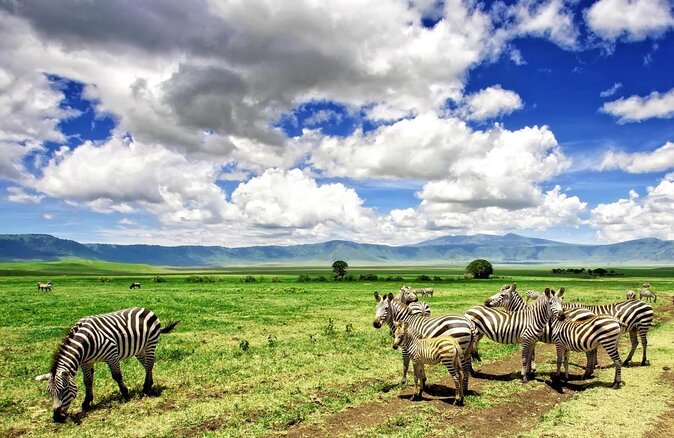
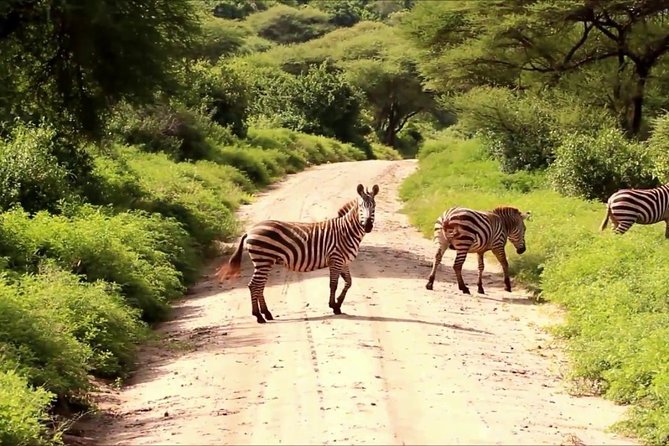
The park is known for lions, leopards, elephants, cheetahs, buffalo, zebra, wildebeest, eland, wild dogs, gazelles, crocodiles, and many birds. The annual wildebeest and zebra migration moves between Serengeti and Kenya’s Maasai Mara, but the exact location of the herds changes with the season. The word Serengeti means endless plains in the Maasai language, an apt name for a place this large.
You spend the night at Seronera public campsite. A mid-range or luxury accommodation upgrade may be available if arranged early, but the tour price is built around camping.
Day 2: A full Serengeti day with the Seronera hippo pool
Day two is the most important wildlife day because you are not changing parks. After breakfast, you take morning and afternoon game drives in Serengeti. The split gives your guide time to respond to where animals are moving rather than forcing the day into one fixed route.
The migration is not a permanent parade waiting beside the road. Herds move, and their position depends on the season. If migration viewing is your main goal, ask about expected herd locations before booking. The guide can search for the animals, but the trip cannot guarantee a river crossing or a particular concentration of wildebeest.
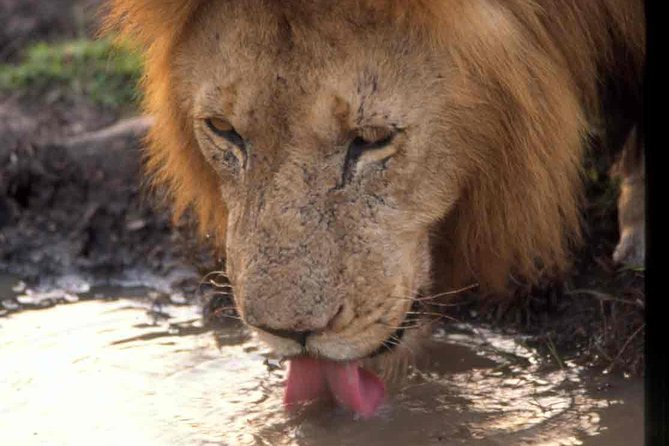
Central Serengeti is also a good area for predators. Lions, leopards, hyenas, and cheetahs are all listed among the animals you may seek. The open plains make some animals easier to see at a distance, while leopards and smaller cats can demand patience and sharp eyes.
This is where past guide performance becomes relevant. Thomas was praised for spotting a rhino and locating the Big Five, including an animal far enough away to require careful watching and video. That kind of sighting depends on timing, eyesight, local knowledge, and luck. Guides named Ely and Good Luck were also praised for both guiding and cooking on earlier departures.
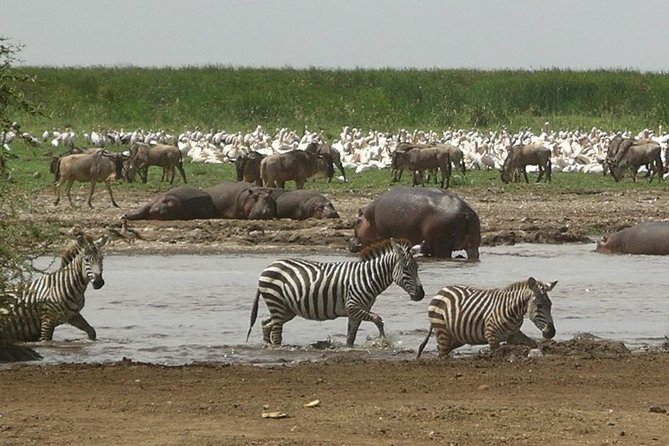
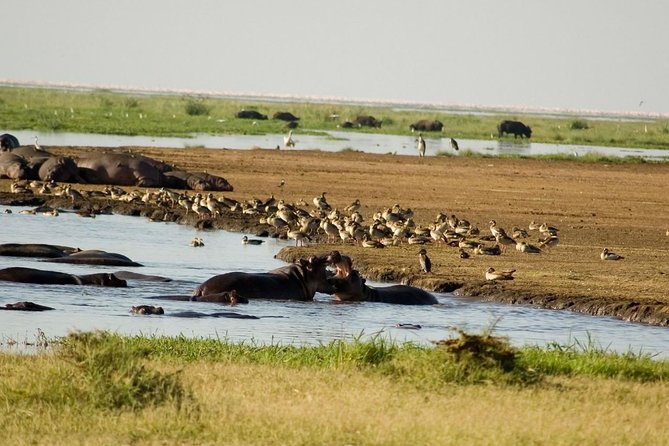
The day may include a stop at the Serengeti hippo pool. Fed by the Seronera River, it remains a water source even during the dry season. Hippos gather in the water, while crocodiles and birds can add to the scene. The stop is listed as about one hour, with access most easily connected to the Ikoma entrance area.
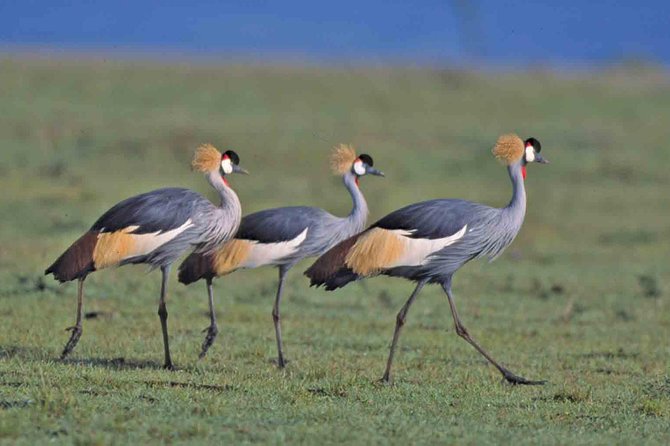
Birdlife is another strength of the park. You might see eagles, ducks, geese, egrets, vultures, secretary birds, ibis, storks, herons, kites, pelicans, cranes, and guinea fowl. If you enjoy birds, tell your guide early. A safari can easily become focused only on large mammals unless you show interest in smaller and less obvious species.
You return to Seronera public campsite for the second night. This is the point where you need to be realistic about the accommodation. The campsite has been described as lacking electric light and hot water. A basic public camp can be part of the fun, but it is not the right choice if you expect lodge comforts.
Day 3: Leaving Serengeti for Ngorongoro
The schedule for day three needs careful reading because the supplied timing describes both an early Serengeti game drive and a substantial Ngorongoro visit. It says you wake at 6 a.m., return to camp around 9 a.m. for breakfast, check out, and continue toward the crater with lunch and game viewing along the way.
The practical point is that this is another full day, not a relaxed transfer. An early drive gives you a chance to see animals when they are active, while the route toward Ngorongoro changes the setting from the broad Serengeti plains to the crater highlands.
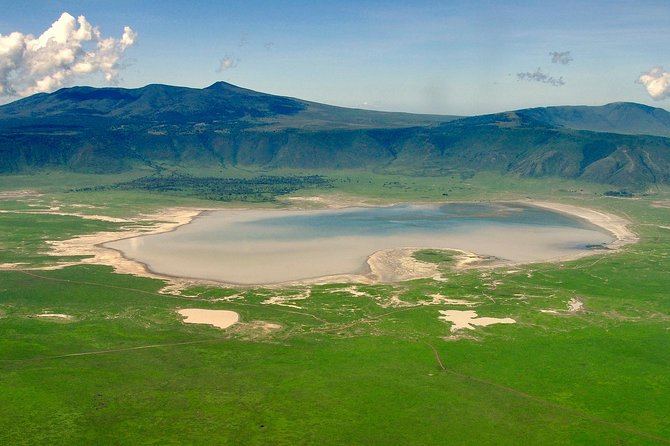
Ngorongoro Crater is the world’s largest unbroken caldera, measuring about 260 square kilometers and reaching roughly 610 meters in depth. Its steep sides create a protected area for a large number of mammals and birds. The crater floor is known for lions, hyenas, wildebeest, zebra, black rhinos, and small antelopes.
The schedule places you at the crater rim or nearby camping area for the night, then describes the main crater-floor visit on day four. That is the clearest way to understand the program: day three moves you toward Ngorongoro, and day four handles the descent and return to Arusha.
An optional visit to Olduvai Gorge can be added for an extra fee. The supplied information only confirms a museum visit, so ask for the current price and exact timing if this is important to you. It may be worthwhile for anyone interested in human origins and archaeology, but it is not part of the base package.
Same country, a completely different kind of safari:
- Tanzania Classic – 7 Days
★ 5.0 · 1,151 reviews - 4 Days Group Camping Safari
★ 5.0 · 1,101 reviews - 5 Days Group Camping Safari
★ 5.0 · 730 reviews - Materuni Waterfalls, coffee tour & Kikuletwa Hot Springs
★ 5.0 · 643 reviews
Day 4: Descending into Ngorongoro Crater
The final day begins early. After breakfast, you leave around 7:30 a.m. and descend into the crater for game drives. This early start is sensible because the crater visit is the main event and the day ends with your transfer back to Arusha.
The crater’s enclosed shape gives you a different wildlife experience from Serengeti. Instead of searching across vast open plains, you are watching animals within a contained natural basin. The route can include lions, leopards, buffalo, elephants, rhinos, zebra, hippos, wildebeest, and hyenas.
Black rhino sightings are among the most prized possibilities here, but you should treat any Big Five list as a guide to what lives in the region, not a promise. A good driver can improve your chances, yet wildlife remains unpredictable.
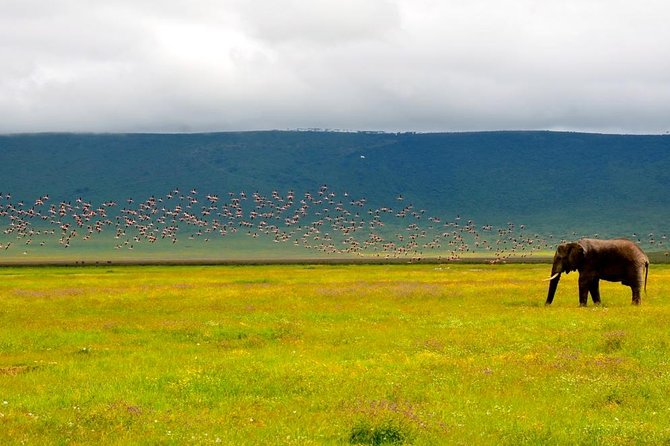
The picnic lunch stop is at Ngoitoktok spring. The break gives you time to eat during the crater visit before more game viewing and the climb out. Flamingos may appear on the soda lake, along with geese, storks, vultures, and other birds.
After ascending from the crater, you are dropped at a hotel or residence in Arusha. The exact arrival time is not provided, so avoid booking a tight evening flight or an inflexible onward connection.
Camping at Seronera: the part you must weigh carefully
The camping option is the main reason this safari costs less than a lodge-based trip. You spend two nights at Seronera public campsite, and the package includes three nights of camping in total. Meals are cooked during the trip, and the food receives some of the strongest praise attached to this experience.
Michael was credited with preparing very good meals in a camping setting. Ely and Good Luck were also praised for cooking, and a vegan meal request was handled successfully on one earlier departure. If you have dietary needs, state them when booking rather than waiting until pickup.
The trade-off is comfort. Reports describe the Seronera camps as having no light and no hot water. The information does not promise private bathrooms, electricity, or lodge-style facilities, so pack and plan for a basic campsite.
Bring a headlamp, although the supplied tour details do not specifically list one. A small towel and personal toiletries are also sensible for a camping trip, but the operator only confirms bottled water, meals, and camping accommodation. Ask what camping equipment is supplied before you travel.
The 4×4, guides, and long hours on the road
Transport is by Safari Landrover 4×4 Jeep with a pop-up roof. The roof is important. It lets you stand or sit with a clear view while the vehicle remains suited to rough park roads.
The English-speaking driver-guide is central to the experience. Past guides named Thomas, Ely, and Good Luck received strong praise for finding animals, explaining the area, and handling meals. Fazeel was described as a Spanish translator who was attentive and eager to help. French, Spanish, or German guide service costs an extra $25 per day if requested early.
The advertised daily activities run from about seven to 12 hours. That means you should expect dust, heat, road vibration, and plenty of time in the vehicle. The reward is more time in the parks, but anyone needing frequent breaks or a slower pace should ask detailed questions before paying.
The listed maximum group size is 100 people. That figure is unusually high for a safari vehicle, and the details do not explain how a group of that size would be divided. Ask how many people will actually share your 4×4. The vehicle size matters much more than the overall booking cap.
What the $740 price really buys
The base fare includes:
- Three nights of camping
- Pickup and drop-off in Arusha
- An English-speaking driver-guide
- 4×4 transport with a pop-up roof
- Bottled water
- Four lunches
- Three breakfasts
- Three dinners
The key extra is $210 in total conservation fees for Serengeti and Ngorongoro, paid in cash on the morning of the tour. That brings the practical starting price to about $950 per person.
Tips are optional. The Olduvai Gorge museum visit costs extra, and a French, Spanish, or German guide adds $25 per day if arranged in advance. The company may also offer mid-range or luxury accommodation upgrades, but no upgrade prices are provided.
For a first safari, the value is good if you are comfortable with public camping and long drives. The price is less attractive if you expect hot showers, private rooms, or a small private group. Compare the final cost, not just the headline number.
Who should book this safari
I would point this trip toward an active budget-conscious visitor who wants Serengeti and Ngorongoro in one compact itinerary. It suits you if wildlife matters more than comfort, you can handle long days, and you like having meals and transport arranged.
It is also a practical choice if you want a chance at the Big Five without paying lodge prices. The combination of a full Serengeti day, an early morning drive, a hippo pool stop, and Ngorongoro gives you a broad sample of northern Tanzania.
I would hesitate if you need reliable hot water, electric light, a quiet room, or a carefully paced schedule. The itinerary is busy, the campsite is basic, and the conservation fees add a large amount to the advertised price.
The experience has an overall rating of 4.6 from seven ratings, with especially strong praise for guides, animal spotting, and cooking. The most useful lesson is that the human service can be excellent, but the camping conditions remain firmly budget level.
Should you book it?
Book this safari if your priority is seeing Serengeti and Ngorongoro while keeping accommodation costs low. The strongest reasons are the full Serengeti game-drive day, the chance to visit the crater, the pop-up-roof 4×4, and the repeated praise for guides and cooks such as Thomas, Ely, Good Luck, and Michael.
Before booking, confirm the $210 conservation payment, the actual group size in your vehicle, the camping facilities, and the timing of the day-three crater transfer. If those details suit you, this is a practical way to reach two great wildlife areas without paying for a luxury safari.
FAQ
How long is the safari?
The safari lasts four days and three nights, with pickup in Arusha at 8 a.m. on the first day.
What parks and reserves does the tour visit?
The route visits Serengeti National Park and the Ngorongoro Crater Conservation Area.
Are conservation fees included in the $740 price?
No. The stated conservation charge is $210 in total for Serengeti and Ngorongoro, paid in cash on the morning of the tour.
Where do you sleep?
The package includes three nights of camping. Two nights are listed at Seronera public campsite, and the itinerary also refers to camping near the Ngorongoro Crater rim.
Does the campsite have hot water and electric light?
The campsite conditions are basic. The supplied information and accommodation feedback indicate that Seronera may have no electric light and no hot water.
What meals are included?
The package includes four lunches, three breakfasts, and three dinners. Bottled water is also included.
What type of vehicle is used?
Transport is by a Safari Landrover 4×4 Jeep with a pop-up roof for viewing animals.
Is a guide included?
Yes. An English-speaking driver-guide is included. French, Spanish, or German guide service costs an additional $25 per day if requested early.
Can you visit Olduvai Gorge?
Yes, an Olduvai Gorge museum visit is listed as an optional activity for an extra fee.
Can you cancel for a full refund?
You can cancel at least 24 hours before the experience start time for a full refund. Cancellations or changes made less than 24 hours before the start time are not accepted for a refund.
More Camping Safaris in Arusha
- 6 Days Tanzania Budget Camping Safari
★ 5.0 · 145 reviews - 3 Days Tarangire, Ngorongoro & Lake Manyara Group Camping Safari
★ 5.0 · 102 reviews - 5-Day private Camping Safari Tour in Tanzania
★ 5.0 · 86 reviews - 03 days Serengeti and Ngorongoro Crater group (camping)
★ 5.0 · 75 reviews
More Ngorongoro Crater Tours in Arusha
- 5 Days Camping Tarangire, Serengeti & Ngorongoro crater & Visiting Maasai
★ 5.0 · 229 reviews - 4 Days Join Group tour Tarangire Serengeti and Ngorongoro crater
★ 5.0 · 219 reviews - 4-Day Safari from Arusha: Tarangire, Serengeti and Ngorongoro
★ 5.0 · 173 reviews - 2 Days Tarangire and Ngorongoro Group Camping Safari
★ 5.0 · 146 reviews
Just added around Arusha
- 8 Days Serengeti Migration safari★ 5.0 · 11 reviews
- tarangire, ngorongoro & lake manyara park 3 days private tour★ 5.0 · 11 reviews
- tarangire & ngorongoro 2 days tour★ 5.0 · 14 reviews
- Mt. Kilimanjaro: Shira plateau to Cathedral point 3872m Day hike★ 5.0 · 7 reviews
- serengeti, ngorongoro & tarangire 4 days private tour★ 5.0 · 18 reviews
- serengeti & ngorongoro 3 days private tour★ 5.0 · 15 reviews
- 2 Days Tanzania Midrange Group Join Safari★ 5.0 · 7 reviews
- climb the KILIMANJARO via Lemosho route★ 5.0 · 4 reviews
Serengeti Safaris, compared.

Serengeti Balloon Safari and authentic bush breakfast
Read our review →
3 Days Serengeti & Ngorongoro Group Camping Safari
Read our review →
5-Day Highlights mid-Range Crater, Serengeti, Tarangire
Read our review →


Private 6-Day Tarangire Manyara Crater and Serengeti with Mid-Range Lodges
Read our review →
5 Days Camping Tarangire, Serengeti & Ngorongoro crater & Visiting Maasai
Read our review →
4 Days Join Group tour Tarangire Serengeti and Ngorongoro crater
Read our review →Browse the lists this tour appears in