

Reviewed · STONE TOWN WALKING TOURS
Stone Town Guided Historical Walking City Tour
Stone Town’s best stories are packed into a small area: carved doors, sultans’ palaces, old railway buildings, spice stalls, and the sobering site of the former slave market. This three-hour private walk gives you a useful first look at Zanzibar’s old quarter without burying you in a long, exhausting day.
I like the route for two clear reasons. First, it connects major sights with ordinary streets and markets, so you see more than restored monuments. Second, the guide can adjust the pace and answer questions, a real advantage in a private group. The main caution is that the quality depends heavily on the individual guide, and some tours have felt rushed or suffered from late starts.
Key points at a glance

- Private walking tour: Only your group takes part, which makes it easier to ask questions or request a little more time at a favorite stop.
- A strong mix of sights: The route includes the waterfront, Old Fort, House of Wonders, Freddie Mercury’s former home, the old slave market, and Darajani Market.
- Market life is part of the tour: Darajani Market gives you a direct look at everyday shopping in Stone Town, with food, spices, clothing, and electronics.
- Some admissions cost extra: Entry to the House of Wonders and Freddie Mercury’s home is not included, while the old slave market and Old Fort are included.
- Good value at $32.90: For a private, guided introduction to Stone Town, the price is reasonable, but the value drops if the walk is hurried or the guide is difficult to understand.
- Flexible local service: The company has arranged hotel pickups, airport drop-offs, and last-minute changes on some bookings, but confirm these details before you go.
Why Stone Town works best on foot
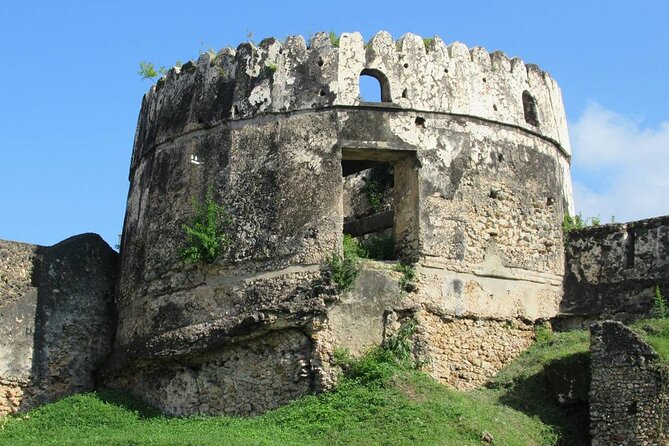
Stone Town is not a place you understand from a car window. Its lanes twist between old coral-stone buildings, small shops, mosques, courtyards, and houses with elaborately carved doors. A walking tour helps you notice the details that are easy to miss when you are simply searching for the next landmark.
The route begins at the People’s Palace Museum on Mizingani Road, near the waterfront. From there, you move through the old center and finish at Darajani Market before returning to the meeting point. The walk lasts about three hours, though the listed stops add up to close to that time even before you count the movement between them.
That matters because this is an orientation tour, not a slow museum visit. You will get a broad introduction to Stone Town’s history, Swahili culture, trade, religion, and architecture. If you want to read every plaque or spend an hour photographing one building, you may need a separate visit later.
The tour is private, so you are not tied to the pace of a large group. That is especially useful in narrow lanes, where stopping often can block the way. It also lets you ask about subjects that interest you, such as Zanzibar’s sultans, the slave trade, Freddie Mercury, local markets, or the meaning of the city’s doors.
More Stone Town Walking Tours in Zanzibar
- Zanzibar Stone Town Walking Tour
★ 5.0 · 145 reviews - Stone Town Historical Walking Tour
★ 5.0 · 143 reviews - Spice Tour + Stone Town Tour + Prison Island
★ 4.5 · 130 reviews
Forodhani Gardens and the waterfront
Forodhani Gardens is the opening stop, with about 20 minutes set aside. The park runs along the seafront in front of the House of Wonders and the Old Fort. It is a good place to get your bearings because several of Stone Town’s most important buildings gather around one open space.
The atmosphere changes with the hour. During the day, Forodhani Gardens is a pleasant place to walk and look across the waterfront. After sunset, it becomes the Forodhani Night Market, where locals and visitors gather around food stalls. The tour description allows for a morning or afternoon visit, with the night-market mood available only if your timing lines up.
You should not expect a full food tour here. The stop is short, and the main value is the setting and the guide’s explanation of how the waterfront fits into Stone Town. If you want to eat at the night market, plan extra time outside the tour.
This is also a useful photo stop. The Old Fort and House of Wonders provide a strong backdrop, but keep your camera down long enough to listen. The guide can explain what you are seeing far better than a quick photograph can.
House of Wonders and the old royal quarter
The House of Wonders is one of Stone Town’s most recognizable buildings. Its Swahili name is Bayt al-Ajā’ib, and it faces Forodhani Gardens on Mizingani Road. It was commissioned by Sultan Barghash bin Said and was one of six palaces built during his rule.
The tour allows about 20 minutes here. Your guide explains the building’s place in Zanzibar’s royal and colonial-era story, but admission is not included. You should confirm the current access situation before booking your day around an interior visit, since historic buildings in Stone Town can be under renovation or have limited access.
The building is important even when you only see it from outside. Its size and position make it easy to understand the old royal quarter, which also includes the Old Fort and the former Sultan’s Palace, now the Palace Museum. The guide’s commentary is the key part of this stop.
If you are hoping for a polished museum visit, adjust your expectations. This experience is built around a guided city walk, and the House of Wonders stop may be more about context and exterior views than a long indoor visit. The extra admission fee is worth considering only if the building is open and you want more time with its exhibits.
The Old Fort and a layered past

The Old Fort, or Ngome Kongwe, receives another 20-minute stop. Omani Arabs built it after the Portuguese were expelled in 1699. Over time, it served as a garrison and prison, and later became a railway terminal between 1905 and 1928.
That changing use is what makes the fort interesting. It is not just an old military structure. Its walls reflect several stages of Zanzibar’s development, including the period when rail travel connected Stone Town with Bububu.
The fort is included, so you can enter without adding another admission charge. A short visit will give you the basic shape and history of the site. If you like architecture, ask your guide how the fort relates to the nearby waterfront buildings and the old city lanes.
The stop may feel brief if you enjoy exploring old masonry or taking photographs. Still, it works well in the larger route because it gives you a clear landmark before the walk turns into Stone Town’s narrower streets.
Same country, a completely different kind of safari:
- Zanzibar: Quad Bike Adventure departing from Kendwa or Nungwi
★ 4.9 · 1,233 reviews - Zanzibar: Prison Island and Nakupenda Boat Trip with Lunch
★ 4.1 · 882 reviews - Skydive Zanzibar | Tandem Skydive
★ 5.0 · 877 reviews - Mnemba Island: Dolphin Swim & Snorkeling with Optional Lunch
★ 4.3 · 591 reviews
Freddie Mercury’s Zanzibar connection
The Freddie Mercury Museum stop lasts about 15 minutes and focuses on the singer’s early connection to Zanzibar. Born Farrokh Bulsara in Zanzibar in 1946, Freddie Mercury grew up in Stone Town while his family moved around the area because his father worked in the British colonial service.
The tour takes you to the exterior of his childhood home. That distinction matters. The basic walk does not include entry, and going inside requires an optional additional fee. You should treat this as a short cultural stop rather than a full museum experience.
For Queen fans, the address has obvious appeal. It connects a world-famous musician with the streets and buildings of Stone Town. For everyone else, it adds a modern human story to a tour otherwise focused on older political, commercial, and religious history.
The stop also shows how Stone Town combines different eras. A royal palace, a nineteenth-century trade center, and a twentieth-century music story all sit within the same compact city. That contrast is one of the route’s strengths.
The narrow streets and Zanzibar doors

The longest part of the walk through Stone Town lasts about 45 minutes. This is where the tour becomes less about individual attractions and more about reading the city itself.
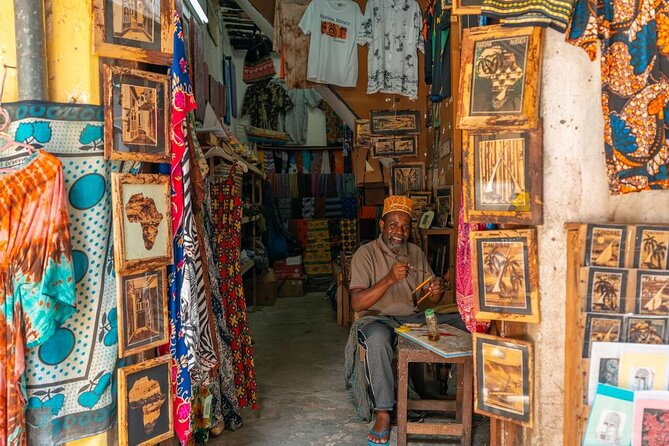
You will pass street shops, souvenir stalls, and old buildings. The guide points out Zanzibar’s famous doors, including their decoration and symbolism. These doors are more than attractive photo subjects. They can tell you about the owner’s wealth, cultural background, religious identity, and the trading connections that shaped the island.
The private format helps here. You can stop for pictures or ask why one door looks different from another without holding up a large party. You can also browse for souvenirs, though you should keep your shopping modest if you want to stay with the group.
This is the section most likely to feel rushed if the guide tries to cover too much. One person who took the walk found that some buildings were skipped and that the pace felt quick. Renovation work can also block access to historic sites, so the exact sequence may change.
I would treat this part as a guided introduction to the city’s character. It is not a dedicated shopping trip or architecture course. Look up, look down at the stone lanes, and let the guide show you details you would probably miss alone.
The old slave market and Anglican Cathedral

The former slave market is one of the most serious stops on the route. It is located along Mkunazini Street and is visited before the group reaches Darajani Market. About 20 minutes are set aside, with admission included.
Your guide explains how the slave trade operated and how it affected Zanzibar and the wider region. This is not a light sightseeing stop, and it should not be treated as one. The site asks you to face a painful part of the island’s past, including the buying and selling of enslaved people.
The Anglican Cathedral occupies the former market area, adding another layer to the visit. The pairing of religious space and former slave-trade site creates a strong reminder of how later generations have tried to mark and interpret that history.
For many people, this is the most meaningful stop on the tour. It provides context that you will not get from walking past Stone Town’s handsome buildings and busy shops. Give yourself time to listen, and ask questions if you want a clearer explanation of the trade’s wider impact.
Because the stop is emotionally weighty, the guide’s communication skills matter. Some guide experiences have been praised for clear explanations and patience, while one account described a quiet voice and a strong accent that made the commentary hard to follow. If you cannot hear or understand easily, say so early.
Darajani Market: ending with everyday Stone Town
The tour finishes with roughly 30 minutes at Darajani Market, also called Estella Market or Marikiti Kuu. The market dates to 1904, when Bomanjee Maneckjee built it for Sultan Ali bin Hamud.
This is the most direct look at present-day daily life on the route. You will find fresh seafood, meat, fruit, grains, and spices, along with clothing, electronics, and other household goods. The colors and smells change from one aisle to the next, and the market can feel much more immediate than the formal historic sites.
Do not expect a tidy market arranged for sightseeing. Darajani is a working bazaar, and the narrow aisles can be crowded. Stay close to your guide, watch your belongings, and ask before photographing people or stalls.
The 30-minute visit is enough for an introduction but not enough for a leisurely browse through every section. If you want to buy spices or souvenirs, note what catches your eye and return later. Ending here is smart because the market gives the historical walk a present-day finish. You see how Stone Town functions, not just how it looked during the sultanate.
Guides, communication, and the private format
The tour uses licensed local guides who speak several languages. Individual guides named in related bookings include Osman and Othman, while Saidi and Abu have also been involved in transport and tour arrangements. The names are useful when confirming your booking, but they do not guarantee who will lead your particular walk.
The strongest guide experiences have involved clear explanations, patience, humor, and flexibility. Osman and Othman were specifically praised for explaining places in detail, answering questions, and keeping the mood friendly. Another guide adapted the route to suit a group’s needs.
The private setup gives you more control than a standard group walk. You can ask for clarification, request a slower pace, or spend a little longer at a site if the schedule allows. The tradeoff is that a private tour does not automatically mean a better presentation. Your enjoyment still depends on the guide’s volume, language ability, preparation, and interest in the subject.
Confirm the starting point and guide contact before the day begins. Some bookings have been handled easily through WhatsApp, and the company has accommodated late changes in certain cases. Other arrangements have involved waits of more than an hour, so punctuality should be confirmed rather than assumed.
Price, timing, and practical value
At $32.90 per person, this is a fair price for a private three-hour introduction to Stone Town, especially if you are traveling with several people and the guide gives strong historical commentary. You are paying for a local guide, a carefully chosen route, and included entry at the Old Fort and former slave market.
The value is less clear if you plan to walk Stone Town on your own and mainly want exterior photographs. The city center is compact, and independent visitors can see many of the same streets. The guide earns the fee by explaining what the buildings, doors, markets, and slave-trade sites mean.
Remember the extra costs. Admission to the House of Wonders is not included, and entry to Freddie Mercury’s home requires an additional fee. The tour ends back at the meeting point, so hotel transport is not automatically part of the stated experience, even though pickup and airport drop-off have been arranged in some cases.
The booking pattern suggests that many people reserve around 109 days ahead. You do not need to copy that timing for every trip, but it is sensible to book early during busy travel periods. Free cancellation is available up to 24 hours before the start time. Bad weather can lead to a new date or a full refund.
Who will get the most from this walk
I would choose this tour if you are visiting Stone Town for the first time and want a clear framework for the city. It suits history-minded visitors, Queen fans, photographers interested in doors and old buildings, and anyone who prefers a local explanation to wandering without context.
It is also useful after arriving in Zanzibar because it helps you understand the old town before you explore it alone. The market and street sections give you a practical feel for the city, while the former slave market provides essential historical context.
You may want something else if you dislike walking in heat, want long museum visits, or prefer a slow photography tour. Three hours is enough for a survey of Stone Town, but not enough to study every landmark.
Wear comfortable shoes and plan for a steady walk through narrow streets. Keep water with you, dress respectfully around religious and historic sites, and bring small cash if you hope to buy something at the market. Ask about the exact meeting point, guide, start time, and optional entrance fees before setting out.
Should you book the Stone Town walking tour?
Book it if you want a private, organized introduction that joins famous landmarks with real market life. The route is well chosen, the price is reasonable for a private experience, and the former slave market adds substance beyond the usual photo stops.
I would book with two conditions: confirm the start time and make sure your guide can speak loudly and clearly in your chosen language. If those details are settled, this is a useful first walk through Zanzibar’s old capital. If you are comfortable exploring on your own and want to avoid extra admission charges, save the $32.90 and use the route as your independent plan.
FAQ
How long does the Stone Town walking tour last?
The tour lasts approximately three hours. It begins at the People’s Palace Museum and ends back at the same meeting point.
Where does the tour start?
The meeting point is the People’s Palace Museum on Mizingani Road in Zanzibar, at the listed location near the Stone Town waterfront.
Is the tour private?
Yes. Only your group participates in the activity, rather than joining a larger shared walking group.
Are entrance fees included?
Entry to Forodhani Gardens and the Old Fort is included, and the former slave market visit includes admission. The House of Wonders does not include an admission ticket, and entering Freddie Mercury’s home requires an optional extra fee.
Can I cancel for a full refund?
You can cancel at least 24 hours before the local start time for a full refund. Cancellations or changes made less than 24 hours before the start time are not accepted for a refund.
What happens if bad weather cancels the tour?
If poor weather causes the activity to be canceled, you will be offered another date or a full refund.
More Walking Tours in Zanzibar
- Stonetown: Food Markets and Street Food Walking Tour
★ 4.7 · 151 reviews - Walking City Tour in Zanzibar Island
★ 5.0 · 122 reviews - Zanzibar: Jozani nature walk and wildlife tour
★ 4.5 · 89 reviews - 3 Hours Private Stone Town Walking Tour
★ 5.0 · 71 reviews
More Historical Tours in Zanzibar
- Private Historic Stone Town Tour
★ 5.0 · 79 reviews - Stone Town Historical Walking Tour
★ 5.0 · 40 reviews - Zanzibar Stone Town Historical Tour and Spice Farm Tour
★ 5.0 · 30 reviews - Stone town historical tour + Spice farm tour
★ 5.0 · 29 reviews
Just added around Zanzibar
- Zanzibar: Maasai village and Nungwi turtles experience trip★ 4.9 · 16 reviews
- Zanzibar: Mnemba Atoll, Spice farm, Jozani forest & Lunch★ 3.9 · 3 reviews
- Zanzibar: Maasai World Tour with Cultural Practices★ 4.0 · 4 reviews
- Zanzibar: Kendwa Beach Professional Photoshoot★ 5.0 · 5 reviews
- Zanzibar: Jozani Red Colobos Monkey & Salaam Turtle Santuary★ 4.6 · 3 reviews
- ZANZIBAR: Jozani Forest,Salaam Cave, The Rock & Blue Lagoon★ 4.8 · 8 reviews
- Zanzibar: Jozani Forest Walking Tour★ 5.0 · 3 reviews
- Zanzibar: Jozani Forest,Red colobus,the Rock Restaurant tour★ 4.5 · 21 reviews
Stone Town Walking Tours, compared.

Stone Town, Spice Tour, Prison Island with Lunch
Read our review →
Stone Town, Spice tour & Prison Island with Lunch
Read our review →

3 Hours Private Stone Town walking Tour with Guide
Read our review →
Full-Day Private Stone Town +Spice Farm and Prison Island Tour
Read our review →
Stone Town Historical Cultural Walking Guided Tour
Read our review →
Browse the lists this tour appears in