
Reviewed · STONE TOWN WALKING TOURS
Stone Town City Tour
Stone Town is best understood on foot, where carved doors, old palaces, fish stalls, and narrow lanes bring Zanzibar’s past into the present. This private tour follows the trail of sultans, slaves, and explorers, with a guide explaining what happened inside the buildings around you.
I like the way the route can bend toward your interests, from antiques and souvenirs to the slave trade and David Livingstone’s time in Zanzibar. I also like the close look at ordinary life: fish piled at the market, bread in wicker baskets, fruit stalls, and children playing in the lanes.
The main consideration is time. The tour is advertised as lasting from two to eight hours, so the experience can vary widely. The supplied start time is listed as 12:00 am, which is not useful for planning without clarification, so confirm your pickup hour before you set your day around it.
Key points to know before you book
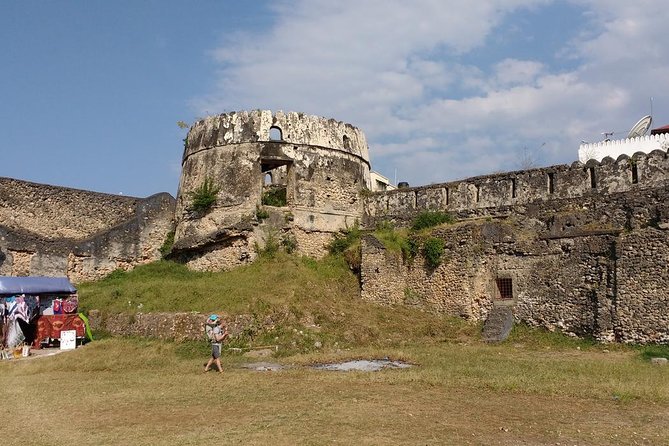
- Stone Town’s major landmarks fit into one private walk: See the former Slave Market, Anglican Cathedral, House of Wonders, Sultan’s Palace Museum, Old Arab Fort, and Dispensary.
- The route can be tailored: Ask for more history, shopping, antiques, local markets, or links to David Livingstone.
- Hotel pickup is included: This is useful if you are staying outside the old town or prefer not to arrange your own transport.
- Modern Zanzibar is part of the tour: Fish, bread, produce, shopkeepers, and street life share the route with royal and colonial buildings.
- The tour is private: Only your own group participates, making it easier to adjust the pace and questions.
- Allow for changing tour length: A short walk may cover the main sights, while a longer visit gives more room for museums, markets, and side streets.
Entering Stone Town through its narrow lanes
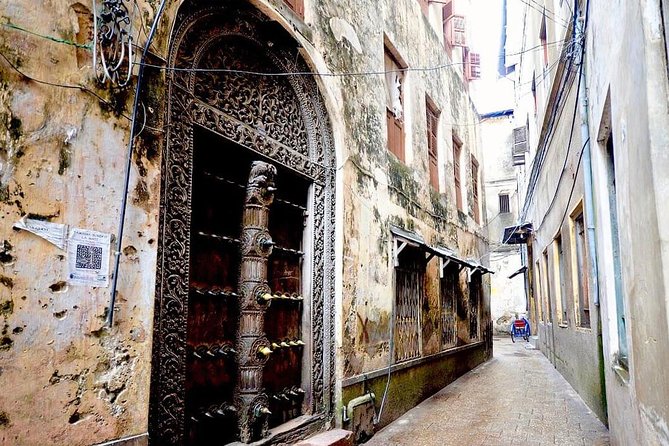
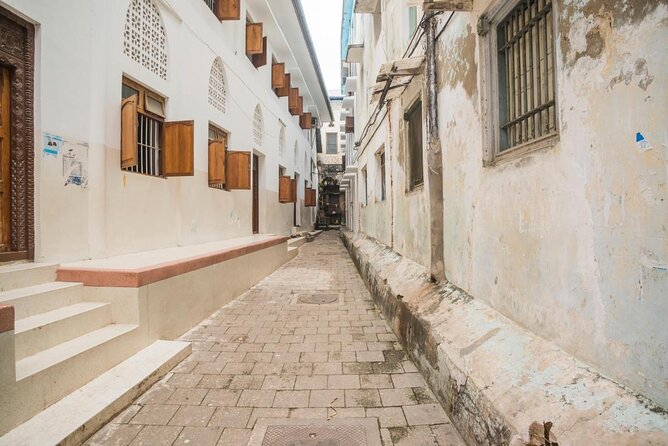
Stone Town is not a place you understand from a vehicle window. Its story is packed into tight streets, old doorways, market corners, and buildings that have served very different purposes over time.
This walk gives you a useful framework. Instead of seeing an old fort, a church, or a palace as separate sights, you follow the forces that shaped Zanzibar: the sultans who ruled from the island, the slave trade that brought wealth and suffering, and explorers who used Zanzibar as a base for journeys into East Africa.
I would treat the guide as the key part of the experience. The buildings are worth seeing on their own, but the walk becomes far more useful when someone explains how they connect. The route is flexible, so tell your guide early if you care most about royal history, religious sites, shopping, architecture, or the slave trade.
The private format helps here. You are not locked into a fixed group pace, and you can ask about details that catch your eye. Booking notes refer to Paul and Abraham in connection with arrangements and past excursions, but the individual guide assigned to your visit may vary.
More Stone Town Walking Tours in Zanzibar City
- Zanzibar: Stone Town, Spice Tour, Prison Island with Lunch
★ 4.4 · 1,219 reviews - Zanzibar: Prison Island, Stone Town, & Spice Farm Tour
★ 4.5 · 579 reviews - Zanzibar: Stone Town, Spice tour & Prison Island with Lunch
★ 4.6 · 453 reviews
The former Slave Market and Anglican Cathedral
The former Slave Market is one of the most important stops on the route. It gives the tour a serious center, moving the story beyond palaces and picturesque doors.
The site helps explain Zanzibar’s place in the East African slave trade and the human cost behind the island’s commercial power. The nearby Anglican Cathedral adds another layer, showing how later religious and political changes reshaped the area.
I would not rush this part of the walk. It is not simply a photo stop. Ask your guide to explain the history in a way that connects the market to the wider streets of Stone Town and to Zanzibar’s role as a trading center.
The supplied tour details do not promise a set amount of time inside each site. If this subject matters to you, say so when booking and again at the start. The flexible format should make it possible to give this part the attention it deserves, but the final route depends on your time.
House of Wonders and the Sultan’s Palace Museum

The House of Wonders and Sultan’s Palace Museum bring you into the world of Zanzibar’s ruling family. These buildings help you picture the courtly side of Stone Town, with its links to the sultans and the wider Indian Ocean.
The names are grand, but you should keep your expectations measured. The tour description notes that some palaces are almost in ruins or under renovation. That can limit what you see inside, yet it also makes the visit more honest. You are not walking through a perfectly restored royal complex. You are seeing old buildings in different states of repair.
The House of Wonders is especially useful as a landmark in the city center, while the Sultan’s Palace Museum adds a more personal connection to the former rulers. Your guide can place both in the wider story rather than treating them as isolated monuments.
If you have only two hours, these stops may be part of a brisk highlights walk. With a longer booking, you have a better chance to pause, ask questions, and combine them with the fort and market areas.
Old Arab Fort and the Dispensary
The Old Arab Fort gives the walk a defensive and political note. After hearing about royal life and trade, you get a sense of the structures that protected the town and marked its changing control.
The Dispensary offers a different view of Stone Town’s past. Its appearance reflects the town’s Indian Ocean connections, and the building helps show how commerce, architecture, and daily services met in the old city.
These stops are especially rewarding if you enjoy doors, facades, and details. Stone Town’s architecture carries influences from Arab, Indian, African, and European connections, and your guide can point out what you might otherwise pass without noticing.
Do not expect every building to feel polished. Repairs and wear are part of the scene. For some people, that is a drawback. For me, it is also a reminder that Stone Town is a living town, not a museum set.
Same country, a completely different kind of safari:
- From Zanzibar: Mikumi Safari Day Trip with Flights and Meal
★ 4.7 · 1,470 reviews - From Zanzibar: Day Selous Game Reserve Safari with Flights
★ 4.7 · 1,025 reviews - Quad Adventures in Zanzibar: Nungwi / Kendwa
★ 4.9 · 640 reviews - Stone Town Private Walking Tour
★ 5.0 · 371 reviews
Markets, bread baskets, and everyday Stone Town
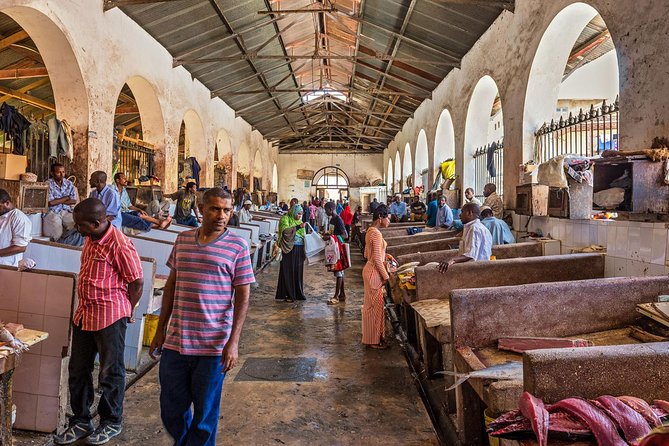
The best part of this tour may be the shift from grand history to daily trade. You can walk through market areas where fish and seafood are piled for sale, bread is carried in wicker baskets, and fruit and vegetables are arranged in neat stacks.
This is where the tour gives you a window into modern Stone Town. The market is not arranged for sightseeing, so you should remain aware of people working, buying, and carrying goods around you. Your guide can help you read the scene without turning ordinary life into a performance.
You might also see children playing and shopkeepers serving local customers alongside people looking for souvenirs. The supplied information specifically points to antiques and souvenir shopping as possible interests, so mention this if you want time to browse.
The shopping angle is useful, but it can change the feel of the tour. A route focused on stalls and antiques leaves less time for museums and historical explanations. A good plan is to choose one main theme and one secondary interest rather than trying to cover everything in a single short walk.
A route shaped around your interests
The tour is designed to adjust. If you are a history buff, you can focus on the former Slave Market, the cathedral, the sultans, and the explorer connections. If you care more about culture and daily life, ask for markets, food stalls, shopfronts, and local streets.
The mention of David Livingstone gives the route another possible thread. You can follow his time in Zanzibar and connect his story to the island’s role in exploration. The details supplied do not promise a particular Livingstone site, so ask the guide exactly which places are included if this is your main reason for booking.
You can also request antiques and souvenirs. I would see that as an add-on rather than the heart of the tour. Shopping is more enjoyable when you know how much time you have left and are not trying to hurry through an important historical stop.
This flexibility matters most because the advertised duration is broad. A two-hour version suits someone who wants an introduction before another activity. An eight-hour version allows a much slower look at the old town, with more time for side streets and markets.
What the private format means for you
This is a private activity, so only your group participates. That is a meaningful advantage in Stone Town, where narrow lanes and busy market areas can make a large group awkward.
You can ask for a slower pace, spend longer at a site, or change emphasis as the walk develops. The private setup also suits families, couples, and small groups with different interests, though the supplied information does not provide a specific age range or group size limit.
Hotel pickup is included. That removes one transport task, especially if your accommodation is not close to the old town. Since the experience is a walking tour after pickup, wear practical shoes and be ready for uneven streets, though the supplied details do not give a formal accessibility rating.
The tour is offered with a mobile ticket, and confirmation is received at booking. The experience is listed near public transportation, giving you another option if you need to reach the area independently.
Is $100 a fair price?

At $100 per person, this is not the cheapest way to take a short walk through Stone Town. The price makes more sense if you use the private format, included hotel pickup, and route flexibility.
For a two-hour experience, I would expect a focused introduction rather than a full exploration. In that case, value depends heavily on the quality of the guide and how well the route matches your interests.
For a longer visit, the price is easier to justify. You are paying for a private guide, transport from your hotel, and the ability to combine major landmarks with markets and shopping. If your group is small, compare the cost with arranging several separate activities, but remember that admission details beyond the stated included ticket are not broken down.
Personal expenses and drinks are not included. Bring money only if you plan to shop or buy refreshments, and ask what admissions are covered before you begin so there are no surprises.
The experience has an overall rating of 4.7 from three ratings, with praise for prompt timing, professional organization, and local-style guiding. One booking also included help with a visa application, but that is not listed as part of the tour itself, so do not assume it comes with every reservation.
Timing, weather, and cancellation
The listed start time of 12:00 am needs clarification. It may be a system error or a placeholder, but you should not rely on it. Confirm the actual pickup time with Bohobe Travels before the day of the tour.
The experience can be canceled free of charge up to 24 hours before the start time for a full refund. Changes made less than 24 hours ahead are not accepted, and cancellations inside that window are not refunded.
Good weather is required. If poor weather cancels the tour, you should be offered another date or a full refund. The activity also requires a minimum number of participants, although it is described as private. If the minimum is not met, you should be offered another date or experience, or a full refund.
Who will get the most from this walk?
I would recommend it to anyone visiting Zanzibar who wants context before exploring Stone Town alone. It is especially useful for first-time visitors who want the major landmarks explained rather than simply photographed.
History-focused visitors should request extra time at the former Slave Market, Anglican Cathedral, palaces, and explorer-related sites. People interested in everyday culture should ask for the fish market, produce stalls, bakeries, and streets where local trade takes place.
The tour also suits shoppers, provided you make that clear at the start. You can ask the guide to point out antiques and souvenir shops, but do not expect a full shopping itinerary and a detailed historical tour to fit equally well into two hours.
I would be more cautious if you want a fixed, highly structured schedule or guaranteed access to every named building. The route is flexible, and some palaces may be under renovation or in poor condition. That is part of the reality of Stone Town, but it means you should book for the town’s atmosphere and story, not for a perfectly preserved museum circuit.
Should you book the Stone Town City Tour?
Book this if you want a private introduction to Zanzibar’s old capital with hotel pickup and room to shape the route. Its strongest features are the mix of major historical sites and ordinary market life, plus the chance to focus on slavery, sultans, exploration, shopping, or local culture.
Before paying, confirm the actual start time, expected duration, and which admissions are included. Ask for the historical emphasis you want, especially if the former Slave Market or David Livingstone is central to your plans.
I would choose the longer version if your schedule allows it. A short walk can show you the highlights, but Stone Town rewards patience. If you want a flexible, guide-led introduction and accept that some buildings may be worn or under repair, this tour is a sensible way to begin.
FAQ
Where does the Stone Town City Tour take place?
The tour takes place in Stone Town, Zanzibar City, Tanzania.
How long does the tour last?
The experience is described as lasting approximately two to eight hours, depending on the route and your available time.
Is hotel pickup included?
Yes. Hotel pickup is included.
Is this a private tour?
Yes. Only your group participates in the activity.
What main sights are included?
The route can include the former Slave Market and Anglican Cathedral, House of Wonders, Sultan’s Palace Museum, Old Arab Fort, and Dispensary.
Can the itinerary be customized?
Yes. The route can be adapted to your interests and time frame, including history, culture, shopping, antiques, souvenirs, and David Livingstone’s time in Zanzibar.
Are drinks and personal expenses included?
No. Personal items and beverages are not included.
Can I cancel for a full refund?
Yes, if you cancel at least 24 hours before the experience start time. Poor-weather or minimum-participant cancellations offer a different date or a full refund.
Just added around Zanzibar City
- Zanzibar: Mikumi Wonderful Safari with Open Jeeps★ 4.9 · 15 reviews
- Zanzibar: Maalum Cave Natural Swimming Pool Tour in Paje★ 4.4 · 3 reviews
- Zanzibar: Jozani Forest Watching Colobus Monkeys Guided Tour★ 4.1 · 7 reviews
- Zanzibar: Jozani Forest, Salaam Cave & The Rock Restaurant★ 3.0 · 4 reviews
- Zanzibar: Jozani Forest Guided Tour,Red Colobus and transfer★ 3.9 · 6 reviews
- Zanzibar: Jozani Chwaka Bay National Park and Spice Farm …★ 4.6 · 5 reviews
- Zanzibar: Horse Riding and Kayaking with Video and Photos★ 4.9 · 10 reviews
- Zanzibar: Half-Day Private in Prison Island Tours★ 5.0 · 4 reviews
Stone Town Walking Tours, compared.

Stone Town, Spice Tour, Prison Island with Lunch
Read our review →
Stone Town, Spice tour & Prison Island with Lunch
Read our review →

3 Hours Private Stone Town walking Tour with Guide
Read our review →
Full-Day Private Stone Town +Spice Farm and Prison Island Tour
Read our review →
Stone Town Historical Cultural Walking Guided Tour
Read our review →
Browse the lists this tour appears in