
Reviewed · SERENGETI SAFARIS
Private 6-Day Great Migration Ndutu Serengeti Safari Tour
The main reason to choose this safari is Lake Ndutu during the migration. From December through April, wildebeest and zebra gather on the short-grass plains, and January can bring the dramatic calving season, when hundreds of thousands of young are born over a short stretch of time. Predators are close by, so the action is not limited to peaceful grazing.
I like the way this route mixes four very different wildlife settings, from Tarangire’s elephant country to the Ngorongoro Crater and Lake Manyara’s bird-filled wetlands. I also like the private format: you have your own safari vehicle and guide, rather than sharing the schedule with a large group. The main consideration is the price, $2,827 per person, plus long driving days on rough park roads and a strict non-refundable booking policy.
Key points at a glance
- Best migration window: Lake Ndutu is the focus from December to April, with January offering the strongest chance of seeing newborn wildebeest.
- Four major wildlife areas: The route includes Tarangire National Park, the southern Serengeti and Ndutu region, Ngorongoro Crater, and Lake Manyara.
- Private vehicle and guide: Only your group takes part, allowing more room for personal interests and flexible wildlife stops.
- Strong guide reputation: Guides named in past trips include Shafino, Gilbert, Ozzie, Meck, Evans, Goodluck, David, Fredrick, Gama, Luther, and Sahele.
- Airport pickup offered: The trip begins with an Arusha arrival transfer and ends back at the listed meeting point.
- A demanding but rewarding pace: This is an active six-day safari with several substantial transfers, not a slow lodge holiday.
Why Ndutu is the heart of this safari
Lake Ndutu sits in the Ngorongoro Conservation Area and forms part of the wider Serengeti ecosystem. The name suggests a single lake stop, but the experience is much broader: you explore short-grass plains, woodland, swamps, soda lakes, and open areas where migrating herds spread out.
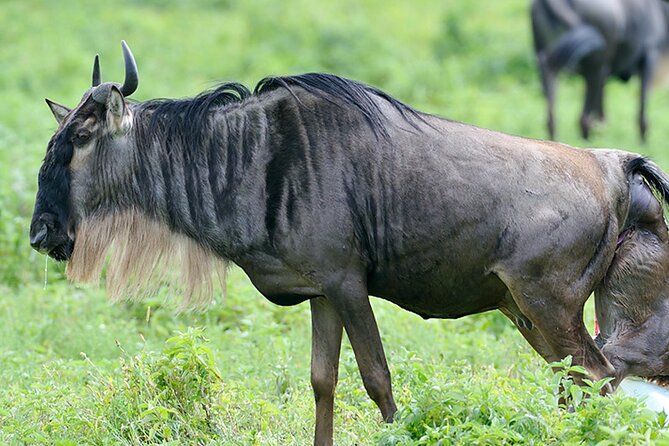
The timing matters more here than on many standard safari routes. From December to April, the wildebeest migration usually occupies the southern Serengeti and Ndutu area. January is especially important because the herds gather for calving. The young can stand and run within minutes, yet the open grass offers little shelter from lions and other predators.
That gives you a chance to see more than a long line of grazing animals. You may find newborn calves, nervous herds, hunting behavior, and the constant movement that makes migration season so compelling. No operator can promise a specific sighting, but the seasonal logic behind this route is sound.
The Ndutu portion includes a shorter game drive on arrival and a full day in the area on Day 4. That full day is valuable. Wildlife viewing is never fully predictable, and an extra morning and afternoon in the same region gives your guide more time to follow changing animal activity instead of treating Ndutu as a quick stop between parks.
More Serengeti Safaris in Arusha
- Balloon Safari & Bush Breakfast in Serengeti – Miracle Experience
★ 5.0 · 1,646 reviews - 3 Days Serengeti & Ngorongoro Group Camping Safari
★ 5.0 · 574 reviews - 5-Day Highlights mid-Range Crater, Serengeti, Tarangire
★ 5.0 · 296 reviews
Day 1: A quiet Arusha arrival
The first day is deliberately light. A Lion King Adventures representative collects you from the airport and takes you to accommodation in Arusha, where you spend the night before the main safari begins.
Arusha is the practical starting point for northern Tanzania’s national parks. This overnight gives you time to rest, organize camera equipment, and prepare for early starts. It also avoids trying to begin a long park drive immediately after an international flight.
The stated meeting point is Mount Meru Hotel on Arusha-Taveta Road in the Sekei area. Since airport pickup is also offered, confirm the exact arrival transfer and first-night accommodation when booking. The supplied details name Arusha Planet Lodge for the overnight stay, so it is sensible to check that this is still the property assigned to your departure.
This is not a sightseeing day. That is a good thing if you want a calmer start, but it does mean the six-day schedule contains only four main wildlife days after arrival and departure logistics are counted.
Day 2: Elephants and open country in Tarangire
Your safari guide collects you in Arusha and drives toward Tarangire National Park. The route follows a paved road across Maasai plains, with acacia trees, villages, people in colorful clothing, bicycles, cattle, and donkey carts adding useful context before you reach the park.
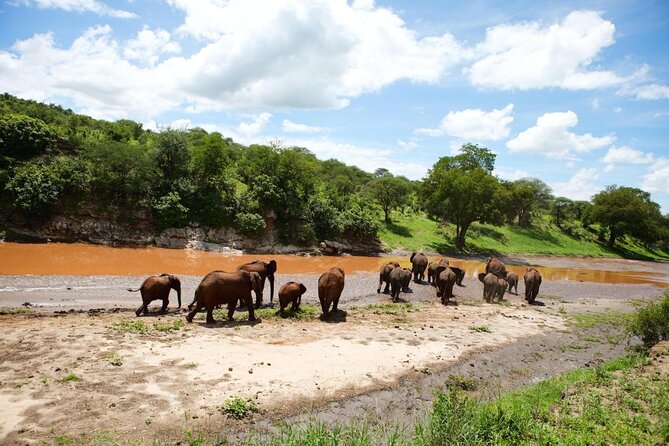
Tarangire is famous for elephants, and large herds are one of the main reasons it earns a place on this itinerary. The park also includes seasonal swamps, open savanna, and the Tarangire River, which helps support wildlife during dry periods.
From the open roof of the safari vehicle, you may see zebra and other animals around these water sources. The supplied plan also points to a wide mix of creatures, rather than promising only elephants, which is the right way to view the park.
The tradeoff is time. The day is described as roughly eight hours, and the drive from Arusha takes up part of that. You should expect a full day in a vehicle, with pauses for wildlife and scenery rather than a short park visit. Still, Tarangire gives the trip an immediate change of setting and a strong chance to see elephants before the migration focus begins.
Days 3 and 4: Two chances to find the herds at Ndutu
After breakfast on Day 3, you drive toward the Lake Ndutu region. The journey takes about three hours and crosses the Rift Valley area before reaching the southern Serengeti ecosystem.
The first Ndutu game drive takes place after arrival. You then continue to your accommodation for dinner and the night. This is a sensible arrangement because it puts you close to the next day’s wildlife area instead of returning to a distant base.
Day 4 is the major Ndutu day. After breakfast, you spend the full day exploring the region’s different habitats. The mix of swamps, woodland, soda lakes, and short-grass plains means you are not simply looking at one endless stretch of grass.
The migrating wildebeest and zebra are the central draw. During the calving period, the open plains can hold huge numbers of animals and newborns. The timing of the births is not exact, so January offers a strong opportunity rather than a guarantee. December through April is the broader target period, and conditions can change from one year to the next.
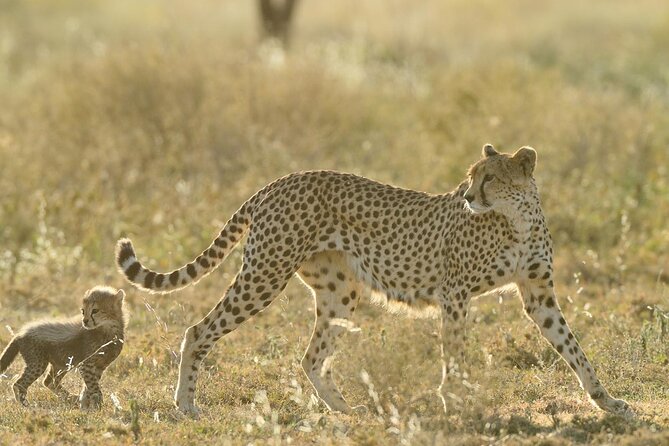
A full day also gives your guide time to search for other wildlife. The operator’s guides have been praised for spotting elusive animals, including leopard, cheetah, lions, and rhinoceros. Several past guide pairings, including Shafino Dominick, Gilbert, Ozzie, Meck, Evans, and Goodluck, received especially strong praise for animal spotting, driving, and efforts to follow personal wish lists.
That does not mean you should expect every animal on demand. It does mean guide skill matters. A good guide reads tracks, listens to radio updates, studies animal behavior, and knows when to wait. In a private vehicle, you can explain whether you prefer predators, birds, photography, or wide views, then shape the day around those interests as conditions allow.
Same country, a completely different kind of safari:
- Tanzania Classic – 7 Days
★ 5.0 · 1,151 reviews - 4 Days Group Camping Safari
★ 5.0 · 1,101 reviews - 5 Days Group Camping Safari
★ 5.0 · 730 reviews - Materuni Waterfalls, coffee tour & Kikuletwa Hot Springs
★ 5.0 · 643 reviews
Day 5: From the Serengeti plains to Ngorongoro Crater
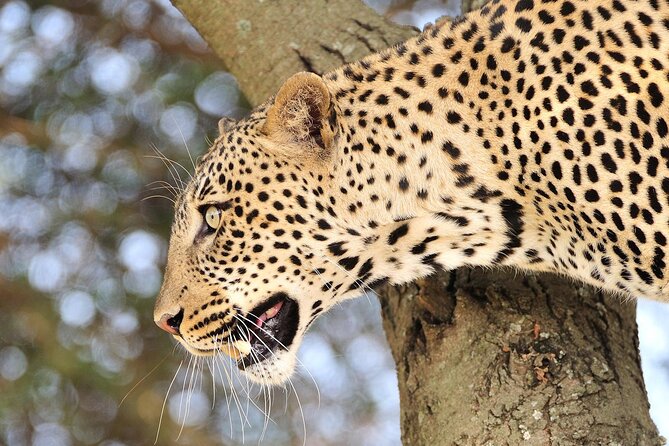
Day 5 combines an en-route game drive through the Serengeti with a move toward the Ngorongoro Conservation Area. You may have another chance at the Big Five during the drive, but the day’s major reveal comes at the crater rim.
Ngorongoro Crater formed after a huge volcanic explosion millions of years ago. It is about 610 meters deep and covers roughly 304 square kilometers. From the rim, you look down into a contained bowl of grassland, woodland, and other habitats that support a dense population of animals.
The crater is known for strong game viewing because its enclosed setting holds many animals in a relatively compact area. The stated animal population is about 25,000 ungulates. That concentration can make sightings easier than in a vast open park, although wildlife still moves on its own schedule.
The crater visit is also one of the route’s most dramatic changes in scenery. Ndutu is about migration movement and open plains. Ngorongoro gives you a sweeping high viewpoint before bringing you into a more enclosed wildlife setting.
The limitation is that Day 5 is another long transfer day, listed at about eight hours. You will spend time on the road and may arrive at the crater rim before lunch, but the schedule does not describe a full crater-floor safari on this day. Confirm how much crater game-drive time is included in your final plan, especially if seeing the crater floor is a top priority.
Day 6: Birdlife and varied habitats at Lake Manyara
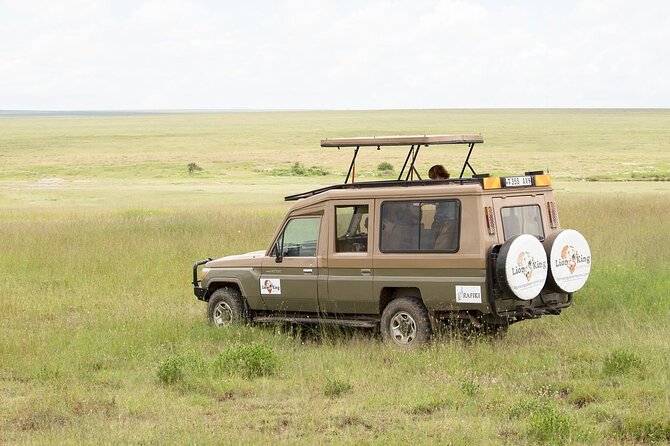
The final destination is Lake Manyara National Park, about 120 kilometers west of Arusha. It is a smaller park, but the range of habitats is impressive: open grassy plains, primate-filled woodland, baobab-dotted cliffs, and the shallow alkaline lake itself.
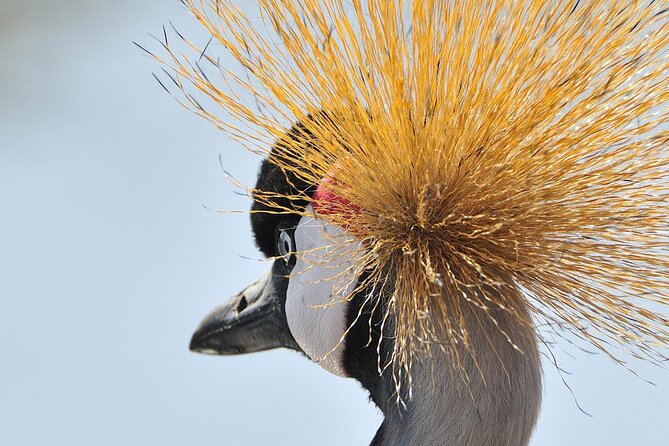
The lake covers about 70 percent of the park’s surface area and expands or contracts with the seasons. It can attract thousands of flamingos and supports around 500 bird species in the wider park setting. If you care about birds, this is not merely a spare hour added to the end of a Big Five itinerary.
Mammal sightings may include monkeys, giraffes, zebra, wildebeest, buffalo, and elephants. Lions lounging in trees are possible with luck, and that behavior is one of the park’s better-known draws. As always, the wording matters: a sighting is an opportunity, not a promise.
After lunch, you continue with the park exploration before the activity ends back at the meeting point. The day is again listed at about eight hours, so arrange onward plans with care. The tour data says the activity ends back at the meeting point, but it does not provide a separate airport drop-off promise.
What the private format changes
A private safari is not just a smaller bus. It changes how you use time. Since only your group participates, you can discuss your priorities with the guide and spend longer at a sighting if the group agrees.
This matters most at Ndutu. A public group may have different interests or a fixed pace. A private group can ask to wait near an active scene, move on from a common animal, or focus more on photography and birds.
The guide is the other major part of the experience. Past pairings with Shafino Dominick, Gilbert, Ozzie, Meck, Evans, Goodluck, David, Fredrick, Gama, Luther, and Sahele received strong praise for spotting animals, explaining wildlife, handling difficult roads, and helping with practical needs. David was especially noted for confident driving on rocky, muddy, and difficult tracks, while several guides were praised for finding leopard, cheetah, lions, and rhinoceros.
You should still tell the company what matters most before departure. If your priority is the migration, say so clearly. If you want the Big Five, birds, photography, or a slower pace, say that too. The more specific you are, the more useful a private format can be.
Is $2,827 per person good value?
At $2,827 per person, this is a substantial purchase. Its value comes from the combination of a private safari, six days of transport and guiding, four major wildlife regions, and a carefully timed visit to Ndutu.
The price is easier to justify if you specifically want the southern Serengeti calving season. A cheaper general safari may visit the Serengeti but miss the period when the herds are concentrated around Ndutu. Here, the route is built around that seasonal event rather than treating it as a lucky extra.
You also pay for variety. Tarangire offers elephant country, Ndutu brings migration, Ngorongoro provides dense crater wildlife and huge views, and Lake Manyara adds wetland birds and varied habitats. Each place has a different character, so the trip does not rely on one park to carry the whole experience.
The price is less attractive if you want a relaxed holiday with little time on the road. This schedule includes several long driving days, early starts, and rough tracks. It is designed for wildlife coverage, not for lying around a lodge.
Accommodation quality has been praised across the operator’s past trips, with Nyoto Luxury Camp receiving specific approval. Exact lodging can vary, so ask for the full accommodation list before paying. Food has also been described as good and adaptable to dietary needs, but confirm your own requirements in advance.
Practical points to settle before booking
Airport pickup is offered, and the first night is in Arusha. The listed meeting point is Mount Meru Hotel, while the itinerary names Arusha Planet Lodge, so confirm where you will be collected and where the first overnight takes place.
The activity is private, and group discounts are available. Confirmation is received at booking, and the supplier states that most people can participate. The information does not give a specific accessibility assessment, so anyone with mobility concerns should ask about vehicle access, crater roads, and walking arrangements before booking.
This experience is non-refundable and cannot be changed for any reason. That makes travel insurance particularly sensible, and it also means you should be certain about your dates and migration window before making payment.
Pack for long vehicle days, changing temperatures, dust, and photography. The supplied information does not list a formal equipment checklist, so ask the operator about luggage limits, charging, drinking water, and clothing recommendations rather than assuming these details.
Who should book this safari?
I would recommend it to you if the migration is the main reason you are coming to Tanzania, especially from January through March. You get two substantial chances to explore Ndutu, plus a full route through Tarangire, Ngorongoro, and Lake Manyara.
It also suits couples, families, and small private groups who want their own pace. The guide can focus on particular animals, and the private vehicle avoids the compromises of a large shared departure.
I would think twice if you dislike long drives or want several free afternoons. This is an efficient northern Tanzania circuit, and efficiency means movement. I would also avoid booking solely because you expect guaranteed Big Five sightings or a guaranteed river crossing. Wildlife is wild, and luck remains part of the deal.
Should you book the six-day Ndutu safari?
Book this tour if you want a focused migration safari with a strong chance of seeing the Ndutu calving grounds, but also want the classic additions of Tarangire, Ngorongoro Crater, and Lake Manyara.
The best dates are December through April, with January offering the clearest calving-season appeal. Before committing, confirm the exact lodges, airport transfer, crater-floor schedule, and guide assignment. If those details fit your needs, the private format and route make the price easier to defend.
FAQ
Where does the safari start?
The listed meeting point is Mount Meru Hotel on Arusha-Taveta Road in the Sekei area of Arusha, Tanzania. Airport pickup is also offered for the arrival day.
Where does the safari end?
The activity ends back at the listed meeting point. The provided details do not separately confirm an airport drop-off on the final day.
How long is the safari?
The safari lasts approximately six days.
Is this a private tour?
Yes. Only your group participates in the activity, with a private safari vehicle and guide.
When is the best time to see the migration at Ndutu?
The migration is usually found around Ndutu from December through April. January is described as the best period for witnessing calving.
What parks and areas are included?
The route includes Tarangire National Park, the Lake Ndutu region in the Ngorongoro Conservation Area and southern Serengeti ecosystem, Ngorongoro Crater, and Lake Manyara National Park.
Is airport pickup available?
Yes. Pickup from the airport is offered on arrival in Arusha.
Are group discounts available?
Yes. Group discounts are listed as one of the tour’s features.
Can I cancel and receive a refund?
No. The experience is non-refundable and cannot be changed for any reason.
More 6-Day Experiences in Arusha
- Tanzania Wildlife Encounters – 6 Days
★ 5.0 · 277 reviews - Private 6-Day Tarangire Manyara Crater and Serengeti with Mid-Range Lodges
★ 5.0 · 238 reviews - 6 Days Private Budget Safari
★ 5.0 · 163 reviews - 6 Days Tanzania Budget Camping Safari
★ 5.0 · 145 reviews
More Safari in Arusha
- 7-Day Premium Luxury Tanzania Safari All-Inclusive
★ 5.0 · 426 reviews - 3-Day Classic Serengeti Safari
★ 5.0 · 263 reviews - 8 Days Great Wildebeest Calving Migration Safari from Arusha
★ 5.0 · 254 reviews - Group Safari 7 Days in Tanzania’s Main Parks
★ 5.0 · 240 reviews
Just added around Arusha
- 8 Days Serengeti Migration safari★ 5.0 · 11 reviews
- tarangire, ngorongoro & lake manyara park 3 days private tour★ 5.0 · 11 reviews
- tarangire & ngorongoro 2 days tour★ 5.0 · 14 reviews
- Mt. Kilimanjaro: Shira plateau to Cathedral point 3872m Day hike★ 5.0 · 7 reviews
- serengeti, ngorongoro & tarangire 4 days private tour★ 5.0 · 18 reviews
- serengeti & ngorongoro 3 days private tour★ 5.0 · 15 reviews
- 2 Days Tanzania Midrange Group Join Safari★ 5.0 · 7 reviews
- climb the KILIMANJARO via Lemosho route★ 5.0 · 4 reviews
Serengeti Safaris, compared.

Serengeti Balloon Safari and authentic bush breakfast
Read our review →
3 Days Serengeti & Ngorongoro Group Camping Safari
Read our review →
5-Day Highlights mid-Range Crater, Serengeti, Tarangire
Read our review →


Private 6-Day Tarangire Manyara Crater and Serengeti with Mid-Range Lodges
Read our review →
5 Days Camping Tarangire, Serengeti & Ngorongoro crater & Visiting Maasai
Read our review →
4 Days Join Group tour Tarangire Serengeti and Ngorongoro crater
Read our review →Browse the lists this tour appears in