
Reviewed · MACHAME ROUTE CLIMBS
KILIMANJARO MACHAME ROUTE, (Climb 7days) “Whiskey” route
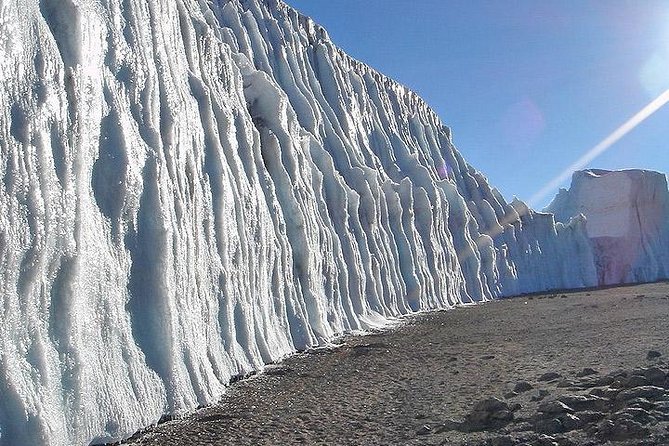
Kilimanjaro’s Machame Route earns its Whiskey Route nickname with a demanding but well-paced climb through four distinct mountain zones. You begin in humid rainforest, cross the open Shira Plateau, spend time above 15,000 feet for acclimatization, and make the midnight push to Uhuru Peak.
I like the route’s smart high-and-low rhythm, especially the climb to Lava Tower followed by a descent to Barranco Camp. I also like the private setup and the personal attention from Paul and his team, who can handle special diets such as gluten-free meals. The main caution is simple: this is a serious physical challenge, not a casual walk, and the summit day alone can take up to 14 hours.
Key details worth knowing
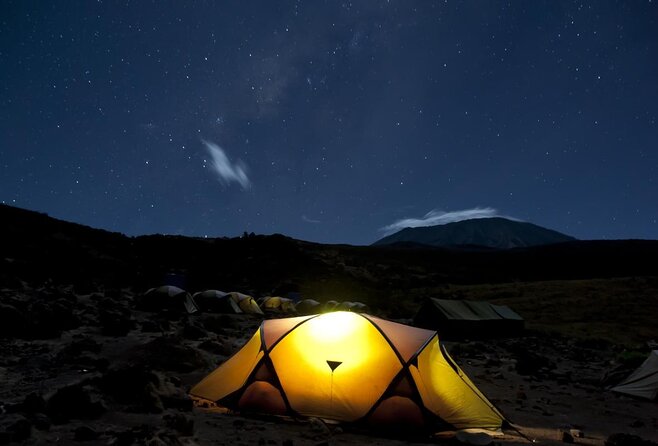
- The Barranco Wall is steep but non-technical: You need confidence and steady footing, but no climbing equipment or technical climbing skills are listed.
- Day three helps your body adjust: You climb to 15,190 feet at Lava Tower, then sleep much lower at Barranco Camp.
- The summit begins around midnight: Expect cold, wind, darkness, short rest stops, and a long descent after reaching Uhuru Peak.
- You finish on a different trail: The route goes up through Machame and returns through Mweka, giving you changing scenery rather than a simple backtrack.
- This is a private activity: Only your group participates, with pickup offered and mobile ticketing available.
- The price is $2,564.11 per person: Its value rests mainly in the seven-day schedule, private guiding, park access, camp support, meals, and the care of the mountain team, though you should confirm exact inclusions before paying.
Why the seven-day Machame Route works
Machame is often chosen for its scenery and its gradual approach to altitude. This seven-day version gives you several days to gain height before the summit attempt, rather than racing upward on a shorter schedule.
You start at 5,380 feet and finish at 19,341 feet at Uhuru Peak. That change is enormous. The route helps by making you climb high and then sleep lower on day three, followed by shorter acclimatization days around Barranco and Karanga.
The private format matters here. You are not tied to the pace of a large mixed group. Your guide can watch how you are coping, set a practical walking rhythm, and offer direct advice when the trail becomes tiring. Paul is the named guide connected with the experience, and past climbs with him include returning climbers and a person who needed gluten-free food.
Still, do not confuse private service with an easy climb. You need moderate physical fitness, and the summit attempt is a hard test of endurance. The company describes an experienced team of guides and cooks, but the supplied details do not specify the exact guide-to-climber ratio, equipment package, or full list of included meals. Ask for those details before booking.
More Machame Route Climbs in Arusha
- 7-Day Machame Kilimanjaro Summit Tour from Arusha
★ 5.0 · 125 reviews - 6 Days: Hiking Kilimanjaro via Machame Route
★ 5.0 · 24 reviews - 6-Day Guided Tour in Machame Route Mt Kilimanjaro
★ 5.0 · 17 reviews
Day one: Machame Gate to Machame Camp
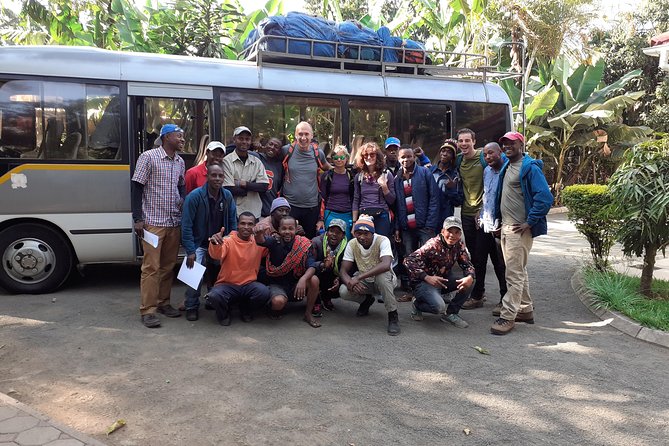
Your first transfer from Moshi to Machame Gate takes about 50 minutes and passes through Machame village on Kilimanjaro’s lower slopes. Pickup is offered, but the exact pickup point should be confirmed with the operator if you are staying in Arusha rather than Moshi.
The hike begins at 5,380 feet and climbs to Machame Camp at 9,350 feet. The distance is about 11 kilometers, or seven miles, and the walking time is listed as five to seven hours.
This is a classic rainforest start. The trail winds up a ridge through dense vegetation, and the setting feels very different from the dry high country you will reach later. The first day is not the highest or longest, but it can feel slow because of mud, humidity, and the steady uphill grade.
Keep your rain layer close. The itinerary identifies this zone as rainforest, and the final descent through forest is also described as wet and muddy. Your day may take about 12 hours in total when transfers, arrival formalities, walking, and camp routines are counted.
Day two: Shira Plateau and open moorland
The second day leaves the forest behind. You climb from Machame Camp to Shira 2 Camp, rising from 9,350 to 12,500 feet over roughly five kilometers.
The walking time is four to six hours, but this is still a proper uphill day. The trail reaches a steep, rocky ridge before opening into heather and moorland on the Shira Plateau. You then cross a large river gorge on the way to camp.
I like this stage because the mountain begins to feel broad and exposed. The close, damp forest gives way to open ground and longer views. You also gain more than 3,000 feet, so the short distance should not trick you into treating it as an easy stroll.
Shira 2 is important as a staging point for the high-altitude day ahead. Move slowly, drink as directed by your guide, and use the afternoon to rest. The supplied schedule allows about eight hours for the day, which leaves time for camp routines rather than forcing you to hurry.
Day three: Lava Tower, then the Senecio Forest
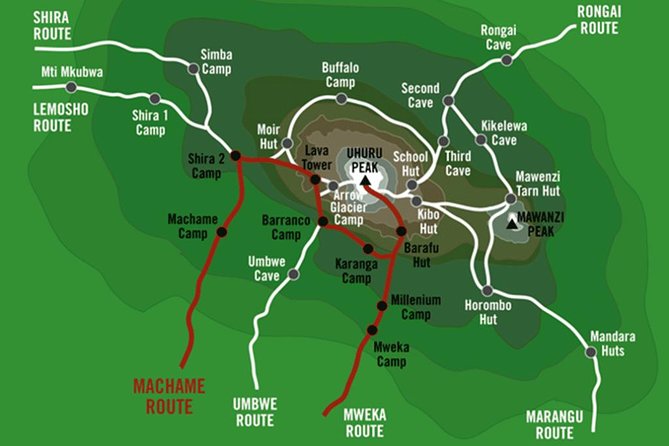
Day three is the route’s key acclimatization day. You climb from Shira 2 at 12,500 feet to Lava Tower at 15,190 feet, covering about seven kilometers in four to five hours.
Lava Tower is a 300-foot volcanic rock formation and one of the most memorable features on this section. The terrain is classified as alpine desert, with rock, sparse plant life, and a much colder feel than the forest below.
After reaching Lava Tower, you descend three kilometers to Barranco Camp at 13,044 feet. That descent takes another two to three hours. You finish the day at nearly the same height where you began, but the time spent above 15,000 feet gives your body a useful test before the summit.
The route passes through the unusual Senecio Forest on the way to Barranco. These giant plants make the otherwise stark high country feel strange and distinctive. You may be tired by the time you reach camp, but this climb-high, sleep-lower pattern is one of the best features of the seven-day plan.
The schedule lists about six hours of hiking, though the full day can feel longer once breaks and camp activity are included. This is the point where altitude may begin to affect you. A private guide can give you direct advice, but you still need to report symptoms honestly and follow the pace set by the mountain team.
Same country, a completely different kind of safari:
- Balloon Safari & Bush Breakfast in Serengeti – Miracle Experience
★ 5.0 · 1,646 reviews - Tanzania Classic – 7 Days
★ 5.0 · 1,151 reviews - 4 Days Group Camping Safari
★ 5.0 · 1,101 reviews - 5 Days Group Camping Safari
★ 5.0 · 730 reviews
Day four: Climbing the Barranco Wall
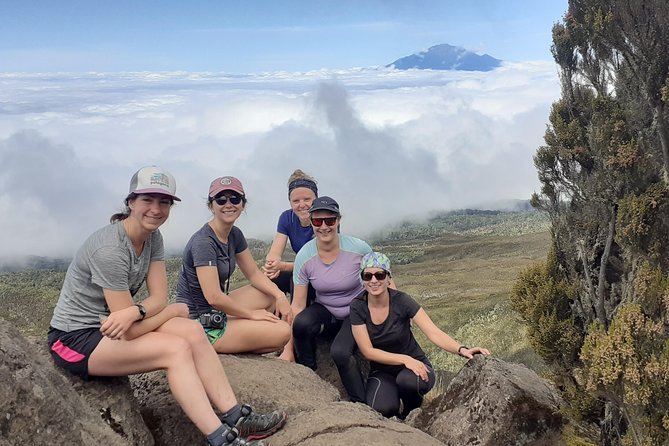
The route from Barranco Camp to Karanga Camp covers about five kilometers and takes four to five hours. The camps are nearly the same height, with Barranco at 13,044 feet and Karanga at 13,106 feet.
The challenge is the Barranco Wall. You first descend into a ravine, then climb the nearly 900-foot cliff. It is described as steep but non-technical, so the issue is effort and footing rather than ropes or specialized climbing.
This is a short day by distance, but it is not effortless. The trail crosses hills and valleys after the wall, then drops sharply into Karanga Valley before climbing again to camp. Those repeated ups and downs can be more tiring than a steady grade.
The shorter schedule serves acclimatization. Use it to eat, drink, sort your pack, and rest your legs. The alpine desert setting is exposed and rocky, with little shelter compared with the first day. The total day is listed at about six hours.
Day five: Karanga to Barafu Camp
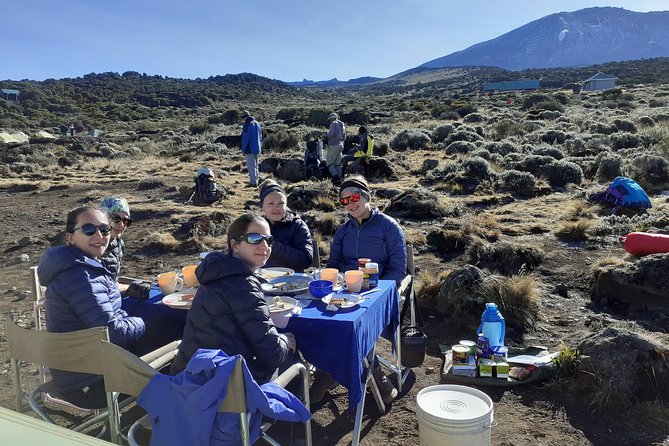
Day five takes you from Karanga Camp at 13,106 feet to Barafu Camp at 15,331 feet. It is only about four kilometers, with four to five hours of hiking, but altitude makes the short distance count.
You reach the junction with the Mweka Trail and continue through rocky ground toward Barafu Hut. At Barafu, you have completed the Southern Circuit, which gives views of the summit from several angles. Mawenzi and Kibo, the two main peaks visible from this position, frame the high mountain setting.
This is not a day for extra wandering. You need to arrive, eat, organize your summit clothing, and rest. Dinner is scheduled early because the summit departure comes around midnight.
Barafu Camp is the practical launch point for the hardest part of the climb. The itinerary lists about eight hours for the day, including the walking and time at camp. Because the summit starts so soon after arrival, listen closely to your guide’s instructions about what to carry and what to leave behind.
Day six: Uhuru Peak and the long descent
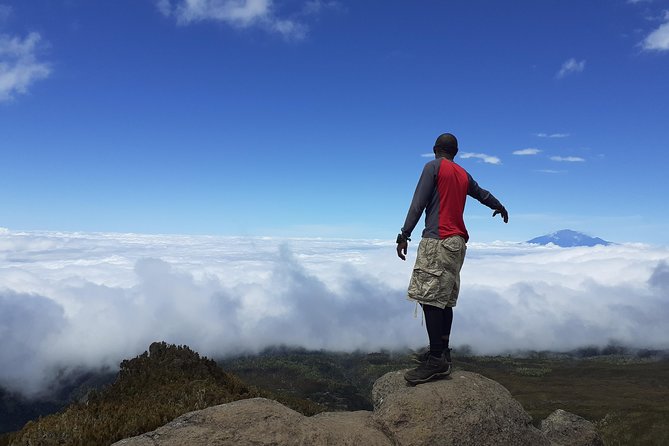
Summit day starts around midnight. You climb from Barafu Camp at 15,331 feet to Uhuru Peak at 19,341 feet, a five-kilometer ascent that takes about seven to eight hours.
The darkness hides much of the route, but it also keeps your attention on the next step. Wind and cold can be severe at this height. The pace is slow, with frequent short breaks rather than long stops that might cool your body too much.
Near Stella Point, at about 18,900 feet, you may see sunrise over Mawenzi. This is one of the great rewards of the route, but reaching Stella Point does not always mean the work is over. You still need to continue along the crater rim to Uhuru Peak.
At 19,341 feet, Uhuru is the highest point on Kilimanjaro. Take your summit photographs quickly, follow your guide’s instructions, and do not linger longer than your condition allows. The cold, low oxygen, and fatigue can build fast.
The descent goes all the way to Mweka Camp at 10,065 feet. It covers about 12 kilometers and takes four to six hours. That means summit day can involve roughly 17 kilometers of walking and up to 14 hours of hiking.
This is the biggest drawback of the itinerary. Even if the climb to the top goes well, the descent is long and tiring. Your knees and feet may suffer, and you still need enough energy to reach camp safely. The reward is a rapid return to a lower altitude and the rainforest zone.
Day seven: Mweka Gate and the return to town
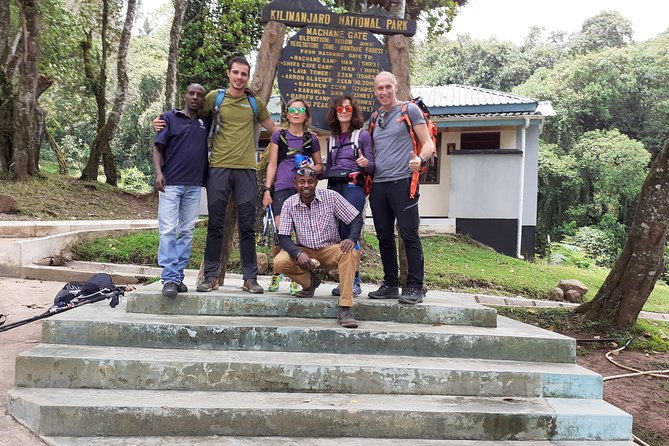
The final hike descends from Mweka Camp at 10,065 feet to Mweka Gate at 5,380 feet. The distance is about 10 kilometers, with three to four hours of walking through rainforest.
The trail can be wet and muddy at these lower elevations. Trekking poles, careful foot placement, and a waterproof outer layer are useful considerations, though the tour information does not state whether poles or other gear are provided.
At Mweka Gate, you collect your summit certificate. You then continue for about an hour to Mweka Village, where a vehicle meets you for the drive back to your hotel in Moshi or Arusha.
The final transfer is a welcome convenience after seven days on the mountain. Confirm in advance which town your return transfer covers, especially if your accommodation is outside Moshi or Arusha.
What the private team adds
The strongest part of this experience is the human support. Paul and his team are described as friendly, attentive, and able to make the climb feel more manageable without pretending it is easy.
That support is especially useful on the long summit night. A good guide helps you keep a steady pace, take sensible breaks, and stay focused when the trail feels endless. The cooking team also matters because food becomes a major part of your energy plan after several days at altitude.
A gluten-free diet can be accommodated, based on the information provided. If you have allergies, religious food requirements, or other restrictions, send them before the climb and confirm how meals will be handled.
The private structure also suits a group of friends or family members who want to move together. Only your group participates, so you are not placed with unknown climbers. The tradeoff is that a private trip depends heavily on the operator’s planning, communication, and staffing. Ask about emergency procedures, porter arrangements, sleeping equipment, park fees, meals, and the number of staff assigned to your group.
Is $2,564.11 a fair price?
The listed cost is $2,564.11 per person. That is a large sum, but seven days on Kilimanjaro involves more than trail time. You are paying for a private mountain operation, park access, guiding, cooking, camp support, transport at the start and finish, and the labor needed to move and manage supplies.
The supplied details do not provide a full inclusion list, so I would not judge the price on the headline alone. Before booking, ask in writing whether airport transfers, hotel nights, park fees, tents, sleeping bags, meals, drinking water, porter tips, and rescue coverage are included.
The seven-day schedule improves the value for people who want more time to adjust to altitude. A shorter climb may cost less, but the extra days here provide a gentler progression and two useful acclimatization stages before the summit.
Who should book this climb?
This climb suits you if you want:
- A private group rather than a shared departure
- A scenic route with rainforest, moorland, volcanic rock, and high alpine terrain
- Seven days on the mountain for a more gradual altitude schedule
- Direct support from a guide and cook team
- A route that reaches Uhuru Peak and returns through a different trail
- Pickup and return transport connected with Moshi or Arusha
It is less suitable if you want a soft adventure, dislike cold nights, or cannot manage long uphill and downhill days. You should also be comfortable with an overnight summit start and the possibility of wet, muddy forest trails.
The experience requires moderate physical fitness, but preparation should go beyond a few casual walks. The itinerary includes steep sections, high altitude, rocky ground, and a very long summit day. Your guide can support you, but no operator can remove the physical demands of Kilimanjaro.
Booking confirmation is received at the time of booking. The activity is listed as available daily from 8:00 AM to 11:30 PM, and it is near public transportation. The cancellation terms are strict: cancel at least six full days before the start for a full refund, two to six days before for a 50 percent refund, and within two days for no refund. Poor weather or failure to meet the minimum number of participants may lead to a different date or a full refund.
Should you book it?
I would choose this Machame climb if you value private guiding, a seven-day pace, and strong personal support more than a bargain price. The route has a good structure, with Lava Tower for acclimatization, a shorter Barranco day, and a separate descent through Mweka.
Book only after confirming the practical details that are not spelled out, especially equipment, meals, transfers, porter support, and safety procedures. If Paul and the team can answer those questions clearly, this is a serious and appealing way to attempt Kilimanjaro. If you are not ready for a midnight start and a summit day of up to 14 hours, choose a different type of Tanzania trip.
FAQ
How long is the Kilimanjaro Machame Route climb?
The climb lasts approximately seven days, from Machame Gate to Mweka Gate, followed by transport back to a hotel in Moshi or Arusha.
What is the highest point reached?
The highest point is Uhuru Peak at 19,341 feet.
How difficult is this activity?
A moderate level of physical fitness is required. The route includes steep rocky sections, the Barranco Wall, high-altitude walking, and a summit day that can take up to 14 hours.
When does the summit climb begin?
The summit push begins very early, around midnight, from Barafu Camp.
Is the tour private?
Yes. Only your group participates in this private activity.
Is pickup available?
Pickup is offered. The return vehicle meets the group at Mweka Village and drives back to a hotel in Moshi or Arusha.
Can the team provide gluten-free food?
Yes, gluten-free meals can be accommodated. Tell the operator about your dietary needs before the climb.
More 7-Day Experiences in Arusha
- 7-Day Premium Luxury Tanzania Safari All-Inclusive
★ 5.0 · 426 reviews - Group Safari 7 Days in Tanzania’s Main Parks
★ 5.0 · 240 reviews - 7 Days Tanganyika Wilderness Safari
★ 5.0 · 159 reviews - 7 days great migration safari
★ 5.0 · 77 reviews
Just added around Arusha
- 8 Days Serengeti Migration safari★ 5.0 · 11 reviews
- tarangire, ngorongoro & lake manyara park 3 days private tour★ 5.0 · 11 reviews
- tarangire & ngorongoro 2 days tour★ 5.0 · 14 reviews
- Mt. Kilimanjaro: Shira plateau to Cathedral point 3872m Day hike★ 5.0 · 7 reviews
- serengeti, ngorongoro & tarangire 4 days private tour★ 5.0 · 18 reviews
- serengeti & ngorongoro 3 days private tour★ 5.0 · 15 reviews
- 2 Days Tanzania Midrange Group Join Safari★ 5.0 · 7 reviews
- climb the KILIMANJARO via Lemosho route★ 5.0 · 4 reviews
Machame Route Climbs, compared.



Climbing Kilimanjaro through 7 days Machame Route
Read our review →
7-Day Machame Kilimanjaro Summit Tour from Arusha
Read our review →
7 Days Kilimanjaro via Machame route affordable price
Read our review →
#1. Best Kilimanjaro Day hike Tour-Machame Route-ISMANI
Read our review →

The Best of Machame Route in 6 Days: Your World’s Summit Guide
Read our review →Browse the lists this tour appears in