
Reviewed · 7-DAY EXPERIENCES
7 days great migration safari
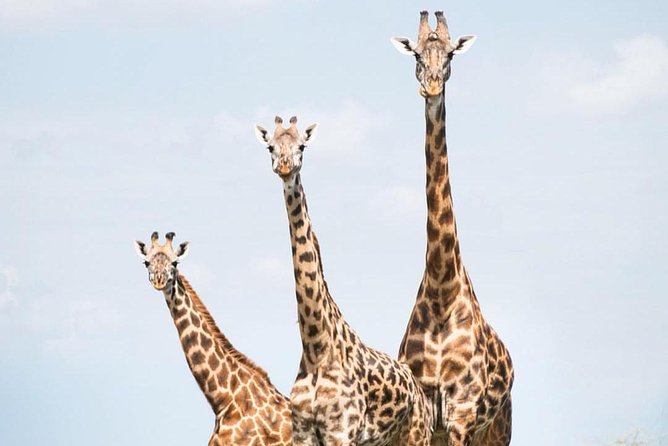
Lake Natron gives this safari its unusual edge. Instead of heading straight for the famous parks, you first follow the Rift Valley Escarpment through Maasai country to a soda lake where flamingos may turn the shoreline pink. I like that you also reach Northern Serengeti, an area with fewer vehicles and strong chances for resident lions, leopards, elephants, buffaloes, giraffes, and zebra. I also like the private format, which lets your group set the pace with a guide such as Estomih, Isaac, Christian, Jonathan, or Simon, subject to availability.
The main consideration is the amount of time spent on rough, winding roads. This is a full safari week, not a relaxed lodge holiday, and the route covers long distances between remote areas. The migration is seasonal, too, so you should treat a major river crossing or a particular animal sighting as a possibility, not a promise.
Key points about this seven-day safari
- Lake Natron adds a rare northern detour: Walk beside a hyper-alkaline lake, look for breeding flamingos, and see Ol’doinyo Lengai, sacred to the Maasai, in the distance.
- Northern Serengeti receives two nights: Staying at Lobo gives you more time in a quieter part of the park, with good resident wildlife and seasonal migration activity.
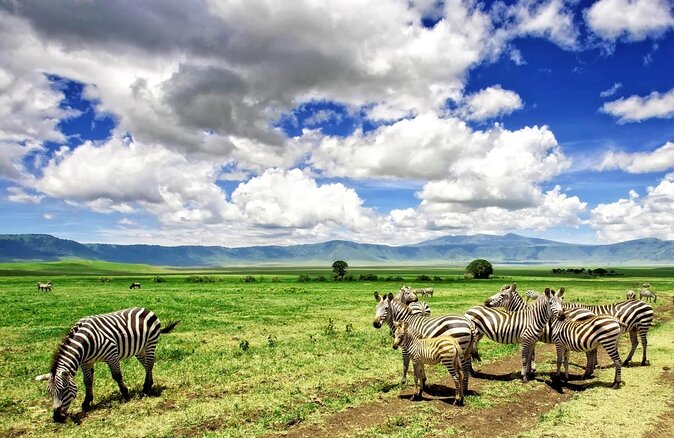
- The itinerary includes both Serengeti and Ngorongoro: You get open plains, kopjes, woodland, crater habitats, and dependable water sources in one trip.
- Lake Eyasi brings cultural variety: The Hadzabe and Datoga communities offer a different kind of encounter from a standard game drive.
- The trip is private: Only your group participates, with private transportation and a professional driver-guide.
- The price covers most major trip costs: Accommodation, meals, park fees, activities, airport transfers, binoculars, and camping equipment are included.
Why Lake Natron is the right opening
Many northern Tanzania safaris begin with the big-name parks. This one takes the long way around, heading first toward Lake Natron along the eastern side of the Rift Valley. That choice gives you a more varied first day and a sense of rural Tanzania before the game-drive schedule begins.
After breakfast, you leave your Arusha-area hotel or lodge and travel through typical Maasai country. The road follows the Rift Valley Escarpment, with long views and increasingly remote surroundings. Ol’doinyo Lengai may appear ahead, its name often translated as Mountain of God. It is sacred to the Maasai and gives the route a strong sense of place.
At Ngare Sero, a small Maasai village, you take a guided bush walk toward the lake. Lake Natron is a soda lake with highly alkaline water, and its shallow margins can support large numbers of flamingos during the breeding season. The sight of a pink shoreline beneath the escarpment is one of the most distinctive scenes on this route.
You may also choose to walk to a nearby waterfall for a refreshing bath. That alternative matters because Lake Natron itself is not a swimming stop. Ask your guide how the day will be arranged, since the walk, lake visit, and waterfall option depend on local conditions and timing.
The first night is at Lake Natron Tented Camp. Breakfast, a picnic lunch, and dinner are included. Expect this day to feel more like a remote nature excursion than a polished park circuit. It is a strong start for you if scenery, birds, local culture, and unusual places matter as much as large mammals.
A few more Arusha trips to weigh up
- Balloon Safari & Bush Breakfast in Serengeti – Miracle Experience
★ 5.0 · 1,646 reviews - 4 Days Group Camping Safari
★ 5.0 · 1,101 reviews - 5 Days Group Camping Safari
★ 5.0 · 730 reviews
Two nights in Northern Serengeti at Lobo
Day two is a transfer day, but it is far from dull. The vehicle climbs through a series of winding turns, and you get a final view of Lake Natron before leaving the Rift Valley behind. The road continues through Wasso toward Northern Serengeti and enters the park around midday at Klein’s Gate.
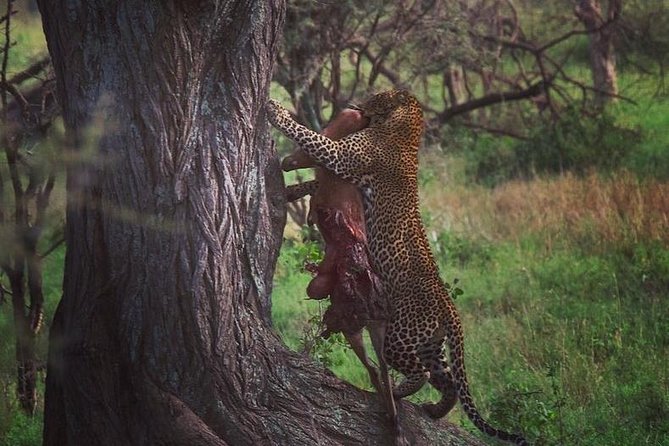
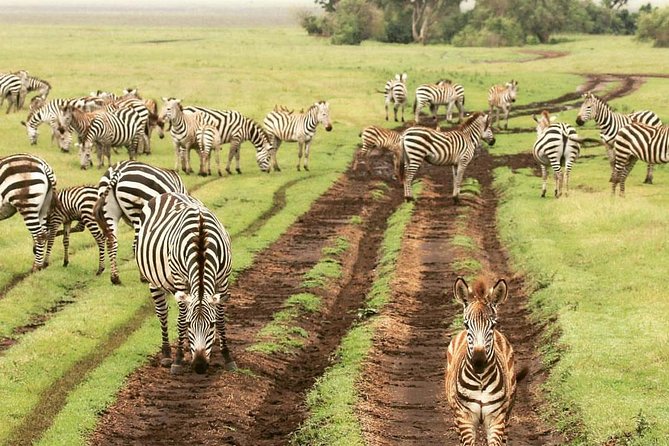
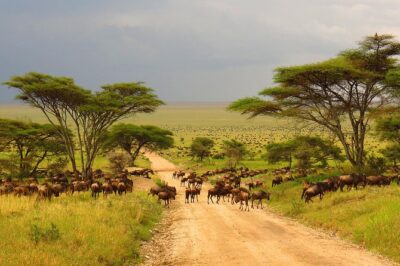
Your first game drive takes place in the Lobo area. Lobo is known for permanent springs, open grassland, and rocky kopjes. Those water sources help support animals throughout the year, so the area is not dependent only on the migration. You might find lions, leopards, buffaloes, elephants, giraffes, and zebra here, along with other resident species.
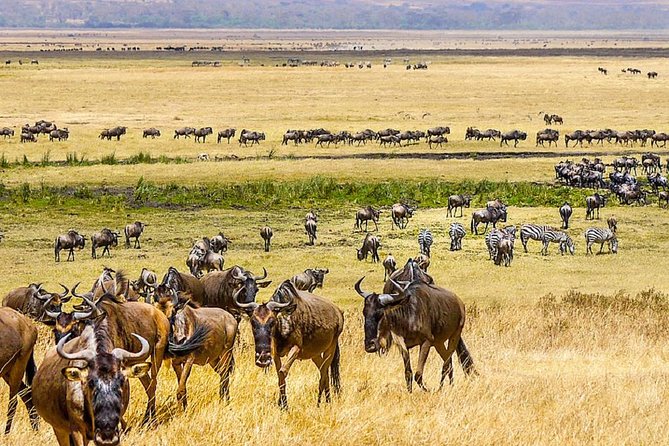
The migration timing needs careful reading. The schedule highlights October through December, when large wildebeest herds may be moving back toward the southern plains. It also refers to the dry season, when Northern Serengeti can hold large herds of wildebeest and zebra. Conditions shift from year to year, so ask the operator for a current wildlife update before you book.
You spend the night at Lobo Wildlife Lodge, with breakfast, a picnic lunch, and dinner provided. The two-night stay is a sensible feature. It avoids packing up every morning and gives your guide a full day to work the area instead of treating Northern Serengeti as a quick pass-through.
Day three is devoted to Northern Serengeti. This is where the itinerary gains breathing room. The area is described as less explored than the central parts of the park, and its open country can feel more remote than the Seronera Valley later in the trip.
Resident wildlife includes lion, elephant, hippo, giraffe, crocodile, and the uncommon oribi antelope. During the right part of the dry season, migratory wildebeest and zebra may provide the main spectacle. You could also spend much of the day watching smaller scenes, such as a herd moving across open grass or a predator resting near water.
The trade-off is distance. Northern Serengeti is not close to Arusha, Ngorongoro, or the central park. The reward is a less concentrated safari setting, but you should be ready for extended driving and basic remote-area logistics.
A full day in Central Serengeti’s Seronera Valley
Day four shifts toward Central Serengeti. After a more relaxed morning drive, you spend the day in the Seronera Valley, one of the strongest all-round wildlife areas on the route. The valley offers game in different seasons, so this part of the trip is useful even when the migration is elsewhere.
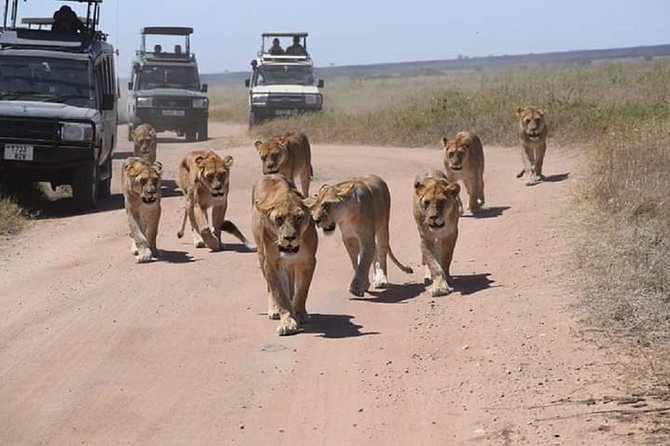
Predators are a major draw. You might look for cheetahs, hyenas, leopards, and lions. The area also supports buffaloes, giraffes, hippos, impalas, topi, warthogs, and zebra. Permanent water helps explain the variety, while the mix of open ground and river habitats gives your guide several types of country to search.
This is a good day to pay attention to the guide’s field knowledge. For example, Grant’s gazelles and Thomson’s gazelles both have white rumps, but the Thomson’s gazelle has a thin black stripe below the lighter brown band and an entirely black tail. Small distinctions like this turn a drive into a lesson rather than a simple animal checklist.
The day is listed at about 12 hours, which tells you something important about safari pacing. You may leave early, stop for a picnic lunch, and return later after hours on uneven roads. A private vehicle helps because you can ask for more time at an interesting sighting, though park rules and daylight still shape the day.
From Serengeti plains to Ngorongoro rim
Day five begins with another Serengeti game drive before you head toward the Ngorongoro Conservation Area. The change is striking. The open Serengeti gives way to higher ground and the crater rim, with cooler air and broad views into the caldera.
Ngorongoro Conservation Area covers 8,292 square kilometres and contains nine craters. It is not simply another national park. Maasai communities continue to live within the conservation area, and the management model allows pastoral life alongside wildlife protection. Your guide can explain how this differs from Serengeti National Park.
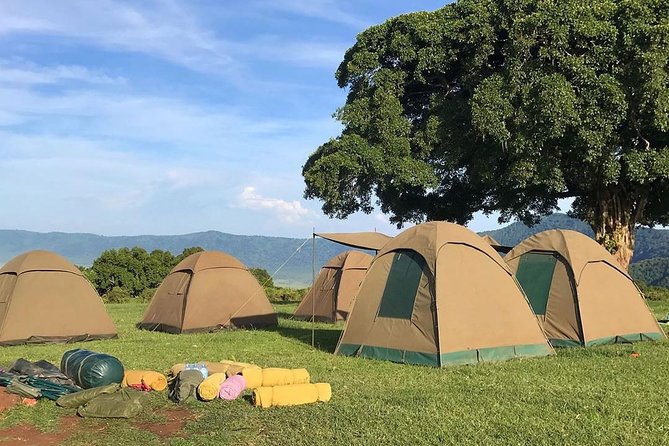
Your accommodation sits on or near the crater rim, giving you a view into the crater. This is one of the trip’s most memorable lodging settings, although the information provided does not name the property. Since accommodation standards can vary across a seven-day safari, ask for the exact lodge names and room arrangements before paying.
Day five is also another long day, listed at about 12 hours. You receive breakfast, a picnic lunch, and dinner, and the Ngorongoro admission fee is included. The route is efficient, but it leaves little spare time for an unscheduled stop.
Same country, a completely different kind of safari:
- Tanzania Classic – 7 Days
★ 5.0 · 1,151 reviews - Materuni Waterfalls, coffee tour & Kikuletwa Hot Springs
★ 5.0 · 643 reviews - 3 Days Serengeti & Ngorongoro Group Camping Safari
★ 5.0 · 574 reviews - 7-Day Premium Luxury Tanzania Safari All-Inclusive
★ 5.0 · 426 reviews
Descending into Ngorongoro Crater
The itinerary places the crater descent on day six. After breakfast, you drive along the rim to Seneto Gate on the western side, then descend by an adventurous route to the crater floor. The first view from above is a major moment. From the floor, the crater walls create a contained setting where animals can be easier to find than in the wide Serengeti.
Ngorongoro has reliable water, which helps support a large animal population. Wildebeest and zebra numbers often rise in the dry season, while elands, elephants, and waterbucks may be more numerous in wetter months. Animals still move in and out, so the crater is not a sealed zoo and sightings remain unpredictable.
The stated target is the Big Five: buffalo, elephant, leopard, lion, and black rhinoceros. The crater is one of only two places in Tanzania where black rhinoceros may still be seen, making it especially important for wildlife watchers. A sighting is never guaranteed, but the chance adds real weight to this day.
The listing labels day six Lake Eyasi, while the detailed plan describes a full Ngorongoro Crater visit. Day seven then covers Lake Eyasi and the return to Arusha. I would confirm this point with the operator before booking, along with the exact accommodation on the crater rim and the timing of the final transfer.
Lake Eyasi and a different side of Tanzania
On the final day, the route heads to Lake Eyasi in the southwest corner of the Ngorongoro Conservation Area. The lake is fed by the Sibiti and Baray Rivers and offers a different setting from the game-drive parks. It is another soda lake, but the focus here is human culture as well as scenery.
The Hadzabe and Datoga communities live around Lake Eyasi. The Hadzabe maintain a hunting and gathering tradition, while the Datoga are pastoralists. Village visits may include time in family homes, traditional dances, and an introduction to daily life. The description also notes that invitations may happen spontaneously, so you should approach these encounters with patience and respect rather than treating them as a staged show.
This is an important balance to the safari. You spend several days looking for animals from a vehicle, then finish with a closer look at communities whose lives have developed around this dry region. It is also the part of the trip where your guide’s judgment and the operator’s local relationships matter most.
The final day is listed at about nine hours, ending in Arusha. Airport transfer is included, and pickup can be arranged from the airport on day one or the day before the tour. Still, do not schedule a tight international flight without confirming the actual drop-off time. The safari includes a roundtrip airport transfer, but the supplied details do not promise a particular airport or arrival buffer.
What the private format changes
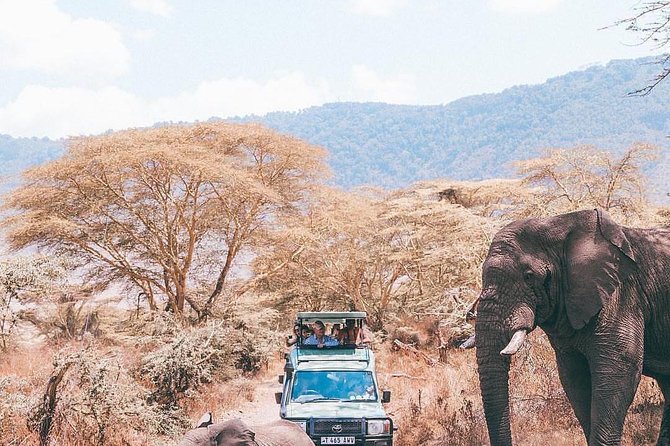
This is a private tour, so only your group participates. That is a meaningful advantage on a safari. You can discuss how long to stay at a sighting, ask questions without holding up a busload of strangers, and adjust the rhythm within the limits of park rules and the planned route.
The driver-guide is central to the experience. Names connected with this operator include Estomih, Isaac, Christian, Jonathan, Simon, Innocent, and Chady. Estomih is praised for explaining wildlife and plants with enthusiasm, while Isaac is associated with careful animal spotting. Christian is noted for adapting to a family group and searching for elusive animals, and Simon is known for wildlife-finding skill and photography help. Ask who is assigned to your departure, since a specific guide is not guaranteed in the information provided.
The vehicle is privately provided, and binoculars are included. That saves you from bringing your own pair, though keen photographers may still want camera equipment suited to distant animals. Camping equipment is also listed, even though the named overnight stays are lodges and a tented camp. Ask how that equipment fits your particular departure.
Meals, lodging, and the real value of $4,514
The price is $4,514 per person. That is a serious amount, but it covers many of the costs that can make a Tanzanian safari expensive: private transportation, a professional driver-guide, park and conservation fees, accommodation, activities, airport transfers, binoculars, and meals.
You receive seven breakfasts, seven lunches, and six dinners. Lunches are listed as picnic lunches on the first six days, which is normal for long game-drive days but worth knowing if you prefer leisurely restaurant meals. Dinner is included on the first six nights, while the final return day does not list dinner.
The value depends heavily on group size. Since the tour is private, a larger family or group of friends can spread the vehicle and guide cost across more people, while a solo guest or couple may find the per-person rate harder to justify. Group discounts are offered, so ask for the exact price at your party size.
Accommodation is included unless an upgrade is clearly marked optional. The named properties are Lake Natron Tented Camp and Lobo Wildlife Lodge, plus an unnamed crater-rim accommodation. Past trip descriptions associated with this operator point to lodging that is generally comfortable, with some properties better than others. I would ask for the full hotel list, room type, and whether any extra charge applies before you commit.
International flights, tips, personal items, and onboard restroom facilities are not included. The lack of a restroom on the vehicle is a practical concern on long road days. Plan to use facilities at lodges, gates, and picnic stops when available, and ask your operator about the vehicle setup.
Who will appreciate this route most
I would recommend this safari to you if you want more than the standard Arusha, Serengeti, and Ngorongoro circuit. Lake Natron adds birds, geology, a bush walk, and Maasai-country scenery. Lake Eyasi adds contact with Hadzabe and Datoga communities. Together, they make the trip broader than a pure wildlife itinerary.
It also suits you if you value privacy and can handle long driving days. The route is active, with two days listed at about 12 hours and several remote transfers. Most people can participate, according to the tour details, but anyone with mobility or medical concerns should discuss the walks, crater descent, and road conditions before booking.
Families and multigenerational groups may find the private setup particularly useful. The included airport transfer and meals reduce planning work, while a flexible guide can adjust explanations and stops for different ages. Older visitors can certainly consider it, but the long vehicle days deserve an honest conversation before departure.
Booking details worth checking first
Confirmation is provided at booking. Pickup is offered, and the listed start time is 7:30 am. Airport pickup is included on the first day or the day before the safari, which is helpful if you are arriving from an overnight flight.
The cancellation policy allows a full refund if you cancel at least 24 hours before the local start time. Changes made within 24 hours are not accepted, and late cancellations are not refunded. Poor weather or failure to meet the minimum number of participants can lead to a new date, a different experience, or a full refund.
Before you pay, I would confirm four items: the exact guide, the complete accommodation list, the day six and day seven routing, and the expected airport drop-off time. Those answers will tell you more about the trip’s practical fit than a general promise of migration sightings.
Should you book this safari?
Book it if you want a private, wildlife-heavy week with two less usual additions: Lake Natron and Lake Eyasi. The route gives you a good spread of habitats, two nights in Northern Serengeti, a full Seronera day, a Ngorongoro Crater descent, and cultural visits at the end. At $4,514 per person, it makes the most sense for a private group that values included transport, fees, meals, and personal guiding.
Choose another plan if you want short transfers, luxury-only accommodation, or a guaranteed migration crossing. No safari can control animal movement, and this route asks you to spend long hours on the road. For an adventurous group that wants the famous parks plus a few less familiar corners of northern Tanzania, it is a strong and unusually varied seven-day choice.
FAQ
Where does the safari start?
The safari starts in Arusha, with a listed start time of 7:30 am. Pickup is offered from your hotel or lodge, and airport pickup is included on day one or the day before the tour.
Is this a private safari?
Yes. Only your group participates, and private transportation is included.
Which places does the safari visit?
The route includes Lake Natron, Northern Serengeti, Central Serengeti, Ngorongoro Crater, Lake Eyasi, and Arusha.
Are meals included?
Yes. The package includes seven breakfasts, seven lunches, and six dinners. Lunch is listed as a picnic lunch on the first six days.
Is accommodation included?
Yes. All accommodation mentioned in the package is included unless it is clearly labeled as an optional upgrade. Named properties include Lake Natron Tented Camp and Lobo Wildlife Lodge.
Are airport transfers included?
Yes. Roundtrip airport transfer is included, with pickup available on the first day or the day before the safari.
What is included in the $4,514 price?
The price includes private transportation, a professional driver-guide, accommodation, listed activities, park and conservation fees, all taxes, binoculars, camping equipment, meals, and roundtrip airport transfer. International flights, tips, personal items, and a restroom on board are not included.
Just added around Arusha
- 8 Days Serengeti Migration safari★ 5.0 · 11 reviews
- tarangire, ngorongoro & lake manyara park 3 days private tour★ 5.0 · 11 reviews
- tarangire & ngorongoro 2 days tour★ 5.0 · 14 reviews
- Mt. Kilimanjaro: Shira plateau to Cathedral point 3872m Day hike★ 5.0 · 7 reviews
- serengeti, ngorongoro & tarangire 4 days private tour★ 5.0 · 18 reviews
- serengeti & ngorongoro 3 days private tour★ 5.0 · 15 reviews
- 2 Days Tanzania Midrange Group Join Safari★ 5.0 · 7 reviews
- climb the KILIMANJARO via Lemosho route★ 5.0 · 4 reviews
7-Day Experiences, compared.

7-Day Premium Luxury Tanzania Safari All-Inclusive
Read our review →
Group Safari 7 Days in Tanzania’s Main Parks
Read our review →

Climbing Kilimanjaro through 7 days Machame Route
Read our review →
7-Day Machame Kilimanjaro Summit Tour from Arusha
Read our review →Browse the lists this tour appears in