
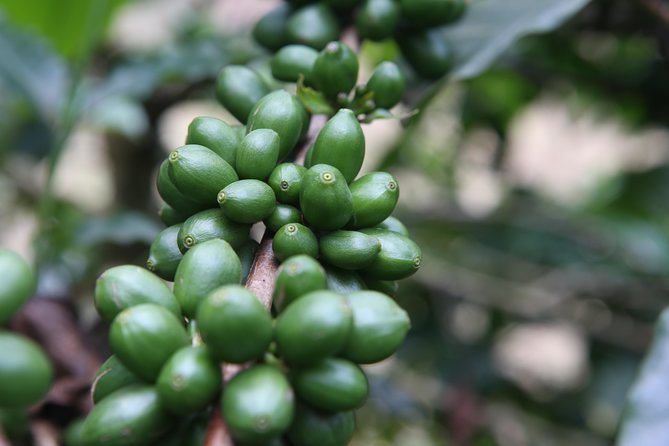
Reviewed · KILIMANJARO COFFEE FARM TOURS
Coffee walk day trip
The most interesting part of this Arusha day trip is the walk from the village center to the coffee farm. You pass small farms, schools, and churches before seeing how coffee is grown, processed, roasted, and served. I like the direct look at small-scale farming and the fact that lunch is made by local villagers. I also like that the private format lets your group set the pace and ask plenty of questions.
The main consideration is the walking. The route to the farm and roaster takes time, and the full experience lasts about six and a half hours. If you want a quick plantation visit, this will feel long. If you enjoy seeing ordinary village life as part of the tour, the slower pace is the point.
Key points at a glance
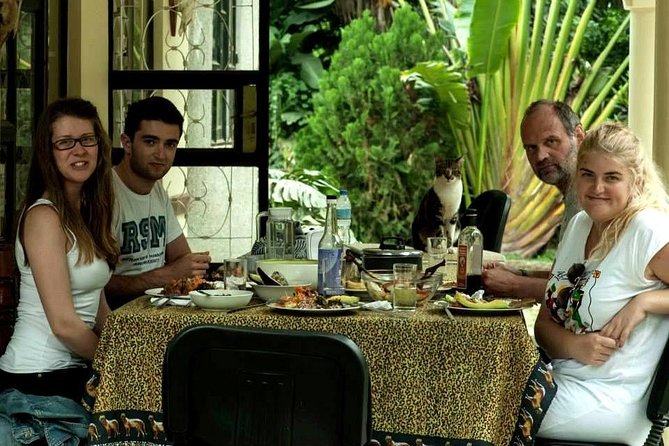
- A village-to-farm walk: Begin about 40 minutes from Arusha town and walk through the surrounding community before reaching the coffee fields.
- Organic and Fairtrade coffee: Compare traditional and organic production and learn how coffee supports local livelihoods.
- A guide with long experience: Samwel, also identified as Samuel in tour feedback, has worked with the coffee walk for more than 10 years.
- Lunch in the garden: Expect chapati, roasted banana, rice, ugali, goat sauce, spinach, salad, seasonal fruit, banana cake, and coffee.
- Coffee to take home: A bag of coffee is included, with more available to buy.
- Private, not crowded: Only your group takes part, with pickup offered and group discounts available.
From Arusha town to a coffee village

The coffee village is about 40 minutes from Arusha town, making this an easy addition to a stay in Arusha. Pickup is offered, and the start time is 9:00 a.m. That morning departure gives you a full day without pushing the activity into the evening.
The setting is described as evergreen and about 1,400 meters above sea level. That gives the outing a cooler highland feel than the heat you may associate with lower parts of Tanzania, though the tour still involves a fair amount of walking.
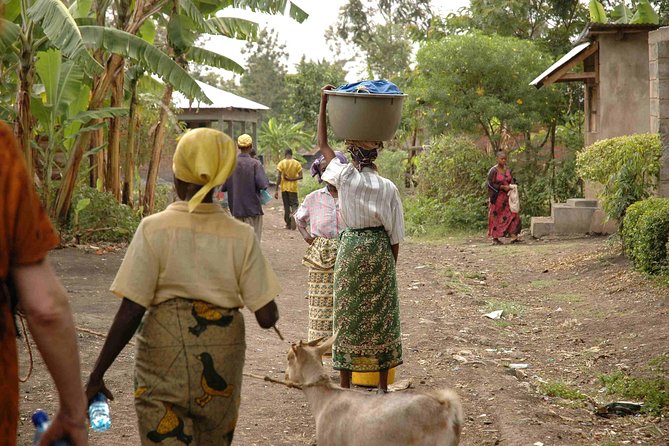
You begin near the village center rather than stepping straight off a vehicle into a polished farm attraction. That matters. The route first shows you the wider setting in which coffee is grown and families make a living. Small farms, schools, and churches are part of the walk, so coffee is presented as one part of village life, not as an isolated product.
I like this approach because it gives the coffee story some human scale. You see the places and daily surroundings connected to production before you examine the beans themselves. The guide also explains local customs and traditions along the way, adding context that a short farm demonstration would miss.
More Kilimanjaro Coffee Farm Tours in Arusha
- Materuni Waterfalls, coffee tour & Kikuletwa Hot Springs
★ 5.0 · 643 reviews - Materuni waterfalls coffee tour & Chemka hot springs Day trip
★ 5.0 · 131 reviews - Maasai village visit, Materuni waterfalls & coffee experience
★ 4.5 · 95 reviews
Walking through farms, schools, and churches
The first walk takes you from the village center to the organic coffee farm. The route is not described as a strenuous hike, but it is a genuine walk rather than a short stroll between parked vehicles. Expect the journey to take part of the morning and leave enough time for stops and conversation.
The appeal is the sequence. You are not simply told that coffee supports local people. You see other small plots, community buildings, and the village pattern around the farms. The guide can connect those sights to culture and traditions, which makes the walk more than a transfer between tour stops.
For you, the practical question is pace. Since this is a private activity, your group has a more personal experience than it would on a large scheduled outing. That should make it easier to pause for explanations or questions, though the route still has to be covered.
Wear shoes suited to walking on a farm and village route. The supplied details do not specify the surface, steepness, or weather conditions, so I would not assume a paved path or fully level ground. The tour is suitable for most participants, but anyone who dislikes extended walking should take that into account before booking.
Seeing traditional and organic coffee production
At the farm, the guide explains the difference between traditional and organic coffee production. This is the heart of the experience for anyone who wants more than a scenic walk.
Coffee can seem simple once it reaches a café: grind, water, cup. Here, you begin to see the work and decisions behind it. The farm visit links the plant to the later stages of production, helping you understand how a local crop becomes the drink you know.
The organic and Fairtrade focus also gives the visit a useful economic angle. The farm is presented as a place where many people make their livelihood, not merely a backdrop for tasting. You can ask how production works and how coffee fits into the local community.
The tour also lets you compare methods rather than hearing only a sales pitch. That comparison is valuable because it gives you a clearer sense of what organic production means on this farm. The information provided does not spell out every farming technique, certification detail, or processing stage, so you should treat the visit as a practical introduction rather than a technical coffee course.
Following the beans to the roaster
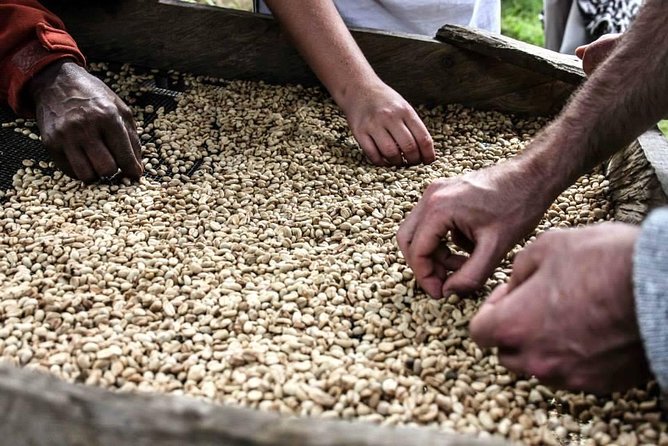
After the farm visit, the walk down to the roaster takes about 30 to 40 minutes. This is another reason to plan for a relaxed half-day rather than a quick tasting.
The roaster gives the tour a satisfying sense of progress. You start with the growing environment, then follow the coffee toward the stage where it becomes something you can brew. Seeing that chain in one outing helps connect farm labor, processing, roasting, and drinking.
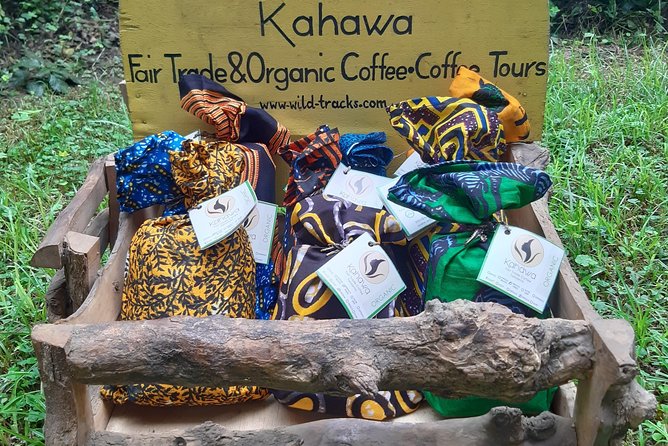
The experience provider, Wild Tracks/Kahawa Coffee Walks, includes a bag of coffee for you to take home. You can also shop for more coffee, which is useful if you want a practical reminder of the visit rather than another souvenir with no connection to the place.
I would save room in your luggage if you like coffee. The included bag is a modest but meaningful part of the value, especially when the tour costs $102 per person. You are paying for the guide, transport arrangement, farm and village access, meal, tasting, and the take-home coffee, not just for a cup at the end.
Same country, a completely different kind of safari:
- Balloon Safari & Bush Breakfast in Serengeti – Miracle Experience
★ 5.0 · 1,646 reviews - Tanzania Classic – 7 Days
★ 5.0 · 1,151 reviews - 4 Days Group Camping Safari
★ 5.0 · 1,101 reviews - 5 Days Group Camping Safari
★ 5.0 · 730 reviews
Lunch with chapati, ugali, and goat sauce
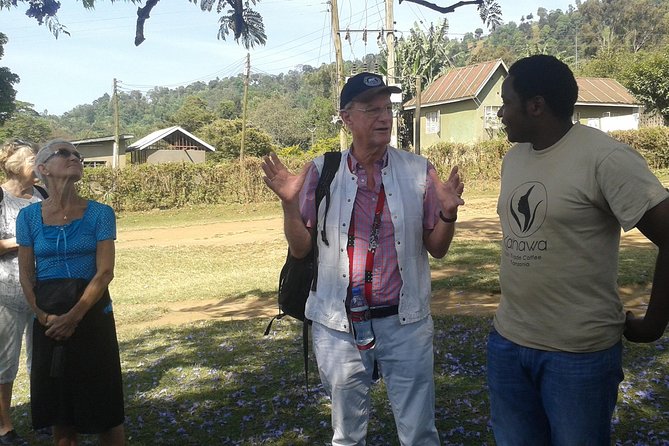
Lunch is served in the garden near the roaster and features traditional Tanzanian food made by local villagers. This is one of the strongest parts of the day because it turns the farm visit into a shared meal rather than ending with a demonstration and a purchase.
The menu is substantial:
- Chapati
- Roasted banana
- Rice
- Ugali
- Goat sauce
- Spinach
- Salad
- Seasonal fruit
- Banana cake
You get a useful spread of familiar and less familiar dishes. Chapati and rice are approachable for many diners, while ugali gives you a chance to try one of Tanzania’s best-known staples. Goat sauce adds a more distinctive local flavor, and the vegetables, salad, and fruit round out the meal.
The menu also reflects the village setting. This is not described as a restaurant meal adapted for tourists. It is a home-style selection prepared locally, and that makes the lunch part of the cultural exchange.
After lunch, you cup different coffees together with banana cake. Coffee tasting after a full meal may be less formal than a professional cupping session, but it should make the differences between coffees easier to appreciate. The cake is a pleasant local touch and gives the tasting a sweet finish.
If you have dietary restrictions, the available information does not say how the menu can be changed. Ask before booking if this matters to you. The listed food includes goat, wheat in chapati, and several starchy dishes.
What Samwel adds to the experience
The guide is central here. Samwel, whose name appears as Samuel in one piece of tour feedback, has worked with the coffee tour for more than 10 years. That length of experience matters because the outing moves through several subjects: coffee production, farming, culture, traditions, and village life.
A good guide can also keep the walk from feeling like dead time. The route includes small farms, schools, and churches, and the guide supplies the connections between those places. You are not left to guess why the village looks as it does or how coffee fits into the community.
The strongest praise attached to this experience focuses on the reality of coffee farming and small-scale agriculture. That is a useful clue about the tour’s character. You should expect a grounded look at work and daily life, not a staged show built around a perfect photo stop.
Because the activity is private, you can ask more direct questions than you might in a large group. You can ask about the coffee process, local traditions, or the difference between the methods shown at the farm. The private format does not guarantee that every question will be answered in technical detail, but it does give you room for a more personal exchange.
Is $102 a fair price?
At $102 per person, this is not the cheapest way to spend a morning near Arusha. Its value depends on how much of the full package you use.
The tour lasts about six and a half hours and includes pickup offered from the Arusha area, a private guide, village and farm walking, coffee production explanations, a traditional lunch, coffee tasting, and a bag of coffee. You also have the option to buy more coffee. Taken together, that is a full half-day program rather than a single farm entry.
I think the price makes better sense for people who want a private cultural outing with food and hands-on context. If your only goal is to taste coffee or buy beans, you can find a less expensive way to do that. If you want the walk, the farm story, lunch, and a private guide in one booking, the package is more defensible.
Group discounts may improve the value for larger parties. Since only your group participates, families or friends who prefer their own schedule may find the cost easier to justify than solo visitors. The booking information confirms mobile tickets and pickup offered, which keeps the practical side simple.
The tour has a five-star rating from 10 reviews and a 100 percent recommendation rate. That is encouraging, especially because the praise centers on the quality of the walking tour and the clear view of coffee farming. Still, 10 reviews is a small sample, so I would use those figures as a positive signal rather than a guarantee.
Who should book this coffee walk?

I would recommend it to coffee drinkers who want to understand the work behind their daily cup. You get a clear farm-to-roaster sequence, and the tasting makes the subject easy to enjoy rather than overly academic.
It also suits anyone interested in village life around Arusha. The route through farms, schools, and churches adds local context that a standard plantation visit may not include. The lunch gives you another way to connect with the community through food.
This is a good choice for a private group that likes asking questions and moving at its own pace. It can also work well for people who want a cultural activity before or after a safari, provided they are comfortable giving up most of a day.
I would hesitate to recommend it to anyone looking for a short, low-effort coffee stop. The walk to the farm, the 30 to 40 minute walk to the roaster, and the six-and-a-half-hour schedule are essential parts of the experience. The tour is most rewarding when you see those walks as part of the story, not as time between attractions.
Practical details before you go
The start time is 9:00 a.m., and the experience lasts approximately six hours and 30 minutes. Pickup is offered, and the meeting arrangement is near public transportation.
Confirmation is provided at booking, and mobile tickets are available. Most people can participate, but the route includes walking through a village and farm area, so consider your comfort with that before paying.
Free cancellation is available if you cancel at least 24 hours before the local start time. Cancellations or changes made less than 24 hours in advance are not refunded or accepted.
The experience is private, so only your group takes part. That is especially useful here because the walk and coffee discussion benefit from questions. Bring a comfortable attitude toward a slower, rural outing, and expect the food and coffee to be as important as the farm itself.
Should you book the Arusha coffee walk?
Book it if you want a personal, food-centered look at coffee production near Arusha. The strongest reasons are the village walk, the organic and Fairtrade farm, the experienced guide Samwel, and the substantial Tanzanian lunch.
Skip it if you want a brief plantation visit, a highly technical roasting class, or an activity with very little walking. At $102, the price asks you to value the whole six-and-a-half-hour experience. For a private tour that combines farming, culture, food, tasting, and coffee to take home, I think it is a worthwhile choice for the right kind of day.
FAQ
Where does the coffee walk take place?
The coffee village is about 40 minutes from Arusha town in the Arusha Region. The setting is evergreen and about 1,400 meters above sea level.
What time does the tour start?
The listed start time is 9:00 a.m.
How long does the experience last?
The tour lasts approximately six hours and 30 minutes.
Is transportation available?
Pickup is offered, and the meeting information also notes that the activity is near public transportation.
Is this a private tour?
Yes. Only your group participates in the activity.
What food is served for lunch?
Lunch includes chapati, roasted banana, rice, ugali, goat sauce, spinach, salad, seasonal fruit, banana cake, and coffee.
Do I receive coffee to take home?
Yes. A bag of coffee is included, and you can shop for more coffee during the experience.
Can I cancel for a full refund?
Yes, if you cancel at least 24 hours before the experience start time. Cancellations or changes made less than 24 hours before the local start time are not refunded or accepted.
More Walking Tours in Arusha
- Arusha Guided Walking City Tour, Culture, Lifestyle & History
★ 5.0 · 150 reviews - 4 Days lodge safari Tarangire , Ngorongoro crater & Walking
★ 5.0 · 39 reviews - Tanzania – Arusha NP – Private Guided 4×4 Safari – Game Drive & Walking
★ 5.0 · 30 reviews - Private Walking Tour with Giraffes
★ 5.0 · 18 reviews
More Coffee Experiences in Arusha
- Materuni Waterfalls & Coffee Tour from Moshi
★ 5.0 · 92 reviews - Arusha: Materuni Waterfalls, Coffee, and Hotsprings Tour
★ 4.8 · 78 reviews - Coffee tour and Buffet Lunch with Kingstone Asilia (Arusha)
★ 5.0 · 74 reviews - Materuni waterfalls,coffee tour & Kikuletwa(Chemka)Hot Springs
★ 5.0 · 49 reviews
Just added around Arusha
- 8 Days Serengeti Migration safari★ 5.0 · 11 reviews
- tarangire, ngorongoro & lake manyara park 3 days private tour★ 5.0 · 11 reviews
- tarangire & ngorongoro 2 days tour★ 5.0 · 14 reviews
- Mt. Kilimanjaro: Shira plateau to Cathedral point 3872m Day hike★ 5.0 · 7 reviews
- serengeti, ngorongoro & tarangire 4 days private tour★ 5.0 · 18 reviews
- serengeti & ngorongoro 3 days private tour★ 5.0 · 15 reviews
- 2 Days Tanzania Midrange Group Join Safari★ 5.0 · 7 reviews
- climb the KILIMANJARO via Lemosho route★ 5.0 · 4 reviews
Kilimanjaro Coffee Farm Tours, compared.
Materuni Waterfalls, coffee tour & Kikuletwa Hot Springs
Read our review →
Materuni waterfalls coffee tour & Chemka hot springs Day trip
Read our review →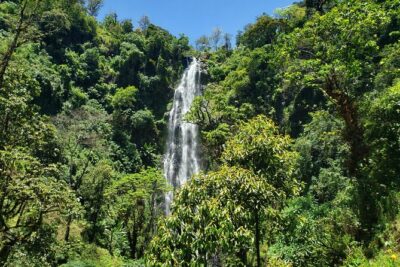
Materuni Waterfall, Coffee Tour and Picnic Hot Lunch
Read our review →
Maasai village visit, Materuni waterfalls & coffee experience
Read our review →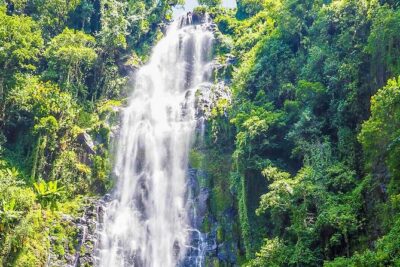
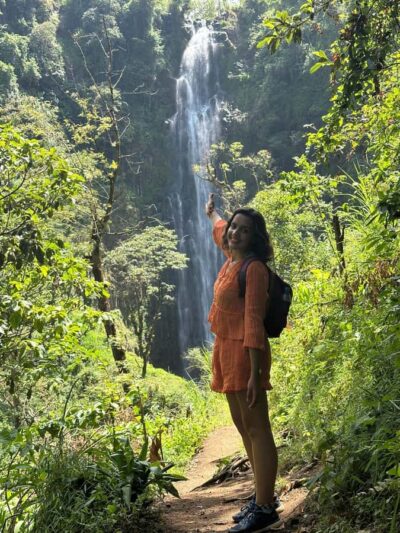
Arusha or Moshi : Hot Spring, Waterfall & Coffee Farm Tour
Read our review →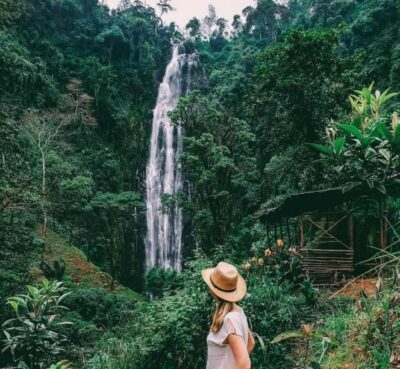
Materuni Waterfalls, Coffee, and Hotsprings Tour
Read our review →
Materuni Waterfalls, Chemka Hot Springs, &/Or Coffee Tour
Read our review →Browse the lists this tour appears in