
Reviewed · SERENGETI SAFARIS
10-Day Serengeti Wildebeest Migration Safari from Arusha
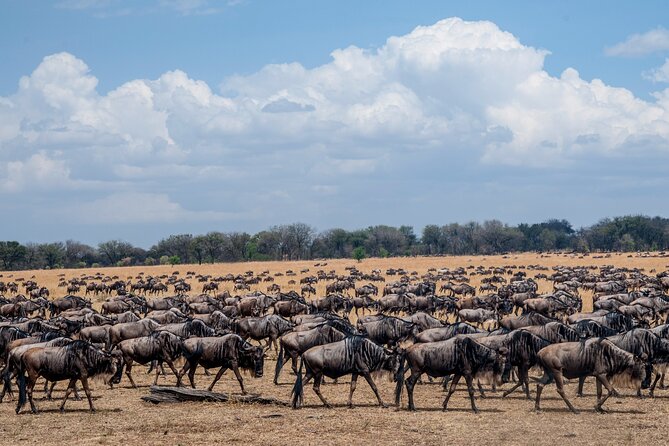
The big draw here is the chance to follow the Great Wildebeest Migration through northern and central Serengeti, then add two of Tanzania’s finest wildlife areas: Ngorongoro Crater and Tarangire National Park. The trip gives you time, rather than rushing through a short safari, and places you in the park during the August to October crossing season.
I like two things right away. First, the northern Serengeti stay gives you three full days in the Kogatende area, where wildebeest may cross the Mara River and often move back and forth with the rains. Second, the small maximum group of seven, private vehicle, bottled water, and camp-and-lodge setup make the long days more comfortable.
The main catch is price. At $5,512.83 per person, this is a serious investment, and the flight from Kilimanjaro to northern Serengeti is not included. You also need to accept that nature controls the migration, so even in the best season, a river crossing is never something anyone can promise.
Key points to know before booking
- Three days in northern Serengeti: The Kogatende area is the trip’s best chance for migration action, especially from August through October.
- A full 10-day route: You get northern and central Serengeti, Ngorongoro Crater, and Tarangire instead of seeing only one park.
- Small group, private vehicle: The maximum is seven people, useful for shared viewing space and a more personal guide experience.
- Strong guide element: Guides named in the feedback include George, Arnold, Wilson, Shedrack, Calvin, Laban, Rahim, Cleopa, William, Ombeni, Inno, and Jerry.
- Comfortable but not fully all-inclusive: Accommodation, meals, airport transfers, water, and guiding are covered, but the northern flight and alcoholic drinks cost extra.
- Best for wildlife-focused visitors: This suits you if migration timing, repeated game drives, and several nights in safari country matter more than a quick, low-cost holiday.
Why this route works for a migration safari
A migration safari needs patience. The wildebeest do not follow a tourist timetable, and the herds may pause, scatter, or turn around when rain changes the available grass. This itinerary gives you three days in northern Serengeti, followed by three days around central Seronera, so you have more than one setting in which to find wildlife.
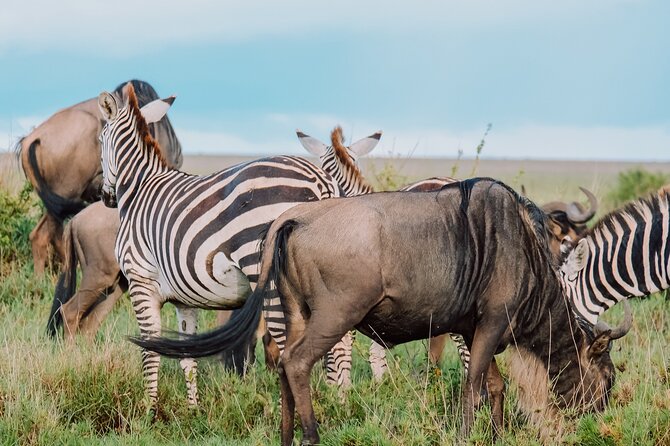
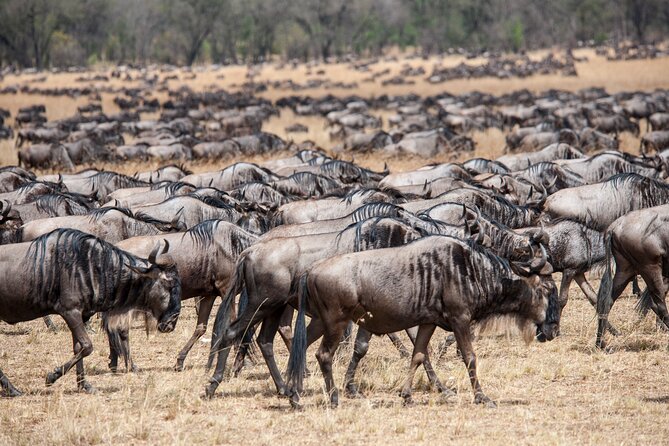
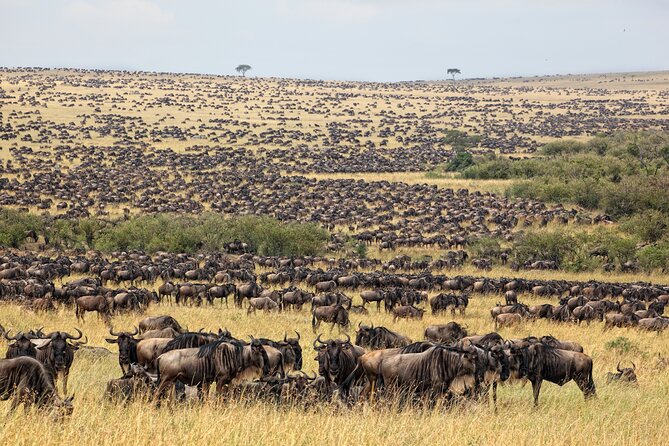
The scale is hard to picture. About 1.5 million wildebeest move through the wider Serengeti and Masai Mara system, joined by hundreds of thousands of zebra and antelope. The result is not one neat procession. It is a shifting mass of animals spread across open country, with smaller groups moving in different directions.
That is why I value the six nights allocated to the Serengeti. You are not simply driving in for one famous sight and leaving. You have time for early starts, longer game-viewing periods, and the possibility of seeing different animals in the north and central parts of the park.
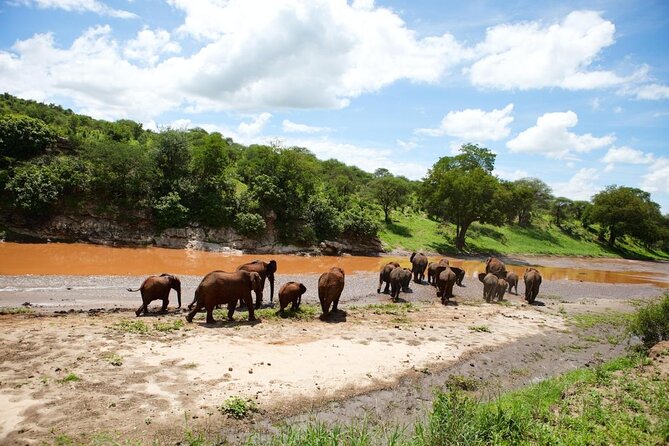
The route also gives you variety after the migration focus. Ngorongoro offers a compact crater environment with a strong concentration of wildlife, while Tarangire brings elephants, birds, and a quieter feel. These final parks help prevent the trip from becoming six straight days of looking for one event.
More Serengeti Safaris in Arusha
- Balloon Safari & Bush Breakfast in Serengeti – Miracle Experience
★ 5.0 · 1,646 reviews - 3 Days Serengeti & Ngorongoro Group Camping Safari
★ 5.0 · 574 reviews - 5-Day Highlights mid-Range Crater, Serengeti, Tarangire
★ 5.0 · 296 reviews
Day 1: An easy arrival in Arusha
Your safari begins with pickup at Kilimanjaro International Airport. A guide transfers you to a mid-range hotel in Arusha and briefs you on the days ahead.
That first night is useful, especially if you have arrived after a long international flight. You are not expected to start with a demanding game drive or a long road transfer. Instead, you get time to settle in before the more active part of the trip.
The stated start time is 8:00 a.m., but the airport pickup is part of the arrival arrangement. Confirm the precise pickup details when booking, since flight arrival times and the first morning’s transfer need to fit together.
Days 2 to 4: Northern Serengeti and the Mara River
After breakfast, you transfer to the Arusha airstrip for a flight to northern Serengeti. The flight is at your own expense, an important cost to add to the advertised price. The itinerary does not state the flight price, so ask for the current amount before committing.
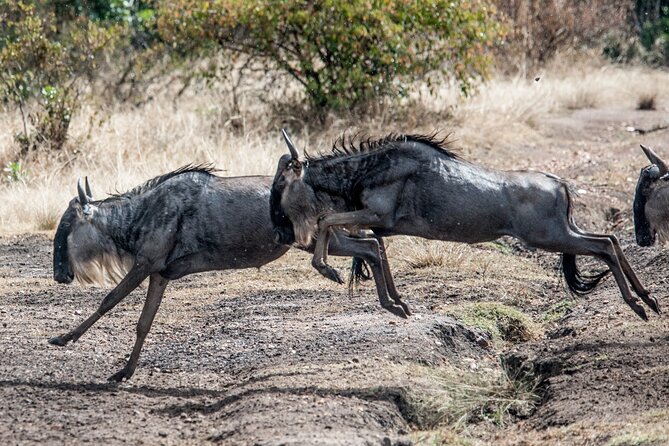
Northern Serengeti is the trip’s main migration stage. From July through October, large herds may gather around the river area, and the Kogatende crossings generally begin in August. August to October is described as the strongest period for game viewing in this part of the park.
A river crossing can be a thrilling sight, but you should keep your expectations sensible. Even during the favored months, you may spend time waiting for the herd to approach the water. The animals can cross, stop, retreat, or cross again. Rainfall and fresh grass influence their movements more than any itinerary does.
Three nights make a real difference here. You have repeated chances to reach the river area and also time to watch other wildlife. The Serengeti is not only wildebeest. The route is designed around general game viewing, and the guides’ role is to help locate animals and position the vehicle for viewing and photographs.
You stay in a luxury tented camp. This means a more comfortable base than basic camping, while keeping you close to the feel of the park. The exact camp is not named in the supplied details, so ask for the current accommodation list if tent size, power, bathroom arrangements, or camp location matter to you.
The guides receive especially strong praise for their work with wildlife and photography. George is repeatedly described as an excellent driver and a strong source of information about animals and plants. Calvin is singled out for finding good positions for photographs, while Arnold is praised for keeping everyone in his vehicle cared for, including children.
Those details matter on a migration trip. A guide who explains what you are seeing makes a slow period useful, and a careful driver can make long game-viewing days less tiring. The available feedback also names guides such as Wilson, Shedrack, Laban, Rahim, Cleopa, William, Ombeni, Inno, and Jerry, but guide assignment is not guaranteed.
Days 5 to 7: Central Serengeti around Seronera
After breakfast, you drive south to central Serengeti, around Seronera. This is Tanzania’s oldest and most popular national park area, and it gives the safari a different rhythm from the far north.
The central zone is known for open plains and broad wildlife viewing. The itinerary describes the annual movement as involving six million hooves, with more than 200,000 zebra and 300,000 Thomson’s gazelle joining the wildebeest in search of fresh grazing.
Three nights here are a good choice. The central Serengeti is not merely a backup plan for a missed river crossing. It is a major wildlife area in its own right, and your guide can spend time looking for the species and behavior that make a game drive worthwhile even when the herds are elsewhere.
This is also where the trip’s pacing becomes clear. You will spend much of the day in a safari vehicle, traveling over uneven roads and stopping for wildlife rather than following a fixed sightseeing schedule. The stated fitness requirement is moderate, but the bigger test may be patience and comfort with early starts, dust, heat, and long hours sitting.
You stay in another luxury tented camp. All breakfasts, lunches, and dinners are included, as is bottled water. Alcoholic drinks are available to buy but are not included, so the package covers the basics without pretending to cover every personal expense.
The maximum group size is seven. That is small enough to avoid a crowded minibus feel, though you should not assume a private vehicle for only your party unless the booking specifically confirms it. The vehicle is described as private in the inclusions, which makes the arrangement more personal, but clarify how that wording applies to your booking.
Same country, a completely different kind of safari:
- Tanzania Classic – 7 Days
★ 5.0 · 1,151 reviews - 4 Days Group Camping Safari
★ 5.0 · 1,101 reviews - 5 Days Group Camping Safari
★ 5.0 · 730 reviews - Materuni Waterfalls, coffee tour & Kikuletwa Hot Springs
★ 5.0 · 643 reviews
Day 8: Ngorongoro Crater from the highlands
Day eight begins with an early morning game drive into Ngorongoro Crater. The Ngorongoro Conservation Area protects wildlife and natural resources while also recognizing the interests of Indigenous people and supporting tourism.
The crater is the most concentrated wildlife setting on this route. After the broad spaces of Serengeti, its enclosed volcanic setting can feel more compact and immediate. You are likely to appreciate the change of scenery and the chance to see animals in a distinct environment.
The early start is practical. Morning is a productive time for wildlife viewing, and beginning early helps you make the most of the crater visit. It also means this will not be a lazy transition day. Pack what you need in the vehicle before bed, especially water, a camera, and a light layer.
That night is at a luxury lodge. The move from tented camp to lodge gives you a different level of shelter and comfort near the end of the safari. Accommodation details can vary, so ask for the named lodge if room style or location is important to you.
Day 9: Tarangire’s elephants and birds
The ninth day is a full game drive in Tarangire National Park, located slightly away from the main northern safari route. The park is best known here for elephant migration, birding, and a quieter atmosphere.
That quieter quality is a welcome change after the famous Serengeti. You may find the day less focused on a single dramatic event and more rewarding for watching elephants, birds, and the general pace of the park.
Tarangire is a particularly good addition for anyone who wants more than big-cat and wildebeest sightings. Birdwatchers should pay attention to the itinerary’s specific mention of birding, while elephant fans get a final chance to focus on one of Tanzania’s most impressive animals.
You spend the night at a luxury lodge. Meals continue to be included, and the full-day format gives you time to explore rather than treating Tarangire as a brief stop on the way back to Arusha.
Day 10: Return to Arusha and the airport
After breakfast, you return to Arusha, stopping at a shopping market on the way. The company then facilitates your transfer to Kilimanjaro International Airport for your onward flight.
This final day includes breakfast and lunch, but not accommodation. Plan your departure time carefully. The itinerary gives a return-to-Arusha plan, but it does not provide a precise arrival time, and road conditions can affect the schedule.
If your international flight leaves late, the market stop may be convenient. If your flight is early, this route may not fit comfortably. Confirm the timing before booking flights, and avoid arranging a tight connection based only on the stated 10-day duration.
What $5,512.83 buys you
The price is high, but it includes many of the costly pieces of a northern Tanzania safari: nine nights of accommodation, meals throughout the itinerary, airport pickup and drop-off, a driver-guide, private vehicle transport, and bottled water.
It also pays for a long route through several major wildlife areas rather than a short Serengeti visit. The northern camp, central camp, Ngorongoro lodge, and Tarangire lodge provide different settings, and the 10-day schedule gives you a better chance of seeing a wide range of wildlife.
Still, the value depends heavily on your dates and group arrangement. The flight to northern Serengeti is extra, alcoholic drinks are extra, and the price does not remove the uncertainty of migration viewing. If your budget is tight, compare the total cost after adding the flight and any optional purchases.
I would see this as a comfort-focused safari for someone who wants time in the parks and does not want to organize every transfer independently. It is less suitable if your top priority is the lowest possible price or if you want a short trip with guaranteed highlights.
Guides, vehicles, and the human side of the trip
The strongest pattern in the available feedback is the praise for individual guides. George is described as skilled at finding lions, leopards, and cheetahs while explaining wildlife and plants. Calvin is praised for his warmth, photography positioning, and ability to locate the Big Five.
Arnold is noted for looking after everyone in the vehicle and making the experience enjoyable for families. Wilson and Shedrack are praised for sharing broad information and taking care of small details. Inno is described as a capable driver with strong service, while William receives praise for careful planning and attention throughout a 10-day migration trip.
You cannot request a particular guide from the information provided, but you can ask whether a preferred guide is available. The guide makes a major difference on safari, not only by finding animals but by explaining behavior, reading conditions, and making quiet stretches feel worthwhile.
The vehicle is described as private and air-conditioned in the feedback. Since vehicle specifications can vary by departure, confirm the exact setup if comfort, photography space, or air conditioning is a major concern.
Who should book this safari?
I would recommend it to you if you want a serious wildlife trip with several nights in the Serengeti, a chance at the northern river crossings, and time in Ngorongoro and Tarangire. Families can also fit well, since children must be accompanied by an adult and guides are described as attentive to younger passengers.
It suits photographers who value repeated game drives and careful vehicle positioning. It also suits first-time safari visitors who prefer having airport transfers, meals, accommodation, and a guide arranged together.
You may want a different trip if you dislike long drives, sitting in a vehicle for much of the day, or paying a premium for a natural event that cannot be guaranteed. The moderate fitness requirement is not extreme, but this is still an active expedition with early mornings and changing conditions.
Specific dietary needs can be requested at booking. Confirmation is normally provided within 48 hours, subject to availability, and the group requires a minimum number of participants. Free cancellation is available up to 24 hours before the start time, while poor weather or failure to meet the minimum may lead to a new date, a different experience, or a full refund.
Should you book it?
Book this safari if the migration is your main goal but you also want Tanzania’s classic trio of Serengeti, Ngorongoro Crater, and Tarangire. The three northern Serengeti nights and three central Serengeti nights are the strongest features, giving you time to look beyond a single river crossing.
Before paying, ask for the northern flight cost, exact camps and lodges, vehicle details, pickup timing, and likely guide assignment. If the full price still fits your budget, this is a well-rounded, comfort-oriented safari with enough time to let the wild places set the schedule.
FAQ
How long is the safari?
The safari lasts approximately 10 days, beginning and ending in Arusha.
Where does the safari start?
Pickup is offered in Arusha, and airport pickup is provided at Kilimanjaro International Airport. The listed start time is 8:00 a.m.
Is the flight to northern Serengeti included?
No. The flight from Kilimanjaro to northern Serengeti is at your own expense and is not included in the tour price.
How many people can join the tour?
The activity has a maximum of seven travelers.
What accommodation is included?
Accommodation is included on all days except the last day. The itinerary lists a mid-range hotel in Arusha, luxury tented camps in northern and central Serengeti, and luxury lodges near Ngorongoro and Tarangire.
Are meals included?
Yes. The package includes nine breakfasts, nine lunches, and nine dinners, served according to the itinerary. Alcoholic drinks are not included.
Can children join the safari?
Yes, but children must be accompanied by an adult.
What happens if the safari is canceled because of weather?
If poor weather causes cancellation, you will be offered a different date or a full refund. If the minimum number of participants is not reached, you will be offered a different date or experience, or a full refund.
More Safari in Arusha
- 7-Day Premium Luxury Tanzania Safari All-Inclusive
★ 5.0 · 426 reviews - 3-Day Classic Serengeti Safari
★ 5.0 · 263 reviews - 8 Days Great Wildebeest Calving Migration Safari from Arusha
★ 5.0 · 254 reviews - Group Safari 7 Days in Tanzania’s Main Parks
★ 5.0 · 240 reviews
Just added around Arusha
- 8 Days Serengeti Migration safari★ 5.0 · 11 reviews
- tarangire, ngorongoro & lake manyara park 3 days private tour★ 5.0 · 11 reviews
- tarangire & ngorongoro 2 days tour★ 5.0 · 14 reviews
- Mt. Kilimanjaro: Shira plateau to Cathedral point 3872m Day hike★ 5.0 · 7 reviews
- serengeti, ngorongoro & tarangire 4 days private tour★ 5.0 · 18 reviews
- serengeti & ngorongoro 3 days private tour★ 5.0 · 15 reviews
- 2 Days Tanzania Midrange Group Join Safari★ 5.0 · 7 reviews
- climb the KILIMANJARO via Lemosho route★ 5.0 · 4 reviews
Serengeti Safaris, compared.

Serengeti Balloon Safari and authentic bush breakfast
Read our review →
3 Days Serengeti & Ngorongoro Group Camping Safari
Read our review →
5-Day Highlights mid-Range Crater, Serengeti, Tarangire
Read our review →


Private 6-Day Tarangire Manyara Crater and Serengeti with Mid-Range Lodges
Read our review →
5 Days Camping Tarangire, Serengeti & Ngorongoro crater & Visiting Maasai
Read our review →
4 Days Join Group tour Tarangire Serengeti and Ngorongoro crater
Read our review →Browse the lists this tour appears in