
Reviewed · MACHAME ROUTE CLIMBS
7 days Kilimanjaro climb via Machame route (Whiskey route)
The Machame Route earns its Whiskey Route nickname honestly: it is scenic, tough, and not softened by huts or an easy grade. You move from wet forest to open moorland, then across rock and scree toward Uhuru Peak at 5,895 meters. The views change almost every day, which is the main reason I like this route.
I especially like the Lava Tower acclimatization day, where you climb high to 4,630 meters and then sleep lower at Barranco. I also like the practical mountain setup: private four-season tents, a mess tent with tables and chairs, hot drinking water, and generous meals prepared by a dedicated cook. The tradeoff is clear: seven days gives you a better schedule than the shorter Machame versions, but this remains a hard climb with a steep summit night and no guarantee that your body will accept the altitude.
Key points before you book
- A route built for scenery: You pass through rainforest, moorland, semi-desert, alpine desert, and the summit zone.
- A real acclimatization climb: The high point at Lava Tower is followed by a descent to Barranco Camp.
- The Barranco Wall is a hands-on section: It looks severe from below, but the route is described as a Class 2 climb rather than a technical mountaineering pitch.
- Summit night starts around 11:30 p.m.: You climb by headlamp toward Stella Point, then continue along the crater rim to Uhuru Peak.
- The package is well supplied: Park and rescue fees, tents, meals, purified water, guides, porters, and a mess tent are included.
- The group can reach 16 people: That is small enough for a shared mountain experience, but not the same as a private climb.
What the $2,300 price really covers
The listed price is $2,300 per person. That is not a bare trail-and-guide fee. It includes Kilimanjaro National Park fees, rescue fees, mountain accommodation in private waterproof four-season tents, all meals on the mountain, purified drinking water, guides, porters, and a separate mess tent with tables and chairs.
That package matters on Kilimanjaro. You are not simply paying someone to point toward the summit. A working mountain crew carries camp equipment and food, sets up the tents, boils water for drinking and washing, and prepares meals for seven days. The cook and porters affect your comfort far more than many first-time climbers expect.
The price does not include tips, flights, or personal climbing equipment. Tips are not a minor afterthought, so set aside extra money for the guide, assistant guides, chef or chefs, and porters. The final mountain celebration is also the traditional time to present those tips.
At this price, the tour makes the most sense if you want a supported climb rather than a self-managed trek. You still do the walking and deal with cold, mud, fatigue, and altitude, but the camp and meal work are handled around you. Before paying, ask for a clear tipping recommendation and a current list of personal gear to bring.
More Kilimanjaro Climbs in Arusha
- 8-Day Small-group Lemosho Kilimanjaro Summit Trekking
★ 5.0 · 186 reviews - 7-Day Machame Kilimanjaro Summit Tour from Arusha
★ 5.0 · 125 reviews - 4 days Best experience Kilimanjaro Hike, Serengeti &Ngorongoro
★ 5.0 · 54 reviews
Day 1: Mud, rainforest, and Machame Camp
The day begins with pickup in Arusha, at about 1,400 meters. From there, the drive goes to Machame Village, where you can buy mineral water and receive a packed lunch.
The final approach depends on the road. If conditions allow, the vehicle continues toward Machame Gate. If the road is muddy, you walk roughly three kilometers from the village, taking about an hour. That is a useful detail to know before you arrive in polished airport clothes. The road is not guaranteed to be smooth.
At the gate, you register and begin climbing almost at once. The rainforest appears quickly, and rain is a strong possibility. Wet weather can turn this first section into a soggy, slippery walk, so waterproof footwear and rain protection are not optional luxuries.
The day is listed at about seven hours. You stop for lunch roughly halfway, then continue toward Machame Camp. The forest is a fine opening act because it feels like a real change from Arusha, but it can also be the least comfortable walking of the trek if rain has arrived. Pace yourself early. A fast first day does not buy you anything later.
Day 2: Shira Plateau and the first cold camp
You leave Machame Camp after breakfast and climb for about an hour to the top of the forest. The trail then becomes gentler for around two hours as you enter the moorland zone.
After lunch and a rest, the route follows a rocky ridge onto the Shira Plateau. The character of the climb changes here. The dense forest gives way to open ground, broad views, and colder air. Looking east, you may see the Western Breach and its glaciers. Kibo is now ahead of you, and the mountain begins to feel much larger.
The day covers about nine kilometers and takes around six hours. Shira Camp sits at approximately 3,840 meters, in an exposed position. Temperatures can fall well below freezing, so a warm sleeping bag, dry layers, gloves, and a hat are central parts of your kit.
The crew boils drinking and washing water before dinner. That is a small but important comfort after a cold day. It also shows the rhythm of mountain life: water is carried, heated, rationed, and delivered as part of the service.
Day 3: Lava Tower gives you the altitude lesson
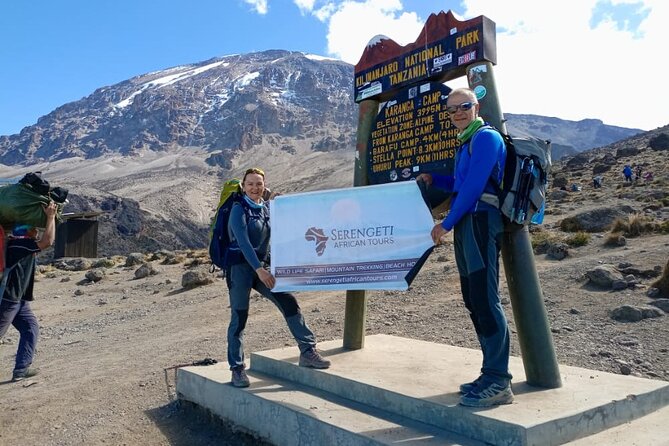
Day three is the clever part of the route. You climb through semi-desert and rocky ground toward Lava Tower, reaching about 4,630 meters after roughly five hours. Lunch is served in a designated area before the route climbs a rocky scree path to the tower.
This is likely to be the first day when altitude makes itself known. Breathlessness, headaches, and irritability can appear at this point. The trail is not merely testing your legs. It is showing your body what high altitude feels like.
After lunch, you descend nearly 680 meters to Barranco Camp. That high climb followed by a lower sleeping altitude is valuable acclimatization. It may feel odd to work hard uphill and then give away much of the height, but that is the point.
The day is described as roughly six hours, though the detailed schedule includes the climb to Lava Tower and the descent to Barranco. Keep your attention on how you feel, not on competing with the clock. Tell your guide about headaches, nausea, unusual tiredness, or breathing trouble. Strong guide support is one of the most important parts of this experience, and past guide teams have included James, Gasto, and David.
More Machame Route Climbs in Arusha
- 6 Days: Hiking Kilimanjaro via Machame Route
★ 5.0 · 24 reviews - 6-Day Guided Tour in Machame Route Mt Kilimanjaro
★ 5.0 · 17 reviews - KILIMANJARO MACHAME ROUTE, (Climb 7days)
★ 5.0 · 16 reviews - Kilimanjaro Climb Via Machame Route
★ 5.0 · 15 reviews
Day 4: The Barranco Wall and Karanga Valley
The Barranco Wall is the most visually intimidating feature so far. From below, it looks like a cliff. The actual route is described as a Class 2 hike, and the main challenge is careful movement over rock rather than technical climbing equipment.
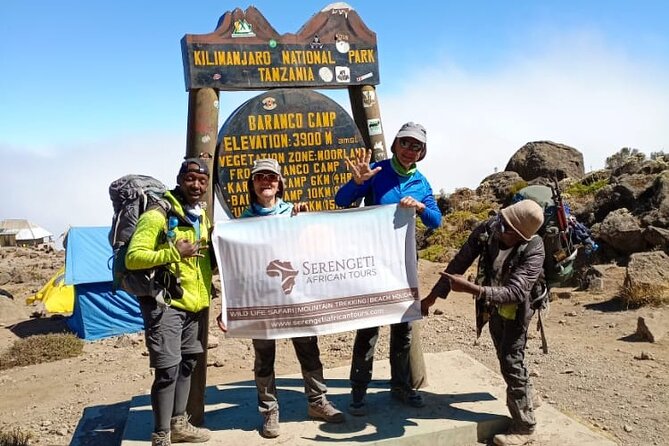
You should still take it seriously. It is steep, and you may need to use your hands in places. Move slowly, keep your pack secure, and follow the guide’s line. The reward comes at the top, where views include Heim Glacier and the cloud layer below.
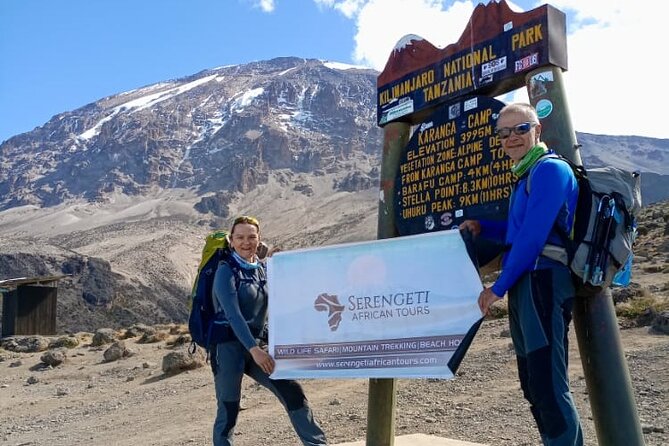
From the wall, the trail rises and falls through Karanga Valley. This is a shorter day, about four to five hours and five kilometers, in the alpine desert zone. That lighter schedule is useful after Lava Tower. You get more time to eat, rest, inspect wet gear, and prepare for the higher camps.
I like this day because it has drama without being the longest day. The drawback is that the repeated ups and downs can feel frustrating when you know you are still climbing toward Barafu. Think of it as a recovery and acclimatization day, not a wasted one.
Day 5: Barafu Camp prepares you for the hardest night
After breakfast, you leave Karanga Camp at about 3,959 meters. The trail joins the Mweka Route, which you use for the descent over the final two days.
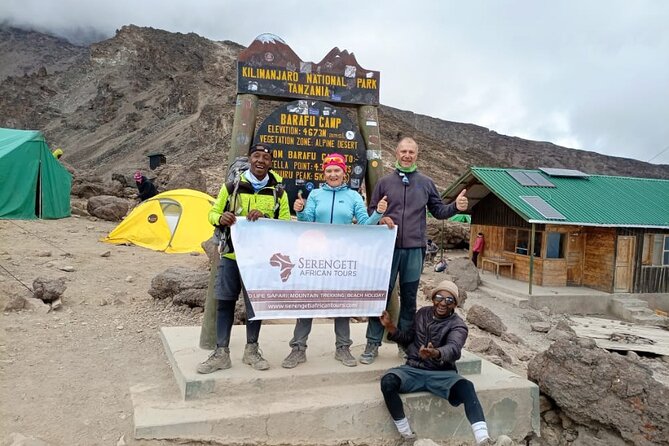
After roughly an hour, you reach Barafu Hut. This is the final water stop for the porters. Barafu Camp is at approximately 4,550 meters, and there is no accessible water there, so fill and organize what you need before moving on.
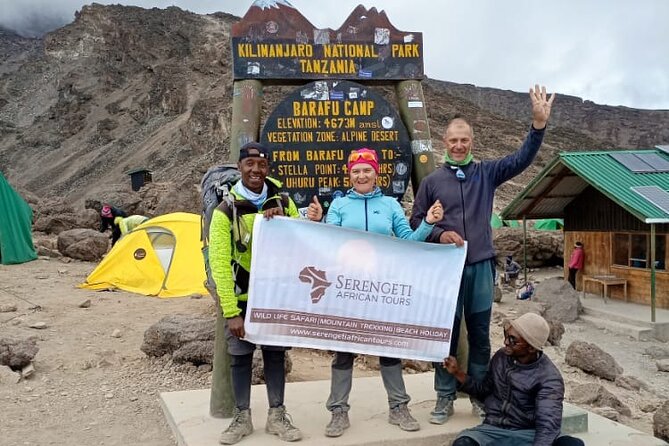
Barafu means ice in Swahili. The camp sits on a rocky, exposed ridge, where wind and rocks can make the tent area feel stark. Familiarize yourself with the campsite before darkness. Once the summit push begins, you will want to know where your gear, toilet facilities, and tent are located.
The hiking distance is short, about two to three hours and four kilometers. Do not mistake that for an easy day. You eat an early dinner and rest before the late-night start. Your task is to sleep, conserve energy, drink what you can, and keep warm.
The mess tent and hot meals are especially useful here. At 4,550 meters, even simple food preparation becomes a chore. The support crew removes that burden, but you still need to eat enough to face the summit attempt.
Day 6: Stella Point, sunrise, and Uhuru Peak
The summit day begins around 11:30 p.m. After tea and biscuits, you set off in the darkness. The route heads northwest over heavy scree toward Stella Point on the crater rim at about 5,685 meters.
This is the hardest part mentally and physically for many climbers. The terrain is loose, the air is thin, and the climb takes place when your body expects sleep. The best approach is a slow, steady pace. Do not spend your strength trying to look strong in the first hour.
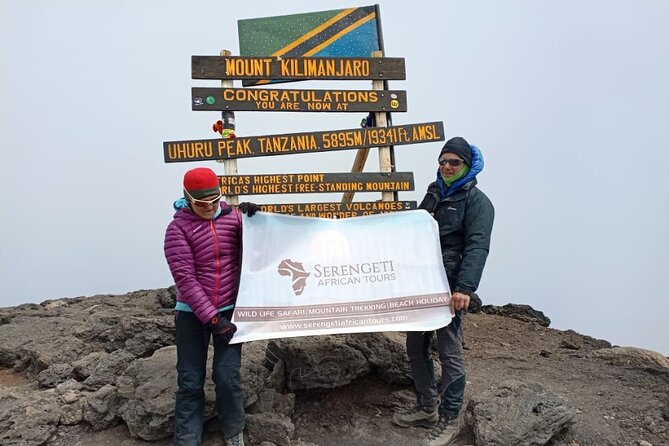
At Stella Point, you pause and, weather permitting, watch the sunrise. The position on the crater rim gives this moment real force. From there, snow may appear along the roughly two-hour ascent to Uhuru Peak. The summit is 5,895 meters, the highest point in Africa.
Time at the summit depends on weather conditions. Keep the stop short enough to protect your energy and warmth. The goal is to reach the highest point safely, not to linger for a long photo session in cold, thin air.
The day’s schedule is listed as about six hours, but the detailed timing describes around six hours to Stella Point and another two hours to Uhuru Peak. Actual timing can vary with pace, conditions, and how the group responds to altitude. This is the point at which guides earn their keep. Several guide teams associated with the company, including Gasto and David, have been praised for encouragement, close attention, and practical help during the summit push.
The supplied schedule does not give a full hour-by-hour description after Uhuru Peak, so confirm the exact descent plan before departure. You should also ask where you will rest after the summit and how the team handles anyone who turns around at Stella Point.
Day 7: Certificates, celebration, and the Mweka descent
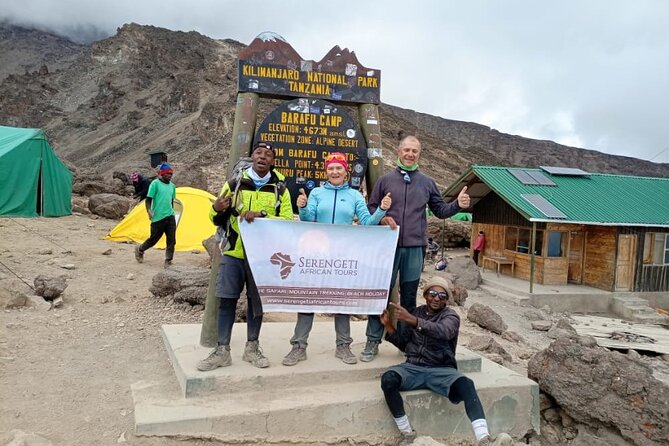
After a well-earned breakfast, the mountain crew holds a celebration with dancing and singing. It is also the time to give tips to the guides, assistant guides, chef or chefs, and porters.
You then descend for about three hours to Mweka Gate through the forest, covering roughly 15 kilometers. At the gate, you sign your name to receive a completion certificate. Those reaching Stella Point receive green certificates, while climbers who reach Uhuru Peak receive gold certificates.
The day does not end at the gate. You continue for about an hour, or three kilometers, to Mweka Village. That final walk is a good reminder that a Kilimanjaro climb ends with a long descent, not the instant you leave the national park.
Food, tents, water, and the human support
The mountain camp is designed for function, not luxury. You sleep in private waterproof four-season tents and eat in a mess tent with tables and chairs. The package includes breakfast, lunch, and dinner on the mountain, with seven breakfasts, seven lunches, and six dinners listed.
The food is described as fresh, nutritious, and served in large portions. That is exactly what you need on a long climb. Appetite can change at altitude, so tell the cook and guide if you are struggling to eat. Purified drinking water is included, and the crew boils water for drinking and washing at camp.
The human side deserves attention. A climb depends on porters carrying supplies, guides managing pace and safety, and cooks keeping the group fed. The stated commitment to fair and ethical treatment of porters is an important part of the value. Ask how porter loads, wages, tipping, and equipment are handled if those details matter to your booking decision.
The company’s staff have received especially strong praise for patience and encouragement. Lucas has been noted for answering many pre-trip questions, while guides named Gasto, James, and David have been singled out for their support on the mountain. Guide assignments can change, so treat those names as examples of the company’s guide team, not a promise of a particular person.
Who should choose this seven-day climb?
This route suits an active person with moderate fitness and some hiking, backpacking, or high-altitude experience. You do not need technical climbing skills for the route as described, but you must be comfortable walking for several hours, sleeping in a tent, coping with cold, and managing a midnight summit start.
It is a good choice if scenery matters to you. Machame gives you more visual variety than a route that stays in one broad habitat, and the Barranco Wall adds a memorable physical feature.
It is less suitable if you want a gentle introduction to high altitude or prefer short walking days and built-in hut accommodation. The seven-day itinerary is better than a shorter schedule for acclimatization, but it remains demanding. People who want more time to adjust should ask if a longer version is available, rather than assuming seven days will feel easy.
The maximum group size is 16. That can create useful companionship and shared morale, but it also means a larger pace range. Ask how the guide team handles different walking speeds and summit-day decisions.
Practical planning before Arusha
Pickup is offered from Arusha, and the meeting point is also the end point. The listed start time is 12:00 a.m., which is unusual for the first day because the itinerary begins with an early breakfast and morning pickup. Confirm the exact pickup time directly before you arrive.
Bring personal climbing gear yourself, since it is excluded from the price. The itinerary makes clear that you need reliable rain protection for the forest, warm clothing for Shira and Barafu, and gear suitable for snow and cold near the summit. A headlamp is particularly important because the summit attempt begins at night.
The activity is confirmed at booking, offers mobile ticketing, and can provide group discounts. Cancellation is free if you cancel at least 24 hours before the local start time. Changes or cancellations inside that window are not accepted for a refund.
Should you book the Machame Route with Serengeti African Tours?
I would choose this climb if you want Kilimanjaro’s most scenic route and value a full support team, substantial meals, private tents, purified water, and included park and rescue fees. The price is easier to justify when you consider how much logistics sits behind seven days on the mountain.
I would not choose it casually. The muddy first day, cold Shira Camp, high Lava Tower, exposed Barafu Camp, and long night to Uhuru Peak demand preparation. You should also confirm the guide assignment, tipping guidance, exact pickup time, summit-day descent plan, and personal gear list.
If you are fit, patient, and ready to walk slowly, Machame offers a powerful progression from rainforest to Africa’s highest summit. If you want a soft adventure, choose a longer itinerary or a less demanding style of trip instead.
FAQ
How long is the Kilimanjaro Machame Route tour?
The climb lasts approximately seven days, beginning and ending at the meeting point in Arusha, Tanzania.
What is included in the $2,300 price?
The price includes park fees, rescue fees, professional mountain guides, porters, private waterproof four-season tents, all meals on the mountain, purified drinking water, and a mess tent with tables and chairs.
Are flights and climbing equipment included?
No. Flights and personal climbing gear are not included.
What fitness level do I need?
The activity advises a moderate physical fitness level. The route is steep and challenging, and it is best suited to people with hiking, backpacking, or high-altitude experience.
How large can the group be?
The maximum group size is 16 people.
What happens during the summit attempt?
You leave around 11:30 p.m. after tea and biscuits, climb toward Stella Point at 5,685 meters, and, if conditions and energy allow, continue for about two hours to Uhuru Peak at 5,895 meters.
What cancellation terms apply?
You can receive a full refund if you cancel at least 24 hours before the local experience start time. Cancellations or changes made less than 24 hours before the start are not accepted for a refund.
More 7-Day Experiences in Arusha
- Tanzania Classic – 7 Days
★ 5.0 · 1,151 reviews - 7-Day Premium Luxury Tanzania Safari All-Inclusive
★ 5.0 · 426 reviews - Group Safari 7 Days in Tanzania’s Main Parks
★ 5.0 · 240 reviews - 7 Days Tanganyika Wilderness Safari
★ 5.0 · 159 reviews
Just added around Arusha
- 8 Days Serengeti Migration safari★ 5.0 · 11 reviews
- tarangire, ngorongoro & lake manyara park 3 days private tour★ 5.0 · 11 reviews
- tarangire & ngorongoro 2 days tour★ 5.0 · 14 reviews
- serengeti & ngorongoro 3 days private tour★ 5.0 · 15 reviews
- Mt. Kilimanjaro: Shira plateau to Cathedral point 3872m Day hike★ 5.0 · 7 reviews
- serengeti, ngorongoro & tarangire 4 days private tour★ 5.0 · 18 reviews
- 2 Days Tanzania Midrange Group Join Safari★ 5.0 · 7 reviews
- climb the KILIMANJARO via Lemosho route★ 5.0 · 4 reviews
Machame Route Climbs, compared.



Climbing Kilimanjaro through 7 days Machame Route
Read our review →
7-Day Machame Kilimanjaro Summit Tour from Arusha
Read our review →
7 Days Kilimanjaro via Machame route affordable price
Read our review →
#1. Best Kilimanjaro Day hike Tour-Machame Route-ISMANI
Read our review →

The Best of Machame Route in 6 Days: Your World’s Summit Guide
Read our review →Browse the lists this tour appears in