
Reviewed · STONE TOWN WALKING TOURS
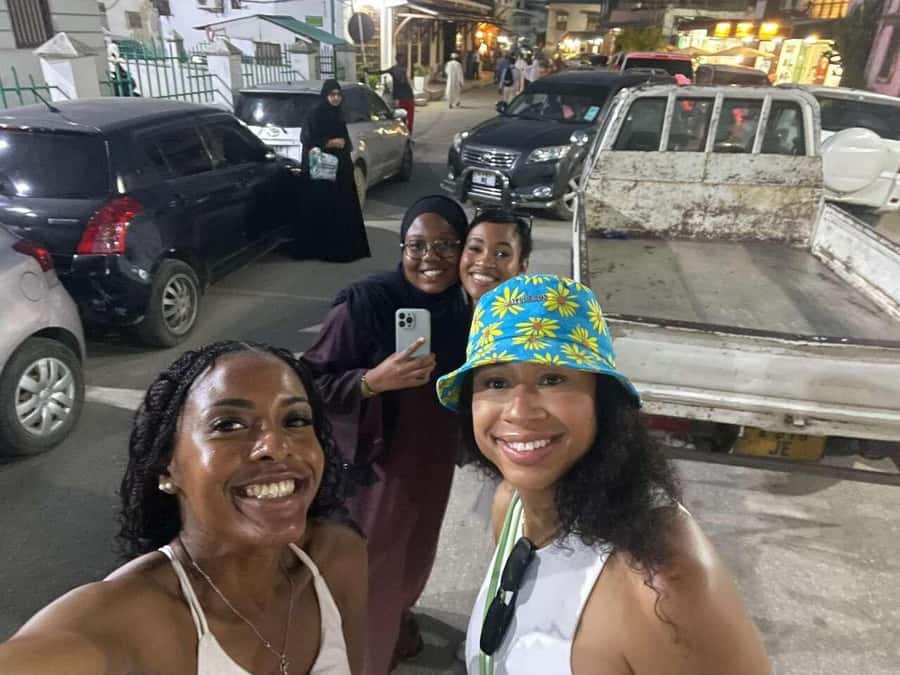
Stone Town Walking Tour with Female Guides
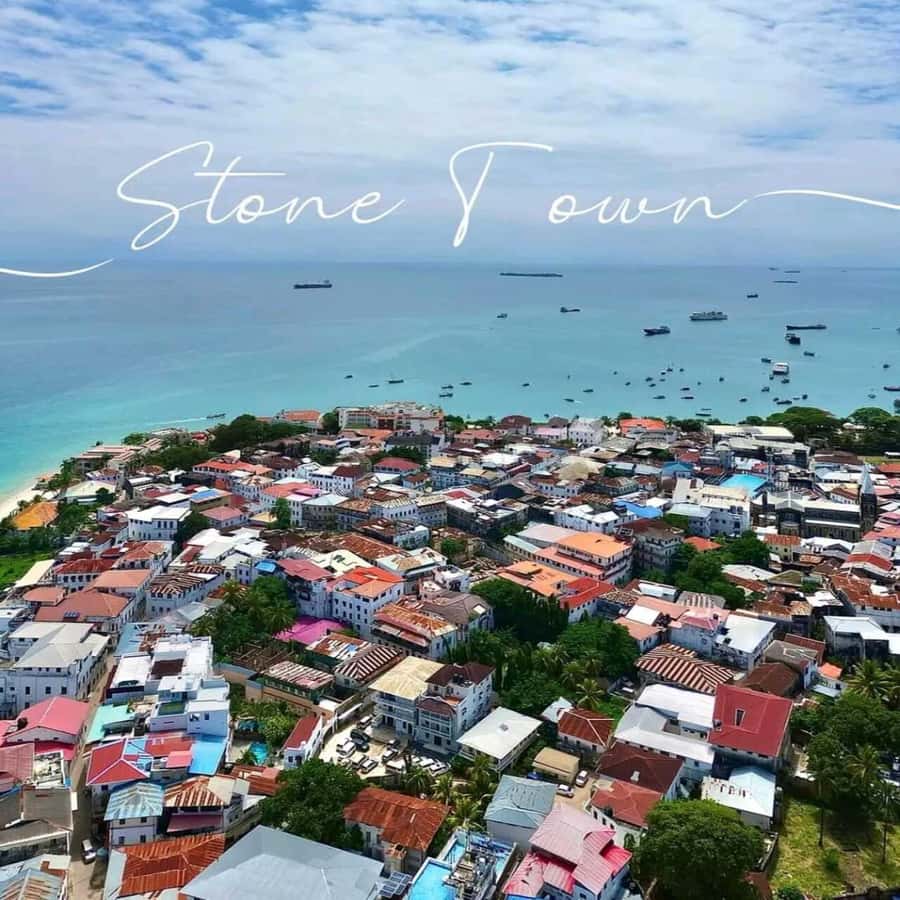
Stone Town’s story is written into its carved wooden doors, shaded balconies, and tight lanes. This private walking tour takes you from the former slave market to Darajani Market, the Sultan’s Palace, Forodhani Gardens, and Freddie Mercury’s childhood home, with a local female guide explaining how Arab, Indian, European, and Swahili influences met here.
I like the small private-group format, which gives you room to ask questions and set a comfortable pace. I also like the useful mix of serious history, market life, coffee, shopping, and landmark stops. At $19, it is a good introduction to central Stone Town, though the extra admission fees add up and some major buildings may be closed for renovation.
Key points to know
- A private three-hour walk: Hotel pickup and drop-off are included within Stone Town.
- Damtu has earned especially warm praise: She is described as friendly and well informed, making her a strong guide choice if she is assigned to your group.
- The former slave market comes first: Allow an extra $10 per person if you want to enter.
- Freddie Mercury’s birthplace is a photo stop: Entry to the museum costs about $8 per person and is not included.
- Darajani Market brings everyday Zanzibar into the tour: Expect produce, fish, meat, spices, and local shopping.
- Check current building access: Recent feedback says the Old Fort and House of Wonders were closed for renovation, so the route may focus more on streets, markets, and paid sights.
Why Stone Town works best on foot
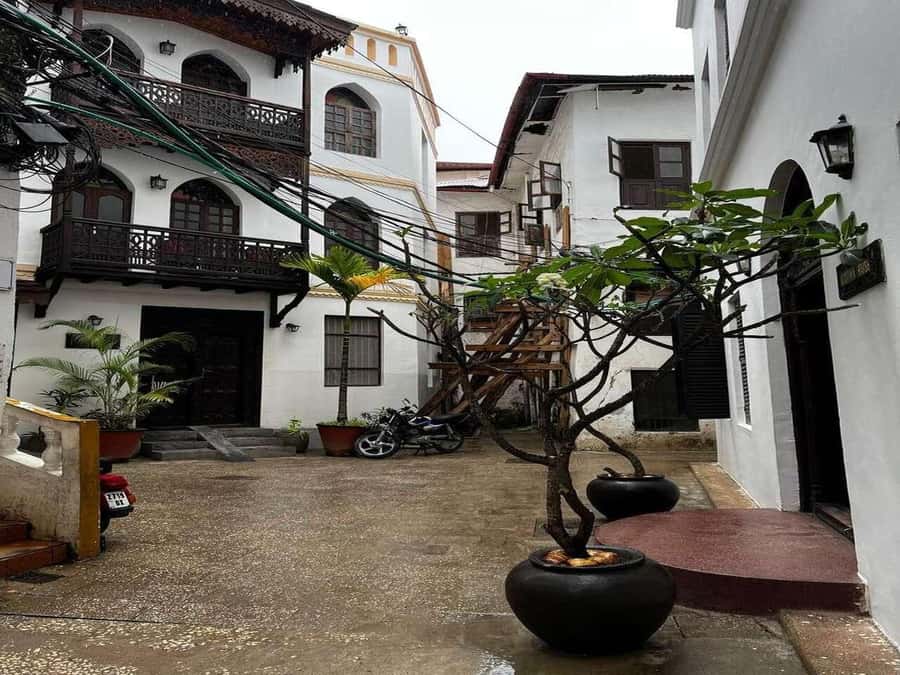
Stone Town is compact, crowded with details, and easy to misunderstand if you rush through it. A walking tour gives you time to notice the curved doorways, carved shutters, balconies, and old walls that can disappear when you are focused only on getting from one major sight to the next.
The city reflects Swahili culture shaped by Arab, Indian, Portuguese, and European connections. That mix appears in the buildings, religious sites, food, markets, and street names. The old city was designated a UNESCO World Heritage Site in 2000, but its value is not only architectural. Stone Town also forces you to confront Zanzibar’s role in the East African slave trade.
This tour begins in that difficult past rather than saving it for a footnote. That is the right choice. You get a clearer sense of the city when you understand both its wealth and the human cost behind it.
More Stone Town Walking Tours in Zanzibar
- Zanzibar Stone Town Walking Tour
★ 5.0 · 145 reviews - Stone Town Historical Walking Tour
★ 5.0 · 143 reviews - Spice Tour + Stone Town Tour + Prison Island
★ 4.5 · 130 reviews
Starting at the former slave market
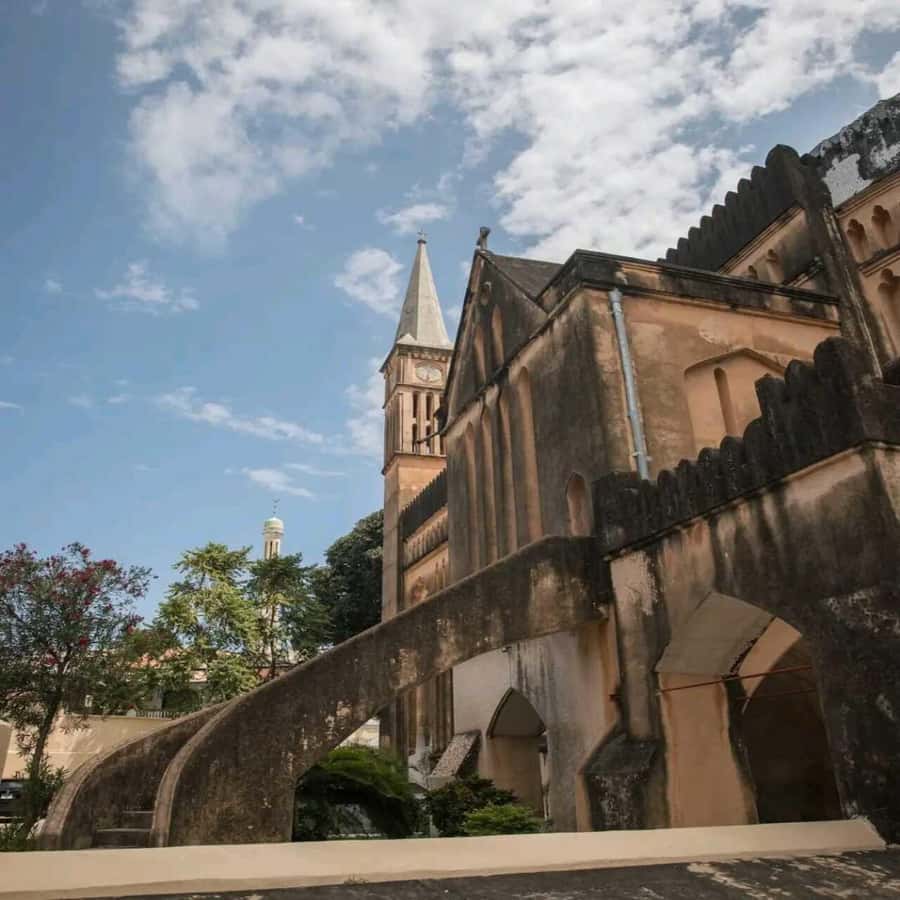
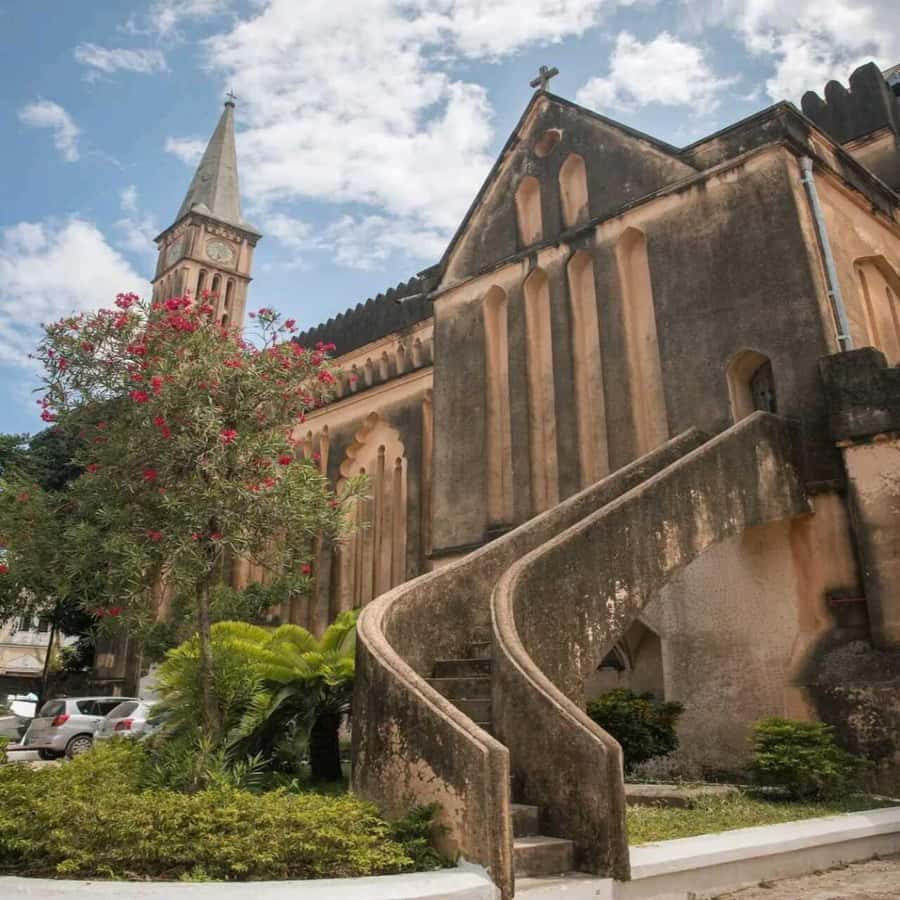
The first major stop is the former East African slave market, now the site of the Anglican Cathedral. Admission is not included and costs $10 per person.
This is the most serious part of the walk. Your guide explains the slave trade in East Africa and connects the site with missionaries and explorers such as David Livingstone. The visit is important, but it is not light sightseeing. Give yourself time to listen and absorb the setting.
The cathedral adds another layer to the site. Its presence reflects the later efforts of missionaries to oppose the trade, while the surrounding buildings point back to the commercial system that once operated here. You are not simply checking off an old church. You are looking at a place where Zanzibar’s religious, political, and economic stories meet.
If your main goal is architecture and shopping, this stop may feel heavy. That is also why it belongs early in the route. It gives context to the rest of the city.
Reading Stone Town through its doors and lanes
From the former slave market, the walk moves through narrow streets toward the market district. The lanes are one of the tour’s best features because they show Stone Town at eye level.
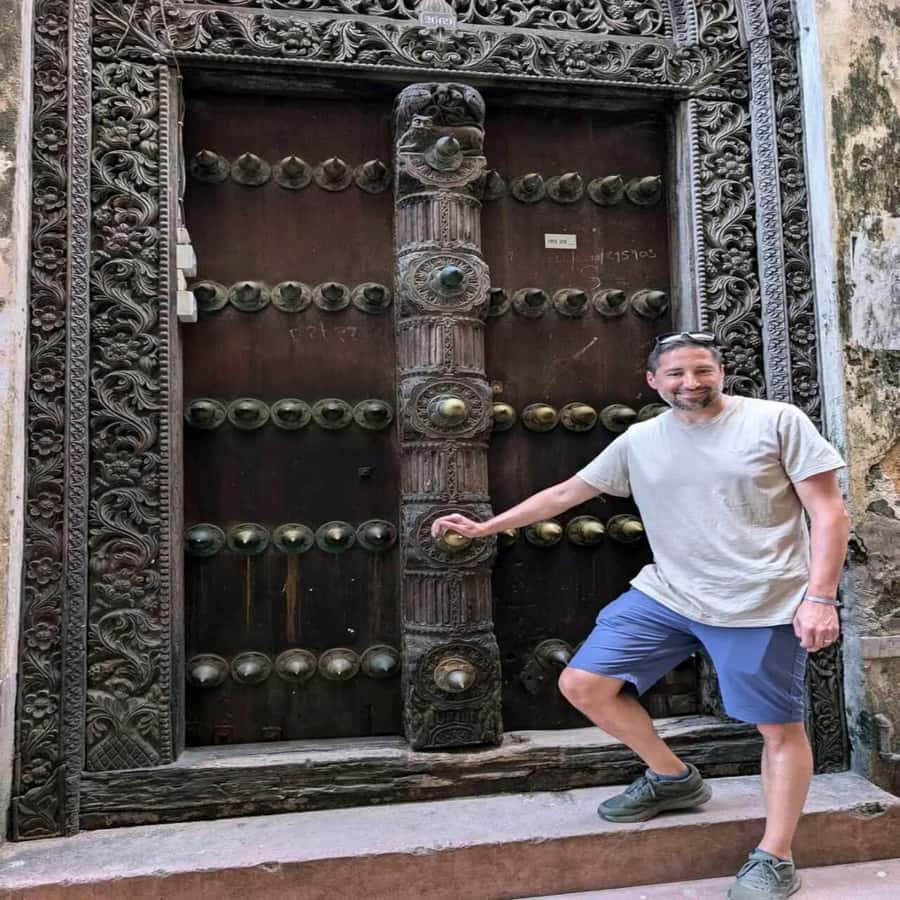
Look for the large Zanzibari doors. Their carved designs, brass studs, and heavy frames reflect status, trade, and cultural influence. You will also pass balconies and aging facades that make the city feel layered rather than polished.
The route is on foot, so comfortable shoes matter. Stone Town’s streets are narrow, and the experience is more about short turns, close-up details, and sudden views of courtyards or waterfront areas than long open walks. Keep your camera ready, but do not let it distract you from the guide’s explanation.
The tour is listed as three hours, while the practical duration is approximately two hours and 45 minutes. One part of the schedule describes only one hour of guided sightseeing, so you should treat the timing as approximate. The walking route, photo stops, and any paid entries can affect the pace.
Darajani Market: the city’s working center
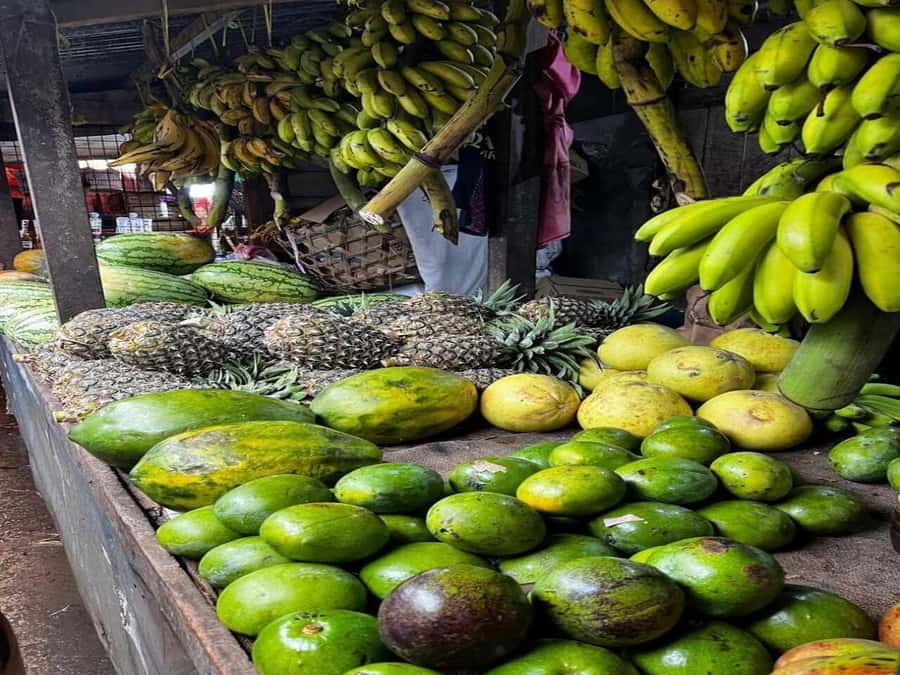
Darajani Market, established in 1904, brings you into the everyday business of Stone Town. You will see stalls selling fruit, vegetables, fish, meat, spices, and other local goods.
This is not a staged cultural display. It is a working market, and that makes it useful for understanding Zanzibar beyond its old palaces. Your guide can help identify spices and produce, while you get a chance to photograph the colors and activity around you.
You can also shop here, though the tour is not built around a long buying session. Bring cash if you want souvenirs, spices, or snacks. The market can be visually rich and crowded, so stay close to your guide and keep your belongings secure.
The fresh fish and seafood offer a direct link to Zanzibar’s Indian Ocean setting. The fruit, vegetables, and spices show the importance of local agriculture and trade. It is a short stop, but it gives the walking tour a welcome change of pace after the slave market.
Same country, a completely different kind of safari:
- Zanzibar: Quad Bike Adventure departing from Kendwa or Nungwi
★ 4.9 · 1,233 reviews - Zanzibar: Prison Island and Nakupenda Boat Trip with Lunch
★ 4.1 · 882 reviews - Skydive Zanzibar | Tandem Skydive
★ 5.0 · 877 reviews - Mnemba Island: Dolphin Swim & Snorkeling with Optional Lunch
★ 4.3 · 591 reviews
Coffee and a pause at Zanzibar Coffee House
The route includes a stop at Zanzibar Coffee House, where you can sit down with a cup of coffee. This break matters more than it may seem.
A three-hour walk through tight streets and busy market areas can become tiring, particularly in warm weather. A coffee stop gives you time to rest, ask your guide questions, and sort through what you have seen.
The information provided does not state that coffee is included in the $19 price, so plan to pay for your own drink. It is a small extra cost, but you should know the difference between a provided bottle of water and purchased refreshments.
The Sultan’s Palace and Zanzibar’s royal past
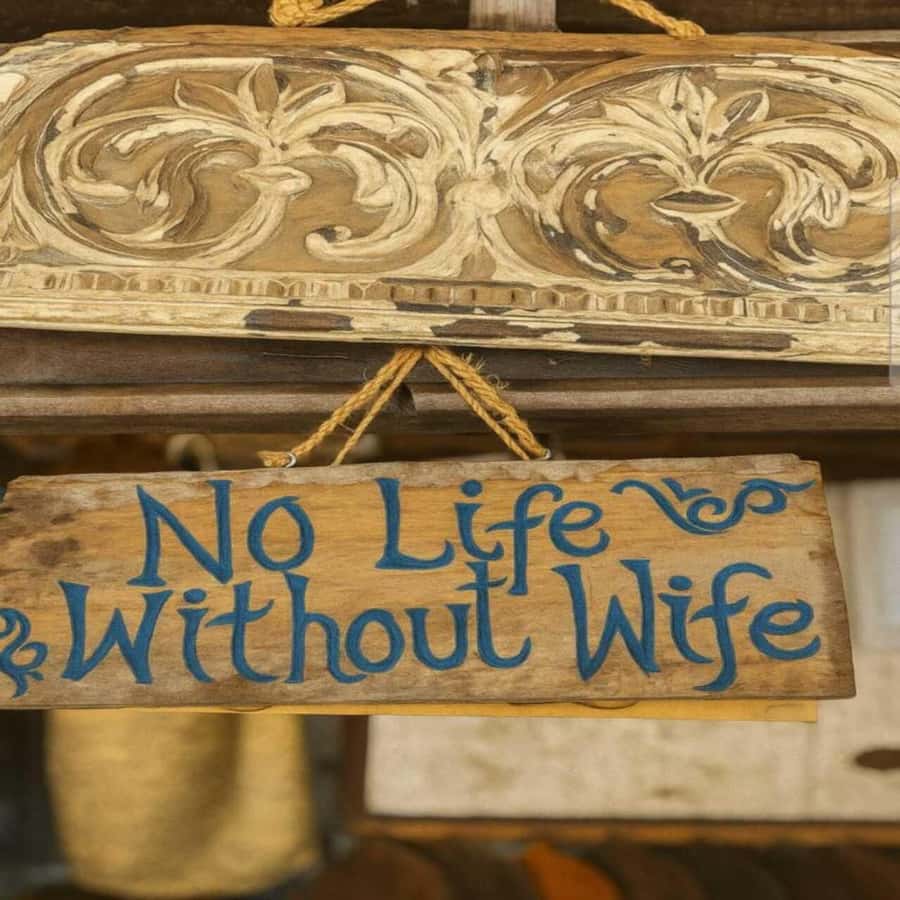
The Sultan’s Palace offers a look at the former Zanzibar Sultanate. The stop helps explain how Stone Town became a center of royal power and international trade.
The palace is valuable for the story it tells about authority and daily life at the top of Zanzibar’s old political order. It also contrasts with the market streets and former slave market, reminding you that different groups experienced the city in very different ways.
The tour description says you have the opportunity to explore the atmosphere inside the palace, but it does not specify an entry fee. Ask your guide which admissions are required on the day. The listed $10 slave market fee and roughly $8 Freddie Mercury Museum fee are the clearly stated extras.
Forodhani Gardens and the Old Arabic Fort
Forodhani Gardens is known for evening food stalls serving seafood, grilled items, sugarcane juice, Zanzibari pizza, and other local dishes. The tour takes you there as part of the city walk, but the schedule does not promise an evening food tasting.
If you visit during food-stall hours, you may find it useful for dinner or a snack. Bring cash and ask your guide which items are worth trying. Since no meal is included, food purchases are your responsibility.
Nearby, the Old Arabic Fort adds another layer to Stone Town’s past. The fort was built quickly and later served different purposes, including a battle arena and an early railway station. That changing use is a reminder that old buildings are not frozen in one historical moment.
There is an important practical warning here. Recent feedback from January 2026 said the Old Fort and House of Wonders were closed for renovation. Conditions can change, but you should check access before booking if these two buildings are the main reason you want the tour. If they remain closed, your guide can still explain their role and show you the exterior, but the visit will feel less complete.
House of Wonders and the changing city skyline
The House of Wonders, also called Bait el-Ajab, is described as a ceremonial palace and one of Stone Town’s most prominent buildings. It was once known as the tallest building in East Africa.
Its name suggests grandeur, and its location makes it an easy landmark during a walking route. The building helps you picture the formal side of the old sultanate, in contrast with the narrow residential lanes nearby.
Again, recent information says it was closed for renovation. Do not assume you will enter. The outside may still be part of the route, but your guide should explain what is accessible when you arrive.
Freddie Mercury’s birthplace
The Freddie Mercury stop gives the tour a modern pop-culture connection. The Queen frontman, singer, songwriter, and guitarist was born in Stone Town, and the route takes you near the house associated with his childhood.
A photo stop outside is included. Museum entry is optional and costs about $8 per person. This is a useful distinction: you can see the exterior and hear his story without paying the museum fee.
If Freddie Mercury is a major reason you want to visit, budget for the museum and confirm that it is open. If your interest is more casual, the photo stop may be enough. The visit is relatively brief, but it breaks up the older political and religious themes with a personal story that connects Stone Town to the wider world.
Notre Dame de Zanzibar and the final shopping walk
The French Catholic Cathedral, Notre Dame de Zanzibar, is another important architectural stop. Its sculpted design and central location reflect the presence of Catholic missionaries in a city where Islamic, Christian, and other cultural influences have long met.
The cathedral works best as part of the larger story rather than as a stand-alone attraction. After the former slave market, Sultan’s Palace, and Anglican Cathedral, it helps you see how different faiths left their mark on Stone Town.
The last part of the tour returns to the narrow lanes, Zanzibar doors, souvenir shops, and small boutiques. This is your chance to browse at a slower pace and pick up locally made items. You also get some free time to explore on your own before returning to the pickup point or your hotel.
The shopping portion is flexible rather than a dedicated retail tour. If you want to buy something, ask your guide about fair prices and suitable places. A local guide can also help you avoid wasting time in shops that do not interest you.
What the $19 price really covers
At $19 per person, the tour offers solid value if you want a guide, hotel pickup, bottled water, and a structured introduction to Stone Town. The private-group format is especially useful because you are not tied to a large crowd or a fixed lecture.
The price does not include the former slave market admission of $10 or the Freddie Mercury Museum admission of about $8. Add those fees and the basic outing can cost around $37 per person before coffee, food, or souvenirs.
That remains reasonable for a private three-hour experience, but the value depends on what is open. If the Old Fort and House of Wonders are closed, you are paying mainly for the guide, market, streets, churches, palace area, and the included Freddie Mercury photo stop.
The tour includes pickup and drop-off in Stone Town. You should wait at your hotel reception, and the guide or driver will collect you there. Pickup outside Stone Town is not stated as included, so confirm your location before reserving.
Guides, languages, and pace
The experience is offered with a live guide in English, French, German, Italian, or Swahili. The provider specializes in local guiding and lists French-speaking connections as well.
Damtu received particularly strong praise for being friendly and well informed. If you can request her by name, do so, though the booking information does not guarantee a particular guide. Another recent booking described the guide as personable, but noted that her English needed improvement. That is worth keeping in mind if detailed English explanations are essential to you.
A private group gives you more control than a public walking tour. You can ask for more time at the slave market, slow down for photographs, or spend less time shopping. The guide’s language ability and communication style will still shape the experience, so choose your preferred language carefully when booking.
The tour is suitable for children, with ages zero to four joining free and ages six to twelve receiving a reduced price. The information does not state the rate for five-year-olds, so ask before booking.
Practical advice before you go
Wear comfortable shoes. The route covers narrow streets and lasts close to three hours, with most sightseeing on foot.
Bring a camera and cash. Cash is useful for market purchases, coffee, food at Forodhani Gardens, souvenirs, and the additional admission fees.
Bottled water is provided, but you may still want extra water in warm weather. The tour is not suitable for people with altitude sickness, although Stone Town itself is at low elevation. If that restriction applies to you, ask the provider for clarification before booking.
Free cancellation is available up to 24 hours in advance, and you can reserve now and pay later. Those terms are helpful if your Zanzibar plans are still shifting, but they do not change the need to confirm renovation closures and entry fees.
Who should book this Stone Town walk?
I would choose this tour if you are visiting Stone Town for the first time and want the main stories explained in one compact outing. It suits people who enjoy architecture, markets, local history, photography, and a few well-known cultural stops.
It is also a good match for solo visitors, couples, families with older children, and anyone who prefers a private group. The female-guide focus may appeal to you if you want to support local women working in tourism or would feel more comfortable with a woman leading the walk.
I would be more cautious if you want long visits inside every landmark. The schedule is broad, and several stops are viewed from outside or treated as short visits. Renovation closures can also reduce the number of interiors available.
Should you book it?
Book this Stone Town walking tour if you want a friendly local guide, a private pace, and a practical introduction to the city for $19. The former slave market, Darajani Market, Zanzibar doors, Sultan’s Palace, and Freddie Mercury photo stop give the route a good range.
Before paying, confirm which buildings are open, whether you can request Damtu, and which admission fees apply on your date. If the Old Fort and House of Wonders are still closed, book it for the guide and street-level experience, not for a full museum tour. That small check will help you decide if the tour matches your expectations.
FAQ
How long does the Stone Town walking tour last?
The tour is advertised as three hours, with the practical duration listed as approximately two hours and 45 minutes.
What is included in the price?
The $19 price includes guiding, bottled water, hotel pickup and drop-off within Stone Town, a licensed local guide, and a photo stop at Freddie Mercury’s childhood home.
Is the former slave market admission included?
No. Entry to the former East African slave market costs $10 per person and is paid separately.
Can I enter the Freddie Mercury Museum?
The tour includes a photo stop near Freddie Mercury’s childhood home. Museum entry is optional and costs approximately $8 per person.
Which languages are available?
Live guiding is available in French, English, German, Italian, and Swahili.
Is this a private tour?
Yes. The experience is offered for a private group.
Is hotel pickup included?
Yes. Pickup and drop-off are included in Stone Town. You should wait at your hotel reception for collection.
Can children join the tour?
Children aged zero to four can join free, and children aged six to twelve receive a reduced price. The supplied information does not state the price for five-year-olds.
More Walking Tours in Zanzibar
- Stonetown: Food Markets and Street Food Walking Tour
★ 4.7 · 151 reviews - Walking City Tour in Zanzibar Island
★ 5.0 · 122 reviews - Zanzibar: Jozani nature walk and wildlife tour
★ 4.5 · 89 reviews - 3 Hours Private Stone Town Walking Tour
★ 5.0 · 71 reviews
Just added around Zanzibar
- Zanzibar: Maasai village and Nungwi turtles experience trip★ 4.9 · 16 reviews
- Zanzibar: Mnemba Atoll, Spice farm, Jozani forest & Lunch★ 3.9 · 3 reviews
- Zanzibar: Maasai World Tour with Cultural Practices★ 4.0 · 4 reviews
- Zanzibar: Kendwa Beach Professional Photoshoot★ 5.0 · 5 reviews
- ZANZIBAR: Jozani Forest,Salaam Cave, The Rock & Blue Lagoon★ 4.8 · 8 reviews
- Zanzibar: Jozani Red Colobos Monkey & Salaam Turtle Santuary★ 4.6 · 3 reviews
- Zanzibar: Jozani Forest,Red colobus,the Rock Restaurant tour★ 4.5 · 21 reviews
- Zanzibar: Jozani Forest Walking Tour★ 5.0 · 3 reviews
Stone Town Walking Tours, compared.

Stone Town, Spice Tour, Prison Island with Lunch
Read our review →
Stone Town, Spice tour & Prison Island with Lunch
Read our review →

3 Hours Private Stone Town walking Tour with Guide
Read our review →
Full-Day Private Stone Town +Spice Farm and Prison Island Tour
Read our review →
Stone Town Historical Cultural Walking Guided Tour
Read our review →
Browse the lists this tour appears in