Reviewed · QUAD BIKES
Zanzibar: Zenji ATV Tour
Zanzibar’s Zenji ATV Tour is more than a beach break with an engine attached. From Kiwengwa, you ride a new 400cc quad bike through plantations, rice fields, rural villages, and coastal tracks, with stops that bring you close to everyday island life.
I like the mix of off-road riding and local encounters, especially the fruit tasting beneath baobab, clove, cinnamon, and mango trees. I also like the route’s final beach stop, where you can cool down with fruit and drinks after several hours in the sun.
The main caution is that the amount of riding can vary. One recent account described about two hours of actual quad driving, with long village and humanitarian stops and more paved-road riding than expected. Ask for a clear route outline before you set off.
Key points to know before booking

- New 400cc quads: The tour uses 2024 models, with helmets, sunglasses, and raincoats supplied.
- A rural route: Expect plantations, rice fields, sugar cane, villages, a fish market, a school, and Zanzibar’s only water dam.
- Fruit and drinks included: Papaya, pineapple, and other organic fruit are served during the outing.
- A beach finish: The ride ends by turquoise water, with shade and refreshments available.
- Free local transfer: Pickup is free within 10 miles of Kiwengwa. Partner drivers can arrange paid transport from farther away.
- Driving rules matter: You must be at least 16, hold a valid driver’s license, and wear closed-toe shoes.
Riding from Kiwengwa into rural Zanzibar
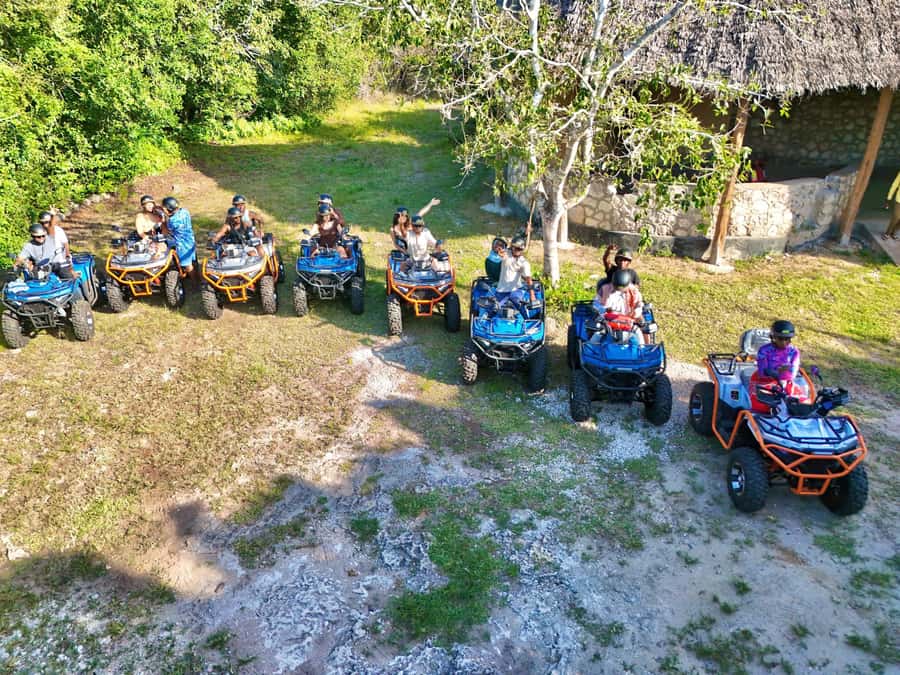
The meeting point is in Kiwengwa, reached by following the supplied Google Maps location. A billboard on the main road helps you spot the base. If you are staying within about 10 miles, the transfer is free. From farther away, the operator can arrange round-trip transport through partner drivers for an additional fee.
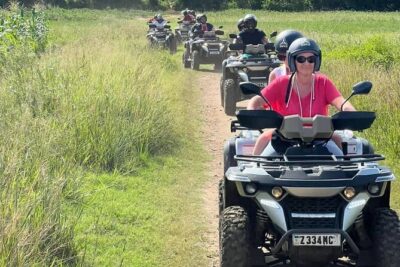
At the base, you receive a safety briefing before taking out a quad. The equipment includes a helmet, sunglasses, and raincoats. The bikes are described as brand-new 2024 models, which is useful if you care about braking, handling, and general machine condition rather than simply wanting the lowest-cost ATV outing.
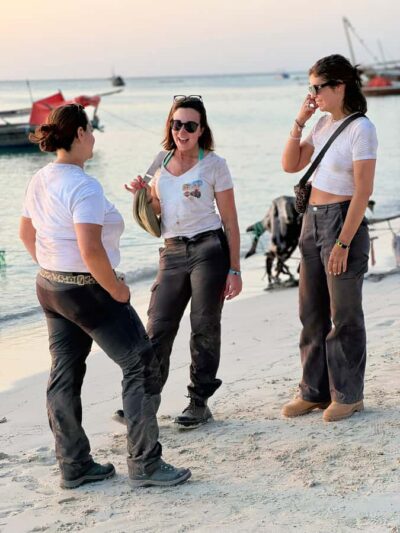
You need a valid driver’s license, and the minimum age for driving is 16. Bring closed-toe shoes, comfortable clothes, sunscreen, a hat, and water. Wear clothing you can wash easily. Dust, mud, and rain are all possible, since the tour runs in all weather.
The published timing is slightly inconsistent. The activity is described as four hours in some places and 3.5 hours elsewhere. I would plan for roughly four hours from departure to return, while understanding that the actual riding time may be shorter because of stops.
A few more Zanzibar trips to weigh up
- Zanzibar: Quad Bike Adventure departing from Kendwa or Nungwi
★ 4.9 · 1,233 reviews - Zanzibar: Quad Bike Adventure Tour to a Local Village
★ 4.9 · 166 reviews - 3-hour quad bike tours in Nungwi and Kendwa along coastal paths and through villages
★ 4.1 · 7 reviews
What the plantation section adds
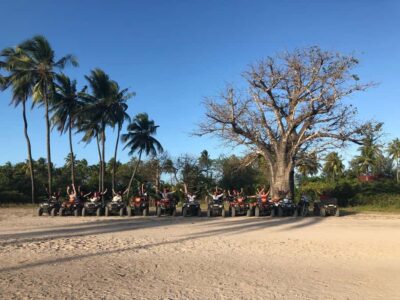
The first major stretch runs along dusty tracks through tropical plantations. You may pass baobabs, clove trees, cinnamon, mango trees, and other crops associated with Zanzibar’s farming traditions.
This is one of the tour’s strongest features because the plants are not presented as a display behind glass. You see them growing along the route, smell the spice trees, and hear how they connect to the island’s trade. The guide also stops for fresh fruit, with organic papaya and pineapple specifically included.
The fruit break gives the ride a welcome change of pace. An ATV tour can become a hot, repetitive exercise if it is only engine noise and dust. Here, the pause lets you rest, take photographs, and pay attention to the countryside around you.
Still, keep your expectations practical. This is not a dedicated spice farm tour, and the information will depend on the guide and the pace of the group. The route provides a short, useful introduction to Zanzibar’s crops rather than a full lesson in agriculture.
A look at Zanzibar’s only water dam
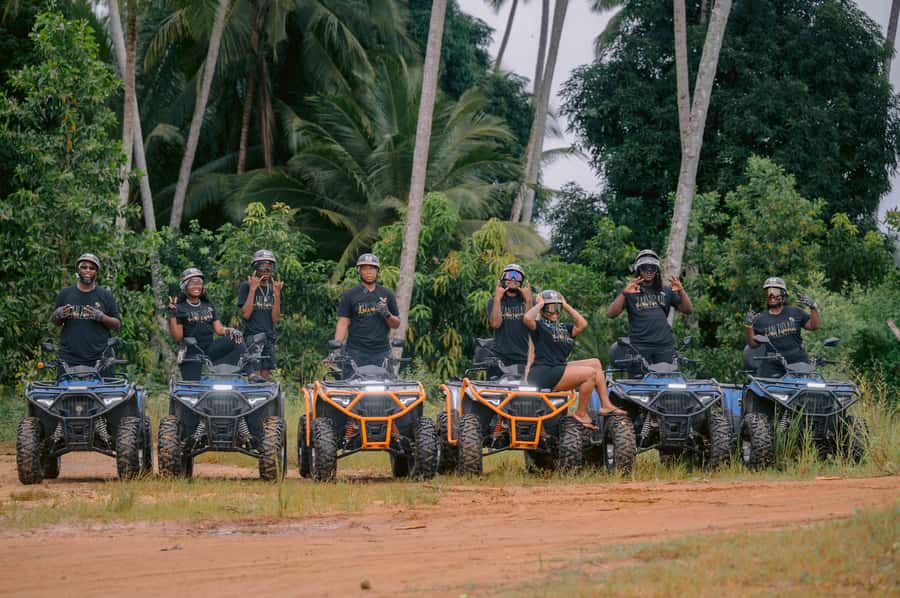
The route continues toward Zanzibar’s only water dam. This is an unusual stop because it adds a piece of the island’s working infrastructure to the day.
The dam is not simply another scenic pause. It helps show how people live with, collect, and manage water on an island where rural life depends closely on seasonal conditions and local resources. It also breaks up the ride with a destination that is different from the plantations and coast.
The supplied details do not give the dam’s name, the length of the stop, or whether you can walk close to the water. Treat it as a short viewing point rather than a major attraction in its own right.
Meeting people in rural villages
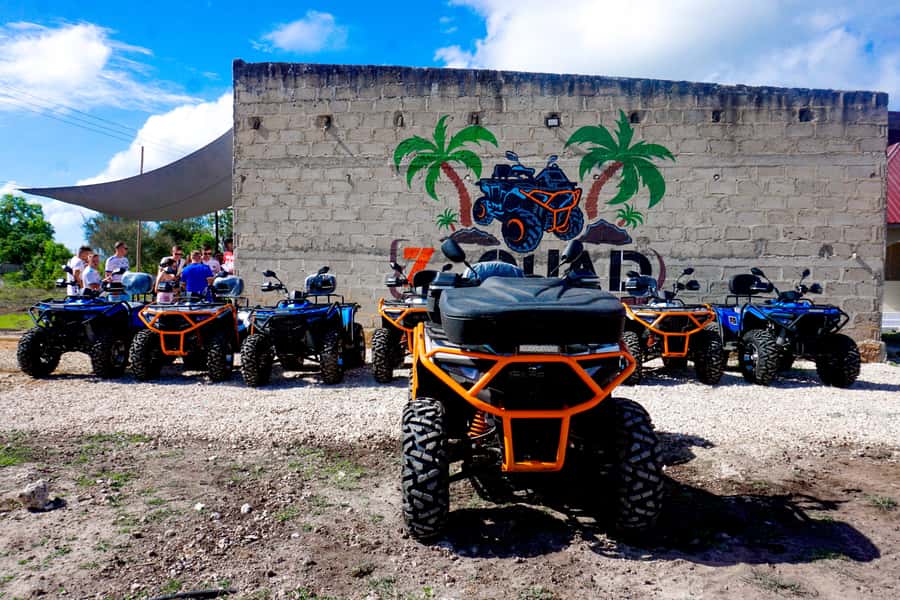
After the plantations and dam, the quads enter rural villages. The route may pass homes, coconut-rope makers, rice fields, and sugar cane. You can expect a more direct look at village life than you get from a resort area or a standard sightseeing drive.
A traditional home visit is included. You may share biscuits with children and see how daily life differs from the hotel zone. Another planned stop includes a local school and a look at traditional clothing.
These encounters can be the most meaningful part of the experience, but they require tact. Ask before photographing people, especially children. A small gift of biscuits may be welcomed, yet it is worth following the guide’s lead and avoiding the feeling that local families are being placed on display for a camera.
One account described long stops connected with humanitarian activities. That can be valuable if you want the tour to support local communities, but it also means less time on the quad. If your main goal is fast off-road riding, ask how much time is set aside for village and school visits.
The strongest version of this tour is one where the guide explains what you are seeing, introduces people respectfully, and gives you enough time to understand the setting without turning the visit into a staged performance.
Same country, a completely different kind of safari:
- Zanzibar: Prison Island and Nakupenda Boat Trip with Lunch
★ 4.1 · 882 reviews - Skydive Zanzibar | Tandem Skydive
★ 5.0 · 877 reviews - Mnemba Island: Dolphin Swim & Snorkeling with Optional Lunch
★ 4.3 · 591 reviews - Zanzibar: Prison Island & Nakupenda Boat Tour with BBQ Lunch
★ 4.4 · 554 reviews
Rice fields, sugar cane, and the fish market
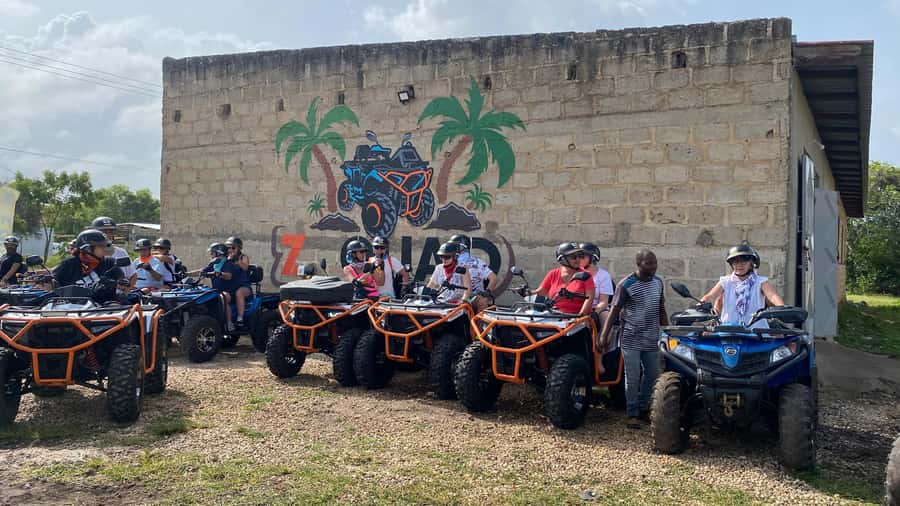
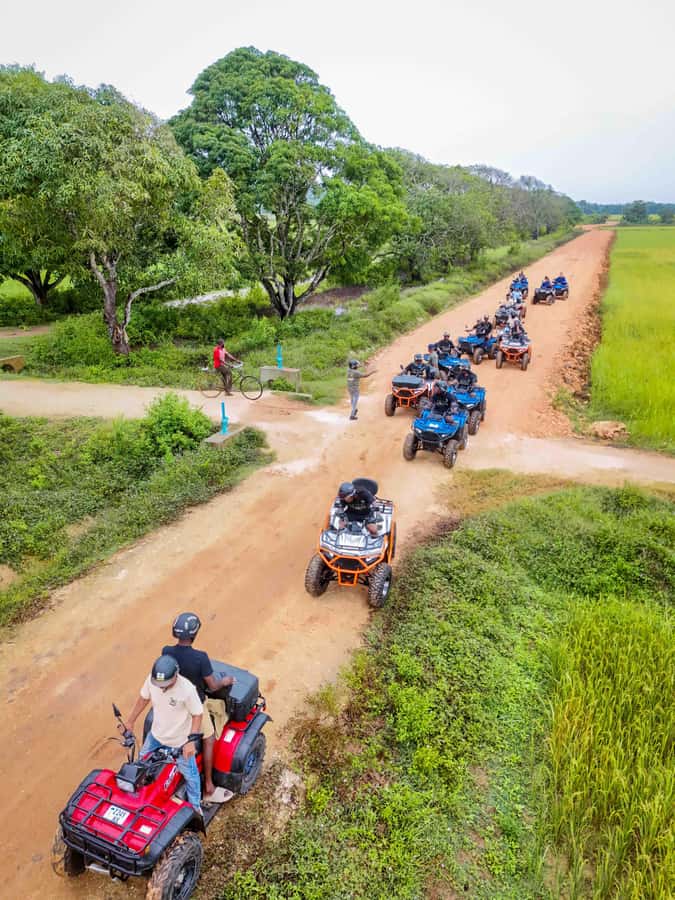
The route then moves through a wider mix of farmland and working areas. Rice fields offer a very different view from the dry tracks near the plantations. Depending on the season and weather, you might see green growth, open paddies, or people tending the fields.
Sugar cane adds another agricultural stop. Together, the rice and cane sections help explain why Zanzibar is more than a string of beaches and spice shops. You are riding through places where food and income come from the soil.
The fish market brings you closer to the island’s coastal economy. Fishermen haul in their catch, and the setting is likely to be active, practical, and less polished than a resort restaurant. That is precisely why it can be interesting, though visitors who dislike strong smells or crowded market conditions should be prepared.
The route description promises several different surfaces, but one account reported much more paved-road riding than expected. Road conditions and the day’s itinerary may affect the balance between dirt tracks and asphalt. Confirm this before booking if off-road driving is your top priority.
Finishing beside turquoise water
The final ride takes you to a beach with clear turquoise water. After dust, heat, village roads, and plantation trails, the coast gives the day a natural finish.
This is not described as a swimming session or a watersports stop, so do not book the excursion specifically for a long beach stay. The point is to pause, take photographs, and enjoy the contrast between Zanzibar’s inland communities and its famous shoreline.
Fruit and drinks are provided during the activity, and one account singled out the shaded rest with fruit after the ride as a particularly pleasant part of the day. That small detail matters. Four hours in the sun on a quad can be tiring, and a quiet recovery period makes the outing feel better paced.
Bring sunscreen and water even though drinks are included. A hat is also useful, but secure it carefully while riding.
How much riding will you actually do?
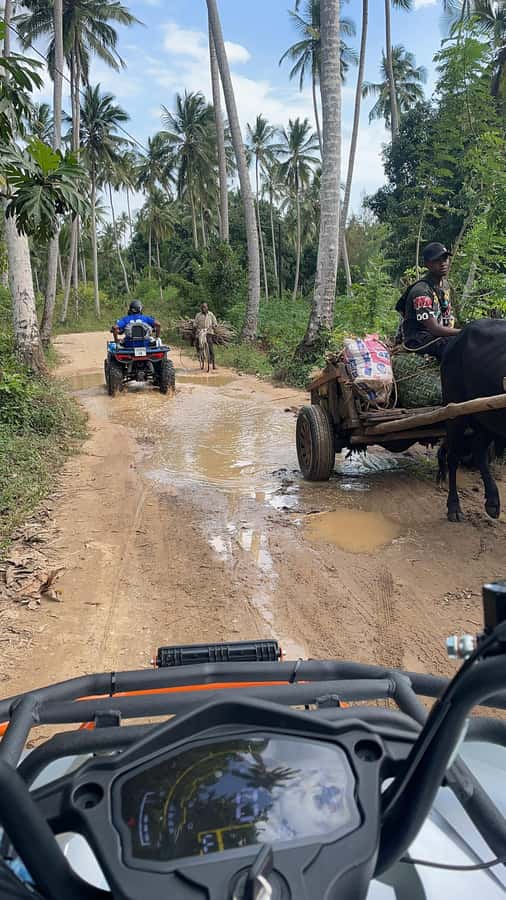
The stated duration is about 3.5 to four hours, but that does not mean four continuous hours behind the handlebars. The tour includes the safety briefing, fruit breaks, village visits, the school, the dam, the fish market, photographs, and the beach stop.
One account estimated only about two hours of actual riding, with much of that on paved roads. Other descriptions emphasize rice fields, forests, villages, and off-road tracks. The most sensible expectation is a mixed excursion, not a pure ATV racing session.
That distinction affects the value. If you want to spend nearly the whole outing driving hard over dirt, this may disappoint. If you want a half-day that combines quad riding with culture, farming, and coastal scenery, the varied pace is more appealing.
The quads are for exploration, not speed contests. Follow the guide, keep your distance from other riders, and slow down in villages and on public roads. Moderate physical fitness is enough for most eligible drivers, but the activity is not suitable for pregnant women, people with back problems, or people with vertigo.
Price and value for two people
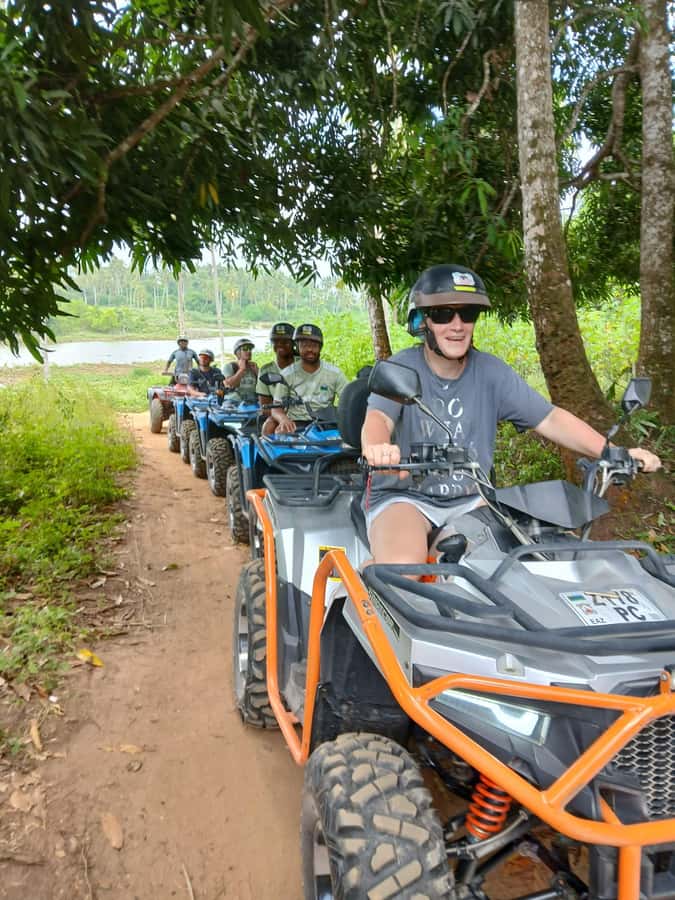
The price is $125 per group of up to two people. That makes the cost easier to judge than a per-person rate. For two people sharing the booking, it works out to $62.50 each before any extra transport from outside the Kiwengwa area.
The price includes the quad equipment, safety briefing, multilingual guide, fruit and drinks, and free transfer within the stated local pickup zone. It can be good value if you want transport, countryside sightseeing, and a guided ride in one half-day.
The calculation changes if you are staying outside Kiwengwa and need a paid partner transfer. Ask for the transport price before booking. Also clarify the photography arrangement. Professional photos are taken and offered at the end, but the information does not clearly say that a full set is included in the $125. One account paid extra and received only four usable photos featuring the pair, so confirm the cost, number, and delivery method if pictures matter to you.
The overall rating is 4.6 from 28 ratings, with strong praise for the friendly team, clear communication, scenery, and sense of everyday African life. That positive picture is balanced by the concern about limited riding time and extra photo charges. The tour is best value when you want the whole mix, not just the quad.
Guides, language, and group comfort
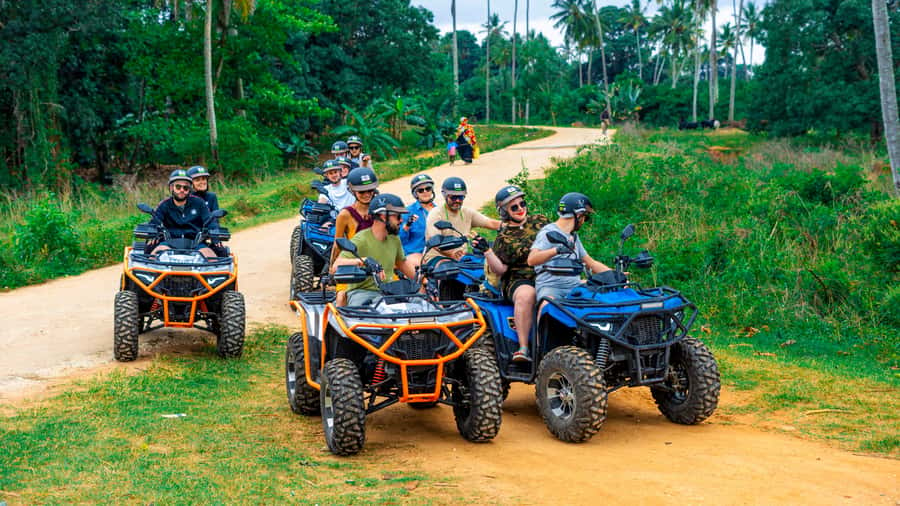
Live guides are available in Arabic, English, French, German, and Spanish. That is helpful during safety instructions and village visits, where a few extra explanations can make the difference between simply passing through and understanding what you see.
No individual guide names are provided, so you cannot request a particular person in advance. The guide’s role is especially important here because the experience depends on pacing, translation, road choices, and respectful introductions.
The group size is not stated. Ask how many quads usually ride together and if a private group can be arranged. A small group should make it easier to hear the guide, stop in villages, and maintain a comfortable pace. A larger group may mean more waiting at turns and more dust on narrow tracks.
Communication before the tour is reported as clear, which is useful for confirming pickup, clothing, timing, and the expected amount of off-road riding.
Safety, weather, and what to pack
The safety briefing comes before you ride, and helmets, sunglasses, and raincoats are supplied. You still need to bring practical personal items:
- Hat and sunscreen
- Drinking water
- Comfortable clothes that can get dirty
- Closed-toe shoes
- A phone or camera with protection from dust and rain
Slippers are not allowed. Smoking, alcohol, drugs, and littering are also prohibited.
The tour operates in all weather. A raincoat is provided, but you should dress for heat, dust, and possible rain. Wet tracks may change the pace and route, while strong sun can make the ride more tiring than expected.
You should also be comfortable with moderate physical activity. The combination of sitting on a quad, steering over uneven surfaces, stopping and starting, and dealing with heat may be uncomfortable for anyone with a back condition. The operator specifically excludes pregnant women, people with back problems, and people with vertigo.
Who will enjoy the Zenji ATV Tour?
I would recommend this outing to you if you want to see more of Zanzibar than the resort coast and enjoy driving as part of a broader cultural day. It suits couples, friends, and families with drivers aged 16 or older who hold the required license.
It is especially good for people who like variety. You get plantations, fruit, farmland, villages, a school, the water dam, a fish market, and a beach rather than one long stretch of similar track.
I would be more cautious if your priority is a technical ATV route, high speed, or uninterrupted dirt riding. The itinerary includes community stops and roads, and the amount of time spent actually driving may vary.
The tour also asks you to be thoughtful around village homes and children. If you prefer sightseeing that keeps a greater distance from local communities, a standard plantation or beach excursion may feel more comfortable.
Should you book it?
Book the Zenji ATV Tour if you want a half-day introduction to rural Zanzibar with a quad ride at its center, not a quad race with a few token stops. The best reasons to go are the new machines, multilingual guides, varied route, local fruit, and the chance to connect the island’s farms, villages, and coast in one outing.
Before paying, confirm three things: the expected amount of off-road riding, the length of village and school stops, and the exact photography fee. If those details match what you want, $125 for up to two people is a fair price, especially with local Kiwengwa transfer included.
The tour delivers its best value to curious riders who care as much about seeing daily life as twisting the throttle.
FAQ
Where does the Zenji ATV Tour start?
The meeting point is in Kiwengwa in Zanzibar’s Unguja South Region. The supplied Google Maps location leads to the base, which is marked by a billboard on the main road.
Is transportation included?
Round-trip transfer is free if you are staying in Kiwengwa within 10 miles of the meeting point. If you are farther away, partner drivers can arrange transportation for an additional charge.
How long does the tour last?
The activity is described as four hours, while the included details specify 3.5 hours. Plan for roughly four hours overall, including stops and the safety briefing.
What languages are available?
Guides are available in Arabic, English, French, German, and Spanish.
Do I need a driver’s license?
Yes. Anyone driving an ATV must be at least 16 years old and hold a valid driver’s license.
What should I bring?
Bring a hat, sunscreen, water, comfortable clothes that can get dirty, and closed-toe shoes. The operator provides a helmet, sunglasses, raincoats, and a safety briefing.
Just added around Zanzibar
- Zanzibar: Maasai World Tour with Cultural Practices★ 4.0 · 4 reviews
- Zanzibar: Maasai village and Nungwi turtles experience trip★ 4.9 · 16 reviews
- Zanzibar: Mnemba Atoll, Spice farm, Jozani forest & Lunch★ 3.9 · 3 reviews
- Zanzibar: Kendwa Beach Professional Photoshoot★ 5.0 · 5 reviews
- ZANZIBAR: Jozani Forest,Salaam Cave, The Rock & Blue Lagoon★ 4.8 · 8 reviews
- Zanzibar: Jozani Red Colobos Monkey & Salaam Turtle Santuary★ 4.6 · 3 reviews
- Zanzibar: Jozani Forest Walking Tour★ 5.0 · 3 reviews
- Zanzibar: Jozani Forest,Red colobus,the Rock Restaurant tour★ 4.5 · 21 reviews