
Reviewed · STONE TOWN WALKING TOURS
Zanzibar: Stone Town 3-Hour Walking Tour
Stone Town’s most powerful lesson is found in its streets, where a short walk links an Arab fort, a former slave market, spice stalls, and the home associated with Freddie Mercury. This three-hour tour gives you a useful first map of Zanzibar’s old city rather than leaving you to piece its story together alone.
I like the planned route through the Darajani fruit and spice market, and I like that the tour makes room for narrow lanes, Jaws Corner, and local curio shops. Guides such as Mohamed and Amari have been praised for clear explanations and helpful answers. The main concern is pace: three hours can feel tight, and one guide reportedly spent too long at a spice stall.
Key points at a glance
- A compact Stone Town introduction: Cover major landmarks, markets, religious sites, and waterfront areas in three hours.
- A serious look at the slave trade: Visit the Anglican Cathedral and former slave market site, a sobering part of Zanzibar’s past.
- Market time matters: Darajani Market adds everyday local life, with fruit, spices, and food stalls rather than polished tourist displays.
- Several languages are offered: Guides may lead tours in Spanish, French, German, Italian, or Russian.
- Private groups are available: This can help if you want more control over questions, shopping time, or the walking pace.
- Check the mobility details carefully: The tour is advertised as wheelchair accessible, but the route includes uneven, narrow streets and difficult access at the fort.
What the three-hour route is really like
You begin with a greeting and short briefing, followed by a walk toward the Old Fort, also called the Arab Fort. If you are staying in Stone Town, pickup is scheduled for 9:00 AM from your hotel lobby. Pickup and drop-off are included, which is useful if your accommodation sits outside the old center or if you would rather not arrange a taxi.
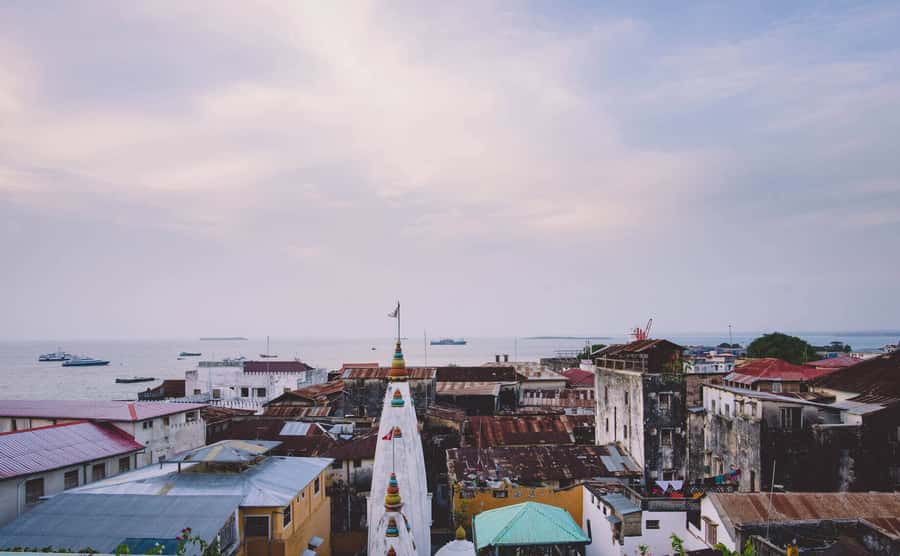
The route is built around the landmarks that explain Stone Town’s many layers. Arab and Swahili influences appear beside colonial-era buildings, Christian sites, market streets, and the Indian Ocean waterfront. You are not simply ticking off monuments. You are moving through the compact center where those influences sit side by side.
Three hours is enough for an introduction, but not for a slow, detailed museum day. You will want comfortable shoes, sunscreen, and a bit of patience when the streets become crowded or the group pauses at shops.
More Stone Town Walking Tours in Zanzibar
- Zanzibar Stone Town Walking Tour
★ 5.0 · 145 reviews - Stone Town Historical Walking Tour
★ 5.0 · 143 reviews - Spice Tour + Stone Town Tour + Prison Island
★ 4.5 · 130 reviews
Old Fort and House of Wonders
The Old Fort is one of the clearest starting points because its heavy walls give you an immediate sense of Stone Town’s defensive past. It is also known as the Arab Fort. The stop helps you understand why this waterfront city mattered to the powers that controlled trade around Zanzibar.
The House of Wonders is another major landmark on the route. Its name alone hints at its former importance, and its position near the fort places two of Stone Town’s best-known buildings in the same part of town. Your guide can connect the buildings to the wider story of the city, including the development of Swahili culture.
You should keep your expectations measured. The tour information does not promise a long interior visit at every landmark, and the schedule has several stops to cover. If you care most about detailed museum interpretation, ask your guide at the start how much time is planned inside each site.
The package includes an entrance fee to Sultan Palace. That is useful for your budget, though the stated route emphasizes the Old Fort, House of Wonders, and other stops more clearly than it explains the palace visit. Confirm the exact palace stop with your guide so you know where it fits into the walk.
Forodhani Gardens and the waterfront

Forodhani Gardens brings you closer to Stone Town’s public waterfront. It is a useful pause between the old buildings and the markets, and the setting helps show how much of the city’s life faces the sea.
The route also reaches the Zanzibar ferry terminal. This adds a practical side to the tour. You see a working point of arrival and departure, not just preserved buildings. It gives the walk a sense of how Stone Town connects with the rest of the island and the mainland.
The waterfront portion may be brief because the tour also includes the markets, cathedral, fort, palace, shops, and Freddie Mercury connection. If you want time for photographs, say so early. The guide may be able to adjust the pace, especially in a private group.
Darajani Market, where the city feels most everyday
Darajani Market is one of the strongest parts of the itinerary for anyone who wants more than old architecture. The fruit and spice market gives you a look at the ingredients and shopping habits that support daily life in Zanzibar.
This is not a quiet, tidy market built only for sightseeing. You can expect narrow passages, stalls, and plenty of movement. Keep your bag close, watch your footing, and do not block a vendor’s workspace while taking pictures.
The market is also where the tour’s shopping element needs a little care. One guide was criticized for directing the group to a particular spice stall, with the concern that prices elsewhere might be lower. I would treat any recommended stall as one option, not an obligation. Compare prices, ask what is included, and remember that the most convenient stop is not always the best value.
The tour includes the guide fee for the markets, so you are not paying an extra entry charge for the market visit. Your purchases are separate. If you want genuine shopping time, protect it by telling the guide that you would like a few minutes to browse rather than only watch a demonstration.
Same country, a completely different kind of safari:
- Zanzibar: Quad Bike Adventure departing from Kendwa or Nungwi
★ 4.9 · 1,233 reviews - Zanzibar: Prison Island and Nakupenda Boat Trip with Lunch
★ 4.1 · 882 reviews - Skydive Zanzibar | Tandem Skydive
★ 5.0 · 877 reviews - Mnemba Island: Dolphin Swim & Snorkeling with Optional Lunch
★ 4.3 · 591 reviews
The former slave market and Anglican Cathedral
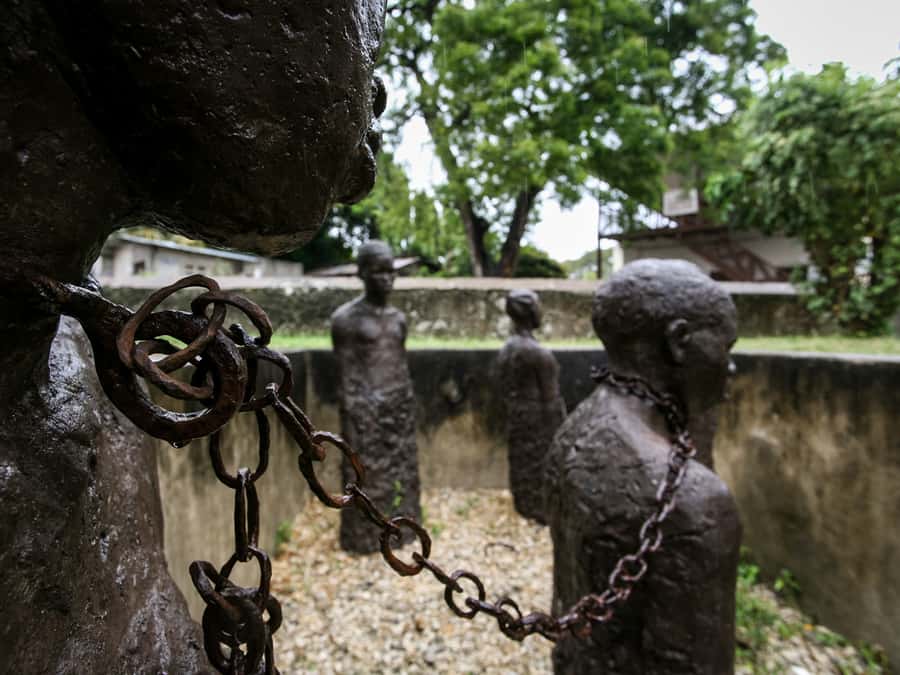
The visit to the Anglican Cathedral is the most serious stop on the walk. The church occupies the site of the former slave market, which operated for centuries as a center of the East African slave trade.
The historical account connected with the site includes people captured and abducted from Malawi, Congo, Zambia, and other parts of East Africa. This is not a light sightseeing stop, and the setting calls for quiet attention. A guide can help explain the site’s role and connect it to Zanzibar’s wider trading past.
The quality of this stop depends heavily on the guide. One account describes a guide who did not enter the museum with the group, saying that guides could not speak inside. That may leave you without the context you expected. If the former slave market is a main reason you booked, ask directly at the beginning if the guide will accompany you into the museum and explain the site before or after the visit.
This is also a place to dress respectfully. Clothing should reach below the knees. That rule matters near religious buildings and helps you avoid being turned away or having to buy a covering.
Freddie Mercury’s Stone Town connection
The tour includes a visit to the house associated with Freddie Mercury. This offers a sharp change of mood after the former slave market and cathedral. It connects Stone Town to a modern international music story and gives the walk a personal detail among the larger political and religious landmarks.
You should clarify what the stop includes. One booking account said the group did not see the Freddie Mercury museum and was told it was not included in the price. The tour description promises a visit to Freddie Mercury’s house, but it does not clearly promise museum admission. Ask if you will see the exterior, enter a museum, or simply be shown the location.
That small question can prevent disappointment. The house connection may be a quick photo stop rather than a full exhibition visit. It is still a worthwhile part of the route for music fans, but it should not be treated as the main attraction.
Curio shops, Jaws Corner, and narrow lanes
Stone Town is best understood on foot, and the narrow lanes are a major reason to choose a walking tour. The route includes curio shops and bazaar streets, with leisure time to explore on your own.
Jaws Corner coffee shop is another memorable location. It helps you see the informal meeting places tucked into the old city. The stop is less about a grand monument and more about noticing how Stone Town’s small corners hold local character.
The walking itself can be rewarding, but you need suitable footwear. Streets are narrow and may be uneven. A short distance on a map can take longer than expected when the group pauses, navigates a tight lane, or waits for space to pass.
Shopping time is limited by the broad itinerary. One person found the tour ended with spare time, while another wished for a longer stay to shop. That difference likely comes down to the guide and the group’s pace. If shopping is important to you, say it clearly rather than assuming the schedule includes an extended browse.
How much value do you get for $27?
At $27 per person, this is a reasonably priced orientation to Stone Town. The price includes hotel pickup and drop-off, a guide, government taxes, market fees, and an entrance fee to Sultan Palace. For a first visit, having transport and a guide bundled into a short morning can save you time and remove some planning work.
The value comes mainly from the route and the explanations. Stone Town’s lanes can be confusing, and a guide can point out places you might pass without noticing. The strongest guide experiences described here involved clear explanations, historical stories, and careful answers to questions. Guides named Mohamed and Amari were singled out for attentive service and useful interpretation.
The price is less attractive if your guide rushes the landmarks, skips an included stop, or holds the group too long at a shop. The tour covers a lot, so you should confirm the priorities before setting off. Ask about the Sultan Palace entry, the former slave market museum, and exactly what is meant by the Freddie Mercury stop.
A private group is available. That option may cost more depending on the booking arrangement, but it can improve the value for families or small groups that want to ask questions, take photos, or spend less time shopping. A shared group is likely better for a simple overview at the lowest price, while a private booking gives you more control.
Guides and language choices
The live guide option includes Spanish, French, German, Italian, and Russian. That matters on a history-focused walk because the sites make more sense when you can ask questions and follow dates, names, and cultural terms comfortably.
The tour also aims to explain the origin of Swahili. That is a useful theme because Stone Town’s identity cannot be reduced to one outside influence. The guide’s role is to show how language, trade, religion, and local life connect across the old city.
The experience can vary with the individual guide. Mohamed received praise for explaining Stone Town’s stories and answering questions, while Amari was credited with helping visitors understand why the city deserved a guided visit. Those names may not be assigned to your booking, so focus on asking for the language and guide style that suit you.
Dress, photos, bags, and access
Wear clothing that falls below the knees. This is a clear requirement, especially for the Anglican Cathedral and the former slave market site. Sunscreen is also worth packing, and comfortable shoes will make the walking much easier.
Large bags and luggage are not allowed. Bring only what you need for three hours. A small day bag is the sensible choice, but the tour specifically warns against large bags, so avoid arriving with airport luggage.
Ask permission before photographing people. Markets are working places, and a polite request takes only a moment. It also helps keep the encounter respectful.
The accessibility information needs careful attention. The activity is marked wheelchair accessible, but it is also listed as unsuitable for people with mobility impairments. A direct account describes the streets and fortress entrance as unsuitable for a wheelchair. Because the route includes narrow lanes, historic structures, and market areas, I would not book this for a mobility-impaired participant without receiving specific confirmation about the exact route and entrances.
Cancellation and pickup basics
You can cancel up to 24 hours before the activity for a full refund. The reserve-now, pay-later option lets you hold a place without paying immediately, which is useful if your Stone Town plans are still shifting.
Pickup is included from your hotel. If you are staying in Stone Town, the stated pickup time is 9:00 AM, with the guide meeting you in the lobby. Confirm the time and location in advance. One booking had a communication problem about pickup, though it was resolved through personal contact.
The tour lasts three hours, and starting times depend on availability. Since the route includes several major sites, an early start can help you avoid spending the whole walk under the strongest midday sun. The activity ends after three hours, so plan any longer shopping session or museum visit separately.
Who should book this Stone Town walk?
I would choose this tour if you have only one morning in Stone Town and want the main landmarks explained in one organized route. It suits first-time visitors who want a mix of architecture, markets, local streets, and difficult historical subjects.
It also works well for people who prefer a guide in Spanish, French, German, Italian, or Russian. A private group makes sense if your party has a fixed pace or wants more time for photographs and questions.
I would think twice if your priority is a long museum visit, serious shopping, or full wheelchair access. The three-hour schedule is broad rather than slow, and the route can be physically awkward. You may prefer to arrange a longer private walk if the former slave market, Sultan Palace, or Freddie Mercury site is central to your plans.
Should you book it?
Book this Stone Town tour if you want an affordable first look at the old city, especially the fort, markets, former slave market site, waterfront, and narrow lanes. The best version of the experience comes with an attentive guide who explains the setting and respects your time.
Before you start, confirm three things: how much time you will spend inside the former slave market museum, what the Freddie Mercury visit includes, and how shopping stops are handled. If those details match your priorities, $27 offers a practical introduction to Zanzibar’s most layered city.
FAQ
How long does the Stone Town walking tour last?
The tour lasts three hours and ends after the walking route is complete.
What is the price of the tour?
The listed price is $27 per person.
Is hotel pickup included?
Yes. Hotel pickup and drop-off are included. Guests staying in Stone Town are scheduled for pickup at 9:00 AM from the hotel lobby.
Which places are included in the route?
The route includes the Old Fort, also called the Arab Fort, the House of Wonders, Forodhani Gardens, Darajani fruit and spice market, Zanzibar ferry terminal, Freddie Mercury’s house, Zanzibar Curio Shop, Jaws Corner, the Anglican Cathedral, and other Stone Town streets.
Does the tour visit the former slave market?
Yes. The Anglican Cathedral is located at the former slave market site, which was used for centuries as a center of the East African slave trade.
Is the Sultan Palace entrance included?
Yes. The listed inclusions cover the entrance fee to Sultan Palace.
What languages are available?
Live guides are available in Spanish, French, German, Italian, and Russian.
Is the tour wheelchair accessible?
The activity is advertised as wheelchair accessible, but it is also listed as unsuitable for people with mobility impairments. The route includes narrow streets and historic entrances, so you should confirm access details before booking.
What should I wear and bring?
Wear clothing that reaches below the knees, bring sunscreen, and use comfortable walking shoes. Large bags and luggage are not allowed.
Can I cancel the booking?
Yes. You can cancel up to 24 hours in advance for a full refund. You can also reserve now and pay later.
More 3-Hour Experiences in Zanzibar
- 3-Hour Private City Tour in Zanzibar Island
★ 5.0 · 47 reviews - 3-Hour Private Stone Town Walking Tour
★ 5.0 · 44 reviews - Zanzibar: 3-hour Kayak Tour through the Mangrove Forest
★ 4.9 · 21 reviews - 3 Hour Community Walking Tour
★ 5.0 · 4 reviews
More Walking Tours in Zanzibar
- Stonetown: Food Markets and Street Food Walking Tour
★ 4.7 · 151 reviews - Walking City Tour in Zanzibar Island
★ 5.0 · 122 reviews - Zanzibar: Jozani nature walk and wildlife tour
★ 4.5 · 89 reviews - 3 Hours Private Stone Town Walking Tour
★ 5.0 · 71 reviews
Just added around Zanzibar
- Zanzibar: Maasai village and Nungwi turtles experience trip★ 4.9 · 16 reviews
- Zanzibar: Mnemba Atoll, Spice farm, Jozani forest & Lunch★ 3.9 · 3 reviews
- Zanzibar: Maasai World Tour with Cultural Practices★ 4.0 · 4 reviews
- Zanzibar: Kendwa Beach Professional Photoshoot★ 5.0 · 5 reviews
- Zanzibar: Jozani Red Colobos Monkey & Salaam Turtle Santuary★ 4.6 · 3 reviews
- ZANZIBAR: Jozani Forest,Salaam Cave, The Rock & Blue Lagoon★ 4.8 · 8 reviews
- Zanzibar: Jozani Forest Walking Tour★ 5.0 · 3 reviews
- Zanzibar: Jozani Forest,Red colobus,the Rock Restaurant tour★ 4.5 · 21 reviews
Stone Town Walking Tours, compared.

Stone Town, Spice Tour, Prison Island with Lunch
Read our review →
Stone Town, Spice tour & Prison Island with Lunch
Read our review →

3 Hours Private Stone Town walking Tour with Guide
Read our review →
Full-Day Private Stone Town +Spice Farm and Prison Island Tour
Read our review →
Stone Town Historical Cultural Walking Guided Tour
Read our review →
Browse the lists this tour appears in