
Reviewed · ZANZIBAR SPICE FARM TOURS
Zanzibar: Spice Farm Tour with Traditional Cooking Lesson
Zanzibar’s spices make the most sense when you meet them on the plant. On this three-hour visit, you can rub fresh cinnamon bark between your fingers, smell vanilla and cardamom, taste young coconut, and see how cloves, nutmeg, turmeric, ginger, and black pepper connect to island cooking and trade. The cooking lesson and farm lunch are the heart of the outing.
I like two things here. First, you do more than walk past labeled plants: you touch, smell, and taste them. Second, the meal gives the farm visit a useful purpose, since you help with cassava leaves, coconut milk, and local dishes before sitting down to eat. The main thing to consider is that the cooking portion may be hands-on only in part, and one booking reported a shortened tour because of timing.
- Fresh spices in their original form: See and smell vanilla, cinnamon, cloves, nutmeg, cardamom, ginger, turmeric, pepper, lemongrass, and more.
- A Swahili meal you help prepare: Take part in simple food preparation, including cassava leaves and coconut milk, before lunch.
- Jackfruit and young coconut: Taste tropical fruit, including jackfruit, and try fresh coconut picked from the tree.
- A private tour with local guides: English and Swahili are offered, with guides such as Chiquito, Abdullah, and Khamis praised for humor and clear explanations.
- Easy Stone Town access: Meet outside the Old Fort at 9:00 a.m., or arrange pickup from a beach hotel anywhere in Zanzibar.
- Bring cash for the spice shop: The farm sells spices, teas, and other products, but card payment is not available for purchases.
Why a Zanzibar spice farm is worth your morning
Zanzibar is often called one of the Spice Islands, along with Tanzania’s Mafia Island. That name is not just a souvenir-shop slogan. Spices have shaped the islands’ food, trade, farming, and daily life, and this visit gives you a simple way to connect those subjects.
I find plant-based food tours more useful than a quick market stop because you see where the flavor begins. A jar of ground cinnamon tells you very little. Fresh bark, by contrast, has a sharp smell and a rough texture that stays with you. The same goes for cloves, nutmeg, vanilla, and pepper.
The tour costs $65 per person for three hours. That is a fair price if you use the included transport, guide, local contribution, farm visit, and lunch. It becomes better value when you take part in the food preparation and buy spices you will actually use at home. It is less compelling if you want a long farm walk or a full cooking school, since the schedule is fairly compact.
The activity is offered as a private group, so you get a more personal setting than a large coach outing. Pickup is available from beach hotels anywhere in Zanzibar, while Stone Town participants can meet outside the Old Fort on Mizingani Road at 9:00 a.m.
From the Old Fort to the farm
If you meet in Stone Town, the starting point is easy to find: the Old Fort on Mizingani Road. Hotel pickup is available if you are staying at a beach property, and that option matters because beach hotels can be spread across the island.
The supplied information does not give a fixed transfer time from each hotel, so confirm the pickup details when booking. You should also allow enough time to reach the meeting point if you are making your own way there. The advertised activity itself lasts three hours, but that duration does not describe the drive from a beach hotel.
Your guide speaks English or Swahili. Several guides have been praised for making the outing lively as well as informative. Chiquito is noted for humor and clear explanations, while Abdullah, Ahmad, and Khamis are also named in particularly warm feedback. Drivers may add another local perspective, especially during the journey from Stone Town.
This is a useful place to ask questions. You can learn the Swahili names for plants, how spices enter local dishes, and how farming connects with island life. The best guides do not treat the farm as a list of facts. They explain what each plant is used for, including food and traditional medicinal purposes.
More Zanzibar Spice Farm Tours in Zanzibar
- Spice Tour + Stone Town Tour + Prison Island
★ 4.5 · 130 reviews - Zanzibar: Stone Town & Spice Farm Tour with Lunch
★ 4.5 · 97 reviews - Zanzibar:Stone Town & Spice Farm Private Tour Lunch Included
★ 4.2 · 94 reviews
Smelling cinnamon, vanilla, cloves, and pepper
The farm walk is the most distinctive part of the tour. You move among organic spice plants and tropical fruit trees, with the chance to touch, smell, and taste what is growing. You are not just shown packaged products after the fact.
The exact order can vary, but the plant selection includes vanilla, cardamom, nutmeg, cinnamon, black pepper, cloves, ginger, turmeric, and lemongrass. You might find that familiar spices smell quite different when they are fresh. Cinnamon comes from bark, vanilla grows in pods, and pepper is seen as a plant rather than a shaker on a dining table.
Cloves deserve special attention because they are closely linked with Zanzibar’s reputation as a spice-producing region. Nutmeg and cardamom also help explain why the island’s food has such a broad range of aromas. The guide describes how plants are grown and how their parts are used in cooking and traditional remedies.
The experience is sensory, so comfortable shoes matter. Parts of the farm may be uneven or exposed to the sun, making a hat, sunscreen, and water sensible additions to your bag. The tour is listed as wheelchair accessible, but the information does not explain the exact surfaces or route. If you use a wheelchair, ask the provider about the farm path before you go.
Tropical fruit, jackfruit, and a coconut from the tree
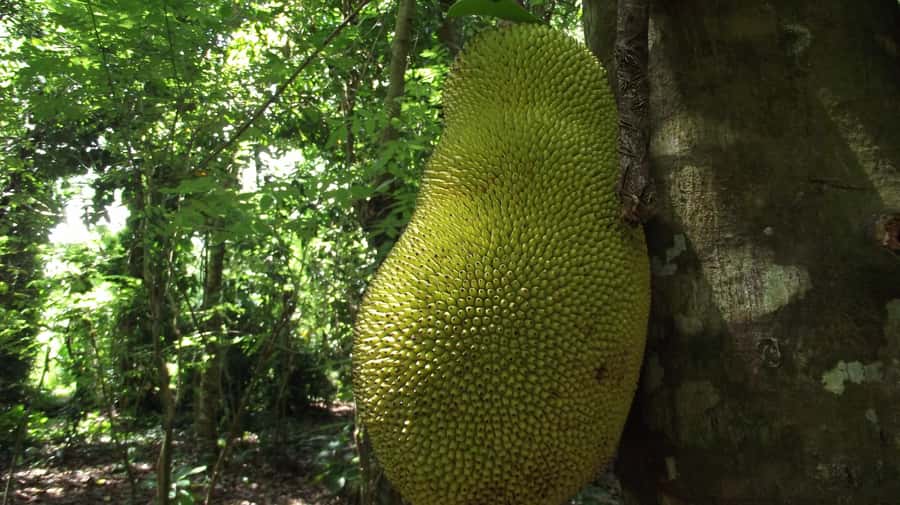
Spices are only half the farm visit. You also get to see and taste tropical fruit, including jackfruit, described here as the world’s largest fruit. It is a fun contrast to the small, concentrated flavors of cloves and cardamom.
The fruit tasting adds variety to the walk and helps you understand the farm as a working food garden rather than a spice display. Freshness is the point. You may know coconut, jackfruit, or other tropical fruit from shops, but tasting it close to where it grows gives the stop more meaning.
A coconut tree climber picks young coconuts for you to try. This is one of the tour’s memorable demonstrations, though it is also a moment to be sensible. Follow instructions carefully during any cutting or food-preparation activity. One account described a minor cut from a coconut cutter after not following directions, so this is not the time to rush or show off.
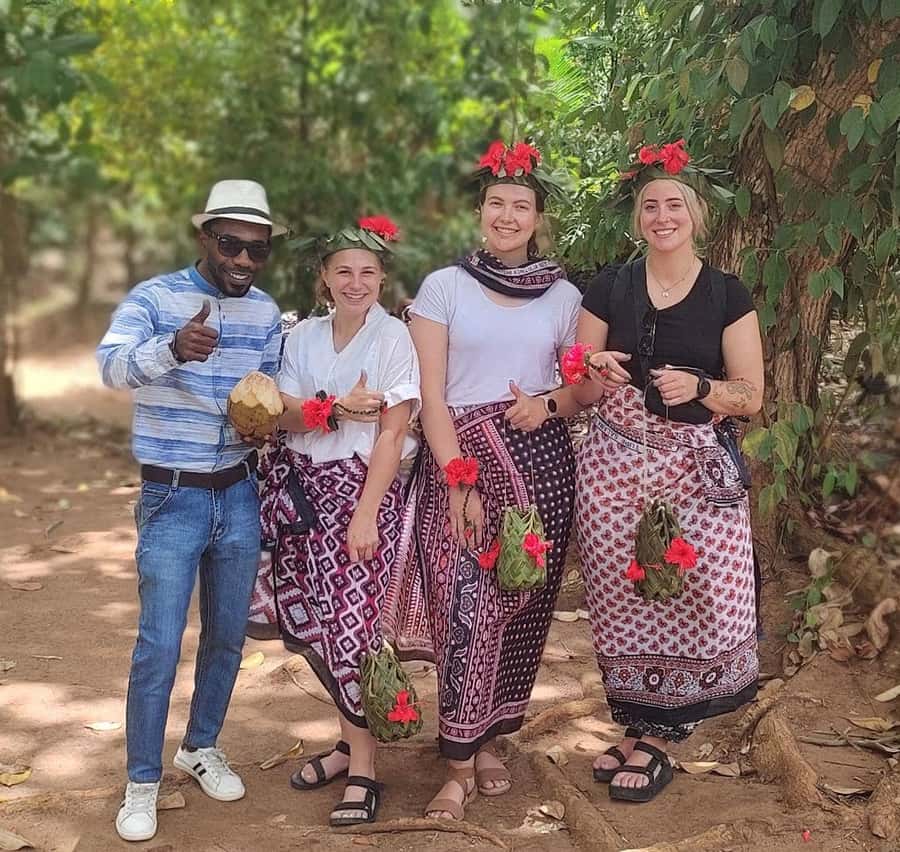
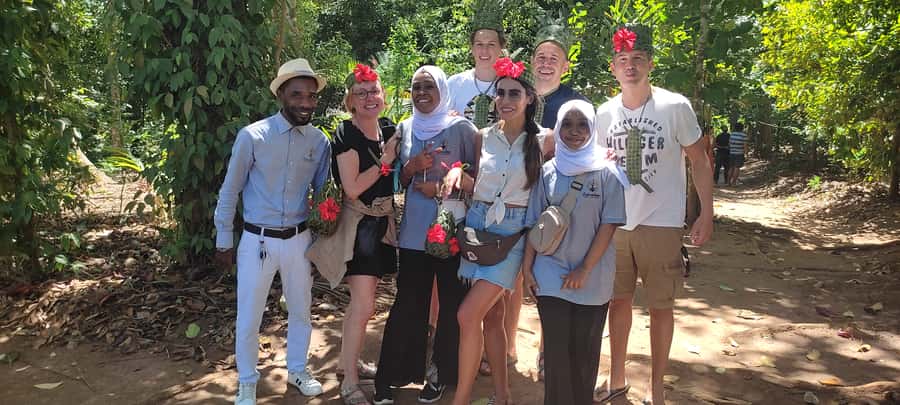
You may also see playful demonstrations using leaves, such as handmade crowns, ties, or bags. These can be amusing, particularly for families and people who enjoy photos, but they may feel touristy. One important practical point: tipping for such extras was mentioned as a downside, so you should not feel obliged to accept every add-on.
Cassava leaves, coconut milk, and the cooking lesson
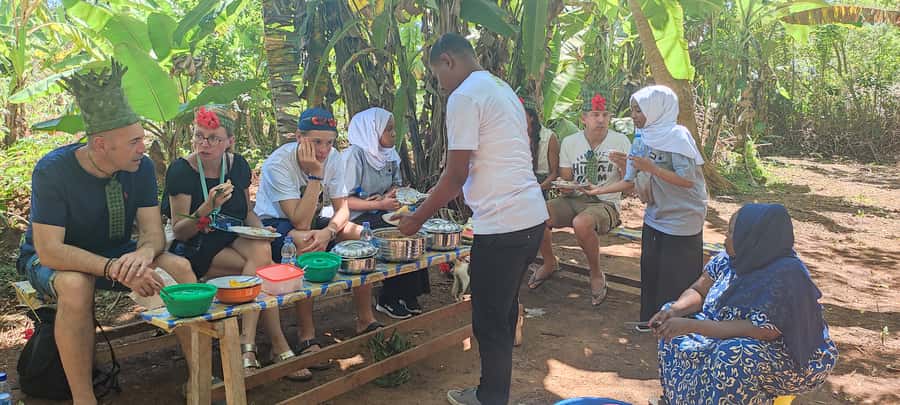
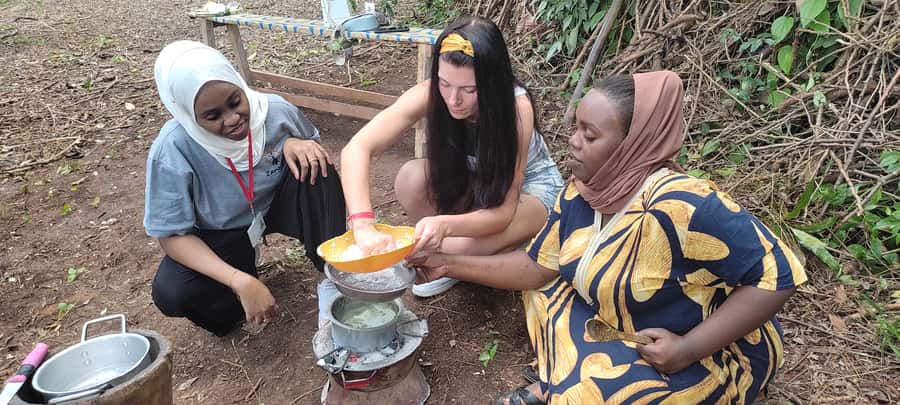
The food part begins with simple preparation. You may join a cassava leaf harvest, help make coconut milk, and assist with ingredients for local dishes. The purpose is not to turn you into a professional cook in one morning. It is to show how everyday Swahili food comes together from farm ingredients, coconut, and spices.
The meal is traditionally prepared with local women at the farm. This gives the lunch a social side that a standard restaurant meal cannot provide. You can see how the spices you just smelled are used in food, rather than treating them as isolated samples.
There is one point to keep clear before booking. The activity is sold as a traditional cooking lesson, but the level of participation may differ. Some people have had a fully hands-on cooking session, while another account says the staff mainly demonstrated ingredients and allowed only limited help with one side dish.
I would treat this as a guided food demonstration with participation, not a formal cooking class where you prepare every course from start to finish. If active cooking is your main reason for booking, ask exactly which dishes you will make and how much time you will spend at the cooking station.
That distinction does not make the food portion poor. It simply sets a fair expectation. The strongest part is the link between the farm and the table: you handle coconut and cassava, season food with farm spices, and then eat the result.
Same country, a completely different kind of safari:
- Zanzibar: Quad Bike Adventure departing from Kendwa or Nungwi
★ 4.9 · 1,233 reviews - Zanzibar: Prison Island and Nakupenda Boat Trip with Lunch
★ 4.1 · 882 reviews - Skydive Zanzibar | Tandem Skydive
★ 5.0 · 877 reviews - Mnemba Island: Dolphin Swim & Snorkeling with Optional Lunch
★ 4.3 · 591 reviews
Lunch on the spice farm
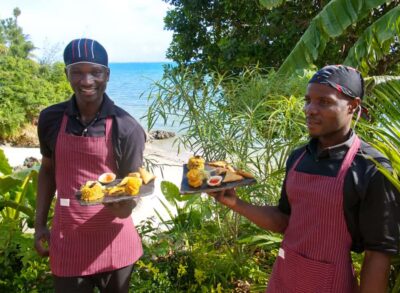
Lunch is included and is described as a traditional Swahili meal. You help with preparation, then sit down to eat at the farm. Several accounts single out the food as one of the best parts of the morning, especially the coconut-based dishes and the chance to taste food made with spices from the same setting.
Come hungry. One useful tip is not to eat a large breakfast before the tour, since you will be offered fruit, coconut, and lunch within a short three-hour schedule. You should still bring water, particularly in warm weather.
The lunch gives the tour its strongest value. A spice walk alone can be pleasant but brief. Adding food preparation and a meal turns the visit into a clearer lesson in Zanzibar’s culture. You learn not only what grows here, but how it enters the kitchen.
Dietary details are not supplied, so tell the provider about allergies or dietary needs before booking. Do not assume that every dish can be changed on the day.
Buying spices to take home
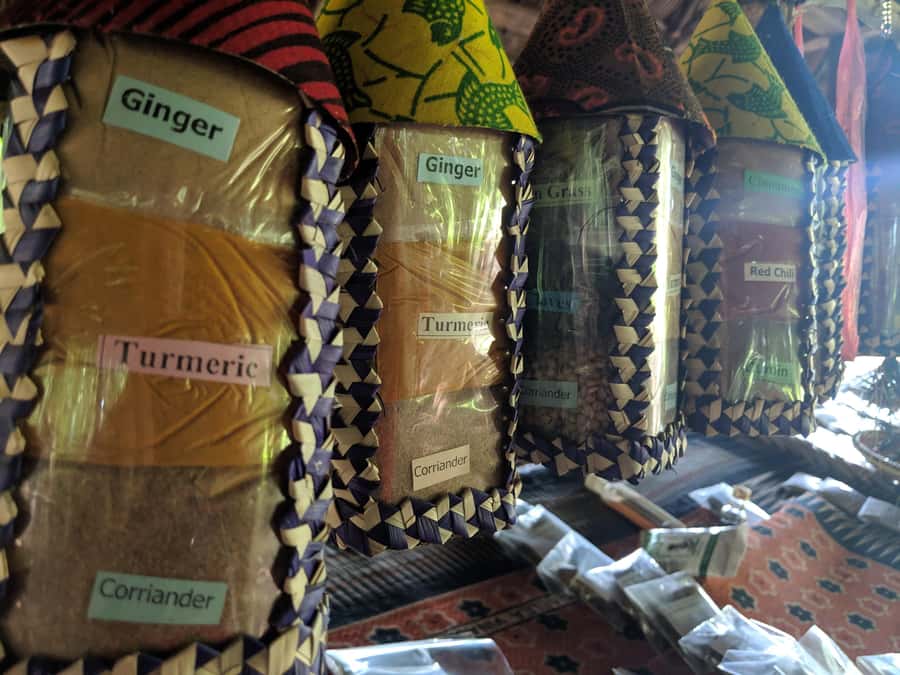
The farm shop is a natural final stop. You can buy fresh spices and teas, and the selection may include products connected with the plants you saw during the walk. This is a better way to shop than buying an unidentified bag from the first souvenir stall, since you can ask what the product is and how to use it.
Bring cash. Spices can only be purchased with cash, and the shop does not offer the convenient card option you may expect. Keep some local currency available rather than spending every note before the tour.
Think about what you will cook at home before buying. Cinnamon, cloves, turmeric, ginger, pepper, and lemongrass are easier to use than an exotic product you cannot identify. Ask about storage and quantities, then leave room in your luggage.
The shopping stop is optional in spirit, even though it is built into the outing. You do not need to buy anything to benefit from the farm visit. The local contribution included in the price already supports the community, so purchases should be based on genuine interest rather than pressure.
Guides, group size, and the pace of the morning
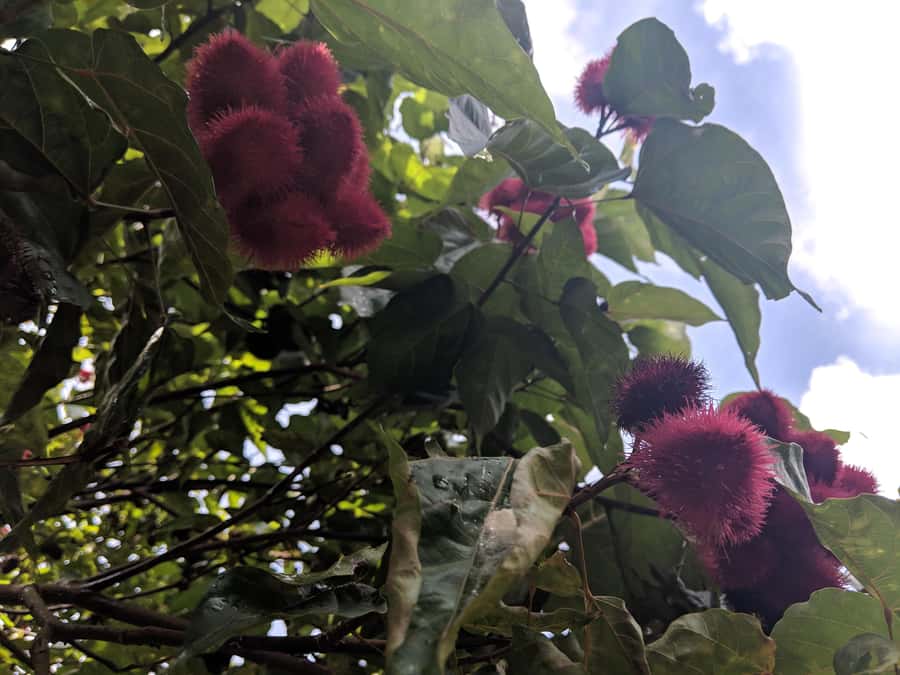
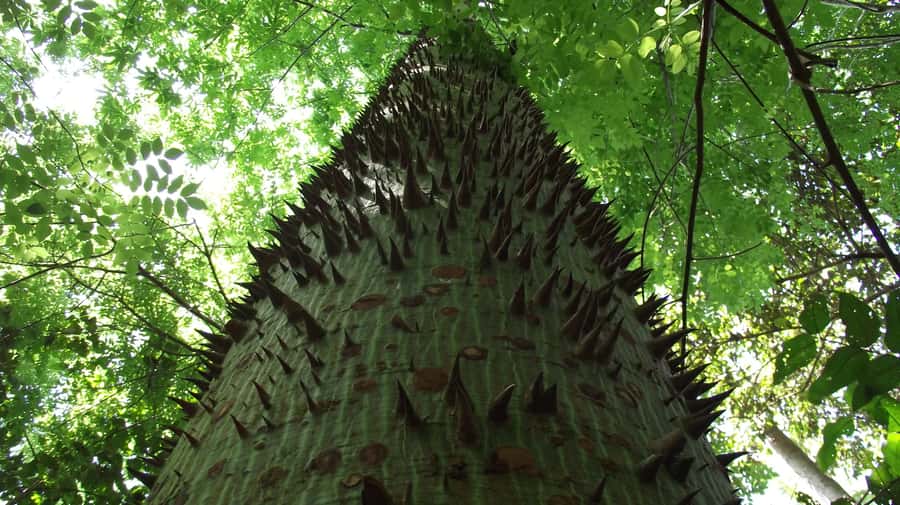
A private group is a real advantage here. You can ask the guide to repeat a plant name, spend more time smelling a spice, or ask about a cooking step without trying to be heard over a full coach.
The guide quality matters because the farm itself is only part of the lesson. Chiquito is repeatedly singled out for his humor and explanations, while other named guides, including Abdullah and Khamis, helped make the day friendly and engaging. One guide even shared Swahili words and local background, which adds a personal touch without needing a long classroom talk.
The pace is fairly quick. In three hours, you cover the farm, plants, fruit, demonstrations, cooking, lunch, and shopping. That makes the tour efficient, but it also means the itinerary may be shortened if the morning runs late. One account specifically noted that the group had to cut the tour short because of timing.
You should choose this activity if you like a guided introduction with several different parts. If you prefer slow photography, extended botany, or a long cooking workshop, the compact format may feel rushed.
Who should book the $65 tour?
I would recommend this tour to first-time Zanzibar visitors who want an easy introduction to local food and farming. It also suits anyone who likes to learn through taste and smell rather than through a museum display.
Families may enjoy the fruit, coconut demonstration, and leaf crafts, although young children should be watched closely around cutting tools. Food lovers will appreciate the connection between fresh plants and lunch. Couples and small private groups get a more relaxed setting and can shape the questions around their own interests.
The tour is less suitable for anyone seeking a serious agricultural study or a guaranteed full cooking class. It is also listed as not suitable for pregnant women. If mobility is a concern, wheelchair access is advertised, but ask about the exact farm route and ground conditions before booking.
The cancellation policy is forgiving: you can cancel up to 24 hours ahead for a full refund. You can also reserve now and pay later, which helps if your Zanzibar schedule is still changing.
Should you book this spice farm visit?

Yes, if you want a short, practical taste of Zanzibar beyond Stone Town’s streets and beaches. The best reasons to go are the fresh plant aromas, the farm lunch, the local guides, and the chance to connect spices with Swahili cooking.
Book it with realistic expectations. You will likely participate in food preparation, but not necessarily cook every dish yourself. The leaf crafts may feel a little staged, the schedule can move quickly, and you need cash for the shop.
At $65, the package offers good value when you use the pickup, private guide, lunch, demonstrations, and community contribution. I would book it early in your Zanzibar stay, especially if you want to buy spices for later meals or use the outing as a gentle introduction to island culture.
FAQ
How long does the Zanzibar spice farm tour last?
The guided activity lasts three hours. Pickup time from a beach hotel may add travel time, depending on the hotel’s location.
Where does the Stone Town meeting point take place?
Meet in front of the Old Fort on Mizingani Road in Stone Town at 9:00 a.m.
Is hotel pickup available?
Yes. Optional pickup is available from beach hotels anywhere in Zanzibar. Stone Town pickup is also included from the Old Fort meeting point.
What languages does the guide speak?
The tour is available with a live guide in English or Swahili.
Is lunch included?
Yes. Lunch at the spice farm is included, along with the guided visit and local community contribution.
Do I need cash?
Yes. Bring cash if you want to purchase spices from the farm shop, because spice purchases can only be paid for in cash.
More Farms in Zanzibar
- Zanzibar: Spice Farm & Stone Town Tour with Lunch
★ 4.5 · 80 reviews - A Private Full Day Tour To Stone Town & Spice Farm
★ 5.0 · 53 reviews - Zanzibar: Spice Farm Tour & Stone Town Adventure
★ 4.6 · 48 reviews - Private Tour Zanzibar Unique Stone Town with spice Farm Plantations
★ 5.0 · 44 reviews
More Cooking Classes in Zanzibar
- Zanzibar Cooking Class & Spice Tour
★ 4.5 · 77 reviews - Half-Day Kuza Cave Swimming Adventure and Cooking Class
★ 4.5 · 44 reviews - Traditional Zanzibar Cooking Class including Spice Tour
★ 4.5 · 14 reviews - Full-Day Private Tour in Zanzibar with Cooking Class
★ 5.0 · 11 reviews
Just added around Zanzibar
- Zanzibar: Maasai village and Nungwi turtles experience trip★ 4.9 · 16 reviews
- Zanzibar: Mnemba Atoll, Spice farm, Jozani forest & Lunch★ 3.9 · 3 reviews
- Zanzibar: Maasai World Tour with Cultural Practices★ 4.0 · 4 reviews
- Zanzibar: Kendwa Beach Professional Photoshoot★ 5.0 · 5 reviews
- ZANZIBAR: Jozani Forest,Salaam Cave, The Rock & Blue Lagoon★ 4.8 · 8 reviews
- Zanzibar: Jozani Red Colobos Monkey & Salaam Turtle Santuary★ 4.6 · 3 reviews
- Zanzibar: Jozani Forest Walking Tour★ 5.0 · 3 reviews
- Zanzibar: Jozani Forest,Red colobus,the Rock Restaurant tour★ 4.5 · 21 reviews
Zanzibar Spice Farm Tours, compared.

Stone Town, Spice Tour, Prison Island with Lunch
Read our review →
Stone Town, Spice tour & Prison Island with Lunch
Read our review →
Full-Day Private Stone Town +Spice Farm and Prison Island Tour
Read our review →


The Swahili Spice Experience – Spice Tour + Culinary Journey
Read our review →Browse the lists this tour appears in