
Reviewed · STONE TOWN WALKING TOURS
Private Walking Tour Of Stone Town
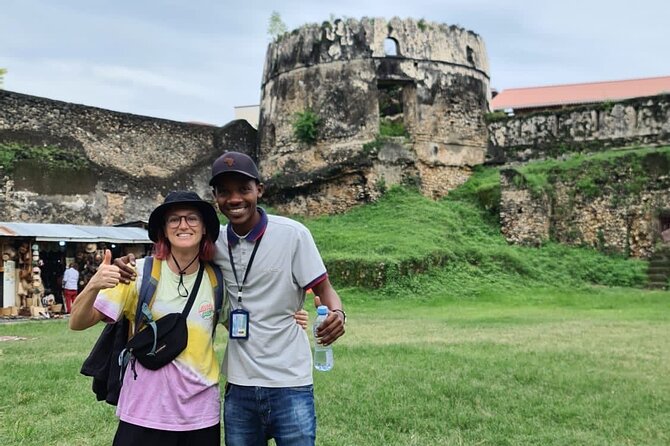
Stone Town makes sense only after you walk it. This private tour leads you through tight lanes, carved doors, old trading streets, and major landmarks while guide Nas explains how African, Arab, Indian, Persian, and European influences shaped Zanzibar. The route also includes a rooftop stop at Maru Maru Hotel for a wider view of the town.
I like the private format, which lets you ask questions and adjust the pace. I also like the mix of grand buildings and everyday places, especially Darajani Bazaar, where history gives way to fish, fruit, spices, and meat stalls. The main drawback is time: two and a half hours goes quickly, and several stops are brief.
Key points at a glance
- A private route with Nas: Your group walks with one guide rather than joining a large party, and the tour can be adjusted to your interests and available time.
- Nine important stops: The route covers Forodhani Gardens, the Palace Museum, House of Wonders, Old Fort, Freddie Mercury Museum, Christ Church Cathedral, and Darajani Bazaar, with Stone Town as the wider setting.
- A useful first-day orientation: The maze of more than 2,000 limestone buildings becomes easier to understand after this geography and history walk.
- A rooftop town view: The planned stop at Maru Maru Hotel adds a perspective you cannot get from the narrow lanes.
- History beyond pretty doors: Expect discussion of Zanzibar’s trading past, the slave trade, sultanate rule, and the city’s mixed architectural influences.
- Good value at $29: For a private 2.5-hour tour with a professional guide and bottled water, the price is reasonable, though food, drinks, and some admissions are extra.
Why Stone Town works best on foot
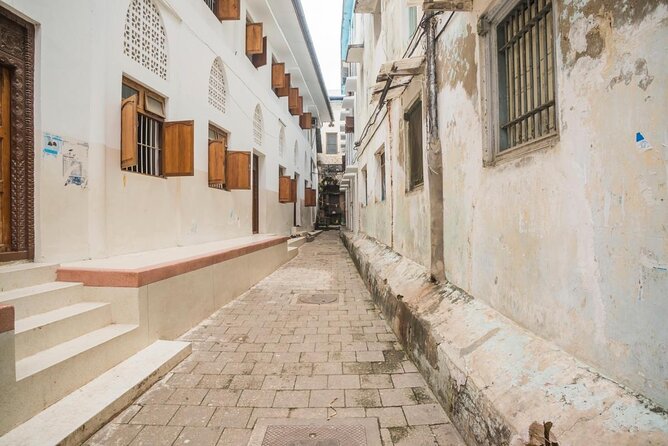
Stone Town is compact, but it is not simple. Its lanes turn sharply, buildings press close together, and a short walk can shift from a seafront square to a market corridor in minutes. The tour uses that confusion well. Instead of asking you to remember isolated sights, it connects them to the city’s larger story.
The town covers about 50 hectares and contains more than 2,000 limestone buildings. Around 25,000 people live in the wider area. This is not an open-air museum emptied for visitors. It is a working part of Zanzibar, with shops, homes, religious buildings, food sellers, and market life sharing the same old streets.
I would take this tour early in a Zanzibar stay. It helps you get your bearings, gives you names for the buildings you will pass later, and provides context for the doors, courtyards, balconies, and worn walls that otherwise blur together. Stone Town was designated a UNESCO World Heritage Site in 2000, but the designation matters most when you see how many cultures meet in a single block.
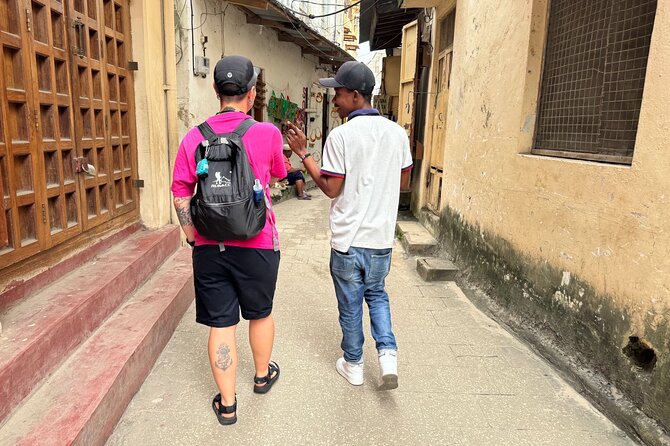
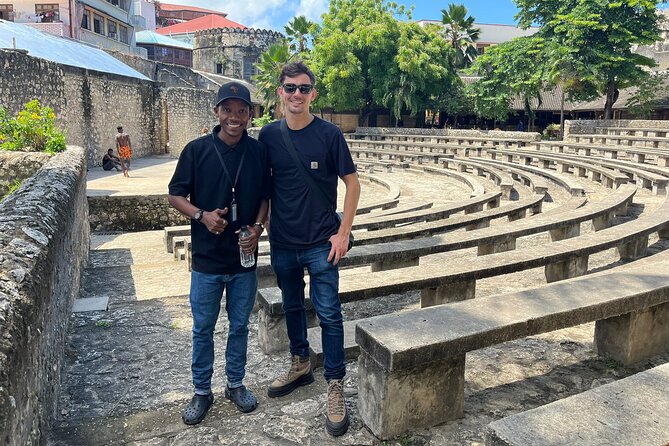
The guide is listed as Nas, with some guest comments also using Nassor or Naz. His strongest qualities are clear English, patience, flexibility, and a talent for answering questions. If you have a short schedule, tell him at the start. He has adapted the route for people with limited time, and a private tour makes that easier.
More Stone Town Walking Tours in Zanzibar
- Zanzibar Stone Town Walking Tour
★ 5.0 · 145 reviews - Stone Town Historical Walking Tour
★ 5.0 · 143 reviews - Spice Tour + Stone Town Tour + Prison Island
★ 4.5 · 130 reviews
Forodhani Gardens and the waterfront opening
The meeting point is Forodhani in Zanzibar, and the tour begins here. This makes practical sense because the gardens sit near several of Stone Town’s main landmarks and offer an easy introduction to the town’s seafront setting.
Forodhani Gardens is often associated with evening food stalls, but this walk treats it as a place with historical importance too. You can expect a short stop rather than a long meal break. Food and drinks are not included, so plan to buy anything you want separately.
The gardens are also a useful point for explaining Stone Town’s relationship with the sea. Zanzibar grew as a trading port, and the waterfront helps you picture how goods, people, and ideas moved through the island. The tour’s short introduction places the streets ahead in that larger setting.
Palace Museum and the age of the sultans
The People’s Palace Museum, also called the Palace Museum, was one of the residences built by the first sultan of Zanzibar. It was his second palace, and its presence gives the tour a direct link to the island’s royal period.
The planned visit lasts about 10 minutes. That is enough for an explanation and a look at the building, but not enough for an unhurried museum visit. If palace interiors are a major interest, you should ask Nas how much time can be devoted to the stop. The private format gives you a better chance of discussing that preference than a fixed group route would.
I like this part because it keeps the political story in view. Stone Town is not only about old streets and photogenic doors. The palaces point to the authority, wealth, and international ties of Zanzibar’s sultans.
The House of Wonders and Stone Town’s grand scale

The House of Wonders is one of the town’s best-known landmarks. It was built in 1883 by the third sultan of Zanzibar, Sayyid Barghash, and is described as the first building in Zanzibar to have electricity.
That detail makes the building more than a decorative landmark. It shows the ambition of the sultanate and Zanzibar’s place in a network of modern trade and technology at the time. The structure also helps explain why Stone Town can feel surprisingly grand inside its tight street plan.
The stop is scheduled for about 10 minutes, with admission included. Again, this is a guided orientation rather than a long museum session. You will get the building’s place in Zanzibar’s story, then move on to the next nearby sight.
The route also includes a visit to the top of Maru Maru Hotel for a Stone Town view. This is one of the most useful additions to the walk. From street level, the town can feel like a maze. From above, you can better see the concentration of old roofs, lanes, and the wider shape of the historic center.
Same country, a completely different kind of safari:
- Zanzibar: Quad Bike Adventure departing from Kendwa or Nungwi
★ 4.9 · 1,233 reviews - Zanzibar: Prison Island and Nakupenda Boat Trip with Lunch
★ 4.1 · 882 reviews - Skydive Zanzibar | Tandem Skydive
★ 5.0 · 877 reviews - Mnemba Island: Dolphin Swim & Snorkeling with Optional Lunch
★ 4.3 · 591 reviews
The Old Fort, from Portuguese beginnings to Omani rule

The Old Fort, or Ngome Kongwe, is described as the oldest building in Stone Town. The Portuguese built it first, and the Omani Arabs later reshaped or used the site. That change in control reflects the wider political shifts that shaped Zanzibar.
The fort receives about 15 minutes, making it one of the longer stops. You can expect a fuller explanation here, including the fort’s construction and its place in the town. The thick walls and solid form offer a sharp contrast to the delicate carved doors and balconies found elsewhere.
I find the Old Fort especially useful because it brings several periods together in one place. Portuguese influence, Omani power, and Stone Town’s later public life all meet here. The fort is also near Forodhani and the other central sights, so the walk does not waste time on long transfers.
Freddie Mercury’s birthplace and modern connections
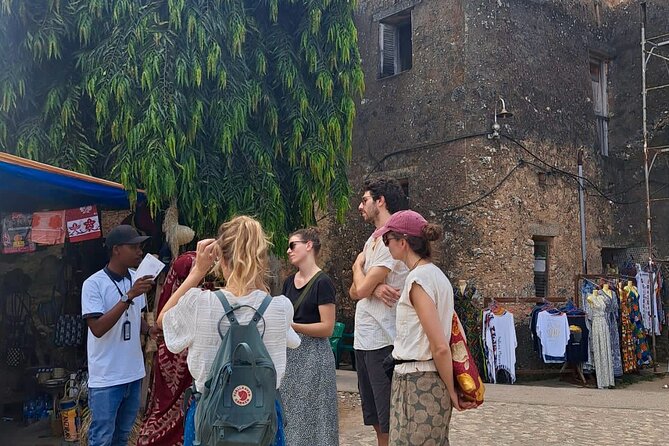
The Freddie Mercury Museum stop is brief, about five minutes, and admission is not included. The house where Freddie Mercury was born and grew up has been changed into a museum, giving the route a modern cultural link alongside its older political and religious sites.
You should see this as a quick exterior or orientation stop unless you arrange more time and pay for entry separately. The visit adds a personal connection to Stone Town’s international identity. Zanzibar’s story reaches beyond sultans and colonial buildings, and Freddie Mercury’s birthplace shows how the town also connects with twentieth-century popular culture.
The short timing means you may want to make your priorities clear. If this museum matters greatly to you, ask whether the route can be adjusted. If not, the stop still works as a quick piece of context between larger historical sites.
Christ Church Cathedral and the slave-trade story
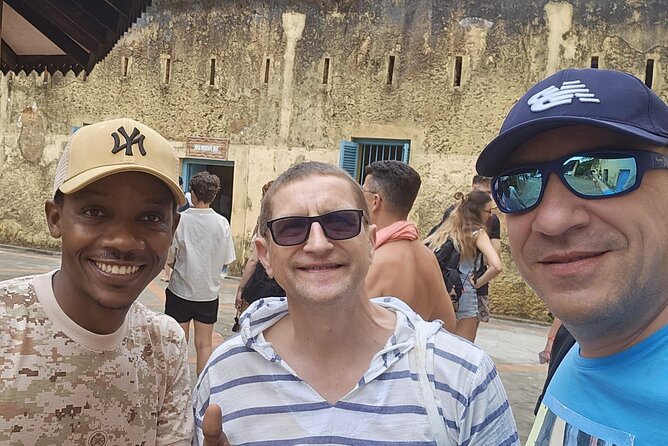
Christ Church Cathedral was built by French missionaries, and the tour includes a visit lasting about five minutes. The church is an important stop because Stone Town’s past includes the slave trade, and the cathedral helps bring that difficult subject into the route’s historical discussion.
This is an area where a guide adds real value. A building can look beautiful while carrying painful memories, and a short explanation helps you understand the setting without treating it as just another photo stop. The tour promises discussion of Stone Town’s role as a center of the slave trade, so expect this history to form part of the walk’s wider story.
Five minutes is not long for a major religious and historic site. Still, the private format lets you ask direct questions and request more explanation. I would approach this stop with patience and respect. The subject is serious, and it deserves more than a rushed snapshot.
Darajani Bazaar, where the old town gets practical
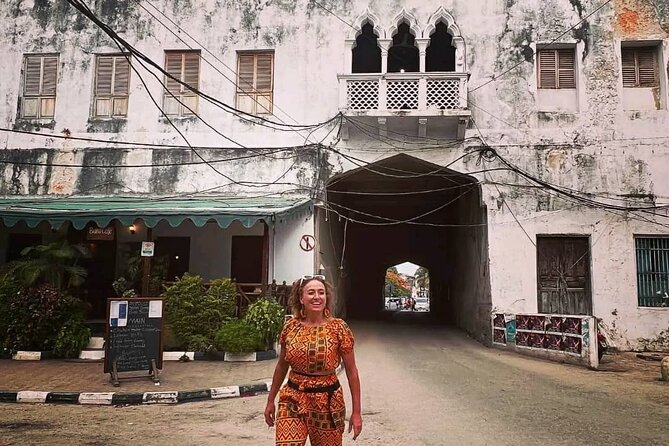
Darajani Bazaar was built in 1904 and is divided into sections for fish, vegetables, cow and goat meat, spices, and fruit. This is the most everyday stop on the route, and one of the most useful for understanding how Stone Town functions now.
The visit is listed at about five minutes, which is very short for a market. You will get an introduction to its layout and purpose, but you may not have time to browse slowly or shop at length. If you want to buy spices, souvenirs, or local food, ask Nas early about fitting that into the schedule.
Market visits can feel more revealing than a grand palace. You see what people buy, how goods are arranged, and how the town’s trading character continues in ordinary life. Nas has also helped people find souvenirs at good prices, though you should still decide what you want to pay before buying.
One useful tip from the tour experience is to ask about fresh sugar cane juice with lemon at the end. It is not part of the included price, but it has been singled out as a memorable local refreshment. Food and drinks remain your responsibility.
What the guide adds to the walk
The route covers plenty of ground in a short time, but the guide is the main reason to choose this experience over wandering alone. Nas explains dates, buildings, cultural influences, and modern Zanzibar. He is also described as easy to talk with, polite, and willing to answer questions.
That matters in Stone Town because the visual details can overwhelm you. You may notice a carved door, a balcony, or a wall without knowing what it says about the people who built and used the town. A good explanation turns those details into clues.
The private setup is particularly helpful for families. Nas has been praised for making the walk comfortable for children and for holding the attention of teenagers on related Zanzibar visits. I would still tell him your group’s age range and interests at the start, since the standard timing moves quickly.
The guide can also help you get your bearings for later meals, shopping, and independent walks. Some people have used his suggestions for shops and restaurants. Treat those suggestions as useful local direction, not as part of the tour price.
Price, pace, and what the $29 covers
At $29 per person, this is a fair price for a private 2.5-hour walking tour, especially if you are traveling with several people and can share the guide’s attention within your own group. The fee includes a professional tour guide and a bottle of water.
Food and drinks are not included. Admission to the Freddie Mercury Museum and Darajani Bazaar is not included either. The itinerary marks admission as included for the other listed stops, but the brief timing means the value comes mainly from the guiding and interpretation rather than long visits inside every building.
The average booking time is six days ahead, so you should not leave it until the last minute if your schedule is tight. The tour is confirmed when booked, uses a mobile ticket, and ends back at the Forodhani meeting point.
You can cancel for a full refund up to 24 hours before the local start time. Changes or cancellations inside that window are not accepted for a refund. That policy is simple, but keep it in mind if your Zanzibar plans depend on flights, ferries, or weather.
Who should book this Stone Town walk
I would choose this tour if you want a fast, human introduction to Stone Town rather than a self-guided stroll. It suits first-time visitors, families, couples, and anyone who wants to ask questions without waiting for a large group to move along.
It is also a good fit if you have only a short stay in Zanzibar. The route covers the town’s main landmarks, the market, a major church, a royal palace, a fort, and a modern cultural site in one compact outing.
You should think twice if you want long museum visits, extended market shopping, or a slow photography walk. The schedule is packed, and five or 10 minutes at a stop can feel rushed. A private booking solves some of that, but not all of it unless you agree on priorities before setting off.
Most travelers can participate, service animals are allowed, and the meeting point is near public transportation. Since this is a walking tour through narrow streets, comfortable footwear and water are sensible, though only the bottle supplied by the tour is specifically included.
Should you book it?
Book this Stone Town tour if you value clear storytelling, flexible pacing, and a private guide more than lengthy time inside each attraction. Nas brings together Zanzibar’s sultanate, trading port, slave-trade history, religious life, market culture, and modern connections in a short route.
The strongest plan is to book it near the start of your stay, then tell Nas what matters most: the Old Fort, palace history, the cathedral, the market, Freddie Mercury, shopping, or the rooftop view. At $29, it offers a solid introduction and a useful first map of Stone Town.
FAQ
How long does the Stone Town walking tour last?
The tour lasts approximately 2 hours and 30 minutes.
Where does the tour start and finish?
It starts at Forodhani in Zanzibar, Tanzania, and ends back at the same meeting point.
Is this a private tour?
Yes. Only your group participates in the activity.
What is included in the price?
The price includes a professional tour guide and one bottle of water.
Are food, drinks, and all attraction admissions included?
No. Food and drinks are not included. Admission to the Freddie Mercury Museum and Darajani Bazaar is also not included. The other listed stops are marked as including admission.
Can I cancel for a full refund?
Yes. You can cancel at least 24 hours before the experience start time for a full refund. Cancellations or changes made less than 24 hours before the start time are not accepted for a refund.
More Walking Tours in Zanzibar
- Stonetown: Food Markets and Street Food Walking Tour
★ 4.7 · 151 reviews - Walking City Tour in Zanzibar Island
★ 5.0 · 122 reviews - Zanzibar: Jozani nature walk and wildlife tour
★ 4.5 · 89 reviews - 3 Hours Private Stone Town Walking Tour
★ 5.0 · 71 reviews
Just added around Zanzibar
- Zanzibar: Maasai village and Nungwi turtles experience trip★ 4.9 · 16 reviews
- Zanzibar: Mnemba Atoll, Spice farm, Jozani forest & Lunch★ 3.9 · 3 reviews
- Zanzibar: Maasai World Tour with Cultural Practices★ 4.0 · 4 reviews
- Zanzibar: Kendwa Beach Professional Photoshoot★ 5.0 · 5 reviews
- ZANZIBAR: Jozani Forest,Salaam Cave, The Rock & Blue Lagoon★ 4.8 · 8 reviews
- Zanzibar: Jozani Red Colobos Monkey & Salaam Turtle Santuary★ 4.6 · 3 reviews
- Zanzibar: Jozani Forest Walking Tour★ 5.0 · 3 reviews
- Zanzibar: Jozani Forest,Red colobus,the Rock Restaurant tour★ 4.5 · 21 reviews
Stone Town Walking Tours, compared.

Stone Town, Spice Tour, Prison Island with Lunch
Read our review →
Stone Town, Spice tour & Prison Island with Lunch
Read our review →

3 Hours Private Stone Town walking Tour with Guide
Read our review →
Full-Day Private Stone Town +Spice Farm and Prison Island Tour
Read our review →
Stone Town Historical Cultural Walking Guided Tour
Read our review →
Browse the lists this tour appears in