
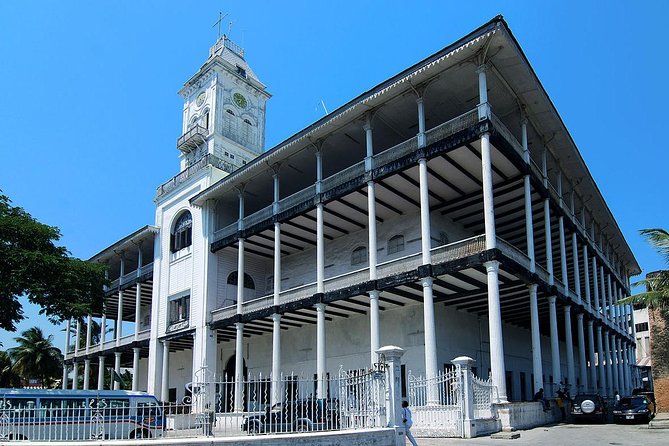
Reviewed · STONE TOWN WALKING TOURS
Stone Town and Prison Island from Zanzibar
Stone Town’s narrow lanes and carved doors tell one story, while Prison Island’s giant tortoises tell another. This tour puts both sides of Zanzibar together in one outing: the island’s layered past and its best-known animal attraction. I like the boat ride to Changuu Island and the chance to see the tortoises up close without arranging separate transport.
I also like the way the Stone Town walk connects major sights, from the Portuguese Old Fort to the Anglican Cathedral and former slave market. Guides such as Mohamed, Mohammed, Yakop, and Riz’one have been praised for clear explanations and a helpful attitude. The main drawback is pace. Five hours is tight for so many stops, and a weak or distracted guide can turn the town walk into a quick look rather than a meaningful history tour.
Key points to know
- Giant tortoises on Prison Island: You get about two hours for the island, including the tortoise colony, beach, forest, and possible snorkeling nearby.
- A history-heavy Stone Town walk: The route covers the Old Fort, Sultan-era sights, Freddie Mercury’s birthplace, the former slave market, and Darajani Bazaar.
- Good value at $85: Hotel transfers, bottled water, a professional art historian guide, and Prison Island park fees are included.
- Plan for walking and heat: The old town is explored on foot, and the afternoon can feel hot. Morning is the smarter choice when available.
- A small group: The maximum is 15 people, and at least two people must book together.
- Budget extra for admissions and meals: Food and drinks are not included, and the Freddie Mercury Museum and former slave-market site list separate admission charges.
Why this Zanzibar pairing works
Stone Town and Prison Island are close enough to combine, but they offer very different experiences. Stone Town is about buildings, trade, religion, music, and the painful history of slavery. Prison Island is about a short boat journey, open air, giant tortoises, and time beside the sea.
I like that contrast. After walking through crowded lanes and serious historical sites, you get a change of setting on Changuu Private Island. The boat ride itself adds something, too. It gives you a view back toward Zanzibar and makes the day feel less like a standard city tour.
The advertised duration is about five hours. That sounds manageable, but the route includes a boat transfer, two hours on Prison Island, and several Stone Town stops. If traffic delays your pickup, the boat departure takes time, or a spice shop is added to the route, you may be out for much longer. Have a solid breakfast and do not schedule a tight afternoon commitment.
The tour is capped at 15 people, which is small enough for a guide to keep the group together in Stone Town. It is not a private tour, so the pace and amount of explanation can depend on the guide assigned that day. The best guides, including Riz’one and Mohamed, have been praised for making the history clear and keeping the walk engaging.
More Prison Island Tours in Zanzibar
- Zanzibar: Prison Island and Nakupenda Boat Trip with Lunch
★ 4.1 · 882 reviews - Zanzibar: Prison Island & Nakupenda Boat Tour with BBQ Lunch
★ 4.4 · 554 reviews - Zanzibar; Prison Island, Nakupenda, StoneTown Tour with BBQ
★ 4.3 · 457 reviews
Prison Island and its giant tortoises
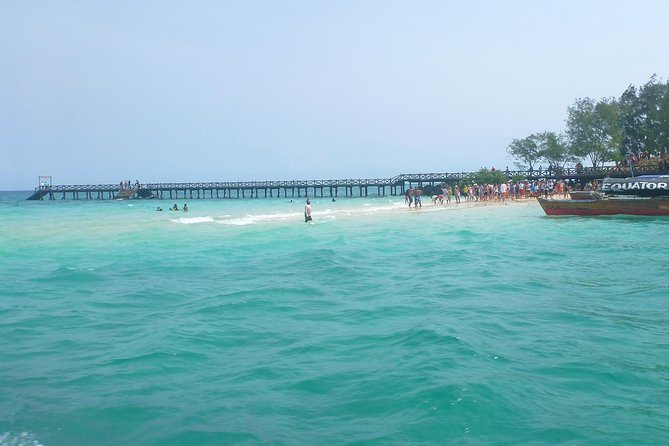
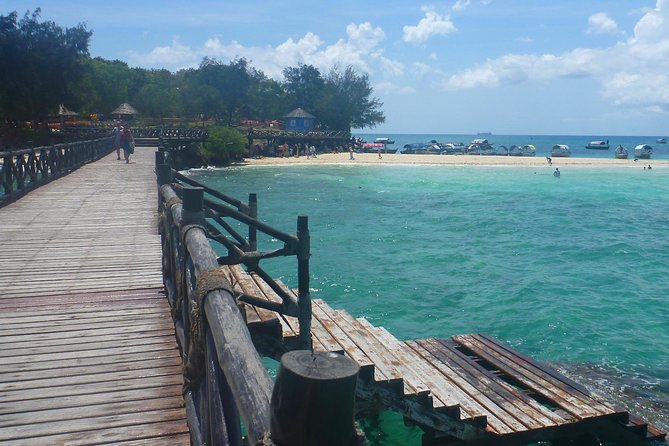
The first major stop is Prison Island, also called Changuu Private Island. The island served as a prison for enslaved people and later as a quarantine station for Zanzibar and the mainland. That background gives the visit more weight than a simple beach excursion.
The most popular part is the giant tortoise colony. These large animals are the island’s main draw, and you can spend time watching them move slowly through the grounds. Peacocks and a range of birds add to the setting, while the white sandy beach and forest offer a softer break from the town portion of the tour.
The stop is planned for about two hours, with park fees included. That is enough time to see the tortoises and enjoy the island without feeling rushed, though the exact balance between wildlife, beach time, and any snorkeling depends on the group and conditions.
Snorkeling is described as available near the island, but it should not be treated as the central promise of the tour. Weather matters, and the experience requires good conditions. If the sea is rough or the tour is canceled because of poor weather, you are offered another date or a full refund.
One practical concern is cleanliness. Prison Island is a natural attraction, but some areas may have plastic waste. That can take the shine off the conservation message. I would treat the tortoise visit as worthwhile while keeping expectations realistic: this is a popular attraction, not a private wildlife reserve.
The Old Fort and Forodhani Gardens
Back in Stone Town, the route begins with the Old Fort, or Ngome Kongwe. The Portuguese built an earlier fortification, and Omani Arabs constructed the present fort after driving the Portuguese out in 1699. Over time, it served as a garrison and prison, then became linked with the Zanzibar railway.
The fort’s later history is unusually varied. A new guardhouse was built in 1947 and used as a ladies’ club, while an amphitheater was added in the 1990s. Your guide can help connect those different chapters, since the stone walls alone do not explain how the site changed roles.
You get about 30 minutes here. That is enough for an introduction and a look around, but not a long architectural study. The Old Fort is also a useful starting point because it places you near several other important Stone Town sights.
Forodhani Gardens follows as a short sightseeing stop of about 15 minutes. The gardens sit along the waterfront and are best treated as a quick orientation point rather than a full visit. If you want to return later for more time, ask your guide where the gardens are located and plan a separate evening visit.
St. Joseph’s Cathedral and the city’s mixed influences

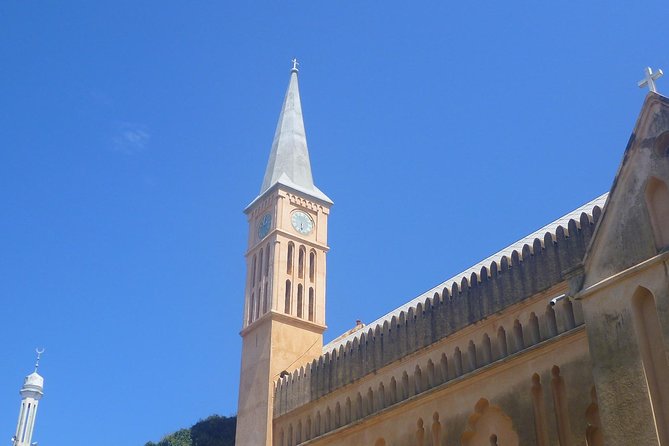
St. Joseph’s Roman Catholic Cathedral is one of Stone Town’s important historic buildings. It remains an active place of worship for the local Catholic community, with Mass held on Sundays and sometimes during the week.
The stop lasts about 15 minutes. That is brief, but it gives you a chance to see how Stone Town’s religious identity was shaped by more than one tradition. The town’s architecture reflects Portuguese, Omani, Indian, African, and European influences, and the cathedral is one visible piece of that wider story.
A good guide will explain what you are seeing instead of simply pointing at the building. That difference matters here. Stone Town is full of details that are easy to miss, from decorative doors to small features tied to trade and faith.
More Stone Town Walking Tours in Zanzibar
- Zanzibar Stone Town Walking Tour
★ 5.0 · 145 reviews - Stone Town Historical Walking Tour
★ 5.0 · 143 reviews - Spice Tour + Stone Town Tour + Prison Island
★ 4.5 · 130 reviews - Stone Town: Stone Town and Prison Island Private Day Trip
★ 4.5 · 104 reviews
Freddie Mercury’s Zanzibar connection
The Freddie Mercury Museum is included as a short stop at the house where Farrokh Bulsara was born in 1946. He later became known worldwide as Freddie Mercury, the lead singer of Queen, after moving to the United Kingdom with his family.
The visit is listed at about 15 minutes, and museum admission is not included. That means you should ask your guide whether the group is entering or simply viewing the location from outside, then budget for the separate ticket if you want to go in.
This stop suits music fans, but it also adds a modern personal detail to a tour otherwise focused on much older buildings and events. I would not choose the tour solely for the museum. Its value comes from placing Mercury’s early life within Stone Town’s broader cultural mix.
Gizenga Street and Stone Town’s carved doors
Gizenga Street offers one of the better chances to see Stone Town as a living neighborhood rather than a collection of monuments. You pass old buildings, shops, traditional clothing, handicrafts, pictures, antiques, and other goods.
The carved wooden doors deserve attention. Many have brass studs associated with Indian design traditions. These doors were not just decoration. They signaled status, taste, and cultural connections across the Indian Ocean.
You get around 30 minutes here. That may include shopping, but do not feel pressured to buy. A guide who knows the area can help you understand what you are seeing and may also help you avoid aggressive selling. One especially useful quality praised in the guiding is a willingness to protect the group from people trying to overcharge or strip money from visitors.
The town walk can be physically manageable for a wide range of ages, but Stone Town streets are not a smooth museum floor. If you have a mobility concern, tell the guide early. Yakop has been described as flexible when a member of the group had difficulty walking, changing the route to make the outing more workable.
The former slave market and Anglican Cathedral

The most serious stop is the Old Slave Market and Anglican Cathedral. The cathedral was built on the site of Zanzibar’s largest slave market, and its construction marked the end of slavery. The church is one of East Africa’s important examples of early Christian architecture.
The visit takes about 30 minutes, and admission is not included. Allow time for the site to affect you. This is not a light sightseeing stop, and the value lies in understanding the human cost behind Zanzibar’s role in regional and Indian Ocean trade.
I consider this one of the strongest reasons to choose a proper guided walk rather than simply wandering Stone Town alone. The buildings are striking, but the meaning of the site is not always visible. A guide with a strong command of Zanzibar’s past can explain the market, the church, and the wider history without reducing it to a few dates.
This is also the point where guide quality matters most. Some guides speak softly, take phone calls, or give only a surface-level account. If you cannot hear clearly, ask the guide to repeat the explanation and stay close to the group.
Darajani Bazaar and the final look at daily life
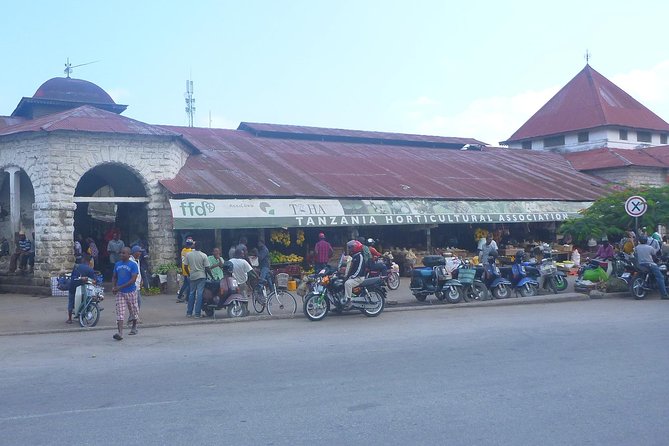
Darajani Bazaar is the town’s old market for fish, vegetables, fruit, spices, and other goods. It gives you a more ordinary look at Zanzibar than the postcard sights do.
Markets can be crowded and intense, but that is part of their value. You see what people buy, how food is sold, and how Stone Town functions beyond its historic facades. The planned visit lasts around 30 minutes, so expect an introduction rather than time to inspect every stall.
The market also helps make sense of Zanzibar’s spice trade. Some versions of this outing include a spice-store or spice-farm visit, although that is not listed among the core stops. If a spice stop is added, it can extend the day. Ask about it at the start, especially if you need to plan lunch or a return time.
What the $85 price covers
At $85 per person, this is not the cheapest way to see Stone Town, but the price can make sense if you value convenience. Hotel pickup and drop-off, bottled water, a professional art historian guide, and Prison Island park fees are included.
The transfer is important. Arranging a vehicle, reaching the boat departure point, finding a Stone Town guide, and paying island fees separately can create a day of small complications. Here, those pieces are bundled together.
Food and drinks are not included. You should eat before leaving and carry enough water, even though bottled water is supplied. The Freddie Mercury Museum and the Old Slave Market or Anglican Cathedral site also list admission as separate, so the headline price is not the final amount if you enter every paid attraction.
The best value comes when you want both the island and the town in one day. If you have several days in Zanzibar and prefer slow sightseeing, separate visits may suit you better. This route covers a lot, but it does not give you long, quiet periods at each site.
Guides, timing, and the real pace of the day
The guide can make or break the Stone Town portion. Mohamed, Mohammed, Riz’one, Yakop, Chicho, and Shadow are names associated with strong explanations, flexibility, or enthusiasm in the supplied feedback. French and multilingual guiding may be available, but you should not assume a particular language unless it is confirmed at booking.
Pickup is included, and punctuality has generally been part of the expected service, but delays can happen. One poor outing began with a late guide and confusion about where to meet. Confirm the pickup point and keep the local operator’s contact details handy.
Choose a morning departure when possible. A French-speaking guide specifically recommended morning because the town can become very hot in the afternoon, and that is sound practical advice. Morning also gives you a better chance of having energy left for the market and the historical sites.
The tour requires walking, boat travel, and time outdoors. Most people can take part, and one guide has adapted the route for a person with limited mobility. Still, tell the operator about any walking difficulty before the day begins rather than waiting until the group is already moving.
Who should book this tour
I would choose this experience if you have limited time in Zanzibar and want a first look at both the old capital and Prison Island. It suits families, couples, and multigenerational groups. A family with four children and a person in her 60s completed the walking portion comfortably, according to the supplied details.
It is also a good fit for history-minded visitors who want the slave-market site explained properly, and for anyone eager to see giant tortoises without planning a separate island trip.
I would hesitate if you dislike fixed schedules or want long visits inside museums. The five-hour estimate leaves limited room for lingering, and the day may stretch toward a full-day outing if delays or extra stops occur. If your main interest is Freddie Mercury, book a dedicated museum visit instead. If your main interest is swimming and snorkeling, choose a beach or water-focused trip.
Should you book it?
Book this tour if you want a broad, efficient introduction to Zanzibar and accept that the schedule will move quickly. The combination of Prison Island’s tortoises, Stone Town’s major landmarks, hotel transport, and included park fees gives the $85 price reasonable value.
Before paying, confirm the pickup time, guide language, expected order of stops, and any extra spice visit. Ask how much time will be spent inside the paid attractions. If you receive a strong guide such as Mohamed, Riz’one, or Yakop, the historical walk can be the heart of the day. If you receive a rushed guide, Prison Island may become the clear highlight.
Free cancellation is available up to 24 hours before the start time. Changes or cancellations inside that window are not accepted for a refund, and poor weather may lead to a new date or full refund.
FAQ
How long does the Stone Town and Prison Island tour last?
The stated duration is approximately five hours. The day may run longer if there are delays or if an additional spice stop is included.
Is hotel pickup included?
Yes. Hotel pickup and drop-off are included in the tour price.
Is Prison Island admission included?
Yes. Prison Island park fees are included.
What can I see on Prison Island?
You can see the giant tortoise colony, white sandy beaches, natural forest, and a variety of birds. Snorkeling is available near the island when conditions allow.
How much time is spent on Prison Island?
The planned visit to Prison Island lasts about two hours.
Which Stone Town sights are included?
The route includes the Old Fort, Forodhani Gardens, St. Joseph’s Roman Catholic Cathedral, Freddie Mercury’s former home, Gizenga Street, the former slave market and Anglican Cathedral, and Darajani Bazaar.
Is entry to the Freddie Mercury Museum included?
No. Admission to the Freddie Mercury Museum is not included.
Is entry to the former slave market and Anglican Cathedral included?
No. The stop lists admission as not included.
Are food and drinks included?
No. Food and drinks are not included, though bottled water is provided.
How many people can join the tour?
The maximum group size is 15 people. A minimum of two people is required per booking.
Can children and older adults take part?
Most people can participate, and the supplied information describes a family group with children and an older adult completing the walking tour. If you have mobility concerns, tell the operator in advance so the guide can consider adjustments.
Just added around Zanzibar
- Zanzibar: Maasai World Tour with Cultural Practices★ 4.0 · 4 reviews
- Zanzibar: Maasai village and Nungwi turtles experience trip★ 4.9 · 16 reviews
- Zanzibar: Mnemba Atoll, Spice farm, Jozani forest & Lunch★ 3.9 · 3 reviews
- Zanzibar: Kendwa Beach Professional Photoshoot★ 5.0 · 5 reviews
- ZANZIBAR: Jozani Forest,Salaam Cave, The Rock & Blue Lagoon★ 4.8 · 8 reviews
- Zanzibar: Jozani Red Colobos Monkey & Salaam Turtle Santuary★ 4.6 · 3 reviews
- Zanzibar: Jozani Forest Walking Tour★ 5.0 · 3 reviews
- Zanzibar: Jozani Forest,Red colobus,the Rock Restaurant tour★ 4.5 · 21 reviews
Stone Town Walking Tours, compared.

Stone Town, Spice Tour, Prison Island with Lunch
Read our review →
Stone Town, Spice tour & Prison Island with Lunch
Read our review →

3 Hours Private Stone Town walking Tour with Guide
Read our review →
Full-Day Private Stone Town +Spice Farm and Prison Island Tour
Read our review →
Stone Town Historical Cultural Walking Guided Tour
Read our review →
Browse the lists this tour appears in