

Reviewed · STONE TOWN WALKING TOURS
Zanzibar Stone Town: Historical Walking Tour With a Local Guide
Stone Town packs centuries of trade, faith, power, and hardship into narrow lanes lined with carved doors and weathered coral-stone houses. This three-hour private walk gives you a clear route through that maze, linking the city market, the former slave market, Sultan’s palaces, the Old Fort, and Forodhani Garden.
I like the way the tour mixes major sights with ordinary street life. You see spice, fish, and fruit sellers at Darajani Bazaar, then look up at Arab and Indian-style doors with brass studs. I also like the personal touch from guide Abdi, who brought an umbrella for a visitor during rainy season and stayed ready for questions beyond the set route.
The main consideration is pace. Stone Town is best understood on foot, but three hours is not long for this much history. The Freddie Mercury Museum costs extra, and the tour is outdoors, so rain, heat, uneven lanes, and the need for comfortable shoes all matter.
Key points to know before booking
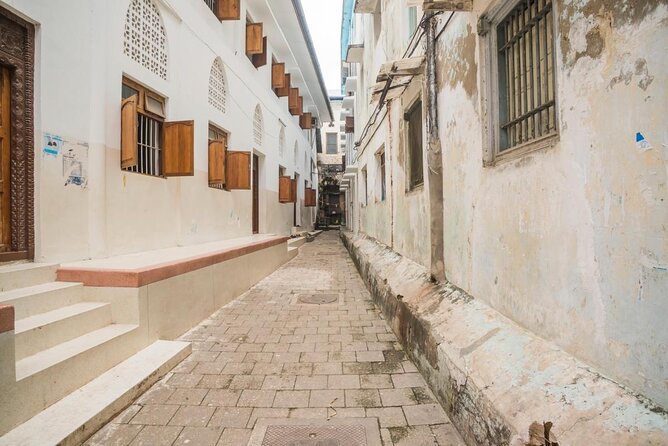
- Stone Town’s carved doors are part of the tour: Look for Arab and Indian influences, brass studs, balconies, and old sand-and-stone houses as you walk.
- The former slave market is the emotional center: The Anglican Cathedral, slave chambers, monuments, panels, whipping post signs, and Bishop Edward Steere’s grave give this stop real weight.
- Darajani Bazaar shows present-day Zanzibar: The route passes spice, fish, and fruit markets, so you see daily commerce rather than only restored monuments.
- Freddie Mercury’s birthplace is a brief stop: You pass the house and can visit the museum for about 10 minutes, but museum admission is not included.
- This is a private tour: Only your group takes part, making it easier to ask questions or adjust the conversation to your interests.
- Weather can affect the walk: The tour requires good weather, and free cancellation is available up to 24 hours before the start time.
Why Stone Town works best on foot
Stone Town is not a place you understand from a car window. Its character is in the narrow alleys, doorways, market sounds, and sudden views of buildings that seem to lean into one another. A walking tour gives you time to notice the details and ask why they are there.
The city is Zanzibar’s only UNESCO World Heritage site, recognized in 2000 for its architecture, history, and culture. That status matters less as a label than as a clue: Stone Town is a compact place where different influences meet in plain sight. Arab and Indian design appears in carved doors and balconies, while later religious and colonial buildings mark changes in power.
This experience uses a local guide to connect those pieces. You are not simply shown a palace, a church, or a fort. You move through the streets between them, which helps you see Stone Town as a living town rather than an open-air museum.
Because the tour is private, you can ask about subjects that interest you. Abdi is the guide specifically praised in the supplied feedback. He brought an umbrella during rainy season and answered questions about Zanzibar beyond the planned sights. That is a useful quality on a walking tour, where a good question can turn a quick stop into a clearer picture of local life.
More Stone Town Walking Tours in Zanzibar
- Zanzibar Stone Town Walking Tour
★ 5.0 · 145 reviews - Stone Town Historical Walking Tour
★ 5.0 · 143 reviews - Spice Tour + Stone Town Tour + Prison Island
★ 4.5 · 130 reviews
Starting at Darajani Market

The route begins at the main city market, opened in 1904. Darajani Bazaar is a practical place to start because it puts you in the middle of daily activity before the tour moves toward palaces and monuments.
You can see spice, fish, and fruit sections, with the sights and smells of a working market around you. This is not just decoration for a tour. It shows how Stone Town still functions as a center of trade and gives you a look at Zanzibar beyond its grand buildings.
Allow yourself to stay alert here. Markets can be crowded and visually busy, and the tour description sets aside about 15 minutes. That is enough for an introduction and a few questions, but not for a long, unhurried shopping session.
The route also offers opportunities to shop at spice shops and souvenir stalls. I would treat this as optional rather than the main purpose of the tour. If you want to buy something, ask your guide for help identifying what is genuinely useful or appropriate to pack. The experience includes the chance to shop, but it does not include meals, drinks, or purchases.
Reading Stone Town’s doors and houses
After the market, the walk turns toward the architecture that gives Stone Town its special look. The old houses are built from sand and stone, and many show Arab or Indian influence through carved doors, brass studs, and balconies.
This is where a guide adds value. Without context, you might notice an ornate door and simply take a photograph. With an explanation, you can pay attention to the way the entrance, balcony, and street-facing design reflect the city’s trading past and the cultures that shaped it.
The narrow lanes are part of the experience, but they also require practical care. Wear shoes that handle uneven walking, and keep your belongings secure in crowded areas. The tour is described as suitable for most people, but it is still a walking route through old streets, not a smooth, vehicle-based sightseeing circuit.
The walk passes the Old Post Office and the house associated with Freddie Mercury’s birth. These stops show the range of Stone Town’s story, from civic buildings and trade to a modern music figure with international fame.
Freddie Mercury’s birthplace and museum
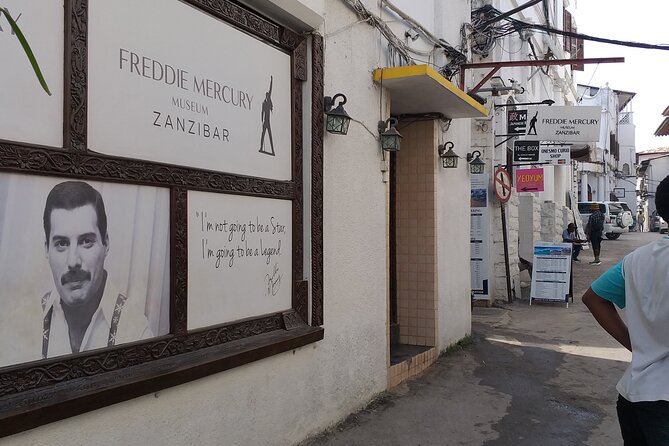
The Freddie Mercury stop is short, listed at about 10 minutes. You pass the house where the Queen singer and pianist was born, then have the option to see the Freddie Mercury Museum.
Museum admission is not included in the tour price. That detail is easy to overlook, so budget for it separately if you want to go inside. The listed visit is brief, which makes this more of a focused cultural stop than a long museum visit.
I like its place in the route because it adds a twentieth-century connection to a tour otherwise centered on older buildings and historical events. It also gives you a personal point of interest if you know Queen’s music.
Still, set your expectations correctly. The included walk takes you by the birthplace, while the museum requires an extra ticket. If the museum is a major reason for booking, confirm the current admission arrangements before you go.
Same country, a completely different kind of safari:
- Zanzibar: Quad Bike Adventure departing from Kendwa or Nungwi
★ 4.9 · 1,233 reviews - Zanzibar: Prison Island and Nakupenda Boat Trip with Lunch
★ 4.1 · 882 reviews - Skydive Zanzibar | Tandem Skydive
★ 5.0 · 877 reviews - Mnemba Island: Dolphin Swim & Snorkeling with Optional Lunch
★ 4.3 · 591 reviews
The Old Slave Market and Anglican Cathedral
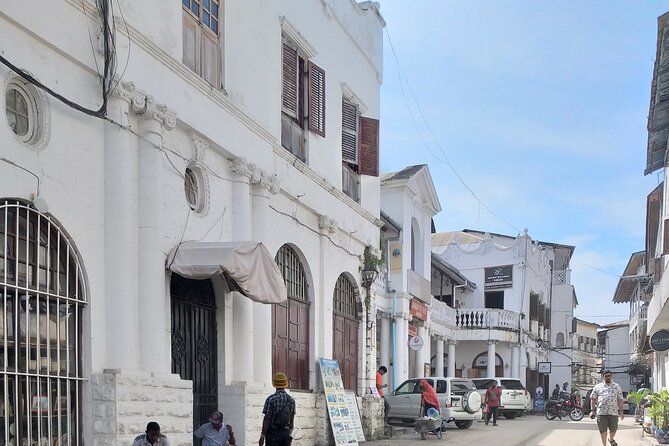
The former slave market is the most serious stop on the walk. The Anglican Cathedral of Christ was built on the site of the Old Slave Market, and the visit includes the slave monuments, chambers, historical panels, signs connected with the whipping post, and the grave of Bishop Edward Steere, who built the church.
This part deserves more than a quick photograph. The cathedral and market site bring together religious change, abolition, and the human cost of the slave trade. The chambers and memorials help make the subject physical and immediate, while the panels provide the basic historical frame.
The scheduled time is about 30 minutes, longer than several other stops. That is appropriate. You will have time to look around and listen, though the exact depth of the discussion will depend on your questions and your guide.
This can be a difficult visit. The site deals with cruelty and forced captivity, not a light sightseeing topic. I value that the route includes it rather than presenting Stone Town only through beautiful architecture and royal stories. Go ready to give the stop your attention and respect.
Sultan’s Palace and the House of Wonders

From the cathedral, the walk continues to the Sultans Palace Museum, also called the People’s Palace Museum in the tour details. This was a residence used by some of Zanzibar’s sultans. The stop is listed at about 10 minutes.
The palace helps explain how Zanzibar was governed and how the sultanate shaped Stone Town. You may see the building and hear about its former residents, but the short time means this is an overview rather than a museum visit with every room explored.
The House of Wonders, or Beit-el-ajaib, comes next. It was the ceremonial palace of Sultan Barghash and was later used as offices by the British colonial administration. Even a brief stop can help you track the shift from sultanate rule to British colonial control.
The House of Wonders is one of the city’s best-known landmarks, but the tour description does not promise a long interior visit. Think of this part as a guided look at the building and its place in Zanzibar’s political story. If you want extensive museum time, three hours will feel tight.
The Old Arab Fort and the route to Forodhani Garden

The Old Arab Fort adds another layer to Stone Town’s defenses and political past. It is included in the route along with the palaces and cathedral, giving you a compact sequence of important buildings within walking distance.
The strength of this arrangement is the contrast. You move from a market where people shop for food, to a cathedral built at a former slave market, then to royal and military structures. The city’s past does not sit in one isolated quarter. It appears block by block.
The walk finishes at Forodhani Garden. This is a fitting endpoint because it brings you back toward public space and everyday Zanzibar after the heavier historical sites. The tour information says the activity ends back at the meeting point, so confirm the precise meeting and finishing arrangements when you book, especially if you have a cruise departure or a timed transfer.
Do not expect a meal to be included at the garden. Food and drinks are not part of the price. You can treat the finish as a chance to continue exploring on your own, but any purchases are separate.
What you get for $33
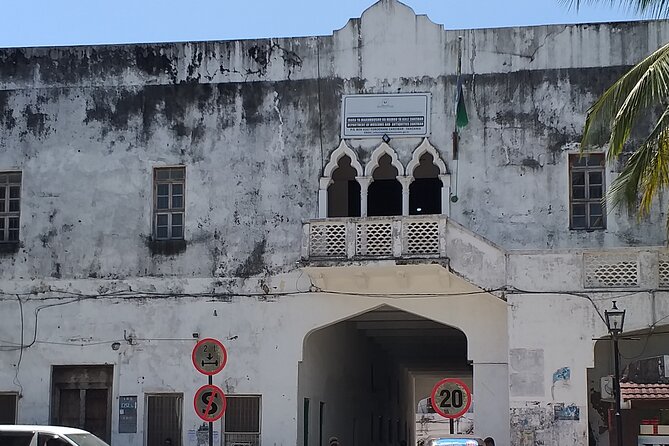
At $33 per person, the value depends on what you want from Stone Town. You are paying for a roughly three-hour private guided walk, not for transport, meals, drinks, or every museum admission.
For that price, the route covers a lot: Darajani Market, the old houses and doors, the Old Post Office, Freddie Mercury’s birthplace, the former slave market, Anglican Cathedral, Sultan’s Palace, House of Wonders, Old Arab Fort, and Forodhani Garden. Several of these are free to view as part of the walk, while the Freddie Mercury Museum is extra.
The private format improves the value if you care about questions and personal attention. A group of your own can spend more time on architecture, slavery, royal history, music, or market life, depending on your interests. It also avoids being tied to the pace of a large mixed group.
The price is less attractive if you want long interior visits at every museum or plenty of time for shopping. The itinerary covers many places in three hours, so some stops are naturally short. I see this as a strong orientation tour and a useful first look, not a full-day historical study.
The tour is often booked about 14 days ahead. That gives you a practical planning clue: if your dates are fixed, reserve before arriving rather than assuming you can arrange it at the last minute.
Timing, weather, and comfort
The listed opening period runs from July 19, 2023, through June 18, 2026, with Monday hours shown as 9:30 AM to 5:30 PM. Since the details display a specific Monday schedule, confirm the available start time for your date.
Morning is likely the easier choice for a walking tour if it is offered, simply because you will be outside for about three hours. The supplied information does not promise a particular temperature or shade along the route, so plan for sun and bring water. Drinks are not included.
Rain matters. The experience requires good weather, and poor conditions can lead to a different date or a full refund. The cancellation rule allows a full refund if you cancel at least 24 hours before the start time. Within 24 hours, changes and refunds are not accepted unless the operator cancels because of weather.
The umbrella detail is worth remembering. Abdi brought one during rainy season, which shows useful preparation, but you should not rely on that alone. Check the forecast and carry light rain protection if conditions look uncertain.
Most people can take part, and service animals are allowed. The route is on foot through old streets and alleys, so tell the provider anything important about your walking needs before booking.
Who should book this Stone Town walk
I would choose this tour if you want a structured first look at Stone Town and prefer learning from a local guide rather than piecing the city together alone. It suits visitors who like architecture, political history, market life, and short stops that build a larger picture.
It is also a good fit for a private group with mixed interests. One person can ask about carved doors, another about the sultanate, and another about Freddie Mercury. The guide can respond to those questions more easily than a fixed large-group tour.
Families and first-time visitors may appreciate the clear route, though the former slave market requires age-appropriate discussion. History-minded visitors will value the cathedral and slave-market site most, while music fans will enjoy the Freddie Mercury connection.
I would hesitate if you dislike walking in weather, need long seated breaks, or want to spend most of your time inside museums. The tour is active, and its broad route means the stops at the House of Wonders, Sultan’s Palace, and Freddie Mercury Museum are brief. It is also not a food tour, despite passing through a market and ending near a place associated with local food.
FAQ
How long is the Stone Town walking tour?
The guided walk lasts approximately three hours.
How much does the tour cost?
The listed price is $33 per person.
Is this a private tour?
Yes. Only your group participates in the activity.
What is included?
The tour includes a guided Stone Town walk, visits to the Anglican Cathedral of Christ and the Old Slave Market, views of ancient houses and architecture, the Old Arab Fort, Forodhani Garden, and opportunities to shop at spice shops and souvenir stalls.
Is Freddie Mercury Museum admission included?
No. The Freddie Mercury Museum is listed as a separate visit, and admission is not included.
What happens if it rains?
The experience requires good weather. If the operator cancels because of poor weather, you can receive a different date or a full refund. The guide named in the supplied feedback, Abdi, brought an umbrella during rainy season, but weather protection should still be planned for.
Can I cancel for a full refund?
Yes, if you cancel at least 24 hours before the experience start time. Cancellations or changes made less than 24 hours before the start are not accepted for a refund.
Should you book it?
Book this tour if you want Stone Town’s major sights explained in a single private walk, with enough street time to see markets and carved houses between the headline landmarks. The Old Slave Market, cathedral, palaces, and Old Fort give the route real substance, while Freddie Mercury’s birthplace adds a lighter modern connection.
At $33, it is good value for a private introduction, especially if you ask questions and use the guide to make sense of the city’s many layers. Just remember that the pace is brisk, the museum admission is extra, and rain or heat can shape the experience. For a first visit to Zanzibar’s historic center, this is a sensible, focused way to get your bearings.
More Walking Tours in Zanzibar
- Stonetown: Food Markets and Street Food Walking Tour
★ 4.7 · 151 reviews - Walking City Tour in Zanzibar Island
★ 5.0 · 122 reviews - Zanzibar: Jozani nature walk and wildlife tour
★ 4.5 · 89 reviews - 3 Hours Private Stone Town Walking Tour
★ 5.0 · 71 reviews
More Historical Tours in Zanzibar
- Private Historic Stone Town Tour
★ 5.0 · 79 reviews - Stone Town Historical Walking Tour
★ 5.0 · 40 reviews - Zanzibar Stone Town Historical Tour and Spice Farm Tour
★ 5.0 · 30 reviews - Stone town historical tour + Spice farm tour
★ 5.0 · 29 reviews
Just added around Zanzibar
- Zanzibar: Maasai village and Nungwi turtles experience trip★ 4.9 · 16 reviews
- Zanzibar: Mnemba Atoll, Spice farm, Jozani forest & Lunch★ 3.9 · 3 reviews
- Zanzibar: Maasai World Tour with Cultural Practices★ 4.0 · 4 reviews
- Zanzibar: Kendwa Beach Professional Photoshoot★ 5.0 · 5 reviews
- ZANZIBAR: Jozani Forest,Salaam Cave, The Rock & Blue Lagoon★ 4.8 · 8 reviews
- Zanzibar: Jozani Red Colobos Monkey & Salaam Turtle Santuary★ 4.6 · 3 reviews
- Zanzibar: Jozani Forest Walking Tour★ 5.0 · 3 reviews
- Zanzibar: Jozani Forest,Red colobus,the Rock Restaurant tour★ 4.5 · 21 reviews
Stone Town Walking Tours, compared.

Stone Town, Spice Tour, Prison Island with Lunch
Read our review →
Stone Town, Spice tour & Prison Island with Lunch
Read our review →

3 Hours Private Stone Town walking Tour with Guide
Read our review →
Full-Day Private Stone Town +Spice Farm and Prison Island Tour
Read our review →
Stone Town Historical Cultural Walking Guided Tour
Read our review →
Browse the lists this tour appears in