
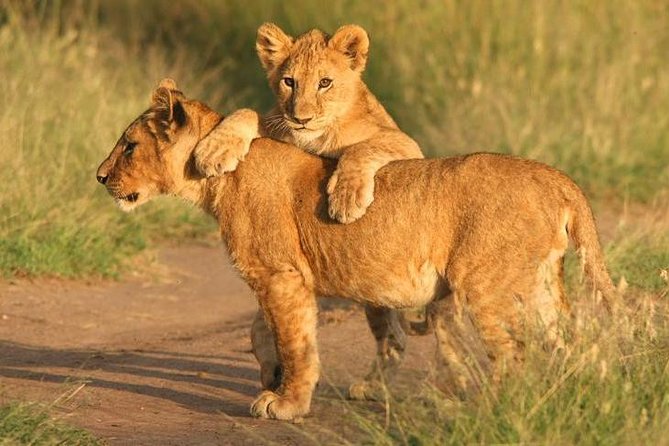
Reviewed · SERENGETI SAFARIS
Tanzania Safari 10 Days- Serengeti, Lake Manyara, Ngorongoro Crater.
The best part of this 10-day private safari is its range. You move from Tarangire’s elephant country to the birdlife of Lake Manyara, meet Hadzabe and Datoga communities near Lake Eyasi, then spend four nights among the wide plains of the Serengeti before ending inside Ngorongoro Crater. That gives you more time than a rushed northern-circuit trip.
I especially like the extra Serengeti nights, since wildlife sightings depend on rain, animal movements, and plain luck. I also like the cultural stops at Mto wa Mbu and Lake Eyasi, which bring people and daily life into a trip otherwise focused on animals. The main drawback is the amount of time spent on rough park roads and transfers, with early starts and long driving days.
Key points to know before booking
- Four nights in the Serengeti: More time gives your guide flexibility to search for moving herds and resident predators.
- Lake Eyasi culture: Meet Hadzabe hunter-gatherers and Datoga pastoralists, with visits focused on daily life and traditional skills.
- Tarangire’s elephant country: The park is known for large herds, baobab trees, and a strong range of plains wildlife.
- A sunrise Ngorongoro drive: You descend about 600 meters into the crater, where roughly 30,000 animals may gather.
- Private travel: Only your own group takes part, which allows some choice between a full day with a picnic lunch and split game drives in Tarangire.
- A $3,946.16 price point: The cost is easier to justify for people who value private transport, ten days, and a slower pace, but you should confirm exactly what is included before paying.
Why this safari works as a northern Tanzania route
This itinerary covers the classic northern Tanzania circuit, but it does not treat every park as a quick photo stop. You begin in Arusha, Tanzania’s main safari base, and make your way through Tarangire, Lake Manyara, Lake Eyasi, the Serengeti, and Ngorongoro.
The route mixes three kinds of experience. You get serious wildlife viewing, scenic drives through the Rift Valley region, and cultural visits with the Hadzabe, Datoga, and Maasai. That variety matters. If you only want big cats and herds, the Serengeti and Ngorongoro are the main draw. If you want a fuller sense of northern Tanzania, the village and community visits add useful context.
This is a private activity, so your group is not combined with strangers. That can make a difference on safari. You can ask to pause longer at a sighting, discuss the day’s route with your guide, and choose between a full-day outing or returning to camp for a hot lunch when the schedule allows.
The published price is $3,946.16 per person. For a private 10-day trip with accommodation, park visits, meals, and transport arranged around a dedicated safari vehicle, that may offer fair value. Still, the supplied information does not spell out every inclusion, so ask about park fees, drinks, airport transfers, tips, accommodation category, and any optional activities before booking.
More Lake Manyara Safaris in Arusha
- Private 6-Day Tarangire Manyara Crater and Serengeti with Mid-Range Lodges
★ 5.0 · 238 reviews - 3 Days Tarangire, Ngorongoro & Lake Manyara Group Camping Safari
★ 5.0 · 102 reviews - 3 Days Private Safari – manyara, Ngorongoro & Tarangire
★ 5.0 · 94 reviews
Day 1: Tarangire’s baobabs and elephant herds
The safari begins with lunch in Arusha at 12:30 p.m. At about 1:30 p.m., you drive to Tarangire National Park. Since this is an afternoon arrival, the first game drive is not a full day, but it gives you an immediate introduction to safari country.
Tarangire is shaped by the Tarangire River and is known for its giant baobab trees. These broad, strange-looking trees give the park a character different from the Serengeti’s open grasslands. The park is particularly noted for elephants, with herds that can number in the hundreds.
You might also see zebra, giraffe, impala, warthog, eland, hartebeest, dik-dik, bushbuck, reedbuck, and mongoose. Lion, leopard, cheetah, hyena, and jackal are also found here, though no guide can promise a particular sighting.
The timing is practical rather than leisurely. Lunch in Arusha followed by the drive to Tarangire means you will spend part of the day on the road. The payoff is a first game drive and a full second day in the park.
Day 2: Choosing your Tarangire rhythm
You have two ways to use the second day. Take a picnic lunch and remain in the park for a full-day game drive, or return to your accommodation for a hot lunch before heading out again for a later drive.
I prefer the full-day option if wildlife is your main goal. It cuts down on backtracking and gives your guide more time to search different areas. The split-day plan is better if you want a break from the vehicle, a proper meal, or a slower morning.
Tarangire has a useful mix of large and small animals. You may see elephants moving between trees, giraffes feeding above the scrub, and small antelope close to the road. The carnivores are there too, but finding them depends on conditions and the skill of the driver-guide.
This flexibility is one of the stronger features of a private trip. A fixed group schedule can force everyone into the same choice. Here, your party can discuss how much time you want in the park, within the day’s operating plan.
Day 3: Mto wa Mbu and Lake Manyara
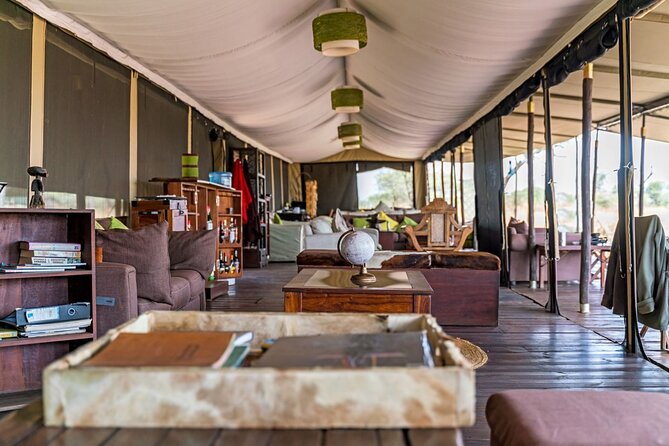
After breakfast, you make a short transfer toward Lake Manyara National Park. Before the game drive, you stop at Mto wa Mbu, a busy community described as home to people from more than 120 tribes.
The point of this visit is not simply to pass through a market. You may see farms, huts, artisan shops, and local trading areas. The stop gives you a look at ordinary work and commerce, rather than only the carefully framed wildlife scenes found inside national parks.
You then continue to your accommodation for lunch and settle in before an afternoon game drive at Lake Manyara. The park stretches along the base of the Rift Valley Escarpment, which rises about 600 meters above the lake.
Manyara is smaller than the Serengeti, but that is part of its appeal. The game-viewing circuit is compact, so you can cover a good range of habitats in a shorter time. Flamingos and pelicans are among its best-known birds, while monkeys and other wildlife may appear around the wooded areas.
The park’s size makes this a sensible one-day visit. The drawback is that the lake’s water level and bird concentrations can change, so the famous bird scenes are not guaranteed on every visit. You should treat the setting and variety of habitats as the main attraction, not one specific animal.
More Serengeti Safaris in Arusha
- Balloon Safari & Bush Breakfast in Serengeti – Miracle Experience
★ 5.0 · 1,646 reviews - 3 Days Serengeti & Ngorongoro Group Camping Safari
★ 5.0 · 574 reviews - 5-Day Highlights mid-Range Crater, Serengeti, Tarangire
★ 5.0 · 296 reviews - 3-Day Classic Serengeti Safari
★ 5.0 · 263 reviews
Days 4 and 5: Lake Eyasi and community visits
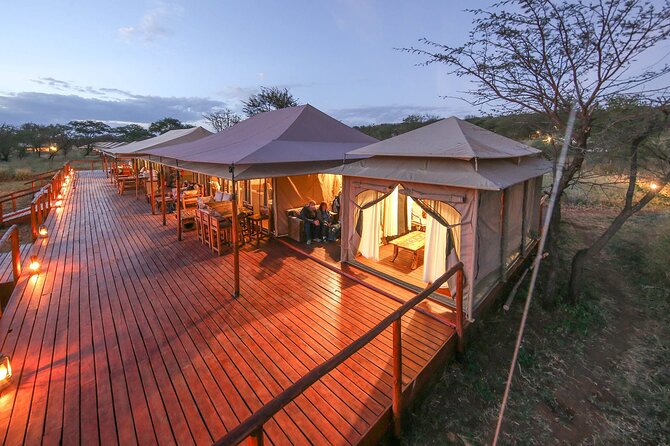
Lake Eyasi is a mildly alkaline lake about 50 kilometers long. Its shores and nearby meadows can support hippos, leopards, monkeys, and many bird species, while the Rift Valley Escarpment gives the area its strongest visual feature.
The first day includes a picnic lunch and visits to Datoga pastoralists and members of the Hadzabe community. The Hadzabe are one of Tanzania’s remaining hunter-gatherer groups, with about 1,500 families reported in the information provided for this trip.
On the following day, you continue with cultural visits in the area. The focus is on the Hadzabe way of life, including hunting and gathering, as well as the Datoga people’s pastoral traditions and metalworking heritage. Lunch is served at camp, and later you drive to Karatu for dinner and the night.
These visits are valuable because they shift the focus from protected areas to the people who live in northern Tanzania. You get a chance to see how homes, food, trade, and craft traditions fit into daily life. At the same time, approach the experience with respect. A community visit should not be treated as a staged animal encounter. Listen, ask before taking photographs, and remember that the people you meet are not scenery.
There is also a practical consideration. Lake Eyasi is not a quick roadside stop. The transfer and cultural schedule take time, and the roads may feel tiring after several game drives. If you want only maximum wildlife hours, these two days reduce time in the parks. If you want culture included in the trip, they make the itinerary more distinctive.
Day 6: Meeting Maasai people, then entering the Serengeti
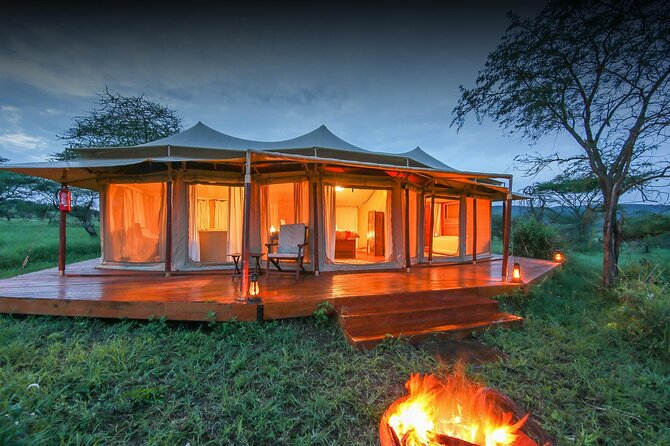
After breakfast in Karatu, you travel toward the Serengeti in a safari vehicle. Along the way, the itinerary includes a visit to a traditional Maasai village.
A village chief guides you around the nearby boma and explains Maasai culture. This is another chance to connect the wildlife route with the people of the region. The stop is especially useful if you have not previously visited a Maasai community, though the quality of any cultural visit depends on how it is conducted and how much time is available.
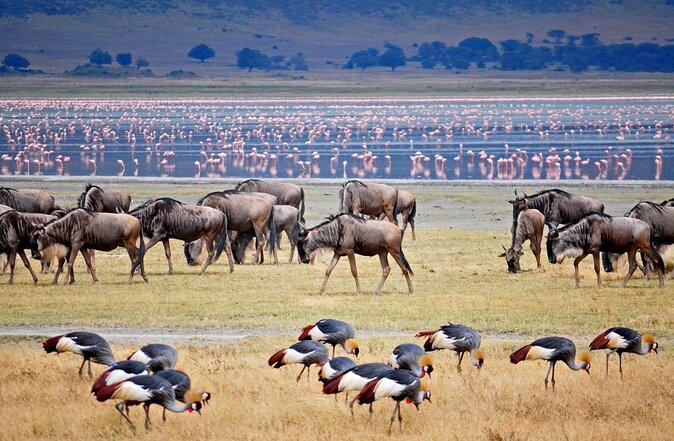
After lunch en route, you continue to the Serengeti entrance. Tanzania’s oldest and best-known national park is famous for its open plains and enormous annual movement of wildebeest, zebra, and gazelle.
The transfer can be long, but it is also part of the safari experience. You begin to see the land open up as you approach the park, and your first wildlife sightings may come before you reach camp. The plan allows four nights in the Serengeti, which is a major advantage. You are not forced to cross the park in one morning and leave before the best viewing hours.
The exact area used for game drives depends on the season and the movement of the herds. That flexibility is important because the migration does not follow a fixed calendar.
Days 7 and 8: Two full days on the Serengeti plains
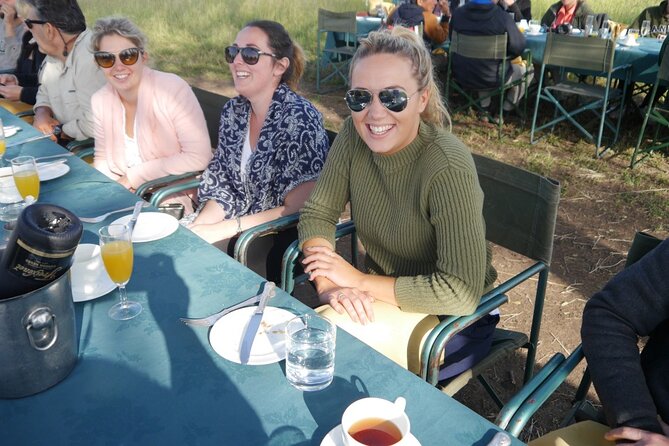
After breakfast on Day 7, your guide searches the eastern, southern, or northern parts of the park. The goal is to get within a reasonable driving distance of large herds, but the annual rains control where the animals gather.
The wildebeest may be elsewhere when you arrive. That is not a failure of the trip. The Serengeti has resident wildlife, and you may still find zebra, gazelles, elephants, buffalo, lions, hyenas, cheetahs, and many other species. A good guide will adjust the route rather than follow a fixed checklist.
A hot-air balloon safari is offered as an optional activity. The flight begins early, around sunrise, and provides an aerial view of the plains and herds. Since it is optional, confirm the extra cost and schedule before you commit. It can be a special addition, but it also means another very early start.
Day 8 centers on another sunrise game drive. Morning light is often a good time to look for animals grazing, while predators may still be active before resting during the hotter part of the day. Later, you can choose between returning for a hot lunch or carrying a packed lunch to a picnic site before continuing the drive.
As evening approaches, keep watch for lion and cheetah on the open plains. These cats are never guaranteed, but the timing gives you a sensible chance to see predators when they may be moving or hunting.
The private format is especially useful here. You can discuss how long to stay at a sighting and how much ground to cover. You still depend on road conditions, park rules, weather, and animal behavior, but you are not negotiating every stop with a busload of strangers.
Day 9: Leaving the Serengeti for Ngorongoro
You begin with a morning game drive, then continue toward the Ngorongoro Conservation Area after lunch. The route changes the mood of the safari. The broad Serengeti plains give way to the high crater region, and your accommodation near Ngorongoro provides a base for the next morning’s descent.
The day includes more driving, so it is not as wildlife-packed as the full Serengeti days. Still, this transfer is well placed. You get one last chance to search for animals before moving to a completely different setting.
At the crater accommodation, dinner is prepared while you settle in. The early night matters because the next morning begins with a descent into the crater.
Day 10: Sunrise inside Ngorongoro Crater
At sunrise, you descend about 600 meters into Ngorongoro Crater for a game drive. The crater is one of the most concentrated wildlife areas in Africa, with an estimated 30,000 animals.
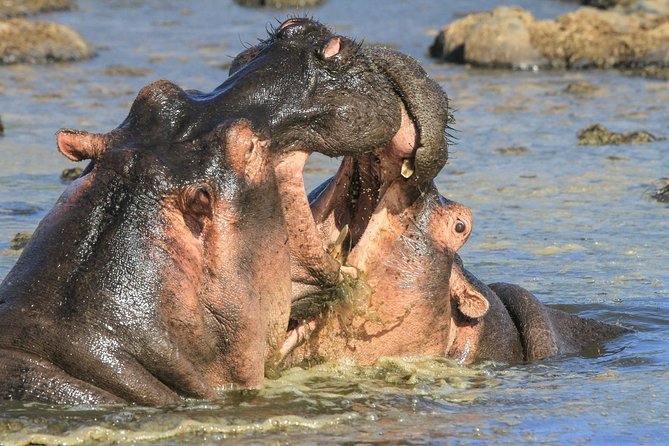
You may find wildebeest, zebra, buffalo, eland, warthog, hippo, and elephant. The predator list includes lion, hyena, jackal, cheetah, and sometimes leopard. Black rhino are among the rarest and most sought-after sightings in the conservation area, although no encounter is certain.
The Lerai Forest, with its yellow-barked acacia trees, is another focal point. Your guide may search there for elephants and rhino while also watching the open grasslands for predators.
Ngorongoro is visually dramatic, but it can also feel busier than the more spread-out Serengeti. Many vehicles concentrate around good sightings, and the crater’s compact shape leaves less room to escape the main route. The tradeoff is density: you have an excellent chance of seeing a wide mix of animals in a relatively small area.
The itinerary ends after this crater visit. Confirm the final drop-off plan when booking, since the supplied details identify Arusha as the base but do not state the exact end point or time.
Guides, vehicles, and the private format
The trip is operated by Premium Safaris Africa and is offered as a private activity. Manase is named in the arrangements, and Freddy is mentioned as a guide who helped deliver a 10-day safari. If having a particular guide matters to you, ask if either person will lead your departure rather than assuming availability.
The vehicle is a safari jeep, and much of the route takes place on park roads. You should be comfortable with bumpy travel, repeated early starts, and long transfers between parks. The stated requirement is a moderate level of physical fitness, but the main challenge is likely sitting for extended periods rather than strenuous walking.
Pickup is offered, and the tour has a mobile ticket. Confirmation is provided at booking. Opening hours are listed as 6:30 a.m. to 6:30 p.m., Monday through Sunday, for the stated operating period.
Who should book this 10-day safari?
I would recommend it to you if you want the major northern Tanzania parks without rushing through them. It suits first-time safari visitors who want elephants, big cats, the Serengeti, Ngorongoro, and cultural encounters in one organized trip.
It is also a good fit for couples, families, or friends who value having their own vehicle and schedule. The two full Serengeti days, plus the wider four-night stay, give you a better chance of seeing changing wildlife conditions than a shorter route.
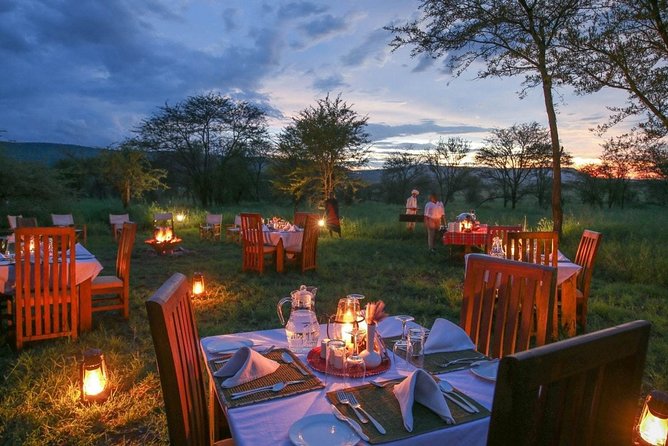
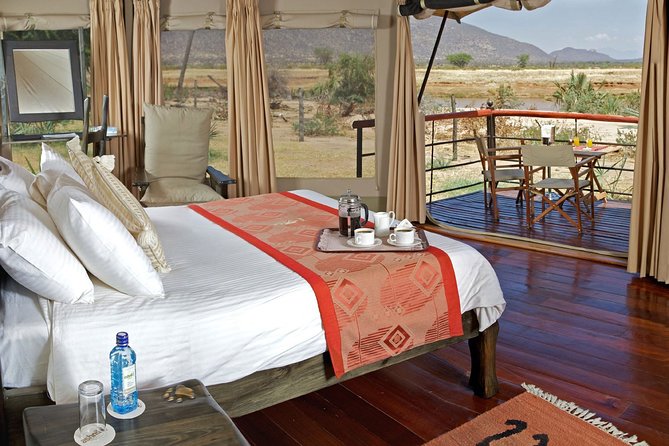
I would hesitate if you dislike long drives, rough roads, basic camp routines, or early mornings. I would also ask careful questions if your priority is luxury, since the accommodation information refers to tented camps and lodges but does not define the exact category included for your departure.
The cancellation terms are reasonably flexible: you can receive a full refund if you cancel at least 24 hours before the local start time. Changes or cancellations inside that window are not accepted for a refund.
Should you book it?
Book this safari if you want breadth plus time, not just a quick circuit of famous names. Tarangire and Lake Manyara bring variety, Lake Eyasi and the Maasai visit add human context, and the extended Serengeti stay gives your guide room to follow the animals.
Before paying $3,946.16 per person, confirm the exact lodges or camps, meals, park fees, drinks, transfers, guide assignment, and balloon-safari price. If those details match your expectations, this is a strong choice for a private first safari in Tanzania. If you want fewer transfers and a more luxurious, slower holiday, a shorter route focused on the Serengeti and Ngorongoro may suit you better.
FAQ
Where does the safari start?
The safari starts with lunch in Arusha, Tanzania, at 12:30 p.m. on the first day.
How long does the safari last?
The experience lasts approximately 10 days.
Is this a private tour?
Yes. Only your own group participates in the activity.
Which national parks and areas are included?
The route includes Tarangire National Park, Lake Manyara National Park, Lake Eyasi, the Serengeti National Park, and the Ngorongoro Conservation Area.
Will I visit local communities?
Yes. The itinerary includes Mto wa Mbu Village, visits with Hadzabe and Datoga communities near Lake Eyasi, and a traditional Maasai village near the Serengeti route.
Is a hot-air balloon safari included?
No. A hot-air balloon safari is listed as an optional activity in the Serengeti.
What level of fitness is required?
A moderate level of physical fitness is recommended.
Can I cancel for a full refund?
Yes. You must cancel at least 24 hours before the experience start time for a full refund. Cancellations or changes made less than 24 hours before the start time are not accepted for a refund.
More Safari in Arusha
- 4 Days Group Camping Safari
★ 5.0 · 1,101 reviews - 5 Days Group Camping Safari
★ 5.0 · 730 reviews - 7-Day Premium Luxury Tanzania Safari All-Inclusive
★ 5.0 · 426 reviews - 8 Days Great Wildebeest Calving Migration Safari from Arusha
★ 5.0 · 254 reviews
More Ngorongoro Crater Tours in Arusha
- 5 Days Camping Tarangire, Serengeti & Ngorongoro crater & Visiting Maasai
★ 5.0 · 229 reviews - 4 Days Join Group tour Tarangire Serengeti and Ngorongoro crater
★ 5.0 · 219 reviews - 4-Day Safari from Arusha: Tarangire, Serengeti and Ngorongoro
★ 5.0 · 173 reviews - 2 Days Tarangire and Ngorongoro Group Camping Safari
★ 5.0 · 146 reviews
Just added around Arusha
- 8 Days Serengeti Migration safari★ 5.0 · 11 reviews
- tarangire, ngorongoro & lake manyara park 3 days private tour★ 5.0 · 11 reviews
- tarangire & ngorongoro 2 days tour★ 5.0 · 14 reviews
- serengeti & ngorongoro 3 days private tour★ 5.0 · 15 reviews
- Mt. Kilimanjaro: Shira plateau to Cathedral point 3872m Day hike★ 5.0 · 7 reviews
- serengeti, ngorongoro & tarangire 4 days private tour★ 5.0 · 18 reviews
- 2 Days Tanzania Midrange Group Join Safari★ 5.0 · 7 reviews
- climb the KILIMANJARO via Lemosho route★ 5.0 · 4 reviews
Serengeti Safaris, compared.

Serengeti Balloon Safari and authentic bush breakfast
Read our review →
3 Days Serengeti & Ngorongoro Group Camping Safari
Read our review →
5-Day Highlights mid-Range Crater, Serengeti, Tarangire
Read our review →


Private 6-Day Tarangire Manyara Crater and Serengeti with Mid-Range Lodges
Read our review →
5 Days Camping Tarangire, Serengeti & Ngorongoro crater & Visiting Maasai
Read our review →
4 Days Join Group tour Tarangire Serengeti and Ngorongoro crater
Read our review →Browse the lists this tour appears in