
Reviewed · SERENGETI SAFARIS
Small Group Serengeti and Ngorongoro Crater Adventure Safari
The great draw here is the sharp contrast between Serengeti’s endless plains and the wildlife-packed floor of Ngorongoro Crater. I like the early game drive in central Serengeti, when the rising sun and active animals make the long road trip feel worthwhile, and I like that the group is capped at six people in a 4×4 with a pop-up roof. The main catch is the amount of driving: Arusha to Serengeti takes about seven to eight hours.
I also like the straightforward price, $790 per person, which covers park fees, the safari vehicle, guide, water, and nine included meals. You should know that this is a fast four-day program, so it gives you a strong first look at two major destinations, but not the leisurely pace of a longer Serengeti trip.
Key points at a glance
- Central Serengeti at sunset: Reach the park around 3 p.m. on day two, then head out for an evening game drive.
- Sunrise from inside the park: Wake at about 5:45 a.m. for breakfast and an early drive before returning to camp.
- Small group vehicle: The maximum group size is six, giving you a better chance at a window or roof opening.
- Ngorongoro’s crater floor: Spend the final morning searching for lions, elephants, flamingos, and black rhino.
- Camping in two locations: Sleep at Seronera campsite in Serengeti and Simba campsite near Ngorongoro.
- Useful all-in pricing: Park charges, three breakfasts, three lunches, three dinners, water, and the 4×4 are included.
Two famous parks, one very busy four-day route
This safari links two of northern Tanzania’s biggest names without adding Tarangire or Lake Manyara. That narrow focus is useful if your main goal is to see Serengeti and Ngorongoro, but the schedule is tight.
You begin with a pickup at Arusha Airport or Kilimanjaro Airport and spend the first night in Arusha city accommodation. The airport transfer is listed at about 50 minutes, though the actual time will depend on which airport and where in Arusha you are staying.
The following morning starts at 7:30 a.m. From there, you drive toward Serengeti, passing views of the Rift Valley and Ngorongoro Crater along the way. The drive is part of the experience, but it is also the least comfortable part of the trip. Seven to eight hours in a safari vehicle is a long stretch, especially on rougher roads and after an airport arrival.
Still, the route gives you an important sense of scale. Tanzania’s northern parks are not lined up like quick city sights. You spend real time crossing open country before reaching the plains that make Serengeti famous.
More Serengeti Safaris in Arusha
- Balloon Safari & Bush Breakfast in Serengeti – Miracle Experience
★ 5.0 · 1,646 reviews - 3 Days Serengeti & Ngorongoro Group Camping Safari
★ 5.0 · 574 reviews - 5-Day Highlights mid-Range Crater, Serengeti, Tarangire
★ 5.0 · 296 reviews
Day one in Arusha: a practical landing night
Day one is not a sightseeing day. It is a buffer before the safari begins, with pickup from either Arusha Airport or Kilimanjaro Airport and an overnight in Arusha city.
That arrangement is sensible. You do not want a delayed flight to spoil your first game drive, and an Arusha night gives you a little time to rest before the early departure. The supplied information does not name the accommodation, so you should confirm its location and standard before booking if that matters to you.
The company’s communication has received particular praise in longer bookings, with Raymond described as quick to answer questions and helpful during planning. That is useful on a safari, where airport transfers, hotel nights, and park departures all need to line up. The guide named in the company’s other safari feedback is Innocent, but the guide for this specific departure is not guaranteed in the details provided.
Day two: the long road to Serengeti
Your 7:30 a.m. pickup begins the biggest transfer of the trip. The drive to Serengeti takes about seven to eight hours, with views of the Rift Valley and Ngorongoro Crater along the way.
By around 3 p.m., you reach Serengeti National Park and begin an evening game drive in central Serengeti. This timing is one of the best features of the plan. You are not simply arriving at camp and waiting for the next morning. You get an immediate chance to see animals and watch the light change across the plains.
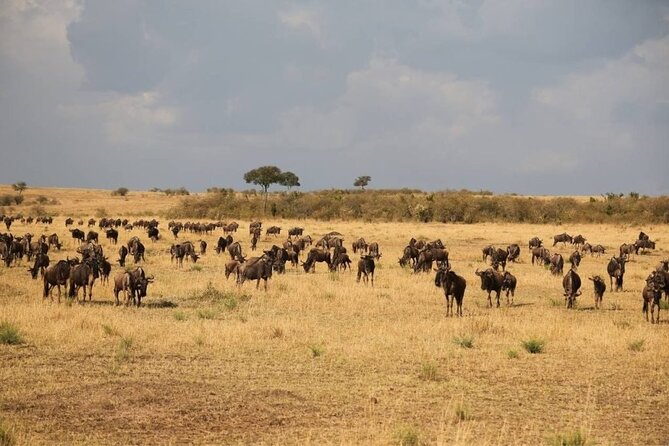
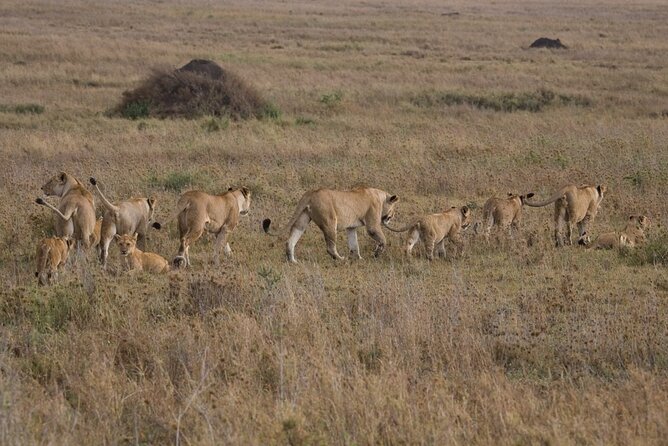
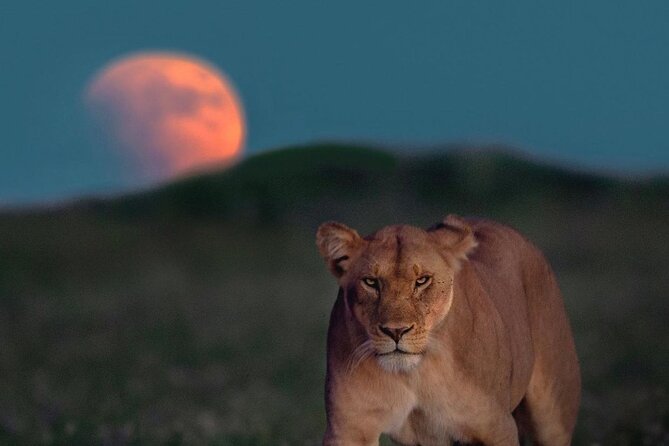
Central Serengeti is known for its large concentration of wildlife, and the park is home to lions, elephants, giraffes, hippos, crocodiles, birds, and many other species. The annual movement of more than 1.5 million wildebeest and about 250,000 zebra is the park’s headline event, but migration sightings depend on the season and the animals’ movements.
That point matters. The guide can search for wildlife and may find part of the migration, but no company can control where herds are on a particular day. The itinerary’s own wording is sensible on this point: the guide will do his best to locate the animals, while nature decides the result.
After the evening drive, you have dinner and sleep at Seronera campsite inside Serengeti. Staying within the park is valuable because you do not have to leave the wildlife area for an outside base. It also puts you closer to the next morning’s game drive.
Day three: sunrise wildlife and the move toward Ngorongoro
Day three begins early, at about 5:45 a.m. You eat breakfast inside Serengeti, then go out for a morning game drive until approximately 11:30 a.m.
This is the right time to be out. Early hours offer changing light and a fresh start to the day, and the schedule gives you several hours before returning to camp for a hot lunch. You then pack your belongings into the jeep and continue with a game drive while heading toward Ngorongoro.
The plan covers a lot in one day. You get a proper morning in Serengeti, a meal back at camp, more wildlife viewing, and a transfer to Simba campsite for dinner and overnight. The cost is efficiency: you will spend part of the afternoon driving rather than making a second full day in central Serengeti.
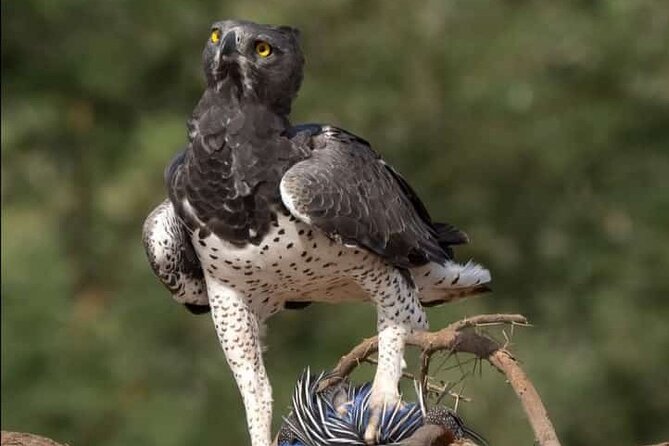
Serengeti is especially well known for large mammals, but the birdlife adds variety. More than 500 bird species are found in the park, including ostriches and flamingos. You might also see giraffes, elephants, hippos, lions, and other animals, depending on the route and conditions.
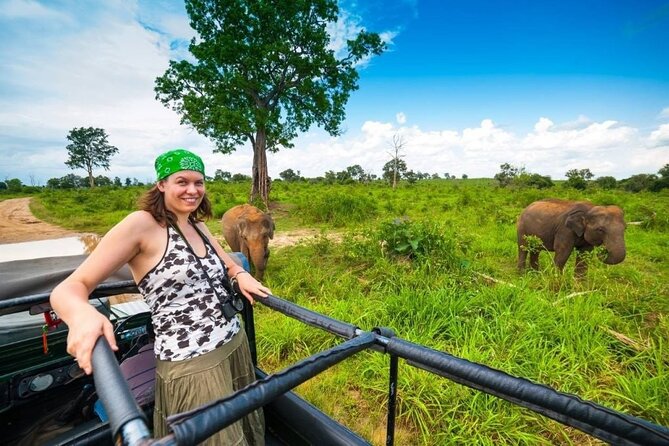
Your guide’s skill matters here. In a small group, you can discuss sightings more easily and ask why the vehicle is stopping or changing direction. The pop-up roof also gives you a better view than a closed vehicle, especially when animals are some distance away.
You sleep at Simba campsite near Ngorongoro. The details do not specify the tent setup or bathroom arrangements, so ask about camping comfort if you are particular about facilities. This is a safari built around being close to the parks, not a lodge-based holiday.
Same country, a completely different kind of safari:
- Tanzania Classic – 7 Days
★ 5.0 · 1,151 reviews - 4 Days Group Camping Safari
★ 5.0 · 1,101 reviews - 5 Days Group Camping Safari
★ 5.0 · 730 reviews - Materuni Waterfalls, coffee tour & Kikuletwa Hot Springs
★ 5.0 · 643 reviews
Day four: the crater’s crowded wildlife bowl
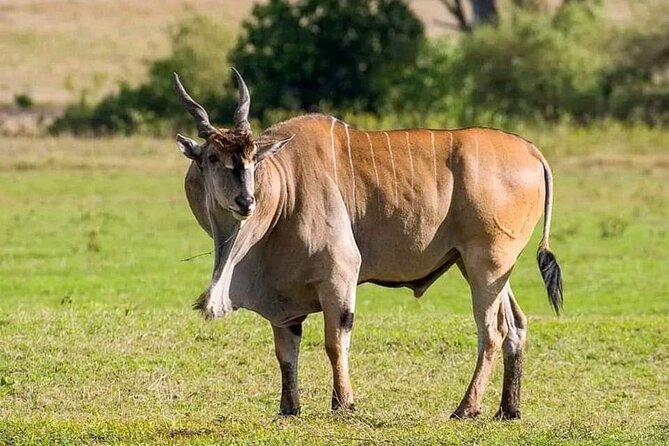
The final day begins at about 5:30 a.m. After breakfast, you descend into Ngorongoro Crater for a game drive on the crater floor.
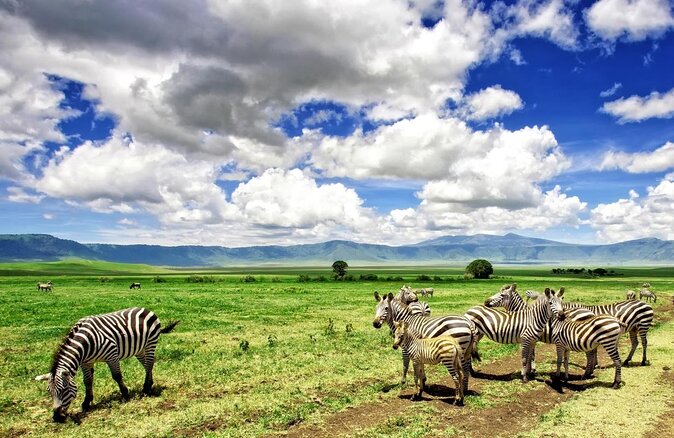
Ngorongoro is an inactive, unbroken volcanic caldera. Its enclosed setting helps concentrate wildlife, which is why this stop can feel very different from the wide-open Serengeti. The day’s plan includes a search for the Big Five, along with birds, flamingos, and black rhino.
The animal figures provided for the crater include more than 6,000 wildebeest, 2,000 zebra, 3,000 gazelles, 200 elephants, more than 30 lions, and about 30 black rhinos, as well as hyenas, elands, jackals, hippos, antelopes, and other small animals. These numbers are useful for understanding the crater’s density, but they are not a promise that you will see every species.
You eat lunch inside the crater while watching the natural setting around you. That is a fine way to use the middle of the day, since you do not need to break away for a distant restaurant or hotel.
The crater is also the most heavily visited part of this route. You may find more safari vehicles here than in remote parts of Serengeti, especially around well-known animal sightings. In exchange, the compact area gives you a strong chance of seeing several species during a single game drive.
The listed day lasts about seven hours, but the return point is not specified. Confirm where the safari ends and how that connects with your next hotel, flight, or onward journey.
What the $790 price really covers
At $790 per person, this safari is priced as a practical shared adventure rather than a luxury trip. The included package covers:
- 4×4 pop-up-roof safari jeep
- Professional guide and safari chief
- Park fees and government charges
- Unlimited drinking water
- Three breakfasts
- Three lunches
- Three dinners
That is a useful bundle. Park fees can make a major difference to safari pricing, and meals are covered on the three active safari days. The airport pickup and Arusha arrival night are also part of the stated plan, though the accommodation details are not fully explained.
You still need money for tips, alcohol, and personal purchases. Tips are not included, so budget for that separately. The phrase personal use can cover a range of small expenses, and it is worth asking the operator for a clearer list before departure.
The value is strongest if you want the two headline destinations and do not need a lodge, private vehicle, or slow pace. The value is weaker if you dislike long road transfers or want several days in one area. A longer safari may cost more, but it gives you more time to wait for wildlife and reduces the feeling of racing between parks.
The small-group setup and daily comfort
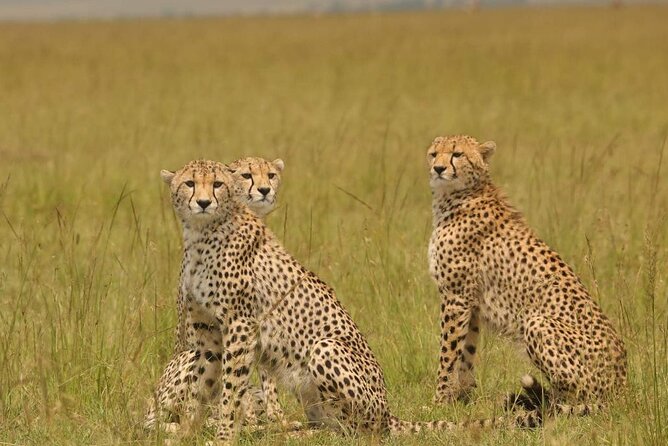
The six-person maximum is important. A full vehicle can make a game drive feel cramped, particularly when everyone wants to photograph the same lion or rhino. With no more than six people, you have a better chance of getting a clear view from the pop-up roof and less competition for conversation with the guide.
The 4×4 is designed for safari viewing, but you should not expect a smooth coach ride. The long transfer from Arusha is the clearest test of your comfort with road travel. Bring only what you can manage in the vehicle and keep essentials easy to reach.
Water is included without a stated daily limit. That is helpful in the heat and during long drives. Breakfast, lunch, and dinner are also included for the safari portion, but the information does not give menus or dietary arrangements. If you have food restrictions, raise them before booking.
The booking confirmation arrives at the time of booking, and pickup is offered. Most people can participate, and the experience is near public transportation, though the safari itself takes place in remote national parks. Free cancellation is available until 24 hours before the start time. After that cutoff, the payment is not refunded and changes are not accepted.
What the company’s strongest service points suggest
The clearest service strength is communication. Raymond has been praised for quick replies, easy planning, and accommodating questions during longer safari arrangements. That matters because a safari involves more moving parts than a standard day tour.
The company’s longer trips have also included a guide called Innocent, who was singled out for his role on a migration safari. That does not mean he will lead this four-day departure, so confirm the assigned guide if his experience is important to you.
Past feedback also highlights organized arrangements, food, guide service, and successful Big Five sightings. Those are encouraging signs, but you should keep expectations realistic. The Big Five are never guaranteed, and migration timing belongs to the animals, not the operator.
Who should book this safari
I would choose this trip if you have four days, want Serengeti and Ngorongoro above all else, and accept a busy schedule. It suits first-time safari visitors who want the major wildlife areas without building a longer custom itinerary.
It is also a good match for solo bookers or couples who like the social side of a small shared vehicle. The six-person limit keeps the group from becoming unwieldy, while the shared format helps hold down the price.
I would think twice if you want luxury accommodation, short transfer times, or long, quiet afternoons at camp. You should also consider a longer trip if the wildebeest migration is your main reason for visiting. The guide can search for the herds, but four days gives nature little time to cooperate.
Should you book it?
Book this safari if the combination of price, two famous parks, included park fees, and a maximum of six people fits your priorities. The strongest moments are likely to be the evening arrival in central Serengeti, the dawn game drive, and the concentrated wildlife of Ngorongoro Crater.
Before paying, confirm the Arusha accommodation, the exact guide, camping facilities, final drop-off point, and how meals handle dietary needs. If those practical details suit you, $790 offers a solid introduction to northern Tanzania, with the honest tradeoff of long drives and a quick pace.
FAQ
Where does the safari begin?
Pickup is offered from Arusha Airport or Kilimanjaro Airport, followed by an overnight in accommodation in Arusha city.
How long is the experience?
The safari lasts approximately four days.
How many people can join the group?
The maximum group size is six travelers.
How long is the drive from Arusha to Serengeti?
The drive takes about seven to eight hours, with views of the Rift Valley and Ngorongoro Crater along the way.
Where do you sleep during the safari?
The itinerary lists Seronera campsite inside Serengeti for the first safari night and Simba campsite near Ngorongoro for the second.
What meals are included?
Three breakfasts, three lunches, and three dinners are included.
Is the Ngorongoro Crater entrance included?
Yes. The Ngorongoro Crater day lists admission as included, and park fees and government charges are included in the package.
Can you cancel for a full refund?
Yes, if you cancel at least 24 hours before the experience start time. Cancellations or changes made less than 24 hours before the start time are not accepted for a refund.
More Safari in Arusha
- 7-Day Premium Luxury Tanzania Safari All-Inclusive
★ 5.0 · 426 reviews - 3-Day Classic Serengeti Safari
★ 5.0 · 263 reviews - 8 Days Great Wildebeest Calving Migration Safari from Arusha
★ 5.0 · 254 reviews - Group Safari 7 Days in Tanzania’s Main Parks
★ 5.0 · 240 reviews
More Ngorongoro Crater Tours in Arusha
- 5 Days Camping Tarangire, Serengeti & Ngorongoro crater & Visiting Maasai
★ 5.0 · 229 reviews - 4 Days Join Group tour Tarangire Serengeti and Ngorongoro crater
★ 5.0 · 219 reviews - 4-Day Safari from Arusha: Tarangire, Serengeti and Ngorongoro
★ 5.0 · 173 reviews - 2 Days Tarangire and Ngorongoro Group Camping Safari
★ 5.0 · 146 reviews
Just added around Arusha
- 8 Days Serengeti Migration safari★ 5.0 · 11 reviews
- tarangire, ngorongoro & lake manyara park 3 days private tour★ 5.0 · 11 reviews
- tarangire & ngorongoro 2 days tour★ 5.0 · 14 reviews
- serengeti & ngorongoro 3 days private tour★ 5.0 · 15 reviews
- Mt. Kilimanjaro: Shira plateau to Cathedral point 3872m Day hike★ 5.0 · 7 reviews
- serengeti, ngorongoro & tarangire 4 days private tour★ 5.0 · 18 reviews
- 2 Days Tanzania Midrange Group Join Safari★ 5.0 · 7 reviews
- climb the KILIMANJARO via Lemosho route★ 5.0 · 4 reviews
Serengeti Safaris, compared.

Serengeti Balloon Safari and authentic bush breakfast
Read our review →
3 Days Serengeti & Ngorongoro Group Camping Safari
Read our review →
5-Day Highlights mid-Range Crater, Serengeti, Tarangire
Read our review →


Private 6-Day Tarangire Manyara Crater and Serengeti with Mid-Range Lodges
Read our review →
5 Days Camping Tarangire, Serengeti & Ngorongoro crater & Visiting Maasai
Read our review →
4 Days Join Group tour Tarangire Serengeti and Ngorongoro crater
Read our review →Browse the lists this tour appears in