
Reviewed · SERENGETI SAFARIS
9-Day Serengeti Migration Footsteps Tanzania Safari
The main draw here is simple: four nights in the Serengeti give you a real chance to follow the moving herds instead of making a quick stop for a few hours. The route adds Tarangire’s elephant country, the Ngorongoro Crater, and Lake Manyara, so you get a broad look at northern Tanzania in one trip.
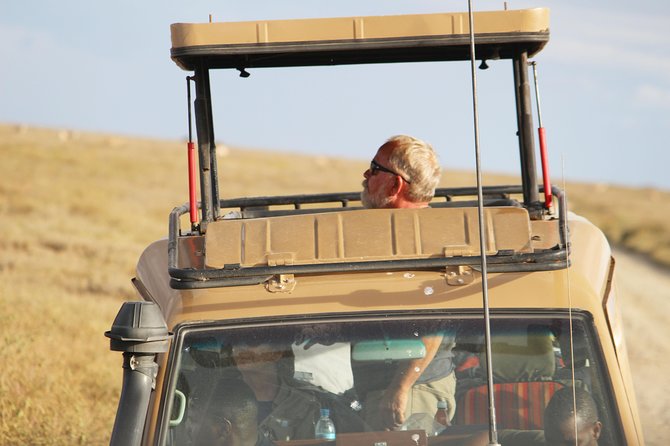
I like the private vehicle and guide setup, since your group can focus on its own pace and interests. I also like the time built in for the Northern Serengeti, a quieter part of the park where the Mara River crossings may take place. The main drawback is that migration sightings depend on nature, weather, and timing. No safari can promise a crossing.
Key points to know before booking
- Four Serengeti nights: This is the heart of the trip, with time in Seronera and the Northern Serengeti.
- Migration timing matters: The Northern Serengeti is used from July to November, while the Ndutu area is the target from December to March.
- Private touring: Only your own group participates, with private transportation included.
- Strong guide focus: Enock, Mwita, Gilbert, Yusuph, Leonard, and others are praised for animal spotting, care, and field experience.
- Big Five potential: Tarangire, the Serengeti, and Ngorongoro all offer chances to see lion, leopard, elephant, buffalo, and rhino.
- Price and meals: The listed price is $4,539 per person and includes parking fees, transport, breakfast, lunch, and dinner, but international flights and gratuities are extra.
Why the four Serengeti nights matter
A migration safari works best when you give it time. The herds do not follow a timetable made for visitors, and a river crossing can happen far from the road, begin suddenly, or fail to happen at all. Four nights in the Serengeti improve your odds and let your guide adjust the route.
This itinerary splits that time between the central Serengeti and the north. You reach the park around midday on Day 3, move toward the Northern Serengeti on Day 4, spend another full day watching for migration action on Day 5, and return toward Seronera on Day 6.
That plan has a useful rhythm. You are not simply driving from one famous park to the next. You have several mornings and afternoons for wildlife, changing scenery, and the search for the herds.
The timing is crucial. From July through November, the migration is expected in the remote northern part of the Serengeti. From December through March, the action shifts to Ndutu, south of the central Serengeti. If the date of your trip does not match the region listed in the plan, ask Lion King Adventures how the route will be adjusted.
More Serengeti Safaris in Arusha
- Balloon Safari & Bush Breakfast in Serengeti – Miracle Experience
★ 5.0 · 1,646 reviews - 3 Days Serengeti & Ngorongoro Group Camping Safari
★ 5.0 · 574 reviews - 5-Day Highlights mid-Range Crater, Serengeti, Tarangire
★ 5.0 · 296 reviews
Day 1: A soft landing in Arusha
Your first day is deliberately light. A Lion King representative picks you up at the airport and takes you to your Arusha accommodation, where you can rest and prepare for the safari.
That first night matters more than it may seem. Safari days start early, and the following morning includes a full game drive in Tarangire. If you are arriving from another time zone, use this day to organize your bags, charge cameras, and get ready for dusty roads and long hours outside.
The stated start time is 8:30 am, but your airport pickup and exact transfer details should be confirmed before arrival. The activity begins and ends in Arusha.
Day 2: Baobabs and elephants in Tarangire
After breakfast, you head to Tarangire National Park for a full day of wildlife viewing. The park is known for nine vegetation zones, huge baobabs, and the Tarangire River, which draws animals when water is scarce elsewhere.
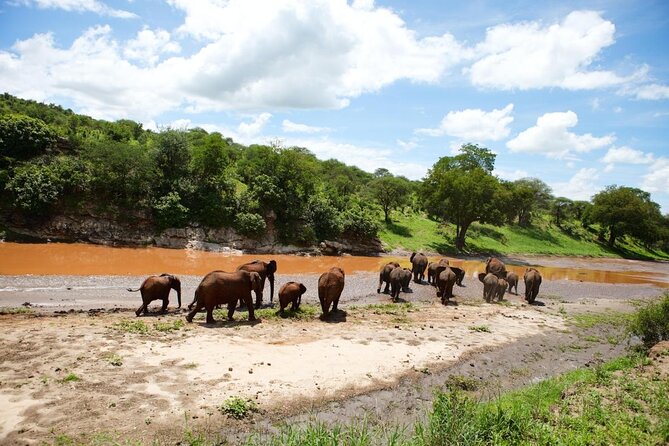
Tarangire gives this safari a different opening note from the Serengeti. Instead of endless open grassland, you see a mix of river country, trees, woodland, and striking old baobabs. Elephants are the park’s great specialty, and the plan allows time to watch family groups interact.
You may also see lion, leopard, buffalo, zebra, giraffe, antelope, and many bird species. The range of habitats makes Tarangire a good first park because it introduces you to several types of wildlife before the wide Serengeti plains take over.
The tradeoff is driving time. This is a full day in the park, then the route continues toward the Serengeti on Day 3. If you want a slow holiday with short transfers, this nine-day route may feel busy. If you want several major parks in one trip, the variety is worth the road time.
Day 3: Through the highlands to the Serengeti
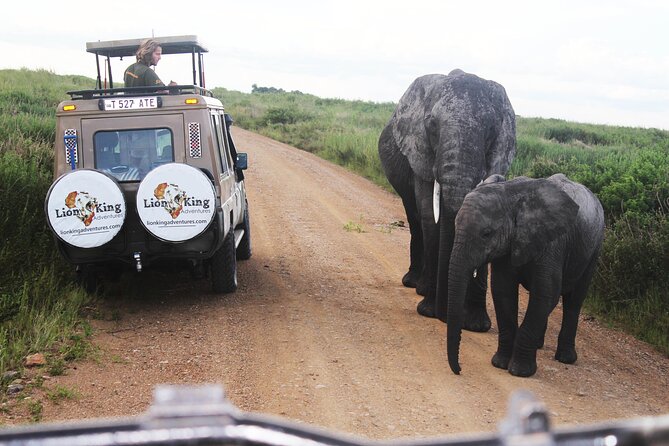
The road to the Serengeti passes through fertile highlands where the Iraqw people grow wheat and corn. You also pass through the Ngorongoro Conservation Area, with misty rainforest and possible sightings of baboons, elephants, and perhaps leopards in the thick vegetation.
The first view of Ngorongoro Crater comes before you continue west. That glimpse is a fine preview, but the real crater visit comes later, when you descend to the floor for a full day.
You are due to reach the Serengeti around midday. The park is Tanzania’s largest and includes grassland, swamps, lakes, and savanna habitats. That variety helps explain why the Serengeti supports both enormous migrating herds and resident predators.
This day combines transit with sightseeing. It is not a full Serengeti game-drive day, so keep your expectations clear. You may see wildlife along the way, but the extended search for the migration begins on the following day.
Same country, a completely different kind of safari:
- Tanzania Classic – 7 Days
★ 5.0 · 1,151 reviews - 4 Days Group Camping Safari
★ 5.0 · 1,101 reviews - 5 Days Group Camping Safari
★ 5.0 · 730 reviews - Materuni Waterfalls, coffee tour & Kikuletwa Hot Springs
★ 5.0 · 643 reviews
Day 4: Heading north toward the Mara River
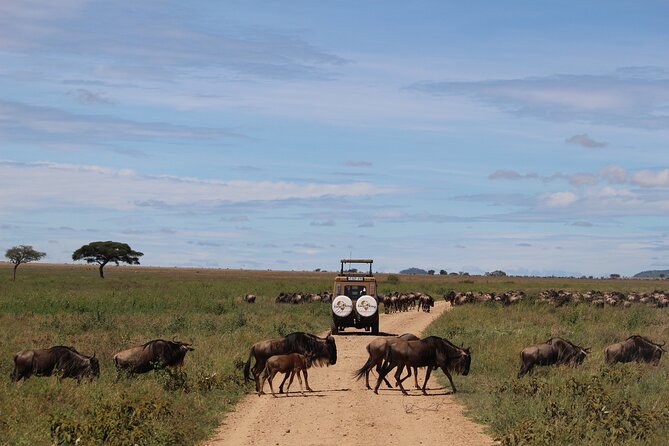
After breakfast, you make an en route game drive toward the Northern Serengeti. The route from Seronera stretches for about 100 kilometers through rolling country broken by small rivers, hills, and kopjes, including Lobo Kopje.
The north is less central to the usual first-time safari route, and that can mean fewer vehicles in some areas. It also brings a different feel to the Serengeti, with more rugged ground and river country replacing the broad central plains.
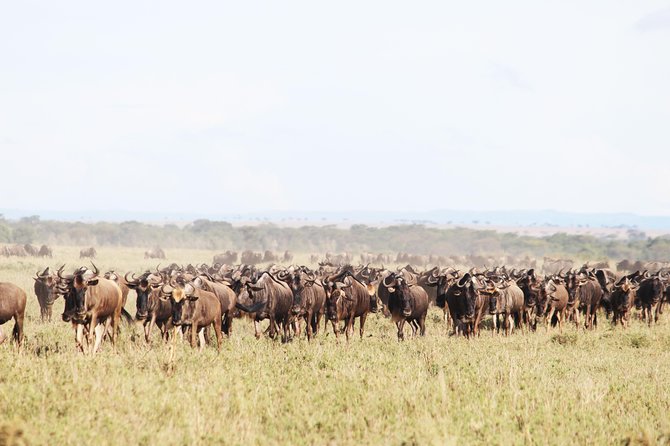
In August, the migration is expected in this region, and the itinerary is built around the possibility of seeing wildebeest approach or cross the Mara River. The word possibility matters. A crossing may happen while you are nearby, but it may also take place elsewhere or not at all during your visit.
Your guide’s role becomes especially important here. Enock, Mwita, Gilbert, Yusuph, and other Lion King guides are praised for spotting animals, reading the situation, and caring for the people in their vehicles. Guides named in the feedback include Mwita, who was described as born and raised in the Serengeti, and Enock, who is repeatedly credited with careful organization and excellent wildlife finding.
Day 5: Waiting for one of nature’s great scenes
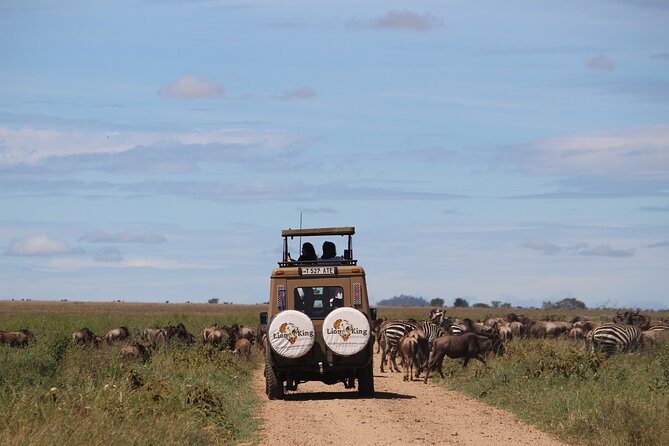
Day 5 is devoted to the migration in the Northern Serengeti. You leave after an early breakfast, giving yourself as much daylight as possible for the search.
A Mara crossing is dramatic because it is unpredictable. Herds may gather along the bank for a long time, then one animal makes the first move and the rest follow. The river carries strong current, and crocodiles wait in the water, making the scene tense and sometimes difficult to watch.
The best advice is to treat the crossing as a bonus, not the entire reason for the safari. Even if no animals enter the river, the northern Serengeti can provide excellent wildlife viewing, big skies, kopjes, and resident animals.
This is also a day when patience matters. You may spend time waiting in the vehicle, and the payoff is never certain. For photographers, that uncertainty can be part of the appeal. For anyone who needs a packed schedule of guaranteed sights, it may be frustrating.
Day 6: Returning toward Seronera
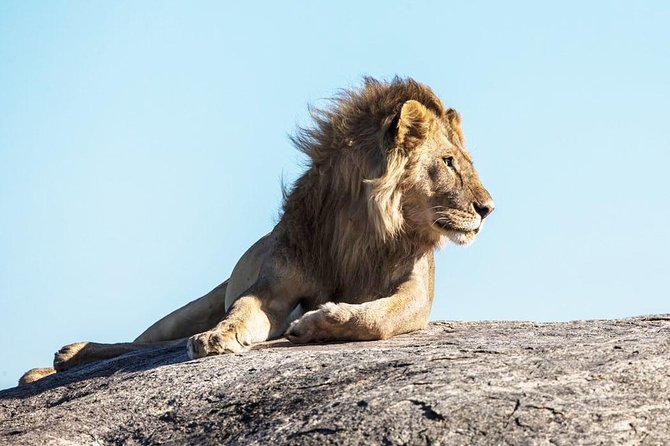
After breakfast, the route turns back toward Seronera, with more chances to search for animals along the way. The focus shifts from the moving herds to the predators that live in the Serengeti year-round.
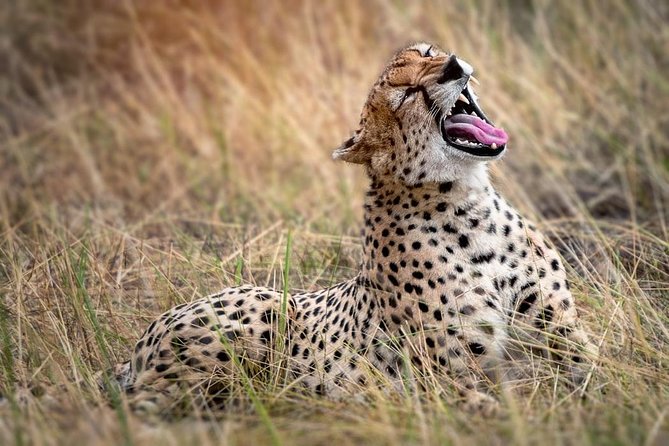
Lion, leopard, and cheetah may appear, each using the plains in a different way. Your guide may also help you look for smaller animals and birds, not just the headline species.
This return leg helps balance the migration focus. You are not spending every day looking only at wildebeest. You also have a chance to see the wider cycle of life in the park and revisit central Serengeti country.
The day ends with dinner and another night near the plains. The itinerary describes evenings by the fire, with time to talk about the day and look at the African night sky. Accommodation details vary, so confirm the name and style of your camp or lodge before booking. Past arrangements have included tented lodges and camps, with Nyota Luxury Camp specifically praised by name, but that does not mean it is included on every departure.
Day 7: Leaving the Serengeti for the crater rim
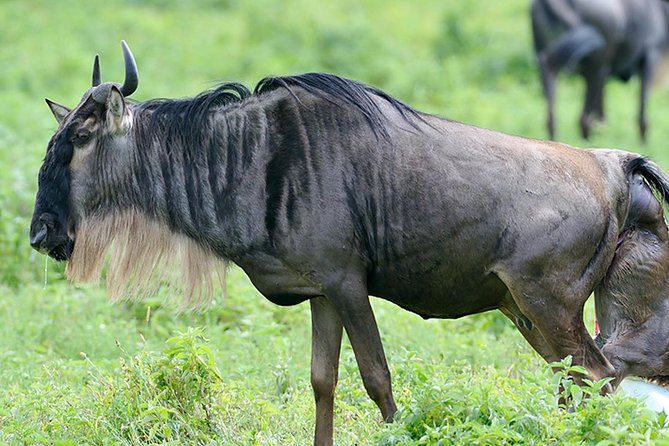
You have another Serengeti game drive after breakfast before traveling toward Ngorongoro Crater. By afternoon, you reach accommodation near the crater rim and get your first view of the crater floor.
This is a smart overnight position. It puts you close to the early descent the next morning instead of requiring a long approach before the wildlife viewing begins.
The change in scenery is dramatic. The Serengeti feels open and expansive, while Ngorongoro is enclosed by the steep sides of an ancient volcanic caldera. Streams, grassland, and large animal populations are visible from the rim.
Expect another day with a mix of game drive and road travel. The reward is a shorter, early start for the crater, which is one of the most valuable parts of the route.
Day 8: A full wildlife day inside Ngorongoro Crater
You descend very early after breakfast for a full day on the crater floor. The caldera is about 610 meters deep and covers roughly 260 square kilometers, creating an enclosed ecosystem where animals roam through open, unfenced country.
Ngorongoro is one of the best places in Tanzania for the Big Five. You may also see wildebeest, zebra, hippos, flamingos, and many other species in a compact area.
The crater is special because you can view several habitats in a single day. Open grassland, water, and streams support different animals, while the steep crater walls create a strong sense of place.
The early departure is worth accepting. Wildlife is often most active early in the day, and you want as much time as possible before returning to the rim. The crater can also feel busier than the remote northern Serengeti, so this day offers a different kind of safari experience: concentrated wildlife rather than solitude.
Day 9: Lake Manyara and the return to Arusha
The final park is Lake Manyara, about 120 kilometers west of Arusha. It is a relatively small park, but its shallow salt lake covers around 70 percent of the park’s area during the season, and the water attracts flamingos and other birds.
The park is a good final stop because it changes the focus again. You may see monkeys in woodland, giraffe, zebra, wildebeest, buffalo, elephant, and, with luck, lions resting in trees. The park also includes open grassland, baobab-dotted cliffs, and forested areas filled with primates.
Bird lovers get particular value here. The park is associated with around 500 bird species, and the lake may be home to thousands of flamingos. Even if the migration has been the main event, Lake Manyara gives you a final chance to look closely at smaller wildlife and birdlife.
After lunch, you return to Arusha in the late afternoon. Since the activity ends back at the meeting point, do not schedule an international flight immediately afterward without allowing plenty of extra time.
The guides are a major part of the value
A safari vehicle is only as good as the person reading the road and the animals. The strongest praise connected with this trip centers on guides including Enock, Mwita, Gilbert, Yusuph, Leonard, Amani, Simon, Ozzy, Richard, Immanuel, and Shafino.
Specific strengths associated with the guiding team include sharp eyesight, safe driving, clear explanations, patience, and personal care. Mwita’s background in the Serengeti is especially relevant for a migration-focused route, while Enock is repeatedly singled out for thoughtful organization and animal finding.
You cannot choose a particular guide unless Lion King Adventures confirms it. Still, it is sensible to ask who is assigned to your group, how many people will share the vehicle, and how the guide handles long waits during a possible river crossing.
The private format is a clear advantage. Only your group participates, so you have a better chance of discussing interests such as photography, birds, predators, or family needs without adapting to strangers.
Is $4,539 per person good value?
At $4,539 per person, this is a serious purchase, but the route covers nine days and several major parks. Private transportation, park fees, breakfast, lunch, and dinner are included, along with airport pickup and the guiding operation.
The strongest value comes from the four Serengeti nights. A shorter safari may cost less, but it gives you fewer chances to reach the migration zone and less time to recover from long drives.
You still need to budget for international flights and gratuities. The supplied details also do not clearly list accommodation in the included section, even though overnight stays are part of the itinerary. Ask for a written breakdown covering every lodge, camp, transfer, and park charge before you make a final decision.
The price is easiest to justify if you value a private trip, several national parks, and a route built around a seasonal event. It is harder to justify if your main goal is a guaranteed river crossing, because that cannot be purchased in advance.
Who should book this safari?
I would look closely at this trip if you want the classic northern Tanzania combination: Tarangire, Serengeti, Ngorongoro, and Lake Manyara. It also suits families and small private groups, with past arrangements including families with teenagers, groups of friends, honeymooners, and older family members.
The route works well for first-time safari visitors who want the Big Five but also care about the migration. It is a good fit for photographers who can tolerate waiting and changing plans.
I would think twice if you dislike early starts, long road transfers, dust, or uncertainty. The itinerary covers a lot of ground, and the most famous scene, a Mara River crossing, may not happen during your visit.
The activity is listed as suitable for most people, and public transportation is nearby. Pickup is offered, and confirmation comes at booking. Free cancellation is available if you cancel at least 24 hours before the local start time. A minimum number of participants is required, though the activity itself is private for your group.
Should you book the 9-Day Serengeti Migration Footsteps Safari?
Book it if you want time, not just a checklist. The four Serengeti nights, private vehicle, named guide team, and wide range of parks give you a strong chance at a varied Tanzania safari.
Choose your dates with care. July through November matches the Northern Serengeti plan, while December through March points toward Ndutu. Before paying, confirm the seasonal route, accommodation standard, group size, and exact inclusions.
My practical verdict: this is a strong choice for a private, migration-focused safari, provided you understand that wildlife follows its own calendar. Go for the Serengeti time and the full northern Tanzania route. Treat the river crossing as the thrilling possibility, not a promise.
FAQ
Where does the safari start and finish?
The safari starts in Arusha, Tanzania, and ends back at the Arusha meeting point.
Is airport pickup offered?
Yes. A Lion King Adventures representative picks you up from the airport and takes you to your Arusha accommodation on Day 1.
How long is the safari?
The experience lasts approximately nine days.
Is this a private tour?
Yes. Only your group participates, and private transportation is included.
When is the migration expected in the Northern Serengeti?
The Northern Serengeti migration period is listed as July through November, with August highlighted for possible Mara River crossings.
Where is the migration found from December through March?
During December through March, the migration is found in the Ndutu region.
Are meals included?
Breakfast is included for nine days, lunch for eight days, and dinner for seven days.
Are international flights included?
No. International flights are not included in the listed price.
What is the cancellation policy?
You can cancel at least 24 hours before the experience start time for a full refund. Cancellations made less than 24 hours before the start time are not refunded, and changes within that period are not accepted.
More Safari in Arusha
- 7-Day Premium Luxury Tanzania Safari All-Inclusive
★ 5.0 · 426 reviews - 3-Day Classic Serengeti Safari
★ 5.0 · 263 reviews - 8 Days Great Wildebeest Calving Migration Safari from Arusha
★ 5.0 · 254 reviews - Group Safari 7 Days in Tanzania’s Main Parks
★ 5.0 · 240 reviews
Just added around Arusha
- 8 Days Serengeti Migration safari★ 5.0 · 11 reviews
- tarangire, ngorongoro & lake manyara park 3 days private tour★ 5.0 · 11 reviews
- tarangire & ngorongoro 2 days tour★ 5.0 · 14 reviews
- serengeti & ngorongoro 3 days private tour★ 5.0 · 15 reviews
- Mt. Kilimanjaro: Shira plateau to Cathedral point 3872m Day hike★ 5.0 · 7 reviews
- serengeti, ngorongoro & tarangire 4 days private tour★ 5.0 · 18 reviews
- 2 Days Tanzania Midrange Group Join Safari★ 5.0 · 7 reviews
- climb the KILIMANJARO via Lemosho route★ 5.0 · 4 reviews
Serengeti Safaris, compared.

Serengeti Balloon Safari and authentic bush breakfast
Read our review →
3 Days Serengeti & Ngorongoro Group Camping Safari
Read our review →
5-Day Highlights mid-Range Crater, Serengeti, Tarangire
Read our review →


Private 6-Day Tarangire Manyara Crater and Serengeti with Mid-Range Lodges
Read our review →
5 Days Camping Tarangire, Serengeti & Ngorongoro crater & Visiting Maasai
Read our review →
4 Days Join Group tour Tarangire Serengeti and Ngorongoro crater
Read our review →Browse the lists this tour appears in