
Reviewed · MACHAME ROUTE CLIMBS
7 Days Kilimanjaro Climb Machame route
The best part of this seven-day Machame climb is the steady change in scenery. You start beneath mossy rainforest, cross the open Shira Plateau, pass below Kibo’s glaciers, and finish with a headlamp ascent to Uhuru Peak at 5,895 meters. The route feels increasingly wild as the trees disappear.
I like the extra acclimatization time and the memorable views of Mount Meru floating above the clouds. I also like the human side of the trip: guides including Emmanuel, Mtui, and Noel, plus cooks and porters who keep the camp moving. The main drawback is simple: this is a hard high-altitude trek, and mountain gear, a sleeping bag, trekking poles, and clothing are not included in the $2,860 price.
Key points before you book
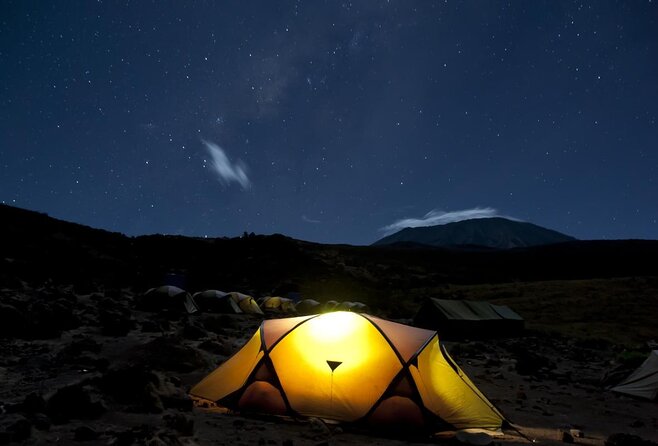
- Seven days gives you more time to adjust: The Shira Plateau, Lava Tower area, Barranco, Karanga, and Barafu create a useful climb-high, sleep-lower rhythm.
- The route begins in rainforest: Day one brings moss-covered trees, cloud forest, heather, tall grasses, and wildflowers before the mountain opens up.
- Summit night starts around midnight: Expect about six hours to reach the crater rim and Uhuru Peak, followed by a long descent.
- Barranco Wall requires hands-on scrambling: You will use your hands in places, but the section is short compared with the full summit day.
- Meals are included for all seven days: Breakfast, lunch, and dinner are part of the package, with cooks joining the climb.
- The trip is private: Only your group takes part, and pickup is offered from the Arusha area. Group discounts may be available.
Why the seven-day Machame Route works well
Machame is often chosen for its scenery, but the seven-day version earns its price mainly through pacing. The route approaches Kilimanjaro from the southwest, joins the Shira route, then crosses beneath Kibo’s southern ice fields before the summit push.
You gain altitude in stages rather than rushing toward Barafu. Day three is especially useful. You climb to about 4,530 meters before descending to Barranco Camp, even though the net gain for the day is only about 110 meters. That up-and-down pattern takes effort, but it gives your body a better chance to adjust.
You also get more time to notice the mountain’s plant life. The lower forest gives way to heather and giant high-altitude plants such as Senecio kilimanjari and Lobelia deckenii. Above that, the route becomes spare and rocky, with little vegetation around Barafu.
This is not a casual walk with a summit attached. You need strong physical fitness, patience, and comfort with long days on uneven ground. The route is private, which means your own group can keep a shared pace rather than joining a large mixed party.
More Kilimanjaro Climbs in Arusha
- 8-Day Small-group Lemosho Kilimanjaro Summit Trekking
★ 5.0 · 186 reviews - 7-Day Machame Kilimanjaro Summit Tour from Arusha
★ 5.0 · 125 reviews - 4 days Best experience Kilimanjaro Hike, Serengeti &Ngorongoro
★ 5.0 · 54 reviews
Day one: Machame Gate to the cloud forest
The day begins after breakfast with transport from Moshi to Machame Gate. At the gate, registration takes place while you check your equipment and meet the guides, porters, and cooks who support the climb.
The first hike leads through Kilimanjaro’s cloud forest. Moss-covered trees create a cool, shaded start, and the forest feels dense and quiet. As you climb, the trees thin out and heather, grasses, and wildflowers take over.
Machame Camp is the first overnight stop. The walking time is listed at about 18 hours in the schedule, which is almost certainly a formatting problem for a hiking duration, so confirm the expected daily walking times before departure. The important point is that day one is a full trekking day, not just a short introduction.
Porters and cooks walk ahead to prepare camp. That arrangement lets you concentrate on walking with a daypack rather than carrying the full load. Keep water close, and use the first day to test your boots, layers, and rain protection while you are still at a lower altitude.
Day two: crossing the Shira Plateau
The second day is described as the easiest on the route, but it still includes uphill sections. The trail is more exposed than the forest, so a clear day can feel hot. Carry plenty of drinking water and protect yourself from the sun.
The reward is the change in scale. From open viewpoints, you can look down toward the plains and forests while Kibo and Mawenzi rise above. The mountain feels less like a forest walk and more like a high-altitude crossing.
After lunch, you climb toward the Shira Plateau. This broad area formed when lava from Kibo filled the Shira crater. Shira Camp gives you views toward Kibo to the west and Mount Meru to the east.
The view of Mount Meru above the clouds is one of the strongest reasons to appreciate this route. It is not a quick roadside photo. You reach it after walking through changing vegetation and gaining enough height to see beyond the lower slopes.
Breakfast, lunch, and dinner are included. Since cooks accompany the group, you do not need to arrange separate mountain meals, though the tour information does not specify menus or dietary options. Ask about special diets before booking.
Day three: the crucial high point before Barranco
Day three is a classic acclimatization day. You hike east across the Shira Plateau and toward the junction with the Shira and Lemosho routes. The trail becomes more barren, with fewer trees and less cover.
The key feature is the height you reach before descending. By early afternoon, you may climb to about 4,530 meters, a gain of roughly 690 meters during the day, then drop to Barranco Camp. The net elevation gain is only around 110 meters, but your legs still do the work.
A faster group may take a detour by Lava Tower, a 300-foot lava formation projecting from the mountain. This option is not described as part of every group’s plan, so treat it as something to ask about rather than a guaranteed stop.
Barranco Camp is set beneath the Barranco Wall. The campsite’s position gives the next morning a clear visual target. You can look at the wall and understand why the route feels more serious here, even though the coming scramble is manageable for fit hikers who follow the guide’s pace.
More Machame Route Climbs in Arusha
- 6 Days: Hiking Kilimanjaro via Machame Route
★ 5.0 · 24 reviews - 6-Day Guided Tour in Machame Route Mt Kilimanjaro
★ 5.0 · 17 reviews - KILIMANJARO MACHAME ROUTE, (Climb 7days)
★ 5.0 · 16 reviews - 7 days Kilimanjaro climb via Machame route (Whiskey route)
★ 5.0 · 16 reviews
Day four: over Barranco Wall to Karanga
The day starts with a roughly 1.5-hour scramble up Barranco Wall. In places, you use your hands to pull yourself upward. This is the most demanding section of the day, but it is not described as a technical rock climb.
The practical tip is to keep your hands free and follow the guide’s instructions. You may need to move carefully rather than quickly. The wall is a reason to wear reliable footwear and avoid bringing an overloaded daypack.
After reaching the top, the trail drops into the greener Karanga Valley. The contrast is pleasing: you work up the dry wall, then enter a more sheltered valley before climbing again to camp on the ridge above it.
The day is listed at about six hours, shorter than several other days. That gives you time to rest, eat, and watch how your body is handling the altitude. Do not mistake the shorter schedule for an easy day. The wall and the accumulated climbing still take energy.
Day five: alpine desert and Barafu Camp
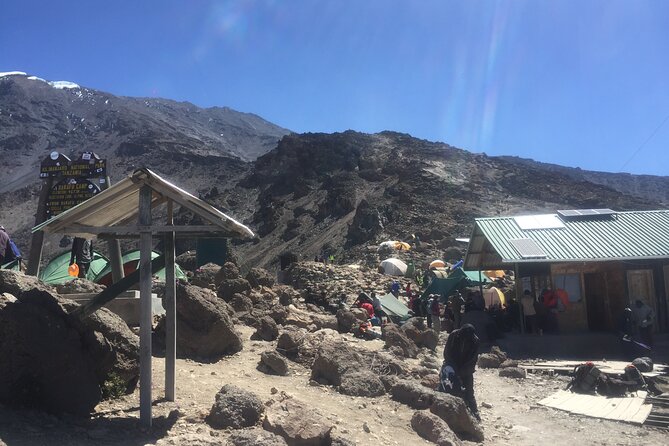
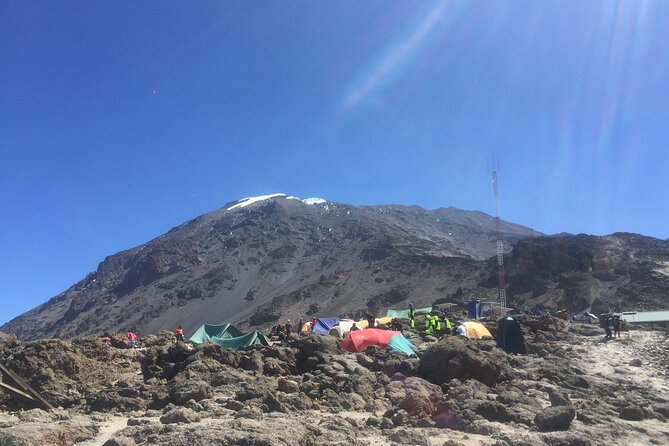
After breakfast, you hike toward Barafu Camp. The route passes through alpine desert, where vegetation is scarce and the mountain feels stark. You can see several of Kibo’s glaciers and the junction where the Mweka descent route connects with the Machame trail.
The route passes near the Heim, Kersten, and Decken Glaciers. These ice features are a reminder that Kilimanjaro is not only a broad volcanic cone, but also a high mountain with a severe upper zone. Conditions and visibility can affect what you see, so keep expectations flexible.
Barafu Camp offers views toward both Kibo and Mawenzi. It is also the staging point for the summit attempt. You are expected to eat dinner and sleep as soon as possible because the final ascent begins around midnight.
That schedule is one of the hardest parts of the trip. You may finish the day tired, try to rest at high altitude, then wake shortly after midnight for the steepest and longest effort. Keep your summit clothing, headlamp, water, and snacks ready before bed.
Day six: the midnight push to Uhuru Peak
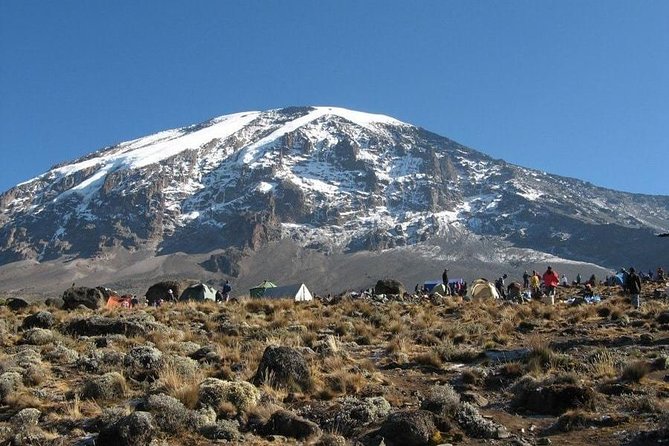
The summit day begins around midnight. For about six hours, you hike by headlamp toward the crater rim. The trail is steep, and the approach to Stella Point is described as the most challenging part of the climb.
At Stella Point, you reach the crater rim. From there, the trail to Uhuru Peak is a more gradual climb, but the altitude makes it slow and tiring. The crater rim section takes about an hour, and the total summit effort demands both physical strength and mental patience.
Uhuru Peak is the highest point in Africa, at 5,895 meters. You have time for photographs and to enjoy the views before starting the descent. Keep that summit stop sensible. At this height, cold, fatigue, and thin air matter more than the number of photos you take.
After Uhuru, you descend toward Mweka. This makes day six a long one even if the listed schedule shows about six hours. The description does not provide a full walking-time breakdown for the descent, so ask the operator how much time the full summit-and-Mweka section normally takes.
Day seven: descending through forest to Mweka Gate
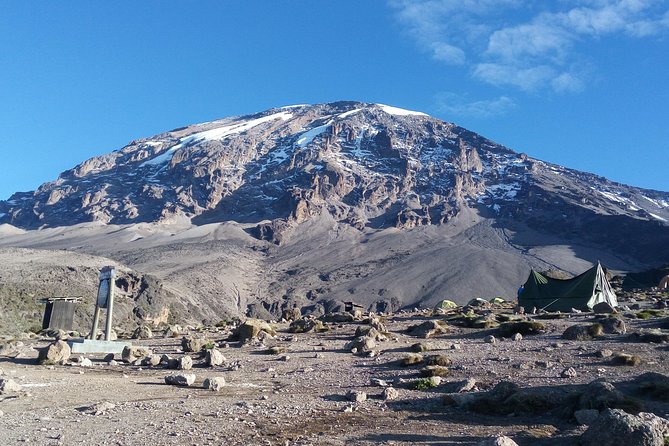
The final morning begins after breakfast with the descent to Mweka Gate. The trail returns through Kilimanjaro’s cloud forest, bringing back thicker vegetation after the bare upper slopes.
Watch your footing. The descent can be slippery, and tired legs often make downhill walking harder than expected. Trekking poles are not included, so bring your own or arrange them separately if you rely on poles for balance.
At Mweka Gate, you sign the registration book and receive a summit certificate if you completed the climb. Reaching Stella Point brings a green certificate. Reaching Uhuru Peak brings a gold certificate.
Vehicles wait at the lower station to take you back to Moshi or Arusha. The return drive is a welcome finish after seven days on the mountain, and the included meals end with breakfast on this final day according to the package details.
Guides, porters, and the feel of the support team
The guiding team associated with this climb includes Emmanuel, Mtui, and Noel. The exact guide assigned to your group may vary, so confirm names before departure if that matters to you.
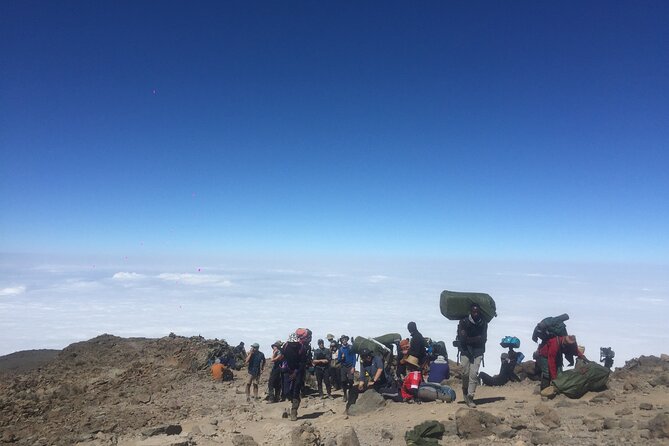
The support system includes porters and cooks. One group arrangement involved more than 20 porters, showing how much labor goes into moving tents, food, and supplies up the mountain. You should ask how porter welfare, tipping, luggage limits, and personal gear are handled before you arrive.
The human side can be a real part of the trip. Song, language lessons, and local cuisine were part of the experience described by the operator’s clients. Those details matter because a week on a mountain is not only about reaching the summit. Camp life, shared meals, and communication with the crew shape the whole experience.
The package includes breakfast, lunch, and dinner for all seven days. It does not include mountain clothing, a sleeping bag, or trekking poles. Those omissions can affect the real cost, especially if you need to rent or buy several items.
Is $2,860 a fair price?
At $2,860 per person, the price is not a budget walk, but it covers a seven-day private climb with meals, porters, cooks, guides, pickup, and the full route from Machame Gate to Mweka Gate. The extra day compared with a shorter itinerary has real value because it spreads the climb over more stages.
You should compare the price carefully with what other operators include. Ask about transfers, park fees, accommodation before or after the climb, equipment rental, porter support, guide-to-climber ratios, and tips. The supplied details confirm pickup is offered, but they do not specify all pre- or post-climb accommodation.
The private format is useful if your group has a clear pace or specific preferences. Group discounts may improve the value for several people booking together. If you are traveling alone, ask how the private arrangement is priced, since the advertised rate is per person.
Who should book this climb?
I would recommend this route to a fit hiker who wants scenery and a better acclimatization schedule rather than the shortest possible climb. It suits you if rainforest, open plateau, glacier views, and a strenuous summit night sound like part of the appeal.
It may also work well for a small family or friend group that wants to stay together. The private setup gives your party its own experience, while the guides, cooks, and porters handle the camp routine.
Think twice if you dislike steep uphill walking, cold nights, poor sleep, or long descents. A strong fitness level is required, and the midnight summit attempt is not a minor add-on. You should also budget for the gear excluded from the package.
Free cancellation is available if you cancel at least 24 hours before the local start time. Changes made inside that window are not accepted, and poor weather may lead to a new date or a full refund.
Should you book the seven-day Machame climb?
Book it if you want the Machame Route’s best scenery with as much acclimatization time as this itinerary provides. The Shira Plateau, Mount Meru views, Barranco Wall, southern glaciers, and Barafu summit route create a varied week rather than a repetitive uphill march.
Before paying, confirm the exact daily walking times, assigned guide, gear rental options, meal arrangements, porter policies, and what pickup includes. If those details suit your needs, the $2,860 price can be a sensible investment in a private, fully supported climb.
FAQ
Where does the Kilimanjaro climb begin?
The experience is based in Arusha, Tanzania, with pickup offered. The trek begins at Machame Gate after transport from Moshi.
How long is the climb?
The experience lasts approximately seven days. The route starts at Machame Gate and finishes at Mweka Gate.
What route does the climb use?
You climb Kilimanjaro by the Machame Route. The route passes through rainforest and moorland, crosses the Shira Plateau, continues beneath Kibo’s southern ice fields, and reaches the summit by the Barafu route.
Is Uhuru Peak included?
Yes. The final ascent is to Uhuru Peak, which is listed at 5,895 meters. The summit attempt begins around midnight on day six.
What meals are included?
Breakfast, lunch, and dinner are included for all seven days. The itinerary also states that cooks accompany the group.
Is equipment included?
Mountain gear, trekking poles, a sleeping bag, and clothing are not included. You need to bring or arrange these items separately.
Can I cancel for a full refund?
You can cancel for a full refund at least 24 hours before the experience start time. If poor weather causes the climb to be canceled, you are offered another date or a full refund.
More 7-Day Experiences in Arusha
- Tanzania Classic – 7 Days
★ 5.0 · 1,151 reviews - 7-Day Premium Luxury Tanzania Safari All-Inclusive
★ 5.0 · 426 reviews - Group Safari 7 Days in Tanzania’s Main Parks
★ 5.0 · 240 reviews - 7 Days Tanganyika Wilderness Safari
★ 5.0 · 159 reviews
Just added around Arusha
- 8 Days Serengeti Migration safari★ 5.0 · 11 reviews
- tarangire, ngorongoro & lake manyara park 3 days private tour★ 5.0 · 11 reviews
- tarangire & ngorongoro 2 days tour★ 5.0 · 14 reviews
- Mt. Kilimanjaro: Shira plateau to Cathedral point 3872m Day hike★ 5.0 · 7 reviews
- serengeti, ngorongoro & tarangire 4 days private tour★ 5.0 · 18 reviews
- serengeti & ngorongoro 3 days private tour★ 5.0 · 15 reviews
- 2 Days Tanzania Midrange Group Join Safari★ 5.0 · 7 reviews
- climb the KILIMANJARO via Lemosho route★ 5.0 · 4 reviews
Machame Route Climbs, compared.



Climbing Kilimanjaro through 7 days Machame Route
Read our review →
7-Day Machame Kilimanjaro Summit Tour from Arusha
Read our review →
7 Days Kilimanjaro via Machame route affordable price
Read our review →
#1. Best Kilimanjaro Day hike Tour-Machame Route-ISMANI
Read our review →

The Best of Machame Route in 6 Days: Your World’s Summit Guide
Read our review →Browse the lists this tour appears in