
Reviewed · CAMPING SAFARIS
6-Day Tanzania Adventures Safaris – Group Joining Camping Safaris
The real draw here is the four-park route. In six days, you move from elephant country in Tarangire to the open Serengeti, then down into Ngorongoro Crater and across Lake Manyara’s bird-filled forests. It is a lot of Tanzania in a short stretch, but the route makes good use of each day.
I like the small maximum group of seven, which keeps the safari vehicle more manageable, and I like that park fees, camping gear, meals, fuel, and an English-speaking guide are already included. The trade-off is simple: this is a busy camping safari, with long drives and several early starts. If you want a slow, lodge-based holiday, this is not it.
Key points to know before booking
- Four major northern parks in six days: Tarangire, Serengeti, Ngorongoro Crater, and Lake Manyara each offer a different setting and wildlife mix.
- Two full Serengeti periods: Days two and three give you a better chance to see predators and migrating herds than a one-night visit would.
- Small group format: The maximum is seven participants, useful for wildlife viewing and group comfort.
- Camping equipment is supplied: Tents, sleeping mats, chairs, and tables are included, along with five breakfasts, five dinners, and six lunches.
- Strong staff reports: Giovanni and Elias are named as guides connected with the operation, while Joaquin and Prospe are mentioned as cooks. Assignments may vary.
- Good solo-safari option: The group setup can help a solo participant share costs and meet people without giving up a proper northern circuit.
Why this six-day route works
Tanzania’s northern parks are close enough to combine, but not so close that the schedule feels effortless. Roads between the parks take time, and the safari vehicle is your main transport for much of the trip. That is why the route matters so much.
This plan begins with Tarangire, spends substantial time in the Serengeti, places you at the Ngorongoro Crater rim before a crater visit, and finishes at Lake Manyara before returning to Arusha. You are not simply ticking off parks. You are seeing how wildlife changes with the scenery.
The price is $1,904.77 per person. For that sum, you receive national park fees, a custom-built 4×4, fuel, a professional English-speaking guide, camping equipment, and all listed meals. International flights, a Tanzanian visa, tips, laundry, communication, souvenirs, and other personal spending are extra.
That package gives the price real value, especially because park fees alone can add a great deal to a Tanzania safari. The main question is not just cost. It is comfort. You are paying for an active camping trip, not a private lodge escape.
More Camping Safaris in Arusha:
- 4 Days Group Camping Safari
★ 5.0 · 1,101 reviews - 5 Days Group Camping Safari
★ 5.0 · 730 reviews - 3 Days Serengeti & Ngorongoro Group Camping Safari
★ 5.0 · 574 reviews
Day one: elephants and baobabs in Tarangire
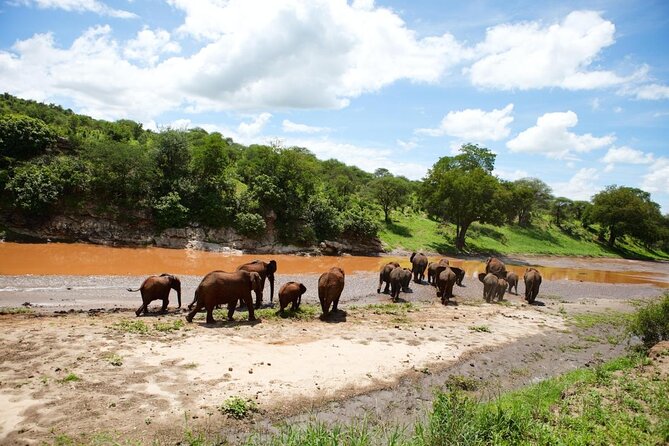
The first morning begins in Arusha at 7:30 a.m. You drive to Tarangire National Park, a large reserve known for baobab trees, open savannah, and seasonal swamps. The park’s changing water supply helps draw wildlife during dry periods, and its elephant herds are the main attraction.
You may see buffaloes, zebras, giraffes, hartebeests, and other antelope. More than 550 bird species are recorded here, so keep your eyes open beyond the larger animals. Tarangire is a good first stop because it offers a clear introduction to East African wildlife without waiting for the Serengeti’s famous plains.
The elephant viewing can be particularly rewarding. The animals are accustomed to safari vehicles, allowing close observation while you remain inside the 4×4. That does not guarantee a perfect sighting, but it creates the chance to watch natural behavior rather than just spotting a distant shape.
The day is listed at about seven hours, including the drive and game viewing. Lunch and dinner are included, and you spend the night at a campsite outside the park. That location is practical, though it means the first day is not only about wildlife. You will also spend a fair amount of time on the road.
Day two: crossing the highlands into the Serengeti
Day two takes you through Tanzania’s highlands, where corn, coffee, and wheat are grown, before reaching Serengeti National Park. The change in scenery is part of the appeal. The route moves from cultivated uplands into the huge open grasslands associated with the Serengeti.
The name Serengeti comes from the Maasai and means endless plains. Once you reach the park, the description makes sense. The horizon can seem to run on without interruption, broken by kopjes, the weathered rock formations that provide lookout points for predators.
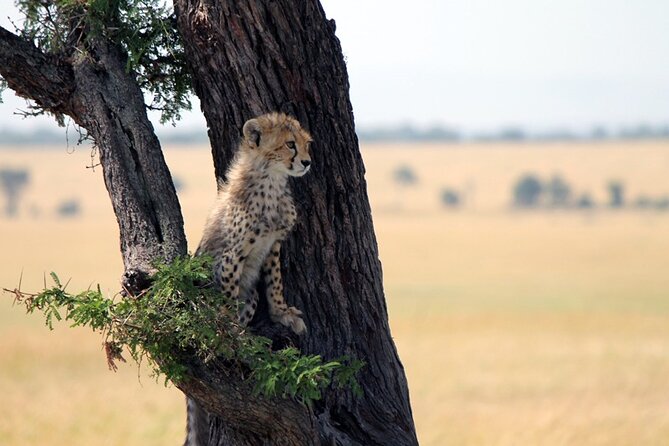
Depending on the season, you may see large numbers of wildebeest and zebras moving through the region as part of their annual migration. The movement is controlled by rainfall, so no fixed calendar can promise a particular sighting. The route may also bring you near lions, cheetahs, leopards, and other predators that follow the herds.
This is an approximately eight-hour day. Lunch and dinner are included, and the night is spent in the Serengeti. The schedule is long, but reaching the park on the second day gives you more than a quick afternoon visit.
Day three: a full Serengeti game-drive day
Day three is the heart of the safari. You have the full day for game drives in the Serengeti, with no major park transfer taking up the entire schedule. That extra time matters because wildlife does not arrange itself around a tour timetable.
The Serengeti supports impalas, buffalo, crocodiles, hippos, and many other species. Its greatest fame comes from wildebeest and zebra migration, but you should not treat the migration as the only reason to come. Resident animals and predators can make a good day even when the herds are elsewhere.
The route description gives seasonal guidance. In November and December, animals generally move from the northern woodlands and hills toward the southern grasslands. During the longer rains from April to June, many return north. Conditions vary from year to year, so ask your guide what is currently happening rather than relying only on a standard calendar.
Predator sightings are possible throughout the year. Lions, cheetahs, and leopards may be found near areas with prey, while crocodiles and hippos add a different kind of wildlife viewing around water. Your guide’s skill in finding and positioning the vehicle will shape the day.
One guide connected with this team is Giovanni, who is described as staying with the search for animal sightings until the final moments of the day. Another named guide is Elias, praised for his experience and for answering questions carefully when asked. You should confirm who will lead your departure, since guide assignments can change.
The day runs about nine hours. Breakfast, lunch, and dinner are included, and you camp in the Seronera area. This is the point where the trip feels most like a real safari rather than a quick park sampler.
A few more Arusha trips to weigh up
- Tanzania Wildlife Encounters – 6 Days
★ 5.0 · 277 reviews - Private 6-Day Tarangire Manyara Crater and Serengeti with Mid-Range Lodges
★ 5.0 · 238 reviews - 6 Days Private Budget Safari
★ 5.0 · 163 reviews - 6 Days Tanzania Budget Camping Safari
★ 5.0 · 145 reviews
Day four: another Serengeti morning, then the crater rim
You start day four with an early breakfast and another Serengeti game drive. That early timing is useful. Animals are often easier to find before the heat of the day, and the morning light makes the plains and kopjes especially striking.
You may have another chance at the Big Five: lion, elephant, buffalo, rhino, and leopard. The wording matters. These sightings are possibilities, not promises, and rhino are much harder to find than some of the other species.
Later, you leave the Serengeti for Ngorongoro. The drive takes you to the crater rim, where the first view is a powerful preview of the next day: streams, grassland, and animals gathered far below. You spend the night at a campsite directly on the crater’s edge.
That setting is one of the most memorable parts of the route. You can wake early for sunrise over the crater, and the orange evening light gives the rim camp a dramatic feel. At the same time, camping at elevation can feel more exposed and basic than a lodge. Pack with changing temperatures in mind, though the provided information does not specify the exact camping conditions.
This is another day of about eight hours, with all three meals included.
Day five: down into Ngorongoro Crater
Ngorongoro Crater is the trip’s big natural spectacle. The UNESCO-listed site was formed millions of years ago and is about 610 metres deep, covering roughly 260 square kilometres. Its enclosed shape supports a dense animal population, estimated at around 25,000.
After breakfast, you take the steep track down into the crater for a game drive. The compact area can make wildlife viewing feel unusually productive. In a short time, you may see wildebeest, zebra, gazelles, elephants, and many bird species.
The crater also offers a chance to look for the endangered black rhinoceros. A sighting is never certain, but the crater is one of the stronger places on this route to try. You may also see other large mammals moving across the open grassland.
The crater is not a small private enclosure. Animals roam freely, and sightings depend on the day, the season, and your guide’s choices. Still, its concentration of wildlife makes it a sensible centerpiece for a six-day itinerary.
The crater visit takes about six hours, and the admission ticket is included. Breakfast, lunch, and dinner are also covered. After the game drive, the schedule continues toward the final park, so this is another full day rather than a relaxed stop.
Day six: Lake Manyara’s birds, forest, and tree-climbing lions
Lake Manyara National Park is smaller than the other parks on the route, but it changes the rhythm of the safari. The park centers on a shallow alkaline lake of about 200 square kilometres and includes open plains, woodland, and baobab-dotted cliffs.
The birdlife is a major reason to visit. More than 400 species are recorded, and the lake may attract flamingos. Hippos, elephants, baboons, and wildebeest add variety, while the park is also known for its unusual tree-climbing lions.
Those lions are a possibility, not a guarantee, and the same applies to the flamingos. The value of Manyara is its mix of habitats. After several days of broad Serengeti grassland, the woodland and cliff scenery give you a different kind of wildlife search.
The final game drive lasts about seven hours, including the return to Arusha, where you arrive in the early evening. Breakfast and lunch are included. Because this is the last day, the timing can feel tight, particularly if you have onward plans from Arusha. Build in flexibility rather than booking a close connection.
Camping, meals, and the shared vehicle
Camping equipment is supplied. That includes tents, sleeping mats, chairs, and tables, so you do not need to bring a full camp kit. The package also covers five breakfasts, five dinners, and six lunches.
The cooks connected with the operation include Joaquin and Prospe. Joaquin is specifically associated with generous meals, while Prospe is described as a warm and capable camp cook. Food is an important part of a camping safari because you spend long days outside, and dependable meals make the physical pace easier.
The safari uses a private custom-built 4×4 vehicle for the group, with fuel included. In practice, the vehicle is the center of your day: it carries you between parks, serves as your viewing platform, and gives the guide room to work with changing animal sightings.
The maximum group size is seven. That is small enough to feel more personal than a large coach tour, but it is still a shared trip. You will need to accept other people’s pace, questions, luggage, and preferences. For a solo participant, that can be a strong arrangement. It lowers the cost of a private safari while giving you a ready-made group.
One unusual detail is that some departures have included nights in private rooms in the Serengeti and Manyara, even though the trip is sold as a camping safari. Do not assume this is guaranteed. Ask what accommodation is planned for your specific date.
What the price includes, and what it leaves out
At $1,904.77, the package covers the expensive working parts of a safari: park entry fees, fuel, the vehicle, the guide, camping gear, and meals. You also get six days of access to four major parks, with two substantial periods in the Serengeti and a crater visit.
You still need to budget for your international flight, Tanzanian visa, tips, laundry, communication, souvenirs, and personal spending. None of those costs is surprising, but they can affect the final total.
I would compare this trip with other Tanzania safaris by checking three things carefully: group size, park fees, and sleeping arrangements. A lower headline price may leave out fees or meals. A higher price may buy a smaller group or lodges. Here, the value is strongest if you want maximum park time at a controlled cost and are comfortable with camping.
Who should book this safari
I would recommend it most strongly to an active first-time visitor who wants the classic northern Tanzania route in one trip. You get elephants, plains, predators, a crater, birds, and several types of scenery without arranging separate park visits.
It also suits solo participants. A small group, supplied equipment, and organized meals remove much of the difficulty of planning a safari alone. The staff names connected with the operation, including Giovanni, Elias, Joaquin, and Prospe, add a useful personal touch, though the exact team can vary.
You should think twice if you dislike long drives, early breakfasts, shared vehicles, or basic camping. The itinerary covers a lot of ground, and the best wildlife days often begin before you feel fully awake.
Pickup is offered, the activity begins in Arusha, and it ends back at the meeting point. Most people can participate, and the departure has a maximum of seven participants. Confirmation is provided at booking. You can cancel for a full refund up to 24 hours before the start time, subject to the stated minimum-group condition.
Should you book the six-day Tanzania safari?
Book it if your priority is seeing the northern circuit properly rather than spending every night in a lodge. The route is ambitious but well chosen, and the included park fees, meals, fuel, vehicle, guide, and camp kit make the price easier to justify.
Skip it if you want a quiet, polished holiday with little time in transit. For everyone else, this is a practical way to reach Tarangire, Serengeti, Ngorongoro, and Lake Manyara in six days, with enough Serengeti time to give the safari real depth.
FAQ
Where does the safari start and finish?
The safari starts in Arusha, Tanzania, at 7:30 a.m., and ends back at the meeting point in Arusha.
How many people can join the safari?
The activity has a maximum of seven participants.
Which national parks are included?
The route includes Tarangire National Park, Serengeti National Park, Ngorongoro Crater, and Lake Manyara National Park.
Are park fees and camping equipment included?
Yes. National park fees and camping equipment are included. The equipment listed includes tents, sleeping mats, chairs, and tables.
Which meals are provided?
The package includes five breakfasts, five dinners, and six lunches.
What is not included in the price?
International flights, a Tanzanian visa, tips, laundry, communication, souvenirs, and other personal expenses are not included.
Just added around Arusha
- 8 Days Serengeti Migration safari★ 5.0 · 11 reviews
- tarangire, ngorongoro & lake manyara park 3 days private tour★ 5.0 · 11 reviews
- tarangire & ngorongoro 2 days tour★ 5.0 · 14 reviews
- serengeti & ngorongoro 3 days private tour★ 5.0 · 15 reviews
- Mt. Kilimanjaro: Shira plateau to Cathedral point 3872m Day hike★ 5.0 · 7 reviews
- serengeti, ngorongoro & tarangire 4 days private tour★ 5.0 · 18 reviews
- 2 Days Tanzania Midrange Group Join Safari★ 5.0 · 7 reviews
- climb the KILIMANJARO via Lemosho route★ 5.0 · 4 reviews
Camping Safaris, compared.



3 Days Serengeti & Ngorongoro Group Camping Safari
Read our review →
5 Days Camping Tarangire, Serengeti & Ngorongoro crater & Visiting Maasai
Read our review →
2 Days Tarangire and Ngorongoro Group Camping Safari
Read our review →

3 Days Tarangire, Ngorongoro & Lake Manyara Group Camping Safari
Read our review →
5-Day private Camping Safari Tour in Tanzania
Read our review →Browse the lists this tour appears in