
Reviewed · HIKING & TREKKING
4 Days Mount Meru Climbing | Hiking | Trekking Tour
The most unusual part of this climb comes before the high mountain scenery: you walk through Arusha National Park with an armed ranger, passing habitat where elephants, giraffes, zebras, buffalo, monkeys, antelope, and other wildlife may appear. Higher up, the trail follows a narrow volcanic ridge above Meru’s crater, with sunrise from the 4,568-meter summit.
I like the chance to use Mount Meru as a Kilimanjaro warm-up, since the climb gives you several days of uphill walking and one demanding summit night. I also like the hut accommodation, which keeps you out of tents and places you near the crater rim and Ash Cone.
The main catch is that this is not an easy four-day stroll. The summit morning begins around 1:30 a.m., includes steep ground and a narrow ridge, and the listed $2,600 price does not include park fees, flights, visas, or crew tips.
Key points at a glance
- Wildlife comes early: The lower route through Arusha National Park may bring views of elephants, giraffes, zebras, buffalo, monkeys, and antelope.
- A ranger is required: You climb with a full armed ranger escort because of the wildlife on the mountain.
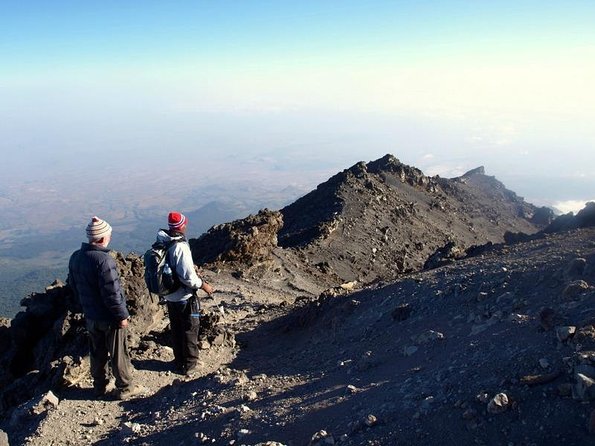
- The crater ridge is the star: The route reaches Rhino Point, Cobra Point, and a narrow ridge between the crater cliffs and outer slopes.
- The summit day is long: You climb before dawn, reach 4,565 to 4,568 meters for sunrise, then descend for a total hiking day of about 10 to 12 hours.
- You sleep in huts: Miriakamba Hut and Saddle Hut replace camping, though you should still expect simple mountain accommodation.
- It can prepare you for Kilimanjaro: The route offers altitude exposure and a serious summit effort, but it also leaves you tired, so allow recovery time before another climb.
Why Mount Meru is more than a practice climb
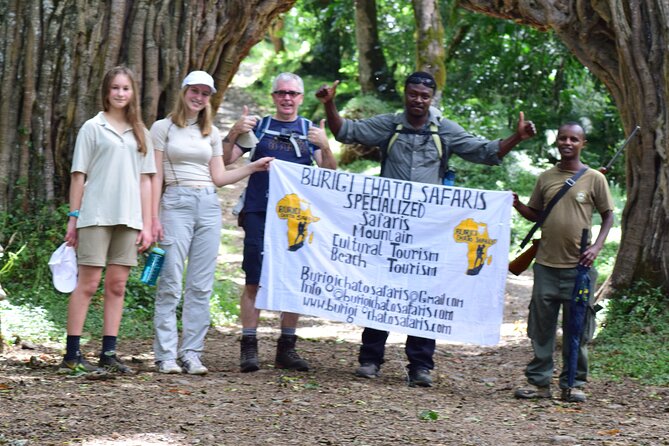
Mount Meru is Tanzania’s second-highest mountain, at about 4,568 meters, and Africa’s third-highest peak according to the tour information. Its position inside Arusha National Park gives it a character that Kilimanjaro does not always provide: the climb begins in forest and open grassland, where wildlife is part of the setting.
That combination makes Meru a strong choice if you want more than a straightforward summit march. You get a mountain climb, a crater, changing vegetation, and the possibility of seeing animals before the route becomes too high for most of them.
The mountain is also useful preparation for Kilimanjaro. You practice carrying a daypack, walking slowly uphill, eating on a schedule, sleeping at altitude, and managing a pre-dawn summit attempt. Several people use it as a warm-up trek before Kilimanjaro, but do not treat the word warm-up as a promise of ease. The final climb is steep and tiring.
A few more Arusha trips to weigh up
- 8-Day Small-group Lemosho Kilimanjaro Summit Trekking
★ 5.0 · 186 reviews - Mountain Kilimanjaro Day Hike
★ 5.0 · 102 reviews - Private Full Day Hiking Experience to Marangu Route
★ 5.0 · 61 reviews
Day 1: Momela Gate to Miriakamba Hut
The day begins with a drive from Arusha to Momela Gate. The listed meeting time is 8:30 a.m. at Arusha Center Inn TouristTZ on Bondeni Street, with pickup also offered. At the gate, you register before setting off with the armed ranger.
This first section covers about 10 kilometers and takes roughly four to six hours. The route moves through montane forest, and the lower slopes offer the best chance of seeing animals. Elephants, giraffes, zebras, monkeys, and antelope are all listed as possibilities, with buffalo and elephants especially worth watching for.
The ranger is not a decorative extra. Because Mount Meru lies inside a national park, the escort is required for safety around wildlife. Follow the ranger’s instructions closely, stay with the group, and keep your attention on the trail rather than turning the walk into a private photo hunt.
Your first night is at Miriakamba Hut. Dinner is included, as are breakfast and lunch during the trek. The hut arrangement is practical and saves you from carrying camping equipment, though you should expect a basic mountain stay rather than hotel comfort.
The supplied elevation figures for this day are not presented consistently. They list a start around 1,387 meters and an end around 1,500 meters, while the feet figures appear reversed. Ask the operator to confirm the exact elevation profile before departure, especially if you are using the numbers to plan altitude medication or fitness training.
Day 2: Miriakamba to Saddle Hut and Little Meru
Day two is shorter in distance but steeper in feel. You climb from Miriakamba Hut toward Saddle Hut, gaining height along a ridge through forest and moorland. The listed distance is 8 kilometers, with three to five hours of walking.
This is a good day to settle into the slow pace needed above the tree line. The route gives you views into Meru Crater and toward the Ash Cone, a dramatic volcanic feature inside the crater. The mountain begins to feel less like a forest hike and more like a high-altitude climb.
After a hot lunch at Saddle Hut, you can make the short climb to Little Meru, at 3,820 meters. The reward is a broad view before sunset. This optional-feeling side effort is still useful preparation for the summit, but you should decide based on how your legs and breathing feel. Saving strength for the following morning is sensible.
You spend the night at Saddle Hut. The elevation figures supplied for this stage place the route roughly between 2,514 and 3,570 meters, though the stated feet conversions do not always match those numbers. The overall message is clear enough: you gain a substantial amount of altitude in a short time, so drink regularly, eat even if your appetite drops, and tell your guide about headaches, nausea, dizziness, or unusual fatigue.
Day 3: A 1:30 a.m. start for Mount Meru’s summit
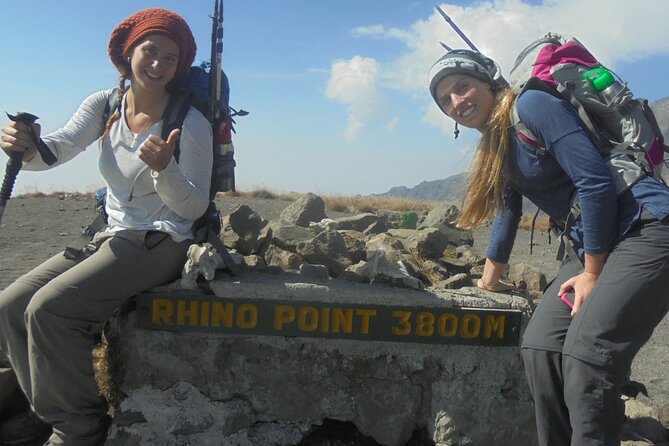
This is the serious day. The alarm comes around 1:30 a.m., and you climb in darkness toward Rhino Point at about 3,800 meters, then Cobra Point at about 4,350 meters. From there, the route continues to the summit at roughly 4,565 to 4,568 meters.
The early start is timed for sunrise. On a clear morning, you may see Kilimanjaro’s peak rising above the clouds. You also get views into Meru Crater, with the Ash Cone and inner cliffs forming the mountain’s most memorable setting.
The final ridge is the technical-feeling highlight, even though the supplied details do not describe technical climbing equipment. The trail runs between steep inner crater cliffs and the sloping outer wall. That narrow volcanic spine can feel exposed, particularly in darkness, wind, or poor weather. Move slowly, keep space between people, and follow the guide’s pace.
The climb to the summit is listed as about 5 kilometers, followed by a 13-kilometer descent. Total hiking time is approximately 10 to 12 hours, crossing alpine desert, moorland, and montane forest. This is where the tour’s repeated advice to walk slowly becomes practical rather than polite.
Some climbers find the last section difficult, and the guide and assistant guide may need to help maintain morale and pace. The local crew may sing during the climb or greet you with songs after the summit. That human touch can matter when the cold, darkness, steep slope, and thin air begin to wear you down.
After reaching the summit, you descend to Saddle Hut for a short rest and brunch, then continue down to Miriakamba Hut. Do not underestimate this second descent. Your knees may find the downhill walking nearly as demanding as the climb, and the full day can leave you spent.
Same country, a completely different kind of safari:
- Balloon Safari & Bush Breakfast in Serengeti – Miracle Experience
★ 5.0 · 1,646 reviews - Tanzania Classic – 7 Days
★ 5.0 · 1,151 reviews - 4 Days Group Camping Safari
★ 5.0 · 1,101 reviews - 5 Days Group Camping Safari
★ 5.0 · 730 reviews
Day 4: Returning through forest to Momella Gate
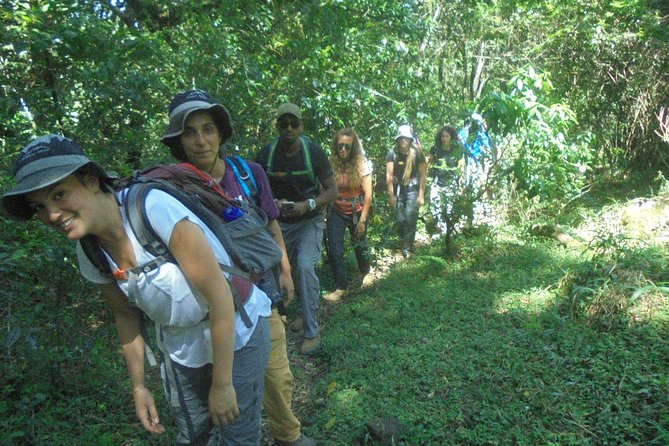
The final morning is short by comparison. You descend about 10 kilometers through open grassland and mixed forest, with another chance to see wildlife before reaching Momella Gate. The listed walking time is two to four hours.
A return transfer waits at the gate and takes you back to your hotel in Arusha or Moshi. The activity ends at the meeting point in Arusha, according to the supplied details. Confirm the exact drop-off arrangement if your hotel is outside those towns.
This last section is not just a formality. After the summit day, a fast descent can be uncomfortable, and wet or uneven ground may test tired legs. Use trekking poles if you normally hike with them, and keep your water accessible until the walk is finished.
The views, wildlife, and changing terrain
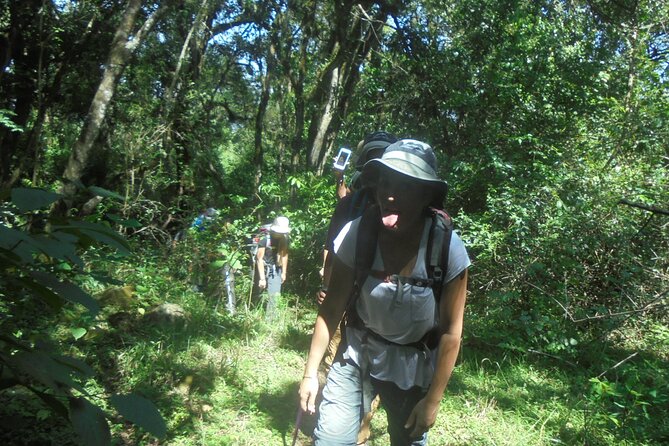
Mount Meru’s appeal comes from how quickly the scenery changes. The lower trail passes through montane forest, where animals may be present. The middle section reaches forest and moorland, with views opening toward the crater and Ash Cone.
Above that, the surroundings become sparse and volcanic. The crater rim gives you the dramatic visual structure that makes Meru memorable: inner cliffs on one side, outer slopes on the other, and a ridge leading toward the summit. Kilimanjaro views depend on weather, so consider them a possible reward rather than a guarantee.
The armed ranger also changes the feel of the walk. You are not simply wandering through a national park. You are moving under a clear safety system, and that makes the wildlife encounters more exciting while also reminding you to respect distance and instructions.
Hut stays, food, and the crew
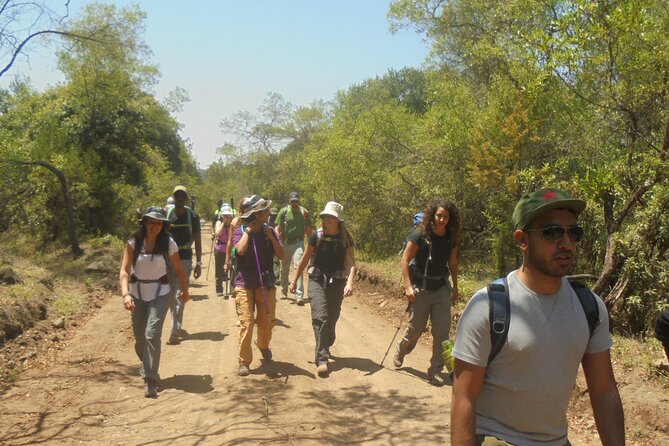
Three breakfasts, three dinners, and four lunches are included. That covers the food listed for the four-day schedule and reduces the amount of meal planning you need to do yourself.
Accommodation is in designated huts at Miriakamba and Saddle Hut. The information does not give room layouts, bedding details, shower facilities, or electricity arrangements, so ask before packing. Bring only the personal gear you need at night and keep warm clothing close at hand for the pre-dawn start.
Crew wages and gate transfers are included. Tipping is not, so budget separately for tips. The package also includes airport pickup and drop-off, although you should confirm how those transfers fit with the Arusha meeting point and your arrival time.
The crew is an important part of this climb. The guide, assistant guide, cook, porters, and office staff handle the practical work while you concentrate on walking. Specific guide names are not provided, so ask for the names and roles of your guide team before you leave town.
Is $2,600 a fair price?
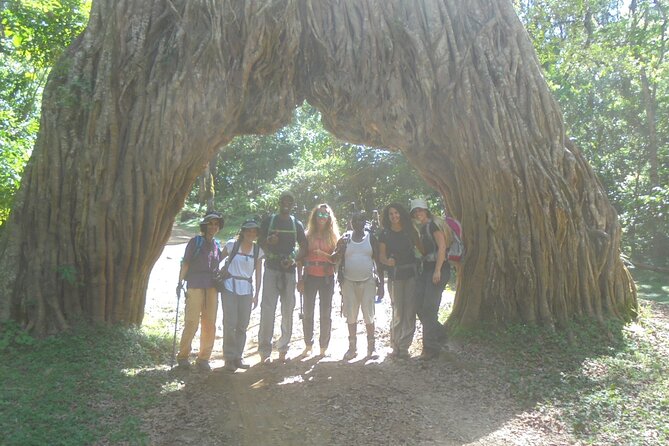
At $2,600 per person, this is not a cheap short trek. The price includes airport transfers, gate transfers, crew wages, hut-based meals, and the guiding operation. Those inclusions can make the cost easier to understand, particularly if you value a single organized package rather than arranging transport, food, and mountain staff separately.
The price is less attractive if you assume it covers every expense. It does not include flights, visas, crew tips, or Mount Meru park fees. Park fees may be paid directly to the park or through the tour operator, so request a written total before booking.
The stated maximum group size is 200 people. That is a very large possible maximum for a narrow crater-rim route, even if your actual departure is much smaller. Ask how many people are expected on your date, how the group is divided, and what guide-to-climber arrangement will apply.
There is also an odd note saying Mount Meru climbing permits have a duration of 12 hours. Since the itinerary covers four days, ask the operator to explain exactly what that permit wording means and how it applies to your scheduled climb. Clear answers here are worth more than a glossy promise.
Who should book this climb?
You should consider this route if you want a real summit attempt without camping and you are already comfortable with long days on foot. It suits people preparing for Kilimanjaro, provided they leave enough recovery time afterward.
It is also a good fit if wildlife and volcanic scenery matter as much to you as reaching a high point. The lower forest, armed ranger, crater views, Ash Cone, and sunrise ridge give the trip several strong features beyond the summit itself.
I would be cautious about booking it as a casual add-on to a Tanzania safari. The summit day is long, the start is very early, and the route can be steep. Fitness helps, but patience and the willingness to walk slowly matter just as much.
The tour information says most people can participate, but that should not be read as a medical clearance. Anyone with concerns about altitude or strenuous exercise should get professional advice before booking.
Booking details and cancellation terms
Confirmation is provided at booking. Pickup is offered, the listed start time is 8:30 a.m., and the activity ends back at the meeting point after the return transfer.
You can cancel for a full refund up to 24 hours before the experience begins. Cancellations or changes inside that period are not accepted and are not refunded. The climb also depends on good weather. If poor weather causes cancellation, you are offered another date or a full refund.
Should you book the four-day Mount Meru climb?
I would book it if you want a demanding but compact mountain experience with huts, wildlife, crater scenery, and a strong training value for Kilimanjaro. The sunrise ridge and views toward Kilimanjaro are the main prizes, while the ranger escort and changing habitats give the approach real character.
I would not book until the operator confirms the park-fee total, actual group size, permit wording, elevation details, hut facilities, and airport-transfer plan. Once those points are clear, the tour offers a well-rounded route for a prepared hiker who understands that Mount Meru is a serious climb, not merely a gentle practice walk.
FAQ
How long is the Mount Meru climbing tour?
The experience lasts approximately four days. The longest section is summit day, which includes about 10 to 12 hours of hiking.
What time does the tour start?
The listed start time is 8:30 a.m. at Arusha Center Inn TouristTZ on Arusha Main Street, Bondeni Street.
Is an armed ranger required?
Yes. Because Mount Meru is inside Arusha National Park and wildlife lives on the mountain, hikers climb with a full armed ranger escort.
Where do you sleep during the climb?
You sleep in designated mountain huts. The itinerary names Miriakamba Hut and Saddle Hut.
Is food included?
Yes. The package includes three breakfasts, three dinners, and four lunches.
Are Mount Meru park fees included in the price?
No. Park fees are not included. They may be paid directly to the park or through the tour operator.
Can I cancel for a full refund?
Yes, if you cancel at least 24 hours before the experience start time. Cancellations or changes made less than 24 hours before the start are not refunded or accepted.
Just added around Arusha
- 8 Days Serengeti Migration safari★ 5.0 · 11 reviews
- tarangire, ngorongoro & lake manyara park 3 days private tour★ 5.0 · 11 reviews
- tarangire & ngorongoro 2 days tour★ 5.0 · 14 reviews
- Mt. Kilimanjaro: Shira plateau to Cathedral point 3872m Day hike★ 5.0 · 7 reviews
- serengeti, ngorongoro & tarangire 4 days private tour★ 5.0 · 18 reviews
- serengeti & ngorongoro 3 days private tour★ 5.0 · 15 reviews
- 2 Days Tanzania Midrange Group Join Safari★ 5.0 · 7 reviews
- climb the KILIMANJARO via Lemosho route★ 5.0 · 4 reviews
Hiking & Trekking, compared.

8-Day Small-group Lemosho Kilimanjaro Summit Trekking
Read our review →

Private Full Day Hiking Experience to Marangu Route
Read our review →

From Arusha/Moshi: Kilimanjaro Hike Marangu Route Day Trip
Read our review →
4 days Best experience Kilimanjaro Hike, Serengeti &Ngorongoro
Read our review →
Best Kilimanjaro hiking day trip tour with Kilinge Adventures
Read our review →Browse the lists this tour appears in