
Reviewed · SERENGETI SAFARIS
6 Day Serengeti wildebeest migration Camping Safari
The main draw here is variety. In six days, you move from Tarangire’s elephant country to the open Serengeti, then down into the wildlife-packed Ngorongoro Crater. You also reach the remote Maasai village of Ngare Sero, with a guided waterfall walk and views toward Lake Natron.
I like the small maximum group of six, which gives you more room at the vehicle windows and makes long game drives easier. I also like the practical setup: a 4×4, safari cook, tents, camping gear, meals, water, and park fees are included. The main caution is the price, $15,000 per person, and the route description needs clarification because the overview names Lake Manyara, while the daily plan describes Lake Natron and Ngare Sero instead.
Key points before you book
- Four very different settings: See Tarangire’s baobabs and elephants, Rift Valley scenery, Serengeti plains, and Ngorongoro’s enclosed caldera.
- Migration timing matters: Wildebeest movement changes with rainfall, so no six-day safari can promise a particular crossing or herd location.
- Maximum six people: The small vehicle group is useful for wildlife viewing and makes the camping routine more manageable.
- Camping with a full support team: A safari cook prepares the included meals, while tents, sleeping mats, tables, chairs, and water are supplied.
- Guide quality can shape the trip: Guides named in past experiences include Godfrey, Gody, David, Monika, and Calvin. Ask who will lead your departure.
- Clarify the route: The daily schedule describes Lake Natron and a Maasai waterfall walk, not a conventional Lake Manyara National Park visit.
Four northern Tanzania parks and one important route question
This safari packs a lot into six days. That is its strength, but also its challenge. You will cover long distances on rough roads, change camps several times, and spend much of each day in the vehicle. The reward is a broad taste of northern Tanzania rather than a single-park holiday.
The supplied plan says you visit Tarangire, Lake Manyara, Serengeti, and Ngorongoro. Yet the day-by-day route describes Mto wa Mbu, a rough road along the Rift Valley Escarpment, Ngare Sero village, Lake Natron in the distance, and a waterfall walk. That is a different experience from a standard Lake Manyara game drive.
I would ask the operator to confirm this point before paying. If the route really includes Ngare Sero and Lake Natron, that is an unusual and appealing cultural and scenic addition. If you specifically want Lake Manyara National Park, ask exactly when you enter it and what time is reserved for wildlife viewing there.
More Serengeti Safaris in Arusha
- Balloon Safari & Bush Breakfast in Serengeti – Miracle Experience
★ 5.0 · 1,646 reviews - 3 Days Serengeti & Ngorongoro Group Camping Safari
★ 5.0 · 574 reviews - 5-Day Highlights mid-Range Crater, Serengeti, Tarangire
★ 5.0 · 296 reviews
Day 1: Tarangire’s river, baobabs, and elephant herds
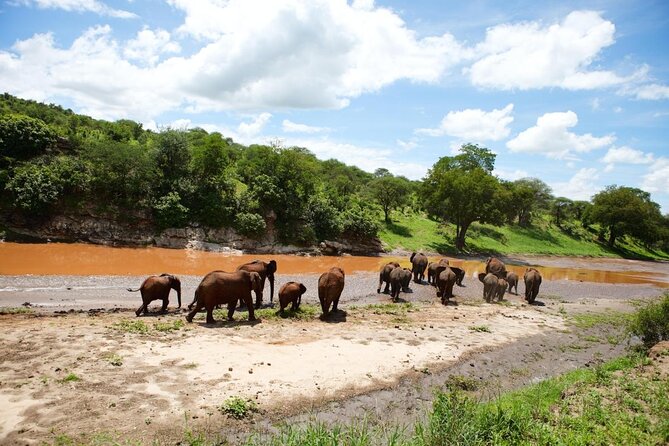
After a morning briefing, you head toward Tarangire National Park. The park is known for open savannah, seasonal swamps, lagoons, and large baobab trees. During the dry season, the Tarangire River draws animals from across the area, giving you a good chance to see wildlife gathered around water.
Elephants are the headline sight here. You might also see giraffes, bushbucks, hartebeests, gerenuks, fringe-eared oryx, buffaloes, zebras, and wildebeest. Lions often follow the grazing herds, while leopards appear occasionally and cheetahs are rarely seen.
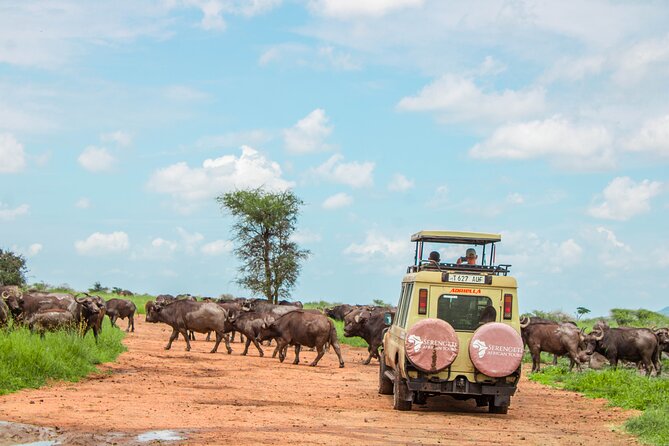
The open roof of the 4×4 is a major part of the experience. You can stand or sit with a clear view above the vehicle, useful for scanning the grass and getting a better angle for photographs. I would bring a hat, sunscreen, and a light layer, since the vehicle offers little protection from sun and dust.
Tarangire is a good first park because it gives you a quick change from Arusha’s urban setting to classic safari scenery. The drawback is time. Since this is only a one-day visit before moving onward, you will not explore the park at a slow pace.
Day 2: Mto wa Mbu, Ngare Sero, and the Rift Valley road
After breakfast, the route takes you toward the multicultural village of Mto wa Mbu. From there, the schedule describes a rough gravel road beside the Rift Valley Escarpment. Expect a bumpy ride. The road is part of the setting, but it will test your patience if you prefer smooth transfers.
You may see Ol Doinyo Lengai, the sacred mountain of the Maasai, in the distance. Lake Natron lies farther across the hot Rift Valley, with a pink glow created by large numbers of flamingos feeding and breeding around the alkaline lake.
The destination is Ngare Sero, described as an oasis near the lake. In the afternoon, a Maasai guide leads a walk to a nearby waterfall. This is one of the most distinctive parts of the trip because it breaks up the usual pattern of vehicle, picnic, vehicle, campsite.
Wear sturdy footwear for the walk and carry water, even though mineral water is included. The schedule does not specify the walk’s length or difficulty, so ask before arrival if you need a precise answer.
This day also explains why the route clarification matters. The description does not set out a game drive in Lake Manyara National Park. Instead, it gives you a rural cultural stop, a waterfall, and Rift Valley scenery. Those are worthwhile experiences, but they should match what you think you are buying.
Days 3 and 4: Following the herds across the Serengeti
Day 3 begins early, with dirt tracks leading up and out of the Rift Valley. By midday, you reach the Serengeti, whose Maasai name refers to endless plains. The first sight of grassland stretching toward the horizon is likely to be one of the strongest visual moments of the safari.
The Serengeti is the core of this trip. It supports the planet’s largest animal migration, with huge numbers of wildebeest and other grazers moving in search of fresh grass and water. You spend the night at a campsite in the northern or central part of the park, depending on the operating plan.
Day 4 gives you a full game drive. Your guide will choose areas based on the herd location and recent conditions. That flexibility is essential. The migration does not follow a fixed calendar, and rainfall can move the animals earlier or later than expected.
The schedule identifies November and December as a period when herds move from northern hills toward southern plains during the short rains. From April through June, they return north during the longer rainy season. These are broad patterns, not guarantees. The best question to ask is not simply Will I see the migration? but Where are the herds expected during my travel dates?
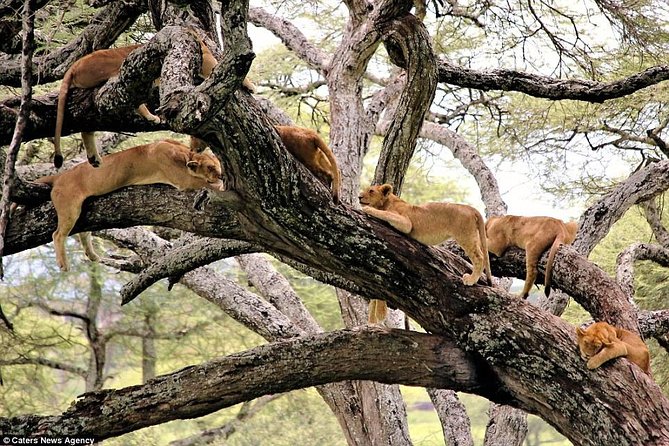
Wildebeest and zebras are the main targets, but predators are never far from the story. Lions, leopards, and cheetahs may be seen following the grazing animals. The Serengeti is also home to the Big Five: lion, elephant, buffalo, rhino, and leopard. Seeing all five in one trip is possible, but it should not be treated as a promise.
The central and northern camps offer different practical tradeoffs. The plan names the northern or central Serengeti on the first night and Seronera on the second. Ask for the expected campsite locations, since the distance between camp and wildlife areas affects how much time you spend driving.
Same country, a completely different kind of safari:
- Tanzania Classic – 7 Days
★ 5.0 · 1,151 reviews - 4 Days Group Camping Safari
★ 5.0 · 1,101 reviews - 5 Days Group Camping Safari
★ 5.0 · 730 reviews - Materuni Waterfalls, coffee tour & Kikuletwa Hot Springs
★ 5.0 · 643 reviews
What camping adds to the safari
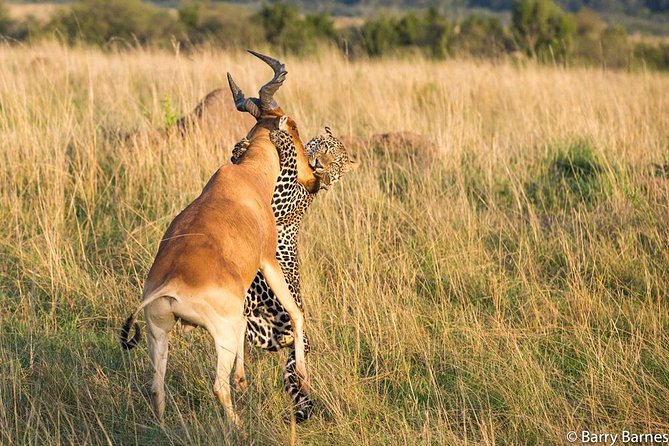
This is a camping safari, not a lodge-based trip with a tented room and permanent facilities. You sleep in safari tents and use the supplied sleeping mats, chairs, tables, and other camping equipment. A professional English-speaking cook prepares the meals listed in the schedule.
I like this arrangement for one reason: it keeps you close to the parks and supports a more direct safari routine. You wake early, eat, drive, return to camp, and spend the evening in a simple outdoor setting. The group size of six also helps. Six people is enough to share the cost of the vehicle while remaining small enough for conversation and window space.
You should still ask practical questions before booking. The supplied information does not specify tent size, toilet arrangements, showers, electricity, bedding beyond sleeping mats, or the exact campsite facilities. Those details matter after a long day on rough roads.
Meals include five breakfasts, five lunches, and four dinners. Mineral water is provided. Personal drinks, snacks, souvenirs, tips, visa costs, flights, and optional activities are not included, so allow room in your budget beyond the advertised price.
Past guide names connected with this operator include Godfrey, Gody, David, Monika, and Calvin. One guide, Calvin, was particularly noted for bird identification and for providing books to help identify species. Guide assignments can change, so request the name of your actual guide and ask about his or her experience with migration timing, birds, and the Ngare Sero section.
Day 5: From Serengeti predators to the Ngorongoro rim
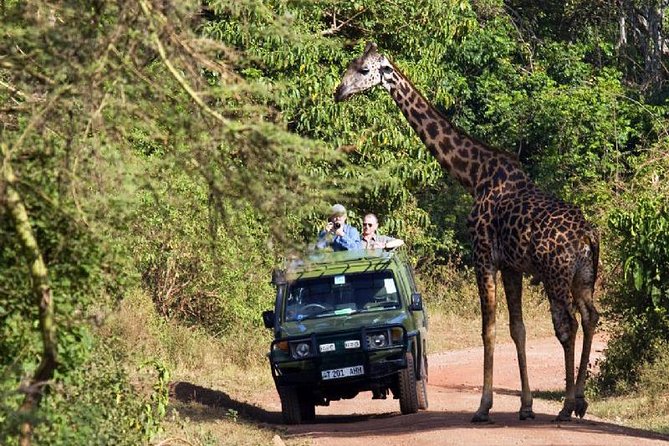
Day 5 starts with another Serengeti game drive. The early hours are useful for searching for species you have not yet seen. After lunch at a picnic site, you drive toward the Ngorongoro Conservation Area.
The arrival at the crater rim is a natural change of pace. The caldera opens below you, with a broad enclosed floor and steep sides. The crater is about 20 kilometres wide and supports more than 25,000 animals, according to the tour details.
You spend the night at a campsite directly on the crater edge. The view is a major part of the appeal. After several days of moving through open plains and rough roads, looking down into the caldera gives you a clear sense of where you are and what comes next.
The campsite’s rim location also means cooler conditions than the lower plains may offer. Pack a warm layer for the evening and early morning. The exact camping facilities are not described, so confirm them if comfort is a major concern.
Day 6: A crater game drive and the return to Arusha
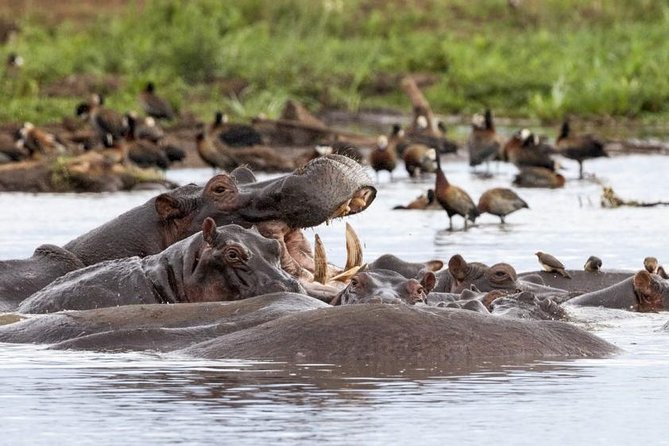
You rise at daybreak, have breakfast, and descend into the crater for an intensive game drive. The enclosed setting gives you a strong chance to see a wide mix of wildlife in a relatively compact area.
Possible sightings include black rhinos, Grant’s and Thomson’s gazelles, lions, leopards, elephants, mountain reedbucks, buffaloes, spotted hyenas, and more than 500 bird species. Wild dogs are listed as rare, so treat that as a lucky possibility rather than a target.
After a picnic lunch, you leave the crater in the afternoon and return to Arusha, arriving in the early evening. This is a full final day, not a relaxed transfer. If you have a flight or another fixed appointment, leave plenty of time after the stated arrival window.
The sequence works well: Serengeti for wide-open wildlife viewing, Ngorongoro for concentrated variety. It also means you finish with a demanding drive, so do not plan an important evening activity too tightly.
Is $15,000 per person good value?
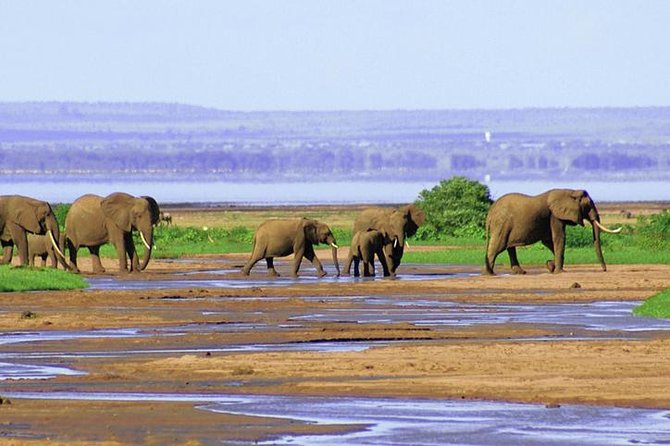
At $15,000 per person, this is a very expensive safari. The price is easier to assess once you separate what is covered from what is not.
Included are the 4×4 vehicle, English-speaking guide, English-speaking cook, safari tents, camping equipment, meals, mineral water, activities listed in the program, and all national park fees. Those fees can make a major difference on a northern Tanzania route, and the combination of vehicle, staff, food, and camping supplies removes many common add-on costs.
The maximum six-person group is another value point. A private vehicle for six can cost far more than a large shared departure, while still giving you a reasonable amount of space. The operator’s smooth organization and reliable staff were praised in the supplied feedback, along with good food, a comfortable vehicle, and strong guiding.
Still, the price deserves careful checking. Ask if $15,000 is truly the final per-person cost, whether it assumes six people in the vehicle, and what standard of camping is provided. Also confirm the Lake Manyara or Lake Natron route, since the difference affects how you judge the package.
At this price, I would expect clear answers about camp facilities, vehicle condition, guide assignment, migration planning, and the exact dates and locations of overnight stops.
Who will enjoy this six-day route?
This safari suits you if you want a concentrated introduction to northern Tanzania and prefer wildlife variety over a slow stay in one park. It is particularly useful if Tarangire elephants, Serengeti migration country, a Maasai-led walk, and Ngorongoro wildlife all appeal to you.
It also suits people who value a small group. The six-person limit gives you a better chance of choosing a comfortable viewing position and makes the long drives more social.
You should think twice if you dislike rough roads, early starts, basic camping, or long vehicle days. The Rift Valley transfer is described as very bumpy, and the Serengeti and crater sections involve extended drives. The schedule is active from the first morning to the return trip on day six.
Birdwatchers may also find extra value here, especially if Calvin or another guide with strong bird skills leads the trip. The parks and crater area support a wide range of birdlife, including more than 500 species around Ngorongoro.
Practical details to settle before departure
Pickup is offered, mobile tickets are available, and confirmation is provided at booking. The stated start time is 12:00 am, which is unusually early and may be a system display issue, so confirm your real pickup time and meeting point in Arusha.
Most people can participate, and the tour operates near public transportation. Flights, visas, tips, souvenirs, and optional activities are extra. Free cancellation is available until 24 hours before the local start time. Within 24 hours, the amount paid is not refunded, and late changes are not accepted.
The six-day length is approximate. I would confirm the exact return time on day six, the camping standard, and the route between Lake Manyara and Lake Natron before making final plans.
Should you book it?
I would book this safari if you want a small-group camping trip with a broad northern Tanzania route and you understand that migration sightings depend on rain. Tarangire, Serengeti, and Ngorongoro make a powerful combination, while Ngare Sero adds a cultural and walking component that many standard game-drive programs lack.
I would not book it without first resolving the $15,000 price and the Lake Manyara versus Lake Natron wording. Once those points are clear, the package has real value in its included park fees, staff, equipment, meals, water, and six-person limit. Ask for the guide assignment, confirm the camps, and match your dates to likely herd movement before you commit.
FAQ
How long is the safari?
The safari lasts approximately six days, beginning in Arusha and returning there in the early evening on day six.
How many people can join the tour?
The tour has a maximum of six participants.
What parks and areas does the safari visit?
The program includes Tarangire National Park, the Serengeti National Park, the Ngorongoro Conservation Area and Crater, and a Rift Valley section near Ngare Sero and Lake Natron. The overview also names Lake Manyara, so confirm the exact route before booking.
Is camping equipment included?
Yes. Safari tents, sleeping mats, chairs, tables, and other camping equipment are included.
Are meals included?
Yes. The package includes five breakfasts, five lunches, and four dinners, according to the provided schedule. Mineral water is also included.
Are park fees included?
Yes. All national park fees mentioned in the program are included.
What is the cancellation policy?
You can receive a full refund if you cancel at least 24 hours before the local start time. Cancellations or changes made within 24 hours are not accepted for a refund.
More Safari in Arusha
- 7-Day Premium Luxury Tanzania Safari All-Inclusive
★ 5.0 · 426 reviews - 3-Day Classic Serengeti Safari
★ 5.0 · 263 reviews - 8 Days Great Wildebeest Calving Migration Safari from Arusha
★ 5.0 · 254 reviews - Group Safari 7 Days in Tanzania’s Main Parks
★ 5.0 · 240 reviews
More Camping Safaris in Arusha
- 5 Days Camping Tarangire, Serengeti & Ngorongoro crater & Visiting Maasai
★ 5.0 · 229 reviews - 2 Days Tarangire and Ngorongoro Group Camping Safari
★ 5.0 · 146 reviews - 6 Days Tanzania Budget Camping Safari
★ 5.0 · 145 reviews - 3 Days Tarangire, Ngorongoro & Lake Manyara Group Camping Safari
★ 5.0 · 102 reviews
Just added around Arusha
- 8 Days Serengeti Migration safari★ 5.0 · 11 reviews
- tarangire, ngorongoro & lake manyara park 3 days private tour★ 5.0 · 11 reviews
- tarangire & ngorongoro 2 days tour★ 5.0 · 14 reviews
- Mt. Kilimanjaro: Shira plateau to Cathedral point 3872m Day hike★ 5.0 · 7 reviews
- serengeti, ngorongoro & tarangire 4 days private tour★ 5.0 · 18 reviews
- serengeti & ngorongoro 3 days private tour★ 5.0 · 15 reviews
- 2 Days Tanzania Midrange Group Join Safari★ 5.0 · 7 reviews
- climb the KILIMANJARO via Lemosho route★ 5.0 · 4 reviews
Serengeti Safaris, compared.

Serengeti Balloon Safari and authentic bush breakfast
Read our review →
3 Days Serengeti & Ngorongoro Group Camping Safari
Read our review →
5-Day Highlights mid-Range Crater, Serengeti, Tarangire
Read our review →


Private 6-Day Tarangire Manyara Crater and Serengeti with Mid-Range Lodges
Read our review →
5 Days Camping Tarangire, Serengeti & Ngorongoro crater & Visiting Maasai
Read our review →
4 Days Join Group tour Tarangire Serengeti and Ngorongoro crater
Read our review →Browse the lists this tour appears in