
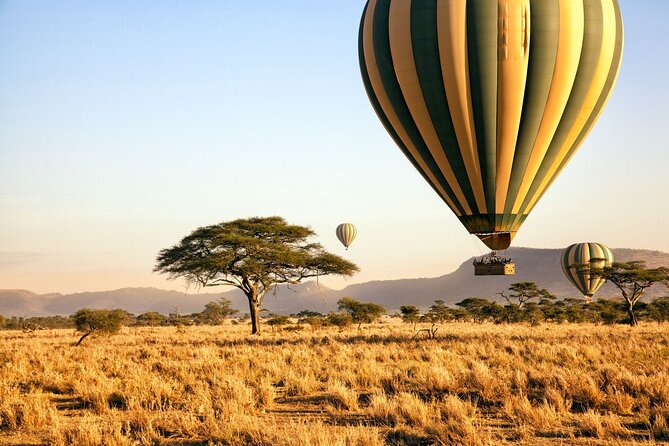
Reviewed · SERENGETI SAFARIS
8 Day private wildebeest migration safari Serengeti Ngorongoro
The heart of this safari is its seasonal pursuit of the wildebeest migration. You spend two full days in the Serengeti, with the route shifting to Ndutu, central Serengeti, the Grumeti area, or the Mara River according to the time of year. That gives you a better chance of being near the herds than a fixed-route safari, though no operator can promise a river crossing or a particular animal sighting.
I like the private vehicle format, which lets your group set the pace, and I like the mix of famous parks with quieter moments, from an early Serengeti drive to a coffee visit near Materuni Waterfalls. Guides named David, Jackson, and Ally, also called Lunge, are associated with this safari team. The main consideration is the long driving time and a schedule that needs careful confirmation, especially around the final airport transfer.
Key details before you book
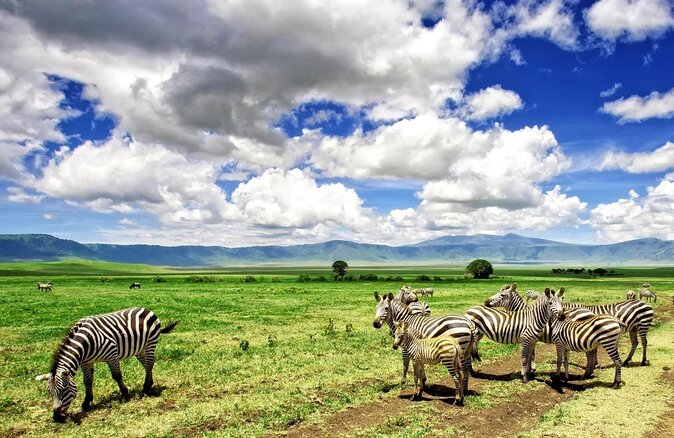
- The migration route changes by month: Ndutu is the focus from December through March, central Serengeti and Grumeti are emphasized around April through June, and the northern Serengeti and Mara River are used from July through October.
- Two full Serengeti days are reserved for tracking: These are long game-drive days, listed at about 11 hours, so you should be ready for early starts and extended time in the vehicle.
- The private setup suits families and small groups: Only your own party participates, and group discounts are offered.
- The safari includes major predator country: Serengeti and Ngorongoro are known for lions, cheetahs, hyenas, leopards, and other hunters, though sightings remain dependent on nature.
- The route adds more than wildlife: Lake Manyara, Ngorongoro Crater, Materuni Waterfalls, a coffee tour, and Chemka Hot Spring broaden the trip beyond standard game drives.
- The final day needs checking: The schedule describes a Materuni and Chemka excursion before a drive to Kilimanjaro Airport, while the overview refers to finishing in a remote Serengeti area and flying onward.
Why the migration is the main event
This eight-day private safari is built around timing. The wildebeest do not remain in one section of the Serengeti, so the operator adjusts the route to the expected seasonal movement. That is the right idea for a migration trip, but it also means the experience you receive in January will differ sharply from the one offered in August.
From December through March, the plan points toward southern Serengeti and Ndutu. This is a strong period for seeing large herds in open country, and the schedule may also bring you close to calving areas. From April through June, the focus shifts toward central Serengeti and the Grumeti River. From July through October, the northern Serengeti and Mara River become the target, where crossings may occur.
I would treat any river crossing as a lucky bonus, not a promised feature. The timing, water levels, herd movement, and number of vehicles all affect what happens. You can still have a fine safari without seeing a crossing, since the Serengeti offers predators, grazing animals, birds, and changing scenery throughout the year.
More Serengeti Safaris in Arusha
- Balloon Safari & Bush Breakfast in Serengeti – Miracle Experience
★ 5.0 · 1,646 reviews - 3 Days Serengeti & Ngorongoro Group Camping Safari
★ 5.0 · 574 reviews - 5-Day Highlights mid-Range Crater, Serengeti, Tarangire
★ 5.0 · 296 reviews
Day 1: A gentle start in Arusha
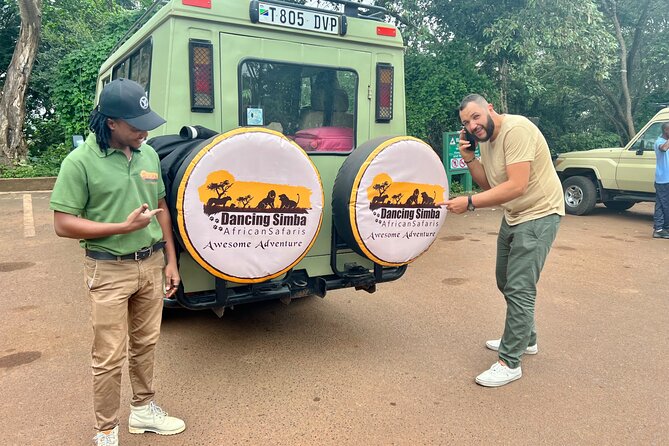
After your flight, a driver meets you at the airport and takes you to Arusha, a drive of about 45 minutes from Kilimanjaro International Airport. You spend the night at a reserved hotel, and the driver gives you a briefing about the following day.
This overnight stop is useful. Rather than rushing straight into a long park day after an international flight, you get time to arrive, sleep, and ask last-minute questions. If you need a different departure time the next morning, tell the team during the briefing.
Pickup is offered, and confirmation is provided when you book. Since the safari is private, you do not need to coordinate with another party’s flight schedule, though the exact pickup time still matters.
Day 2: Lake Manyara’s forest and tree-climbing lions
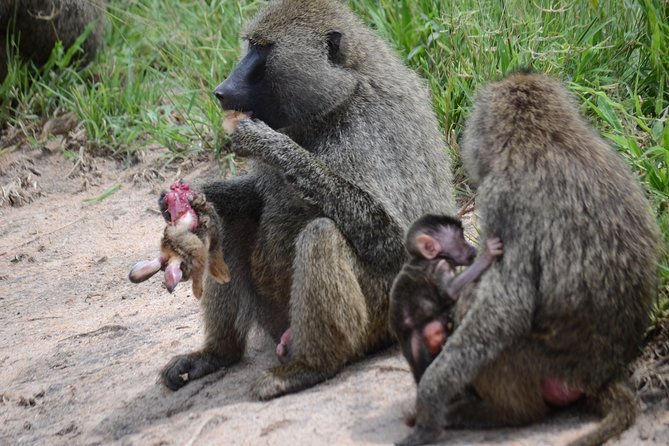
After breakfast, you drive for about two hours to Lake Manyara National Park. The park is known for green scenery, tropical forest, bird life, elephants, waterbuck, baboons, monkeys, and the possibility of tree-climbing lions.
Lake Manyara makes a good opening park because it offers a different setting from the wide Serengeti plains. The forest sections can feel close and enclosed, with monkeys and baboons often easier to spot than they are in open country. Birdwatchers also have a reason to pay attention here.
The phrase tree-climbing lions is a major draw, but it is not a guarantee. Animal sightings depend on the day, and you should not judge this park only by whether a lion is resting in a tree. The range of habitats is the real value.
You spend the night at a lodge in Karatu. This places you near the next stage of the route and breaks up the transfer toward Serengeti. After a full game drive, the Karatu overnight should feel like a practical pause rather than a wasted night.
Day 3: Entering the Serengeti by game drive
Day 3 begins with an early breakfast at about 7 a.m. You then drive toward Serengeti National Park, with wildlife viewing along the way. The transfer is long, listed at roughly eight hours, but it is also your first introduction to the park.
Serengeti is the largest and most famous park on this route. Its open plains support wildebeest, zebra, antelopes, and gazelles, while lions, hyenas, cheetahs, and leopards follow the available prey. The Grumeti River adds crocodiles and hippos to the possible sightings, and giraffes are also found in the park.
The plan puts you in the heart of Serengeti for dinner and overnight accommodation. That location matters because it reduces the need to leave the park immediately after arrival. You can spend more of the following day looking for animals instead of making another long approach drive.
This is also a day to be realistic about road time. A Tanzanian safari is not a series of short hops between attractions. You may spend hours on rough roads, and the reward is access to a huge protected area rather than constant action.
Same country, a completely different kind of safari:
- Tanzania Classic – 7 Days
★ 5.0 · 1,151 reviews - 4 Days Group Camping Safari
★ 5.0 · 1,101 reviews - 5 Days Group Camping Safari
★ 5.0 · 730 reviews - Materuni Waterfalls, coffee tour & Kikuletwa Hot Springs
★ 5.0 · 643 reviews
Days 4 and 5: Two long days following the herds
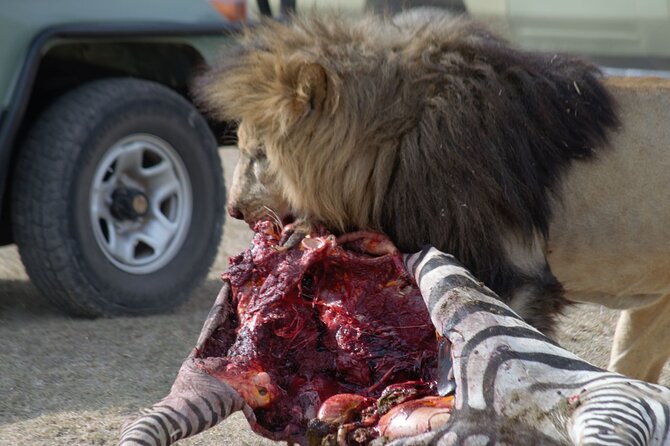
These are the key days of the itinerary. You spend two full days tracking the migration in the section of Serengeti that matches the season. Each day is listed at about 11 hours, so bring patience, sun protection, and a willingness to spend much of the day in the safari vehicle.
The private format has real value here. Your group can focus on migration tracking rather than following a preset schedule designed for a large mixed party. If your group wants to spend longer at a sighting, your guide can discuss the timing and route with you.
The safari team includes guides named David and Jackson, while Ally, also called Lunge, is associated with especially strong animal knowledge and an ability to explain the savanna. You should confirm your assigned guide before departure, since the material does not promise one particular person for every booking.
In the southern season, the Ndutu area may bring you closer to the calving cycle and large concentrations of wildebeest. In central Serengeti and around Grumeti, the setting changes as the herds move west and north. During the July to October period, northern Serengeti is the main target, with the Mara River as a possible crossing area.
A long game drive can be thrilling, but it can also be tiring. This is not the best choice if you want a relaxed lodge holiday with short outings. It is a good fit if wildlife viewing is your priority and you accept that some hours will be spent searching.
Day 6: An early Serengeti departure
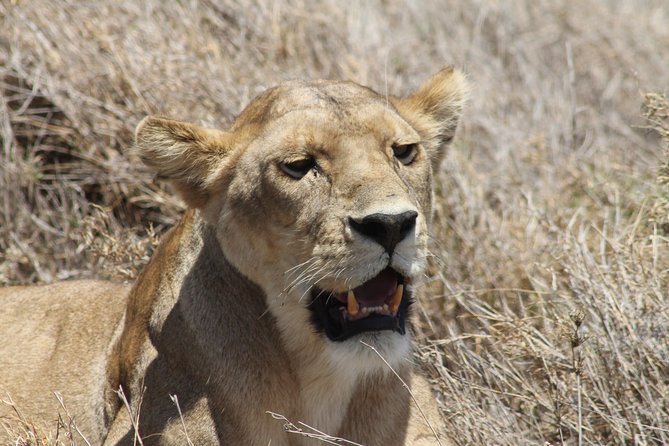
Day 6 begins with tea or coffee and a packed breakfast. The idea is sensible: you leave early, eat on the road, and use the morning hours when predators may still be active after the night.
The route moves from central Serengeti toward the eastern side and then on toward the Ngorongoro Conservation Area. The schedule allows about six hours for the game drive portion. Along the way, you may search for cheetahs, lions on rocky outcrops, and other animals away from the busiest vehicle areas.
The wording of this day is incomplete, so I would ask for the precise overnight location and driving plan before paying the balance. Confirming that detail is especially important for families, anyone with limited time, or anyone connecting to a flight.
Even with that qualification, the early departure is one of the strongest practical choices in the program. Sunrise can bring good light and active predators, and leaving with breakfast means you do not need to return to camp simply to eat.
Day 7: Wildlife in the Ngorongoro Crater
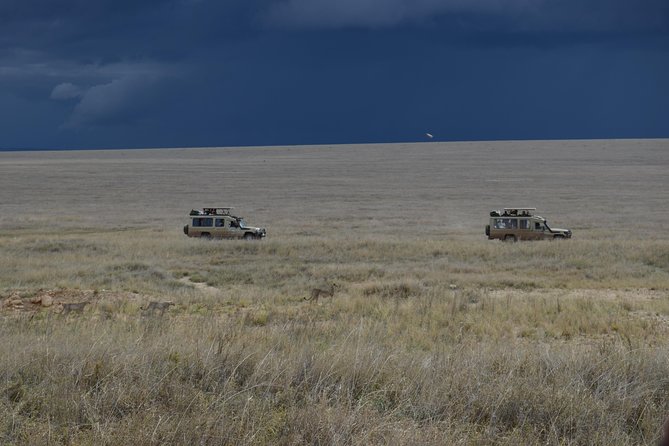
After breakfast, you descend more than 600 meters into Ngorongoro Crater for a game drive. The crater floor has a year-round water and food supply, which helps support wildebeest, zebra, buffalo, elk, warthog, hippos, and large African elephants.
Ngorongoro is also important for predator viewing. Lions, hyenas, jackals, cheetahs, and leopards may be present, although the leopard remains difficult to spot. Lake Magadi, a large shallow alkaline lake in the crater, is one of the planned stops.
The crater offers a compact wildlife experience after the broader Serengeti. You can see a wide range of animals in a smaller area, but that can also mean more vehicles in popular places. The appeal is the combination of scenery and animal variety, not solitude at every stop.
The listed crater visit lasts about six hours. That is enough time for a substantial game drive, but you should expect an early start and a full day when transfers are included. The crater is not a quick photo stop.
Day 8: Materuni Waterfalls, coffee, and Chemka Hot Spring
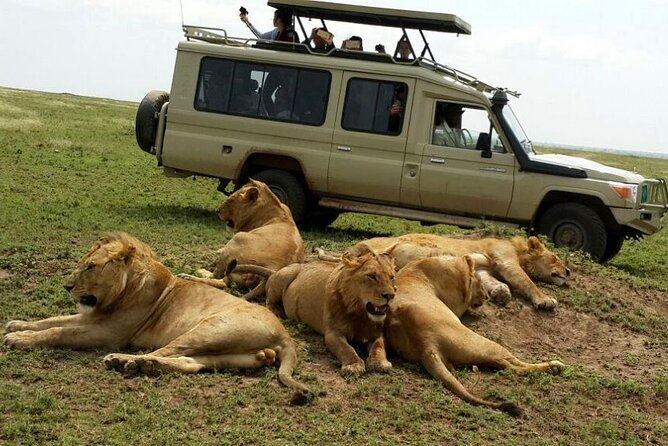
The final day adds a completely different kind of experience. The excursion begins from a hotel in Arusha or Moshi, with a drive to Materuni Waterfalls at about 2,500 meters above sea level. Along the way, you explore the slopes of Mount Kilimanjaro and may see birds, chameleons, coffee plants, and banana trees.
At the waterfall, swimming in the pools is possible. You then walk back to the village for a coffee tour before continuing to Chemka Hot Spring. The natural pool has clean water and small fish, and you can swim and enjoy drinks there before the drive to Kilimanjaro Airport.
Bring swimming clothes. The day is listed at about nine hours, so it is an active finish rather than a quiet airport transfer. The waterfall walk, village coffee visit, and hot spring give you contact with local life and agriculture that a park-only itinerary would miss.
There is an important planning issue here. The general description says the safari finishes in a remote part of Serengeti and then continues by air, but the detailed final day describes a road transfer from Arusha or Moshi to Materuni and Chemka, followed by Kilimanjaro Airport. Ask the operator which version applies to your booking, and allow enough time for your flight.
What the $3,200 price means
At $3,200 per person, this is a major trip expense. The value depends on what your quotation includes, since the supplied details do not spell out every lodging, meal, park fee, flight, or transfer cost.
The private arrangement is the main value point. You are paying for a trip shaped around your own group, with migration tracking across several Serengeti zones rather than a simple fixed park circuit. Two full days devoted to the herds also make the price easier to understand than a shorter safari that only passes through Serengeti.
The route covers Lake Manyara, Serengeti, Ngorongoro, Materuni, and Chemka. That is a lot of ground in eight days, and the variety is appealing. It also means you should compare the quotation carefully with other private safaris, especially the number of nights in each property and any internal flight connected with the remote Serengeti finish.
Group discounts are available. Since this is a private activity, the per-person price may make more sense for a family or group of friends than for a solo visitor. Ask for a written list of inclusions before booking.
Who will enjoy this safari most?
I would choose this trip if your main goal is the wildebeest migration, especially if you want a private vehicle and a route that changes with the season. It also suits families and small groups who want one guide and vehicle rather than a shared schedule.
The safari may work well for children too. The team has handled families with children aged 8 and 11, and the private format can make breaks and timing easier to discuss. Still, the two 11-hour migration days and long road transfers require stamina.
You should think twice if you dislike rough roads, early breakfasts, or long periods of searching for wildlife. You should also avoid booking based only on the hope of seeing a river crossing. The strongest reason to go is the full range of Serengeti wildlife and the chance to follow the herd movement at the right time of year.
Practical booking advice
Confirm the month-specific route in writing. Ask whether your trip is planned for Ndutu, central Serengeti and Grumeti, or northern Serengeti and the Mara River.
Confirm the guide, accommodation names, meal arrangements, park fees, and any flights. The detailed schedule does not provide enough information to assume that every cost is included in the $3,200 price.
Check the final day carefully. Ask if you are flying from a remote Serengeti airstrip or driving from Arusha or Moshi to Kilimanjaro Airport after the Materuni and Chemka visit. Those are very different endings.
Free cancellation is available up to 24 hours before the local start time for a full refund. Inside 24 hours, the amount paid is not refunded, and changes are not accepted. If poor weather cancels the experience, you are offered another date or a full refund.
Should you book it?
Book this safari if you want a migration-first private trip with two serious Serengeti tracking days, strong predator potential, and the added contrast of Lake Manyara, Ngorongoro, Materuni, and Chemka. The guides associated with the team, including David, Jackson, and Ally, add useful continuity to a trip that covers a lot of ground.
Before committing, settle the route, inclusions, and final airport plan. If those details are clear and the long drives suit you, the program offers a broad and worthwhile taste of northern Tanzania. If you want slower days or guaranteed solitude, choose a shorter, more focused safari instead.
FAQ
Where does the safari begin?
The safari begins in Arusha, Tanzania. Airport pickup is offered, and the first overnight is in Arusha after a drive of about 45 minutes from Kilimanjaro International Airport.
How long does the experience last?
The experience lasts approximately eight days.
Is this a private tour?
Yes. Only your own group participates in the activity.
When does the route visit southern Serengeti and Ndutu?
The itinerary directs the safari toward southern Serengeti and Ndutu from December through March.
When does the safari focus on central Serengeti and Grumeti?
The central Serengeti and Grumeti River area is emphasized around April, May, and June.
When does the route go toward the Mara River?
From July through October, the safari is planned for northern Serengeti and the Mara River area, where migration crossings may take place.
How long are the main migration game-drive days?
Days 4 and 5 are listed at about 11 hours each. These are full days of migration tracking.
Does the safari visit Ngorongoro Crater?
Yes. Day 7 includes a game drive in Ngorongoro Crater, with a descent of more than 600 meters and a visit to Lake Magadi.
Can I swim during the final day?
Yes. Swimming is possible at Materuni Waterfalls and Chemka Hot Spring. You should bring swimming clothes.
What is the cancellation policy?
You can cancel at least 24 hours before the local start time for a full refund. Cancellations or changes made within 24 hours are not accepted for a refund. If poor weather causes the operator to cancel, you are offered another date or a full refund.
More Safari in Arusha
- 7-Day Premium Luxury Tanzania Safari All-Inclusive
★ 5.0 · 426 reviews - 3-Day Classic Serengeti Safari
★ 5.0 · 263 reviews - 8 Days Great Wildebeest Calving Migration Safari from Arusha
★ 5.0 · 254 reviews - Group Safari 7 Days in Tanzania’s Main Parks
★ 5.0 · 240 reviews
More Ngorongoro Crater Tours in Arusha
- 5 Days Camping Tarangire, Serengeti & Ngorongoro crater & Visiting Maasai
★ 5.0 · 229 reviews - 4 Days Join Group tour Tarangire Serengeti and Ngorongoro crater
★ 5.0 · 219 reviews - 4-Day Safari from Arusha: Tarangire, Serengeti and Ngorongoro
★ 5.0 · 173 reviews - 2 Days Tarangire and Ngorongoro Group Camping Safari
★ 5.0 · 146 reviews
Just added around Arusha
- 8 Days Serengeti Migration safari★ 5.0 · 11 reviews
- tarangire, ngorongoro & lake manyara park 3 days private tour★ 5.0 · 11 reviews
- tarangire & ngorongoro 2 days tour★ 5.0 · 14 reviews
- Mt. Kilimanjaro: Shira plateau to Cathedral point 3872m Day hike★ 5.0 · 7 reviews
- serengeti, ngorongoro & tarangire 4 days private tour★ 5.0 · 18 reviews
- serengeti & ngorongoro 3 days private tour★ 5.0 · 15 reviews
- 2 Days Tanzania Midrange Group Join Safari★ 5.0 · 7 reviews
- climb the KILIMANJARO via Lemosho route★ 5.0 · 4 reviews
Serengeti Safaris, compared.

Serengeti Balloon Safari and authentic bush breakfast
Read our review →
3 Days Serengeti & Ngorongoro Group Camping Safari
Read our review →
5-Day Highlights mid-Range Crater, Serengeti, Tarangire
Read our review →


Private 6-Day Tarangire Manyara Crater and Serengeti with Mid-Range Lodges
Read our review →
5 Days Camping Tarangire, Serengeti & Ngorongoro crater & Visiting Maasai
Read our review →
4 Days Join Group tour Tarangire Serengeti and Ngorongoro crater
Read our review →Browse the lists this tour appears in