
Reviewed · MACHAME ROUTE CLIMBS
6 Day Machame Route – Climb Mount Kilimanjaro
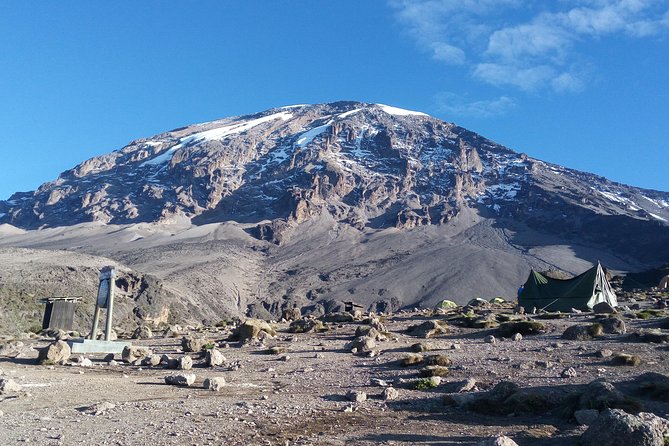
Kilimanjaro’s Machame Route gives you the mountain in changing acts: damp rainforest, open moorland, stark volcanic rock, glacier views, and a midnight push to Uhuru Peak. Rupia Adventure adds airport pickup, a Moshi hotel stay, an equipment check, meals, porters, and a crew capped at 15 people.
I like the sensible acclimatization pattern, including a high day near Lava Tower followed by a lower camp. I also like the practical start: your guide checks your gear before you leave, and missing items can be rented in Moshi. The main drawback is the short schedule. Summit day can last 12 to 15 hours, and six trekking days leave less room for altitude adjustment than longer Kilimanjaro plans.
Key points to know before you book
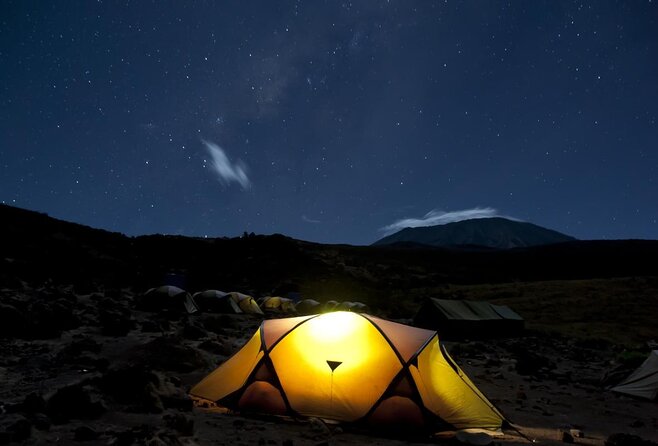
- Midnight summit push: You climb from Barafu Camp in darkness, reach Stella Point around sunrise, then continue to Uhuru Peak at 5,895 meters.
- Walk high, sleep low: The route reaches about 4,600 meters before returning to a lower camp, a useful rhythm for altitude adjustment.
- A real mountain day at Barranco: The Great Barranco Wall is steep and tiring, but it is a nontechnical rock climb.
- Moshi support before and after: Airport pickup, hotel nights, gear checks, and a post-trek celebration simplify the trip.
- Small group size: The maximum is 15 people, large enough for a social trek but still manageable on narrow paths.
- Strong food and guide feedback: Emmanuel is named as a guide who listened and adjusted the walking pace, while the crew and plentiful meals received especially warm praise.
What the $2,000 price covers
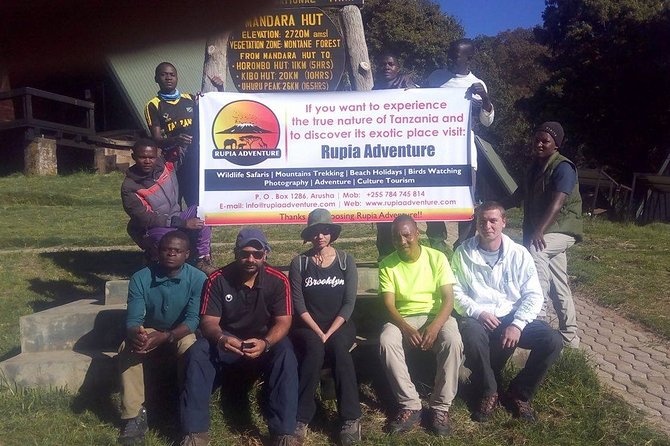
At $2,000 per person, this is not a bare-bones mountain walk. The trip includes airport pickup, hotel accommodation in Moshi, park entry arrangements, guiding, porter support, and meals during the climb. Breakfast is provided on seven days, lunch on six, and dinner on five.
That package matters because Kilimanjaro is not a simple independent hike. You need a local operator to manage park formalities, coordinate the crew, move camp equipment, and keep the trek organized across changing altitudes. The included equipment check is another useful touch. You can find out in Moshi if something important is missing, then rent it before reaching the trailhead.
The price does not include everything. The provided details list bicycle use as an extra, though that is unlikely to matter to most people booking a Kilimanjaro climb. You should also confirm exactly what is included in the hotel arrangement, airport transfers, park fees, porter tipping guidance, and rental equipment before paying.
The company has more than 12 years of experience, according to its description, and offers safari or Zanzibar extensions after the climb. That makes the package a possible fit if you want one operator to help shape a longer Tanzania trip rather than arrange every piece separately.
More Kilimanjaro Climbs in Arusha
- 8-Day Small-group Lemosho Kilimanjaro Summit Trekking
★ 5.0 · 186 reviews - 7-Day Machame Kilimanjaro Summit Tour from Arusha
★ 5.0 · 125 reviews - 4 days Best experience Kilimanjaro Hike, Serengeti &Ngorongoro
★ 5.0 · 54 reviews
Day 1: Gear checks and a quiet start in Moshi
You are picked up at Kilimanjaro International Airport and driven to a hotel in Moshi. The transfer gives you a soft landing before the mountain work begins, and Moshi is the base for your final preparation.
You meet your guide for a briefing about the climb. The equipment check is one of the most valuable parts of this first day. A trek can become miserable fast if you lack warm clothing, suitable footwear, or other basic mountain gear, so this is the point to identify gaps. Gear can be rented on the day if needed.
The planned hotel is Mvuli Hotel, or an alternative. Since the exact replacement is not specified, ask where you will sleep if plans change. You should also use this day to ask your guide about the walking pace, the summit schedule, meals, and the expected routine at camp.
Day 2: Into Machame’s wet rainforest
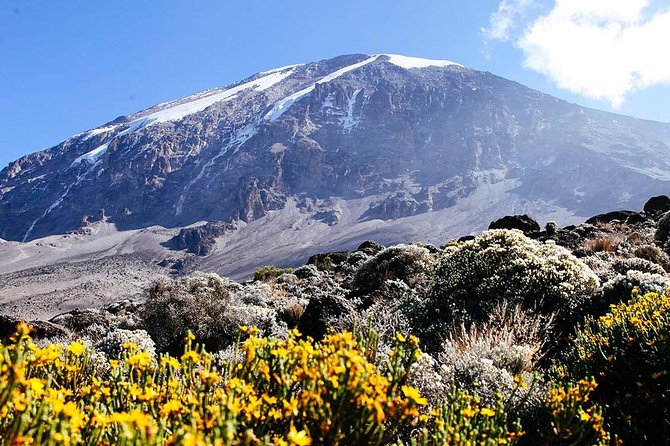
The drive from Arusha to the Machame Route gate takes about two hours. After park formalities, you meet the porters and begin walking through thick rainforest.
This first section climbs steadily for 10.8 kilometers and takes about six hours. The forest is a fine opening to the trek, with a strong sense of leaving roads and town behind. The route is less heavily walked than some mountain paths, but that comes with a tradeoff: parts may be overgrown, wet, and muddy.
You should expect a slow start rather than a quick march. Mud can make ordinary walking more tiring, and the first day is not the moment to test your speed. Keep rain protection easy to reach, use footwear with good grip, and accept that your clothing may get dirty.
The day ends at altitude, but not yet in the severe upper mountain zone. Your guide and porters set the pattern for the days ahead, with you carrying only what you need for the walk.
Day 3: Climbing toward the Shira Plateau
The path continues upward through the forest before making a steeper climb to the Shira Plateau. You cover 5.4 kilometers in about five hours, so the distance is shorter than the first day, but the ascent feels more demanding.
The reward is a change in scenery and a wider view of Kilimanjaro. Looking back, you may see Mount Meru rising above the Arusha area. This is an important visual shift: the forest begins to fall away, and the mountain starts to feel larger and more exposed.
The shorter walking distance gives you a useful chance to settle into the pace. Do not treat it as an easy day simply because the mileage is low. Steep ground can take more from your legs than a longer, flatter path, and careful pacing helps conserve energy for the summit attempt.
More Machame Route Climbs in Arusha
- 6 Days: Hiking Kilimanjaro via Machame Route
★ 5.0 · 24 reviews - 6-Day Guided Tour in Machame Route Mt Kilimanjaro
★ 5.0 · 17 reviews - KILIMANJARO MACHAME ROUTE, (Climb 7days)
★ 5.0 · 16 reviews - 7 days Kilimanjaro climb via Machame route (Whiskey route)
★ 5.0 · 16 reviews
Day 4: Lava Tower and the value of sleeping lower
Day 4 crosses high moorland on the southwest side of Kilimanjaro. You pass below Lava Tower and the final part of the Western Breach before reaching camp.
This is a long day of 10.8 kilometers and about eight hours. The terrain becomes more open and arid, and the mountain feels less sheltered than it did in the forest. You spend part of the day as high as 4,600 meters, which makes this a key acclimatization stage.
The route follows the useful mountaineering principle of walk high, sleep low. You gain height during the day, then sleep at a lower elevation. That pattern cannot guarantee that you will avoid altitude sickness, but it gives your body a better chance to adjust than a constant rapid climb.
This day may be one of the most important reasons to choose this route. The scenery is dramatic, but the pacing strategy matters more than a photograph. Keep your walking rhythm steady, drink as instructed by your guide, and report symptoms early. Headache, nausea, unusual tiredness, or poor coordination should not be brushed aside.
Day 5: Barranco Wall and the road to Barafu
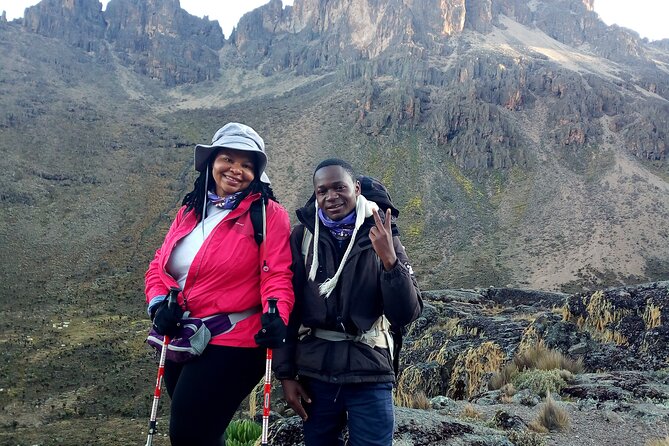
The morning begins with a descent into the Great Barranco, followed by a steep climb up the Barranco Wall. This is a climb over rock rather than a technical mountaineering section, but it is still long and tiring.
You then pass beneath the Heim and Kersten glaciers and continue toward the Karanga Valley. Karanga is the last point with fresh water before the summit section, so it marks a practical change in the trek as well as a scenic one.
The route covers 8.5 kilometers in about eight hours. After Karanga, the terrain becomes scree covered, dry, and stark as you head toward Barafu Camp. There is little softness left in the setting, and your body is now preparing for the hardest effort of the trip.
This is a day when group pace matters. A faster walker may feel held back, while a slower walker may worry about delaying the team. The maximum group size of 15 is not tiny, but it is still more workable than a large commercial group. The guide’s ability to adjust the pace is important here. Emmanuel is specifically praised for listening and adapting the walking speed, a detail worth asking about when you confirm your guide assignment.
Day 6: Stella Point, Uhuru Peak, and a very long descent
You leave around midnight for the summit. The climb rises steeply over scree for four to five hours, gaining a great deal of height in a short distance. The timing aims to put you at Stella Point, 5,739 meters, as the first sunlight reaches the crater rim.
This is the hardest physical and mental section. You are walking in darkness, often tired before the day has properly begun, and the air is thin. The gradual pace matters more than speed. Your guide’s job is especially important here, since the group must balance ambition with safety.
At Stella Point, you can see the ice cliffs inside the crater, along with views toward Mawenzi Peak and beyond. From there, it is roughly another hour to Uhuru Peak at 5,895 meters, the highest point in Africa.
The summit is only part of the day. You descend back to Stella Point over scree, return to Barafu Camp for breakfast, and then continue to Millennium Camp for a longer rest. The total distance is 13.4 kilometers, but the 12 to 15 hour duration tells you more than the mileage does. This is an endurance day, not a casual scenic walk.
You should keep your expectations realistic. Reaching the summit depends on weather, altitude response, physical condition, and the judgment of the guide. A successful trip is not measured only by standing at the highest point. Safe decisions on the mountain count just as much.
Day 7: Forest descent and the return to Moshi
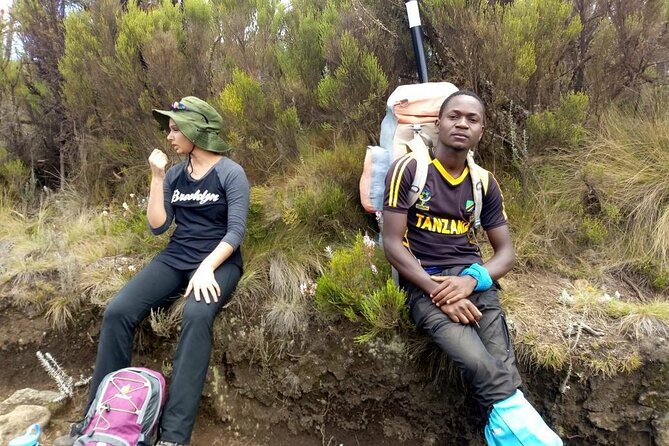
The final trek is gentler, covering 12.1 kilometers in about six hours through rainforest to Mweka Gate. The descent can feel easy compared with summit day, though tired knees and sore feet may disagree.
At the gate, you complete park formalities and receive certificates. Vehicles then take you back to the hotel in Moshi, where a hot shower and a cold drink should feel well earned. A celebration is planned, giving the group a chance to mark the end of the climb together.
This return to comfort is part of the appeal of the itinerary. You do not need to solve your own transport after reaching the gate, and the hotel provides a clear transition from mountain routine back to normal travel.
Day 8: Recovery before your flight
The final day is left free for recovery and departure. Depending on your flight time, you can explore Moshi and buy souvenirs before heading to the airport.
The open schedule is useful after a demanding summit day. Still, check your flight timing carefully and allow enough room for the airport transfer. If you have extra days in Tanzania, Rupia Adventure can also arrange safari or Zanzibar add-ons.
Food, crew support, and the human side of the trek
Food is a major part of a long mountain climb, and the package provides breakfast, lunch, and dinner across most of the trip. The strongest praise focuses on meals being good and plentiful. That is not a minor detail. After eight hours on steep ground, a filling meal can affect your energy and mood the next day.
The crew also receives strong approval. The service is described as kind, open, and helpful, with particular praise for the way the team handled the climb. Matt is another named contact who provided support before the trip, so you have a clear person to approach during the planning stage.
Rupia Adventure emphasizes personal service and tailor-made trips. The actual climb follows a fixed route and schedule, but the pre-trip support may be useful if you want to add a safari or a Zanzibar stay. Ask direct questions before booking, especially about the guide, the porter team, meal arrangements, tent or camp details, and rental gear.
Who should choose this Machame Route climb?
I would consider this trip if you want a guided Kilimanjaro climb with a clear daily plan, airport pickup, Moshi accommodation, organized meals, and a small maximum group. It suits someone who values support and does not want to arrange park access, porters, transfers, and hotels separately.
It is also a good match for a person who wants varied scenery. The route moves from rainforest to Shira Plateau, high moorland, Lava Tower, Barranco, glaciers, scree, and the summit crater. You get more than one repeated view of the same mountain.
The main caution is the pace. The six trekking days include one 12 to 15 hour summit day and several long uphill stages. You should be comfortable with sustained walking and prepared for cold, wet, muddy, steep, and high-altitude conditions. The supplied information says most people can participate, but it does not provide a detailed fitness standard or medical screening process, so ask the operator for guidance before you commit.
The non-refundable policy also deserves attention. If you cancel or request a change, the money paid is not returned. If poor weather forces the operator to cancel, you are offered another date or a full refund. The same applies if the minimum number of people is not reached. Because of that strict policy, confirm your travel dates, insurance, flight plans, and health readiness first.
Should you book Rupia Adventure?
Book this climb if you want a supported, well-structured route with strong attention to food, guide care, and practical preparation. The gear check, Moshi hotel nights, airport pickup, high-low acclimatization pattern, and group limit add real value to the $2,000 cost.
Think twice if you want a relaxed mountain holiday or a longer schedule with more time for altitude adjustment. This plan asks a lot from you, especially on summit day. Before paying, get the final list of inclusions in writing and ask who your guide will be. If the support described by Emmanuel’s example is typical, and the food and crew standards hold up, this is a sensible choice for a determined first Kilimanjaro climb.
FAQ
How long does the full experience last?
The full plan lasts approximately eight days, including arrival in Tanzania, six trekking days, the return to Moshi, and a free departure day.
What is the price per person?
The listed price is $2,000 per person.
Does airport pickup come with the booking?
Yes. Pickup is offered from Kilimanjaro International Airport, followed by a transfer to a hotel in Moshi.
Where does the trek begin?
The trek begins at the Machame Route gate, reached by a drive of about two hours from Arusha.
How high is Uhuru Peak?
Uhuru Peak is 5,895 meters above sea level.
How long does summit day take?
Summit day takes approximately 12 to 15 hours and covers 13.4 kilometers.
What meals are included?
The package includes breakfast on seven days, lunch on six days, and dinner on five days.
How large can the group be?
The maximum group size is 15 people.
More 6-Day Experiences in Arusha
- Tanzania Wildlife Encounters – 6 Days
★ 5.0 · 277 reviews - Private 6-Day Tarangire Manyara Crater and Serengeti with Mid-Range Lodges
★ 5.0 · 238 reviews - 6 Days Private Budget Safari
★ 5.0 · 163 reviews - 6 Days Tanzania Budget Camping Safari
★ 5.0 · 145 reviews
Just added around Arusha
- 8 Days Serengeti Migration safari★ 5.0 · 11 reviews
- tarangire, ngorongoro & lake manyara park 3 days private tour★ 5.0 · 11 reviews
- tarangire & ngorongoro 2 days tour★ 5.0 · 14 reviews
- Mt. Kilimanjaro: Shira plateau to Cathedral point 3872m Day hike★ 5.0 · 7 reviews
- serengeti, ngorongoro & tarangire 4 days private tour★ 5.0 · 18 reviews
- serengeti & ngorongoro 3 days private tour★ 5.0 · 15 reviews
- climb the KILIMANJARO via Lemosho route★ 5.0 · 4 reviews
- 2 Days Tanzania Midrange Group Join Safari★ 5.0 · 7 reviews
Machame Route Climbs, compared.



Climbing Kilimanjaro through 7 days Machame Route
Read our review →
7-Day Machame Kilimanjaro Summit Tour from Arusha
Read our review →
7 Days Kilimanjaro via Machame route affordable price
Read our review →
#1. Best Kilimanjaro Day hike Tour-Machame Route-ISMANI
Read our review →

The Best of Machame Route in 6 Days: Your World’s Summit Guide
Read our review →Browse the lists this tour appears in