
Reviewed · HIKING & TREKKING
3 Days Mount Meru trekking
Mount Meru gives you a proper mountain climb with a bonus safari on the first day. From Arusha National Park, the trail passes giraffes, zebras, antelope, buffalo, and possibly elephants before rising toward the crater rim and the 4,565-meter summit. The final push begins at 1:30 in the morning, with sunrise over the Ash Tray and Mount Kilimanjaro as the reward.
I like the way the trek combines wildlife and altitude in one compact trip. I also like the support system: porters organize your gear, a cook provides meals, and a private guide can set the pace around your needs. The main catch is that this is a serious physical challenge packed into three days, with a steep, rocky summit route and very little sleep before the final climb.
Mount Meru Trek: Key Points at a Glance
- Wildlife comes before the high-altitude climb: The opening walk through Arusha National Park can feel like a walking safari, with giraffes, zebras, buffalo, antelope, and possible elephant sightings.
- A private guide leads a small operation: The maximum group size is 15, and the private format allows more personal attention than a large group departure.
- The summit attempt starts at 1:30 am: You wake at 12:30 am for tea and biscuits, then climb in darkness to reach the summit around sunrise.
- Porters, meals, and huts are included: You do not carry the full camp setup, and the overnight stays are in mountain huts rather than tents.
- An armed ranger is required: Wildlife remains part of the route, so a park-hired ranger accompanies the hiking team.
- The price is $800 per person: That is a substantial fee, but it covers several services that would be costly and difficult to arrange separately.
Why Mount Meru Makes a Strong Three-Day Climb
At 4,565 meters, Mount Meru is Tanzania’s fifth-highest mountain. It does not have the fame of Kilimanjaro, but that is part of its appeal. You get a demanding summit, volcanic scenery, wildlife, and a close look at the mountain’s crater without committing to a longer Kilimanjaro itinerary.
The route begins at about 1,400 meters after pickup in Arusha. That low starting point matters. You do not simply begin in a barren high-altitude zone. The first hours pass through Arusha National Park, where the setting changes gradually from woodland and open grassland to cooler mountain terrain.
This is also a useful climb for anyone who wants a short introduction to high-altitude trekking. The three-day schedule is brisk, though. You will not have much spare time to adjust if your body reacts poorly to the elevation. Good fitness is required, and you should treat the climb as a real mountain expedition, not a casual park walk.
The private format helps here. Your guide can monitor your pace, and you are not tied to the speed of a large group. The listed maximum is 15 people, but a private booking should give you a more personal setup. Before departure, ask exactly how your party will be staffed and what the private arrangement includes.
A few more Arusha trips to weigh up
- 8-Day Small-group Lemosho Kilimanjaro Summit Trekking
★ 5.0 · 186 reviews - Mountain Kilimanjaro Day Hike
★ 5.0 · 102 reviews - Private Full Day Hiking Experience to Marangu Route
★ 5.0 · 61 reviews
Day One: Giraffes, Buffalo, and the Trail to the First Hut
Your morning begins with breakfast in Arusha and a transfer to Momella Gate in Arusha National Park. The schedule gives a 9:00 am start, although the day also refers to an early pickup, so confirm your exact hotel pickup time before setting an alarm.
At the gate, you and your guide handle registration with Tanzania National Parks, while the porters organize and pack the equipment. This is a useful moment to keep your own essentials accessible. Carry water, sun protection, rain gear, snacks, and any medication in your daypack rather than burying them in a porter’s load.
The opening section is one of the most distinctive parts of the trip. You hike through a wildlife area, and the trail can bring you near giraffes, zebras, antelope, buffalo, and potentially elephants. This is not a safari drive, so sightings are not guaranteed. You are walking under your own power, and animal encounters depend on conditions and the movements of wildlife that day.
Because of that possibility, an armed ranger hired through the national park must accompany the group. This may feel unusual if you are used to ordinary mountain hikes, but it is an important part of the route. You have the mountain guide for the climb and the park ranger for wildlife safety.
The first day takes about six hours. That is a fairly long opening day once you add the transfer, registration, packing, and steady uphill walking. The reward is a gradual change in scenery and a memorable start that feels very different from a standard summit trek.
The main practical issue is weight. Porters carry the organized equipment, but you still need to manage your personal daypack. Pack lightly and keep your load balanced. The support team is one of the strongest reasons to book an organized trek, but it does not remove the need for sensible packing.
Day Two: The Saddle Ridge and Little Mount Meru
After breakfast, you follow a steeper trail along the ridge of the saddle. The route gives views into Mount Meru Crater and toward the Ash Tray, the broad volcanic feature that helps define the mountain’s character.
This four-hour day is shorter than the first, but do not mistake it for an easy day. The elevation increases, and the trail becomes more demanding as you approach the higher camp. You may still see wildlife, but the focus shifts from safari-style observation to pacing, breathing, and preparing for the summit attempt.
At camp, you have the option of climbing Little Mount Meru, which reaches 3,820 meters. This extra outing can help you get used to the altitude and gives you another high viewpoint before summit night. It also adds effort to a day when rest is valuable, so make the choice based on how you feel rather than treating it as a required achievement.
Dinner is served early. The plan is to sleep by 7:00 pm, then wake at 12:30 am for tea and biscuits. That early bedtime may sound sensible on paper, but many people find it hard to sleep before a midnight start. Pack warm sleepwear and organize your summit gear before dinner, so you are not fumbling with equipment when the wake-up call comes.
This is where the three-day schedule feels compressed. You reach camp, eat early, try to sleep, and then begin the hardest part of the climb a few hours later. If you are fit and comfortable with long mountain days, the pace may feel manageable. If you prefer gradual acclimatization, a longer Mount Meru itinerary would likely be gentler, though this specific experience is built around three days.
Day Three: A Dark Climb to a 4,565-Meter Sunrise
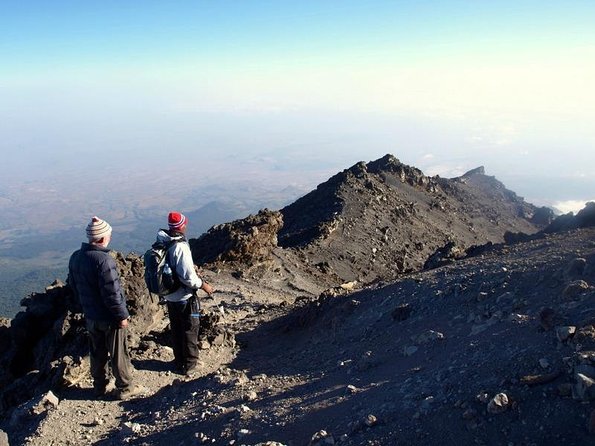
The summit day starts at 12:30 am with tea and biscuits. At 1:30 am, you begin climbing in darkness toward Rhino Point at 3,800 meters and Cobra Point at 4,350 meters.
The early start serves a clear purpose: reaching the summit at sunrise. It also means you need to accept a difficult tradeoff. The views from the top can be spectacular, but you will be climbing after a short rest and several days of exertion.
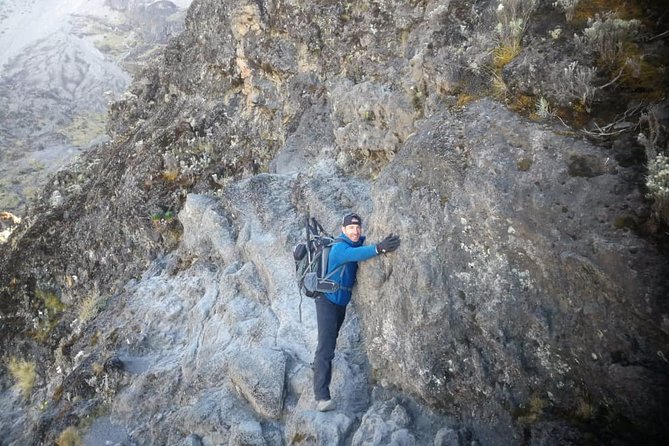
The route becomes steep and rocky. During the final hour, you scramble along a narrow rocky ridge between the crater and Mount Meru’s inner cliffs. This is the most technical-sounding section of the trek, although the supplied details do not describe it as technical climbing. You should be comfortable with steep ground, uneven rock, and using your hands for balance.
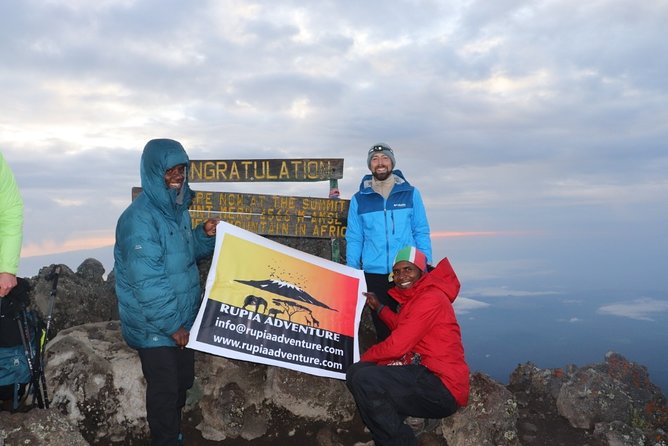
At 4,565 meters, the summit offers views of Mount Meru’s Ash Tray and Mount Kilimanjaro. The sunrise timing gives the finish a strong sense of occasion, especially after climbing through the night. Clear conditions matter, though. Mountain weather can limit visibility, and the route requires good weather to operate.
After time at the summit, you descend to Momella Gate and return to Arusha. The descent is not an afterthought. Your legs have already worked hard, and descending steep, uneven ground can be tiring in its own way. Save energy, drink regularly, and listen closely to your guide’s instructions.
The published timing for this final day contains an obvious scheduling error, showing nearly six days rather than a single summit day. The actual description is clear: midnight wake-up, 1:30 am ascent, sunrise summit, descent to Momella Gate, and return to Arusha. Confirm the expected finish time before booking transport or a same-day flight.
Same country, a completely different kind of safari:
- Balloon Safari & Bush Breakfast in Serengeti – Miracle Experience
★ 5.0 · 1,646 reviews - Tanzania Classic – 7 Days
★ 5.0 · 1,151 reviews - 4 Days Group Camping Safari
★ 5.0 · 1,101 reviews - 5 Days Group Camping Safari
★ 5.0 · 730 reviews
What the Guides, Porters, Cook, and Ranger Add
The package includes a private guide, porters, meals, and hut accommodation. Those are not minor extras. They shape the entire experience.
Your guide leads the route, manages the pace, and explains the mountain environment. One guide named Frank is specifically praised for explaining the flora, fauna, and general mountain life throughout the climb. You should still confirm who will lead your departure, since guide assignments can vary.
The porters organize and pack the trek equipment. This allows you to focus on walking instead of carrying the shared load. It also means you should be respectful about what you bring. A porter-supported trip works best when you pack only what you truly need.
The cook provides the meals, and the food received especially strong praise. One detailed account describes the portions as generous, so you should not need to depend entirely on energy bars. Even so, bring personal snacks if you have particular tastes or dietary needs, and tell the operator about dietary restrictions before setting out.
The huts offer a firmer base than camping, but the information does not specify the exact hut layout, bedding, or bathroom arrangements. Ask about those points before departure. Knowing what the huts provide will help you decide what sleeping gear and toiletries to carry.
The ranger is part of the safety structure for the wildlife zone. You are not being escorted simply for ceremony. The first day passes through habitat where buffalo and elephants may be present, and the national park requires the ranger for the trek.
Is $800 Good Value for Three Days?
The price is $800 per person. That is not a bargain-priced day hike, but it covers a large collection of services: pickup is offered, park admission is included, a private guide leads the climb, porters handle equipment, a cook provides meals, and hut accommodation is included.
You are also paying for the organization required to enter the park and climb safely with a ranger. Arranging a private guide, porter team, meals, huts, park registration, and transport on your own would be complicated. The value depends on how much you want that support and how much comfort you place in a structured climb.
The price looks strongest for someone who wants a short, supported summit attempt rather than a bare-bones independent hike. It is less attractive if you are seeking a simple inexpensive walk or if you already have mountain logistics arranged.
Before paying, ask for a written list of inclusions. Pickup is offered, but the supplied details do not spell out every transport segment. Confirm whether return transport to your Arusha hotel, park fees, ranger fees, meals, porter tips, and any equipment are included in the $800.
The Hard Parts You Should Plan For
Your physical condition is the first concern. The experience requires a strong fitness level, and the schedule includes six hours of hiking on day one, a steep four-hour ascent on day two, and a nighttime summit climb followed by a long descent on day three.
Altitude is another concern. The summit reaches 4,565 meters, and the rapid three-day schedule leaves limited time for adjustment. The guide can control pace, but no guide can remove the effects of altitude. If you feel unwell, report it quickly rather than trying to hide symptoms to reach the top.
Sleep will be limited before the summit. The planned bedtime is 7:00 pm, with a 12:30 am wake-up and a 1:30 am departure. Treat the afternoon at camp as rest time, and prepare your clothing, headlamp, water, and daypack before lying down.
Weather can also change the plan. The experience requires suitable conditions. If poor weather forces cancellation, the stated arrangement is a different date or a full refund. For other cancellations or amendments, the payment is non-refundable, so travel insurance is worth considering.
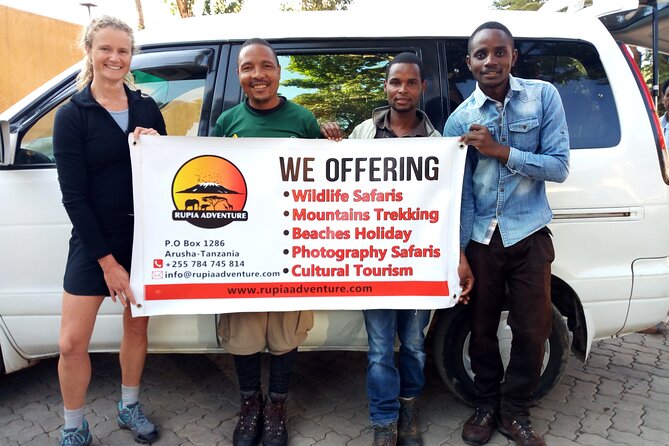
There has also been one serious complaint about money handling, communication, vehicles, and inexperienced staff, while the other supplied accounts describe helpful staff, strong organization, excellent food, and supportive guides and porters. That mixed picture is a reason to verify payment instructions directly with Rupia Adventure, keep written confirmation, and clarify the guide, vehicle, equipment, and inclusions before sending funds.
Who Will Enjoy This Mount Meru Trek?
I would recommend this trip to a fit hiker who wants a short but serious summit climb with wildlife at the start. It suits you if you like the idea of a private guide, do not want to carry the full camp load, and value meals and hut accommodation.
It is also a good choice if you are building confidence before a longer mountain trip. The route gives you a taste of high-altitude pacing, a night ascent, crater views, and a rocky summit ridge without the longer duration of a Kilimanjaro climb.
I would be cautious about booking it if you dislike steep trails, cannot manage a midnight start, or need a slow acclimatization schedule. It is not presented as an accessible or low-effort activity, and the operator specifically requires strong physical fitness.
The group limit of 15 is reasonable, but ask whether your booking will be fully private and how many people will actually be on your departure. That detail affects the pace and the amount of direct time you receive from the guide.
Should You Book the Three-Day Summit Attempt?
Book it if you want a concentrated Mount Meru experience with a rare combination of wildlife, volcanic scenery, professional support, and sunrise from 4,565 meters. The strongest elements are the walking safari feel on day one, the Ash Tray views, the well-supported summit plan, and the repeated praise for the guide, porter, cook, and food.
Think twice if you need flexible cancellation, more time to acclimatize, or a comfortable night’s sleep before your hardest climb. Confirm the operator’s payment details, exact pickup time, final-day schedule, group size, and every inclusion before committing.
For a fit hiker who accepts the early alarm and demanding pace, this can be a memorable three-day mountain challenge. For anyone unsure about fitness or altitude, choose a longer itinerary or get professional medical advice before booking.
FAQ
Where does the Mount Meru trek begin?
The trek begins with pickup in Arusha and transfer to Momella Gate in Arusha National Park.
How high is the summit?
The summit of Mount Meru reaches 4,565 meters.
How long is the experience?
The trek lasts approximately three days.
What time does the summit climb begin?
Your guide is scheduled to wake you at 12:30 am. The summit attempt begins at 1:30 am.
What wildlife might I see?
You might see giraffes, zebras, antelope, buffalo, and potentially elephants along the first day’s route.
Is a ranger required?
Yes. Because the route passes through wildlife habitat, an armed ranger hired through the national park is required to accompany the hiking team.
Are meals included?
Yes. All meals are included, and a cook is part of the support team.
Where do I sleep?
Accommodation is provided in mountain huts.
How many people can join the activity?
The maximum group size is 15 people.
Is the trek refundable if I cancel?
No. The experience is non-refundable and cannot be changed for any reason. If poor weather causes the operator to cancel, you are offered another date or a full refund. If the minimum number of participants is not reached, you are offered another date, another experience, or a full refund.
Just added around Arusha
- 8 Days Serengeti Migration safari★ 5.0 · 11 reviews
- tarangire, ngorongoro & lake manyara park 3 days private tour★ 5.0 · 11 reviews
- tarangire & ngorongoro 2 days tour★ 5.0 · 14 reviews
- Mt. Kilimanjaro: Shira plateau to Cathedral point 3872m Day hike★ 5.0 · 7 reviews
- serengeti, ngorongoro & tarangire 4 days private tour★ 5.0 · 18 reviews
- serengeti & ngorongoro 3 days private tour★ 5.0 · 15 reviews
- 2 Days Tanzania Midrange Group Join Safari★ 5.0 · 7 reviews
- climb the KILIMANJARO via Lemosho route★ 5.0 · 4 reviews
Hiking & Trekking, compared.

8-Day Small-group Lemosho Kilimanjaro Summit Trekking
Read our review →

Private Full Day Hiking Experience to Marangu Route
Read our review →

From Arusha/Moshi: Kilimanjaro Hike Marangu Route Day Trip
Read our review →
4 days Best experience Kilimanjaro Hike, Serengeti &Ngorongoro
Read our review →
Best Kilimanjaro hiking day trip tour with Kilinge Adventures
Read our review →Browse the lists this tour appears in