Reviewed · SAFARI
Off the Beaten Track Safari in Arusha Tanzania
The most appealing part of this safari is its broad sweep through northern Tanzania, with four major wildlife areas packed into seven days. You get Tarangire’s elephant country, the Serengeti’s open plains, Ngorongoro’s compact wildlife viewing, and Lake Manyara’s birdlife and forest.
I like the chance to add a walking safari near Ikoma, since seeing the bush on foot changes the pace and sharpens your attention. I also like the human side of the operation: guides such as Marck, Mustapha, and Martin are named in especially warm trip accounts, while Patrick is praised for careful office planning. The main caution is pace. Long drives, early starts, and one 12-hour safari day make this better for active visitors than for anyone seeking a slow lodge holiday.
Key points to know before booking
- Four famous northern parks in one route: Tarangire, Serengeti, Ngorongoro Crater, and Lake Manyara all feature in the plan.
- The Serengeti gets two full days: You have time for extended game viewing rather than only crossing the park on the way elsewhere.
- Walking and night options near Ikoma: These are listed as possible extras, so confirm what is included before paying.
- Guides are a major strength: Marck, Mustapha, and Martin are specifically associated with highly praised safari experiences.
- The price needs clarification: The advertised $2,500 is per group of up to 15, while the practical tour information says the maximum is 6.
- Expect long road days: Ngorongoro to Lake Manyara is listed at about 12 hours, including the crater visit.
A seven-day route through Tanzania’s best-known parks
This is not a single-park safari. It is a moving circuit from Arusha through several distinct habitats, then back to Arusha for your flight. That variety is the point, but it also means you spend plenty of time in a safari vehicle.
The trip begins with airport pickup and ends with an airport transfer. Lodging is listed as Springlands Hotel, Highview Coffee Lodge, Serengeti Safari Lodge, and similar properties, with some accommodation inside parks and some outside them. The exact hotel matters because location affects how quickly you reach the morning game drive, so ask for the confirmed names before departure.
A few more Arusha trips to weigh up
- Balloon Safari & Bush Breakfast in Serengeti – Miracle Experience
★ 5.0 · 1,646 reviews - 4 Days Group Camping Safari
★ 5.0 · 1,101 reviews - 5 Days Group Camping Safari
★ 5.0 · 730 reviews
Day 1: Arusha arrival and a useful briefing
At Kilimanjaro Airport, a Tanzania Wildlife Adventures driver is scheduled to meet you with a sign bearing your name. You then transfer to Springlands Hotel, where the plan includes a meal, a swimming pool, garden, bar, and restaurant.
This first evening is more than a bed before the safari. The pre-safari briefing gives you a chance to review the route, ask about luggage, and clarify optional activities. I would use this time to confirm the vehicle arrangements, the exact accommodation, and whether the advertised walking safari is part of your package or an extra.
The arrival day is listed at about seven hours, though much of that time depends on your flight and transfer. If your international arrival is late, the scheduled meal and briefing may need adjustment. Keep your first evening simple. The real work begins after breakfast.
Day 2: Tarangire and the pull of the river
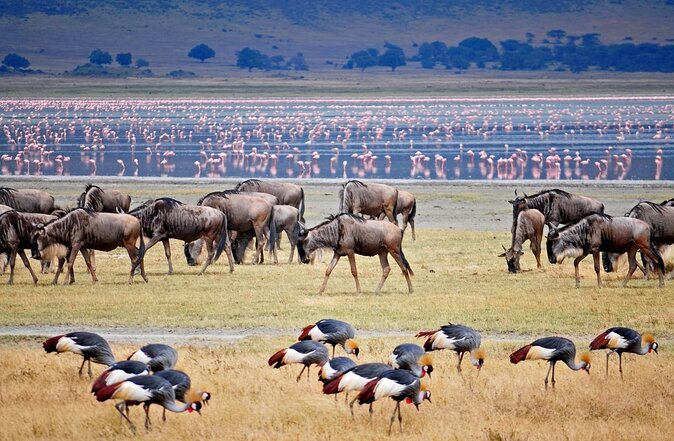
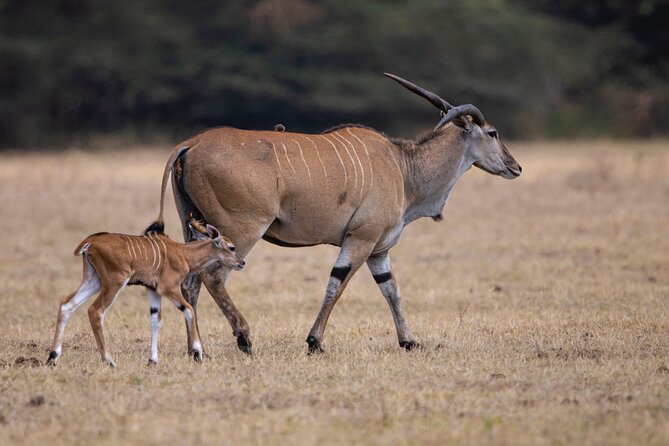
Tarangire National Park is the first major wildlife stop. Its permanent river becomes especially important in the dry season, when migratory animals gather near dependable water. The route highlights wildebeest, zebra, elephant, eland, and oryx.
Tarangire is a fine opening act because it can deliver large animals quickly without requiring you to wait until the Serengeti. Elephants are a central attraction, and the changing concentration of wildlife around the river gives the day a clear seasonal rhythm.
You overnight at Highview Coffee Lodge or a similar property. The day is listed at about eight hours, including the drive and park time. That is a full but manageable introduction to safari life.
The biggest variable is timing. Tarangire is described as particularly strong during the dry season, so wildlife density may not be the same in wetter months. Ask your operator which month-specific conditions they expect and how much time will be spent inside the park rather than on the road.
Day 3: Olduvai Gorge and the long road to Serengeti
The drive to Serengeti National Park takes about three to four hours, with an optional 15-minute stop at Olduvai Gorge. The gorge is tied to some of the earliest human fossil discoveries and sits within a dramatic Rift Valley setting shaped by ancient tectonic forces.
Fifteen minutes is brief, but even a short stop can break up the road and give the journey more meaning. If the archaeological stop matters to you, confirm whether the listed time is fixed or whether a longer visit can be arranged. The itinerary treats it as optional, so do not assume it is part of the core tour.
The day is listed at about seven hours, and the overnight is at Serengeti Safari Lodge or a similar property. This is where the route begins to feel more remote. You are no longer simply visiting a park for a few hours. You are positioning yourself for two nights in Serengeti country.
Same country, a completely different kind of safari:
- Tanzania Classic – 7 Days
★ 5.0 · 1,151 reviews - Materuni Waterfalls, coffee tour & Kikuletwa Hot Springs
★ 5.0 · 643 reviews - 3 Days Serengeti & Ngorongoro Group Camping Safari
★ 5.0 · 574 reviews - 7-Day Premium Luxury Tanzania Safari All-Inclusive
★ 5.0 · 426 reviews
Day 4: A second Serengeti day with room to look around
After breakfast, you spend another full day on game drives in Serengeti National Park, carrying a picnic lunch. That second day is valuable because the Serengeti is too large for a single quick circuit. You can spend less time watching the clock and more time responding to what appears in front of you.
The plan describes the park as a place where large concentrations of animals still move freely. Depending on location and season, you might see predators, grazing herds, and smaller animals that are easy to miss when the vehicle is rushing between major sightings.
A walking safari or night safari is possible as an option. This is one of the most distinctive features of the experience, but the wording matters: possible as an option does not mean included. Ask about the cost, location, minimum age, safety rules, and whether a park or camp permit is required.
The overnight is again at Serengeti Safari Lodge or similar. The day runs about eight hours. A second night in the same area also reduces the inconvenience of packing every morning, a small benefit that matters on a fast-moving itinerary.
Day 5: Ngorongoro Crater and a very long day
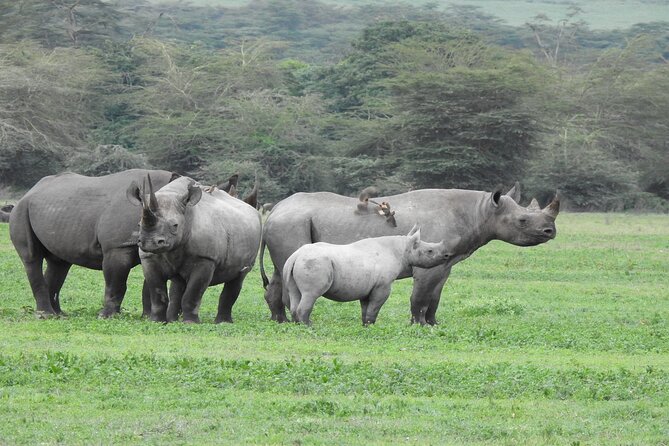
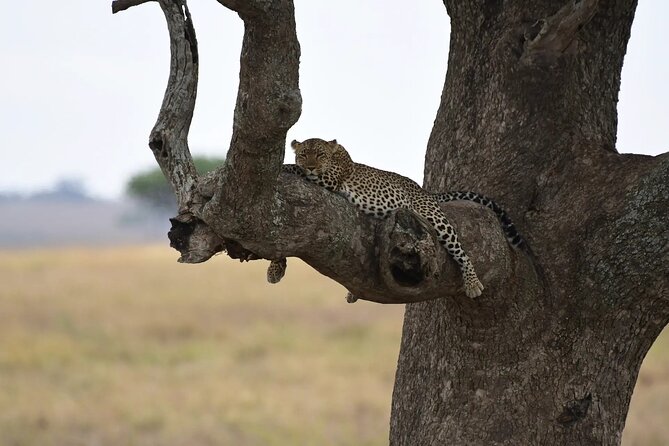
The route leaves after breakfast for a game drive inside Ngorongoro Crater. This is the trip’s most concentrated wildlife stop. The crater is highlighted for black rhinos and lions, along with flamingos, water birds, leopard, cheetah, hyena, antelope, and smaller mammals.
The crater’s appeal is its compact setting. You may see a wide range of animals in one day without covering the vast distances required in the Serengeti. It is also visually different, with wildlife gathered within the crater bowl rather than spread across open plains.
The drawback is the schedule. This day is listed at about 12 hours, making it the longest on the trip. You should expect a full day of driving and game viewing, followed by an overnight at Highview Coffee Lodge or a similar property. The schedule packs a lot into one stretch, so anyone who dislikes long vehicle days should think carefully before booking.
Still, the day can be worth the effort. Ngorongoro is not just another stop on the route. The possibility of seeing black rhino, plus the mixture of big cats, birds, grazing animals, and water habitats, gives it a different character from Tarangire and Serengeti.
Day 6: Lake Manyara’s forest, lake, and birdlife
After breakfast, you head to Lake Manyara National Park, near the Rift Valley. The park includes acacia forest, open grassland, swamp, a delta, and the lake itself. That mix supports a broad range of mammals and birds within a relatively small area.
Lake Manyara is noted for tree-climbing lions, though no wildlife sighting is guaranteed. You might also see buffalo, impala, giraffe, warthogs, hippos, elephants, and monkeys. The birdlife is an important part of the stop, especially around the water and wetlands.
I would treat Manyara as a change of pace after the crater and Serengeti. It is not included simply to add another name to the route. Its appeal is the contrast between woodland, wetland, and lake edge. You may spend more time looking upward into trees or scanning the water than you did on the open plains.
The overnight returns to Springlands Hotel or similar in Arusha. The day is listed at about seven hours, followed by the final night before departure. Because the next morning includes an airport transfer, confirm your flight time and the exact pickup plan.
Day 7: Airport transfer and the trip home
The final day is a three-hour transfer to the airport for your flight home. The activity ends back at the meeting point in Arusha, and airport pickup is offered at the start.
This is a useful arrangement if you want a single company to handle the arrival, safari transport, lodging, and departure transfer. It also means you should give the operator accurate flight details well in advance. The supplied information does not specify which airport is used for the return transfer, so ask whether your flight departs from Kilimanjaro International Airport or another airport.
Why the guides matter on a safari like this
The strongest personal detail attached to this experience is the repeated importance of the guide. Marck is associated with numerous wildlife encounters and a particularly successful first two days, including sightings of all of Africa’s Big Five within that opening stretch. Mustapha is praised for turning a well-prepared plan into a strong adventure, while Martin is linked with a four-day trip around the less-used edges of the Serengeti near Ikoma.
Those names do not guarantee which guide you will receive. They do tell you what to ask for. Contact the company before departure and request the guide’s name, language ability, and experience with walking or night activities if those extras interest you.
A good safari guide does more than find animals. The guide controls the pace, explains animal behavior, positions the vehicle respectfully, and decides when a sighting is worth staying with. The itinerary gives the driver and guide a lot of responsibility because the route covers so much ground.
The Ikoma idea, and what to clarify
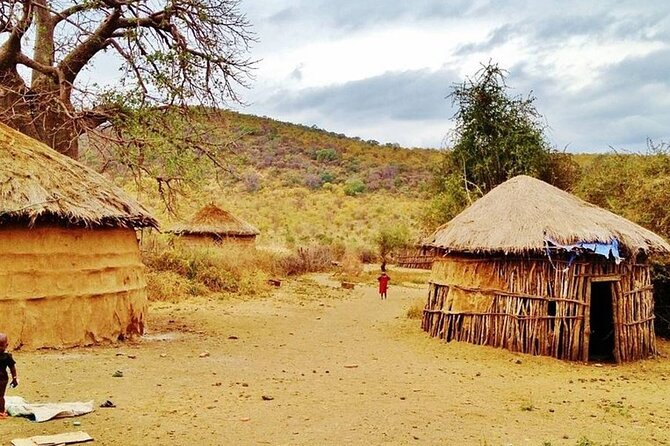
The experience is promoted as an off-the-beaten-track safari with a walking safari around Ikoma Wild Camp. Ikoma lies near the Serengeti’s outer area, and the supplied trip accounts describe time spent exploring less-traveled sections near that region.
But the daily plan places the walking or night safari as an option on the second Serengeti day. That is an important distinction. Before booking, ask these questions directly:
- Is the walking safari included in the $2,500 price?
- Is it conducted at Ikoma Wild Camp or elsewhere?
- How long does it last?
- Is a night safari available on the same day?
- What extra park, camp, or guide charges apply?
For many people, this option is the reason to choose this trip instead of a standard vehicle-only route. On foot, you focus on tracks, plants, sounds, and small signs rather than only on large animals. Just make sure the advertised format matches what you will actually receive.
Is $2,500 good value for your group?
The advertised price is $2,500 per group, with the headline capacity listed as up to 15 people. If a full group of 15 shares that cost, the per-person price would be low for a seven-day northern Tanzania safari. It could offer strong value if accommodation, park fees, vehicle costs, guide services, meals, and airport transfers are all covered as described.
However, another part of the booking information gives a maximum of six travelers. That conflict needs an answer before you pay. A six-person group would work out to about $417 per person, while a private group of two would pay $1,250 per person. Ask whether $2,500 is a fixed private-group price, a starting price, or an amount based on a larger shared group.
The included items list all fees and taxes, six breakfasts, six lunches, and five dinners. International and local flights are not included, and insurance is also your responsibility. The dinner count is lower than the breakfast and lunch counts, so ask which evening meal is not covered.
The value is strongest if you want a ready-made route with park access, lodging, meals, and transfers arranged together. It is weaker if you prefer to choose premium lodges, spend longer in one park, or avoid long road transfers. Get the exact hotel list and final meal plan in writing.
Who should choose this safari?
I would recommend it to you if you want a first northern Tanzania safari with a wide range of parks and the chance to add a more active Ikoma experience. It also suits families and small groups that value a dedicated guide and a planned route, especially since the itinerary has received praise for its organization and vehicle arrangements.
You should be comfortable with long days. The 12-hour Ngorongoro and Lake Manyara transfer day is the clearest warning. This is not a relaxed lodge-to-lodge holiday with late breakfasts and long afternoons by the pool.
The route may also suit wildlife fans who want both famous parks and a less conventional angle. Two Serengeti days provide needed time in the park, while the optional walk or night safari adds a different way to experience the bush.
Practical details before you commit
The tour starts in Arusha at 9:00 a.m., with airport pickup offered. Confirmation is provided at booking, and most people can participate. The activity ends back at the meeting point in Arusha.
Pack for a moving trip rather than a resort stay. You will need clothing suitable for warm days and changing conditions, comfortable shoes for any approved walking activity, and a small day bag for picnic lunches and game drives. The supplied information does not state luggage limits, so ask before arriving with large suitcases.
The cancellation policy is straightforward: cancel at least 24 hours before the local start time for a full refund. Cancellations or changes made within 24 hours are not refunded or accepted.
Should you book the Off the Beaten Track Safari?
Book this safari if your priority is variety: Tarangire, two Serengeti days, Ngorongoro Crater, Lake Manyara, and a possible walk near Ikoma in one organized route. The praised planning by Patrick and the strong guide reputations connected with Marck, Mustapha, and Martin add confidence, though you should confirm your actual guide.
Do not book without clarification on the group size, walking safari, exact hotels, dinner coverage, and airport arrangements. Once those points are settled, the trip offers a practical way to see several of Tanzania’s most important wildlife areas without arranging every transfer yourself.
FAQ
Where does the safari start?
The safari starts in Arusha, Tanzania, with airport pickup offered. The listed start time is 9:00 a.m.
How long does the safari last?
The itinerary covers seven days, including arrival in Arusha, five safari-focused days, and the final airport transfer.
Which national parks are included?
The route includes Tarangire National Park, Serengeti National Park, Ngorongoro Crater, and Lake Manyara National Park.
Is airport pickup available?
Yes. A driver is scheduled to meet you at Kilimanjaro Airport with a sign bearing your name and transfer you to Springlands Hotel.
Is the walking safari included?
The information lists a walking safari near Ikoma Wild Camp as a possible option and also describes a walking or night safari as optional. Confirm the cost and availability before booking.
What meals are included?
The package lists six breakfasts, six lunches, and five dinners. Ask the provider to confirm which dinner is not included.
Are flights included?
No. International and local flights are not included in the price.
Is travel insurance included?
No. Insurance is not included, so you must arrange it separately.
What is the cancellation policy?
You can receive a full refund if you cancel at least 24 hours before the experience start time. Cancellations and changes made within 24 hours are not accepted or refunded.
Just added around Arusha
- 8 Days Serengeti Migration safari★ 5.0 · 11 reviews
- tarangire, ngorongoro & lake manyara park 3 days private tour★ 5.0 · 11 reviews
- tarangire & ngorongoro 2 days tour★ 5.0 · 14 reviews
- Mt. Kilimanjaro: Shira plateau to Cathedral point 3872m Day hike★ 5.0 · 7 reviews
- serengeti, ngorongoro & tarangire 4 days private tour★ 5.0 · 18 reviews
- serengeti & ngorongoro 3 days private tour★ 5.0 · 15 reviews
- 2 Days Tanzania Midrange Group Join Safari★ 5.0 · 7 reviews
- climb the KILIMANJARO via Lemosho route★ 5.0 · 4 reviews
Safari, compared.

Serengeti Balloon Safari and authentic bush breakfast
Read our review →
Mikumi Safari Day Trip with Flights and Meal
Read our review →


3 Days Serengeti & Ngorongoro Group Camping Safari
Read our review →
7-Day Premium Luxury Tanzania Safari All-Inclusive
Read our review →