
Reviewed · 4-DAY EXPERIENCES
4 Days safari Tour Tanzania
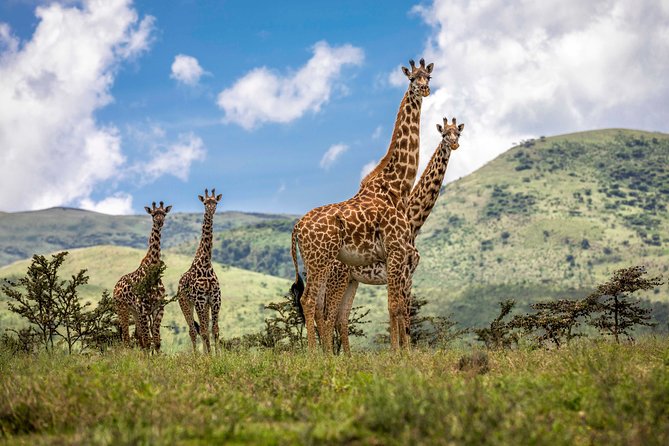
Tarangire’s elephant herds and baobab trees make a strong opening, but the real prize is the three-park sweep: Tarangire, Serengeti, and Ngorongoro Crater in only four days. You spend long hours in a pop-roof 4×4, with the chance to watch lions, elephants, cheetahs, rhinos, flamingos, and huge herds in their natural setting.
I like two things right away. All meals and camping equipment are included, so you do not have to build a safari from scratch. I also like the private format: only your own group takes part, giving the guide room to respond to your interests. Past departures have included guides named Max, Filex, Andersson, Zepha, Maushir, and Edward, though your assigned guide will vary.
The main tradeoff is time. This is a busy four-day route with long drives, bumpy roads, early starts, and basic camping. You cover a lot of ground, but you will not get the slow, leisurely rhythm of a longer safari.
Key points to know before booking
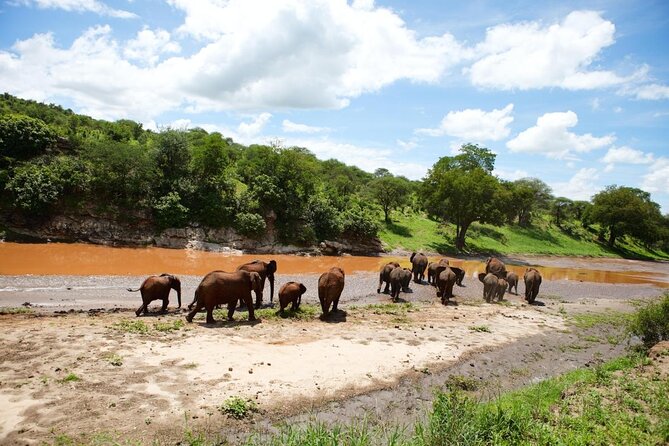
- Tarangire opens with elephants and baobabs: The park’s river, seasonal swamps, and picnic stop provide an excellent first game drive.
- The Serengeti receives the most time: You arrive on Day 2, spend a full morning and part of an afternoon there, then camp near Seronera.
- Ngorongoro packs wildlife into one crater: A five-hour drive inside the caldera can bring sightings of rhino, lion, elephant, flamingos, and other East African species.
- The private 4×4 matters: Your group has the vehicle to itself, with an open roof for viewing and photography.
- The food program is a real convenience: Breakfast, lunch, and dinner are supplied, and dietary needs can be handled if you mention them ahead of time.
- Camping keeps the price in check: At $1,650 per person, the package includes transport, guide, meals, equipment, park visits, and accommodation, but it is not a luxury lodge safari.
What four days in northern Tanzania really gives you
This itinerary is designed as a compact introduction to northern Tanzania. It connects three major wildlife areas without asking you to arrange separate transport, meals, camps, or park entry.
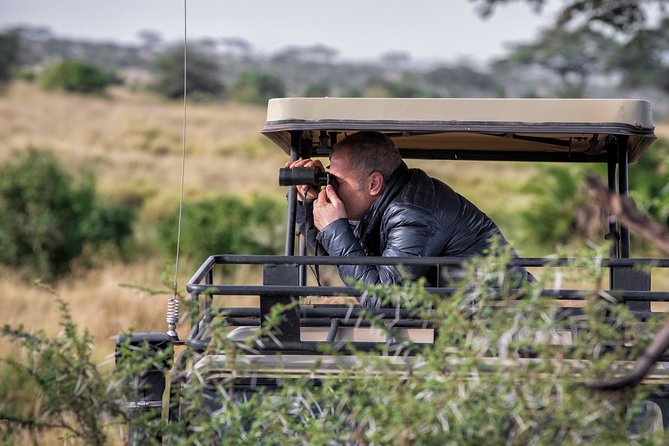
The route begins and ends in Arusha. Pickup is offered, with the stated start time at 7:30 am. From there, you travel in a modern 4×4 with a pop-up roof. That roof is more important than it sounds. It lets you stand or sit above the vehicle for a broad view, which is useful when an animal is partly hidden in grass or when a herd spreads out in several directions.
The tour is private, so your group does not share the vehicle with other passengers. That gives you more say over the pace and the animals you want to watch. Several past guides, including Filex, Max, and Andersson, were singled out for safe driving, clear explanations, animal spotting, and adjusting the day to suit the group. You cannot choose from that list unless the operator confirms it, but it is sensible to ask who will guide you before departure.
The cost is $1,650 per person. That is not a bare transport fee. It includes a professional driver-guide, 4×4 safari vehicle, binoculars, camping equipment, wine and beer, four breakfasts, three dinners, and four lunches. Park admission is included in the itinerary, including the Ngorongoro visit.
You still need to budget for tips, which are not included. You should also clarify the exact sleeping setup before booking. The route names Fig Tree Lodge, Seronera campsite, and Simba campsite, and the package supplies camping equipment. That points to a practical camping-style trip rather than a fully furnished luxury stay.
A few more Arusha trips to weigh up
- Balloon Safari & Bush Breakfast in Serengeti – Miracle Experience
★ 5.0 · 1,646 reviews - 4 Days Group Camping Safari
★ 5.0 · 1,101 reviews - 5 Days Group Camping Safari
★ 5.0 · 730 reviews
Day 1: Tarangire’s elephants and ancient baobabs
The first morning starts with hotel pickup after breakfast and a drive of about two hours to Tarangire National Park. That is a manageable introduction to safari travel, especially compared with the longer transfer to the Serengeti on Day 2.
Tarangire is known for its large elephant herds and enormous baobab trees. These trees give the park a look that is different from the open plains farther west. The route also passes seasonal swamps, savanna, and the Tarangire River, where animals gather when water is available.
Keep your eyes moving. The listed wildlife includes giraffes, impalas, zebras, lions, leopards, elands, warthogs, elephants, and many bird species. No safari can honestly promise every animal on a particular day, but Tarangire gives you a wide range of possible sightings from the start.
The game drive lasts about six hours, including time for a picnic lunch. The picnic site is described as having a spectacular view, and this is one of the better moments to slow down and take in the setting instead of treating lunch as fuel between sightings.
After more game viewing, you continue to Fig Tree Lodge for dinner and the night. The first day is full, but it is not as demanding as the following Serengeti transfer. I would use the evening to charge cameras, sort clothing, and prepare for an early start.
Day 2: The long road to the Serengeti
Day 2 is the least relaxed part of the itinerary. After breakfast, you drive toward the Serengeti for roughly four to five hours on a long, bumpy road through the crater highlands and out toward the plains.
That journey is part of the experience, but you should take the wording seriously. This is not a smooth highway transfer. If you are prone to motion sickness or back discomfort, bring any medication you normally use and dress for a lot of time in the vehicle.
The route includes a picnic lunch before the afternoon drive in the Serengeti. You may begin spotting animals before reaching the main game-driving area, so keep your camera and binoculars close rather than packed away.
The Serengeti is the emotional center of the trip. Its open plains give you a strong sense of space, and the timing allows an afternoon drive followed by sunset. The park is home to the famous big cats and large grazing animals associated with northern Tanzania, with the added possibility of cheetahs, leopards, and lions.
At the end of the day, you continue to Seronera campsite for dinner and overnight. Seronera is a useful base because the itinerary returns to the Serengeti for an early morning drive instead of spending all of Day 3 on the road.
Day 3: Sunrise wildlife near Seronera
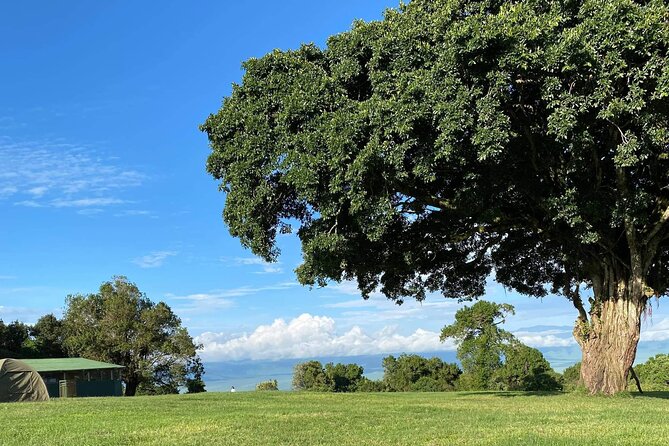
The alarm comes early, around 6 am, for a sunrise game drive. That early start is not just a scheduling trick. Animals are often easier to spot when the day is cool and activity is high, and the light is better for photography than the harsh midday sun.
Breakfast is served at a picnic site in the bush. This is one of the tour’s more memorable practical details. You are not simply stopping at a restaurant and then returning to the vehicle. You eat out in the park, surrounded by the same setting you have been watching from the roof.
The morning game drive continues before you return to camp around noon for a hot lunch. After lunch, you pack the vehicle and head toward Ngorongoro, with dinner and the night at Simba campsite.
This day combines the best wildlife timing with another long transfer. You get a genuine morning in the Serengeti, but the schedule leaves little room for a slow afternoon or an extra sunset drive. If the Serengeti is your main reason for coming to Tanzania, you may prefer a longer itinerary with more nights in or near the park.
Still, the early drive can be excellent. Guides such as Filex and Zepha have been praised for knowing the park roads and timing the day well, while Maushir and Edward were noted for safe driving and strong animal spotting. Those qualities matter here because the best sightings can be brief and far from the main road.
Same country, a completely different kind of safari:
- Tanzania Classic – 7 Days
★ 5.0 · 1,151 reviews - Materuni Waterfalls, coffee tour & Kikuletwa Hot Springs
★ 5.0 · 643 reviews - 3 Days Serengeti & Ngorongoro Group Camping Safari
★ 5.0 · 574 reviews - 7-Day Premium Luxury Tanzania Safari All-Inclusive
★ 5.0 · 426 reviews
Day 4: The Ngorongoro Crater wildlife bowl
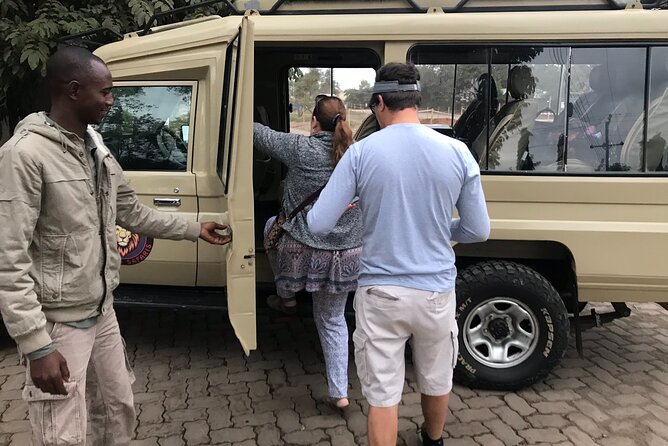
After breakfast, you make an early descent into Ngorongoro Crater. The crater is a huge volcanic caldera, and its enclosed setting helps support a remarkable concentration of wildlife.
Inside, you may see open plains, forest, swamps, a river, and a soda lake. Flamingos gather around the lake, while the plains can support grazing animals and predators. The area is also known for black rhino, though sightings are never guaranteed.
The itinerary allows about five hours for the crater game drive. That is enough time for a serious look, but not enough to stop at every possible viewpoint or linger everywhere. The large bull elephants here are especially notable for their long tusks, linked in the description to the mineral content of the volcanic soil and grasses.
Ngorongoro is likely to be the most varied day visually. Tarangire has its baobabs and elephants, while the Serengeti offers vast open plains. The crater brings several types of habitat into one compact area, along with a strong sense of being inside a natural bowl.
After the drive, you return to Arusha, where the safari ends. The final transfer makes Day 4 another long day, so do not plan an important evening flight unless you have confirmed the timing directly with the operator.
Camping, meals, and comfort on the road
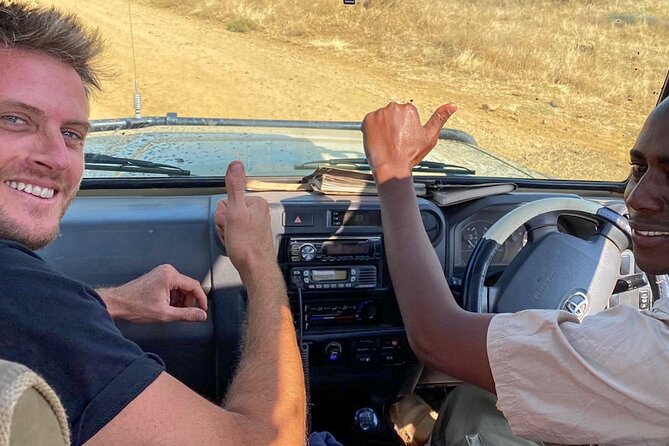
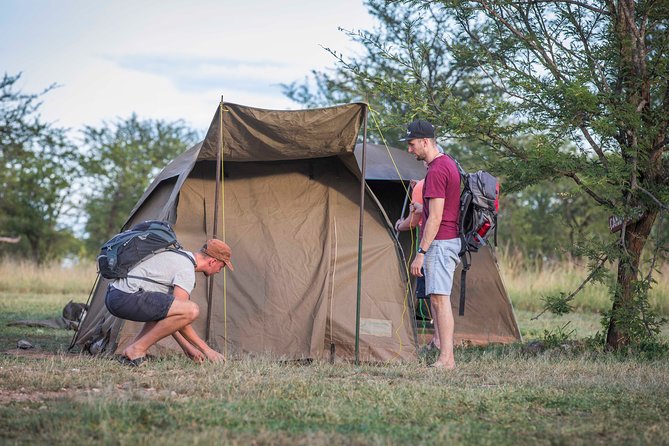
The package supplies camping equipment, which removes one of the biggest planning chores. You do not need to source tents and basic camp gear separately, though you should confirm exactly what personal items you must bring.
The named overnight stops are Fig Tree Lodge, Seronera campsite, and Simba campsite. This mix suggests a practical safari with some lodge comfort and some camping nights. The supplied information does not specify private bathrooms, tent size, bed type, or power arrangements, so ask those questions before paying.
Food is included throughout the four days. The package lists four breakfasts, four lunches, and three dinners. Dietary requirements can be accommodated if you communicate them in advance. Do this early and be specific, especially for allergies or strict medical diets.
Wine and beer are also included. That is a pleasant extra at the end of a game drive, but it should not distract from the basics: ask about drinking water, snacks, and what you need to carry in the vehicle. Those details are not specified here.
Families can consider this route, and one past departure included children aged eight and fourteen. Still, the long drives, rough road to the Serengeti, early wake-up, and camping conditions may test younger children. I would choose it for a family that already enjoys outdoor trips rather than one expecting a resort-style holiday.
What the private vehicle changes
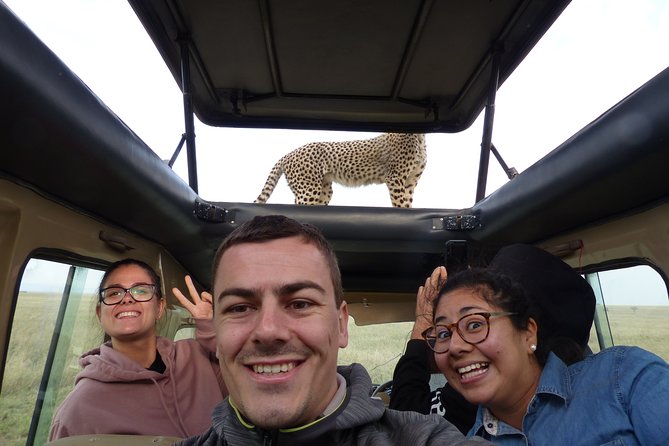
A private tour gives you more control than a shared departure. You can tell the guide if you want to spend longer with elephants, search for big cats, focus on birds, or pause for photographs.
The quality of the guide is central. This person drives, reads the roads, spots distant animals, explains behavior, and keeps the day moving. Names praised in past departures include Andersson, Max, Filex, Zepha, Maushir, Edward, Elikana, Benji, and Dulla, with Dulla also serving as a cook on one departure.
You should not assume a particular guide will be assigned. Instead, ask about the guide’s language, driving experience, and role before arrival. If you have a special interest in birds, photography, rhinos, or the Big Five, mention it during planning.
The supplied binoculars are useful, especially for animals at a distance. You will still want a camera with a decent zoom if wildlife photography matters to you. A pop-roof vehicle gives you a good viewing position, but it does not make every sighting close.
Is $1,650 a fair price?
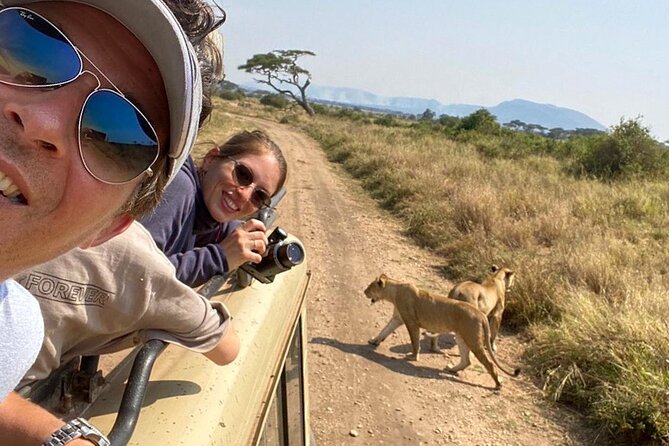
For a four-day private safari, $1,650 per person can be a sensible value if you want the major northern parks without arranging each piece yourself. Transport, park admission, guide, vehicle, camping gear, meals, binoculars, and several overnight stops are bundled together.
The price looks less attractive if you want upscale lodges, private tented camps, extra time in the Serengeti, or a slower schedule. The itinerary is built around efficient coverage, not luxury or long periods at one camp.
You also need to account for tips and any personal extras. The cancellation terms are flexible up to 24 hours before the start time, with a full refund if you cancel by then. Changes or cancellations inside that window are not accepted for a refund.
Who should choose this safari?
I would recommend this route to a first-time safari visitor who wants the three headline parks in a short period. It also suits couples, families with older children, and small private groups that value a dedicated vehicle.
It is a good match if you like early mornings, outdoor meals, long drives, and the possibility of simple camping. You will get more wildlife variety and geographic range than on a single-park trip.
I would be cautious if you need high-end accommodation, dislike rough roads, or want several unhurried days in the Serengeti. In that case, spend more nights on the route or choose a fly-in safari. One luxury-style departure associated with the same operator used a flight from Zanzibar to Seronera, but that is a different arrangement from this road-based package.
Should you book it?
Book this safari if your priority is maximum park coverage in four days, with the practical work handled for you. Tarangire’s elephants, the Serengeti’s sunrise plains, and Ngorongoro’s concentrated wildlife make a powerful combination.
Before booking, confirm the exact camps, tent facilities, assigned guide, dietary arrangements, and final driving times. If you accept the early starts and bumpy road, the package offers a strong first look at northern Tanzania at a price that includes much more than transport alone.
FAQ
Where does the safari start and finish?
The safari starts in Arusha, with pickup offered at a stated start time of 7:30 am. The tour ends with a drive back to Arusha on Day 4.
Which national parks are included?
The route includes Tarangire National Park, Serengeti National Park, and Ngorongoro Crater.
Is this a private tour?
Yes. Only your own group participates in the activity, rather than joining a shared group.
Are meals included?
Yes. The package includes four breakfasts, four lunches, and three dinners. Dietary requirements can be addressed if you communicate them in advance.
Is camping equipment provided?
Yes. Camping equipment is supplied. The itinerary names Fig Tree Lodge, Seronera campsite, and Simba campsite as overnight stops.
What is included in the $1,650 price?
The price includes a professional driver-guide, 4×4 pop-roof safari vehicle, binoculars, camping equipment, wine and beer, meals, and the listed park visits. Tips and gratuities are not included.
Just added around Arusha
- 8 Days Serengeti Migration safari★ 5.0 · 11 reviews
- tarangire, ngorongoro & lake manyara park 3 days private tour★ 5.0 · 11 reviews
- tarangire & ngorongoro 2 days tour★ 5.0 · 14 reviews
- Mt. Kilimanjaro: Shira plateau to Cathedral point 3872m Day hike★ 5.0 · 7 reviews
- serengeti, ngorongoro & tarangire 4 days private tour★ 5.0 · 18 reviews
- serengeti & ngorongoro 3 days private tour★ 5.0 · 15 reviews
- 2 Days Tanzania Midrange Group Join Safari★ 5.0 · 7 reviews
- climb the KILIMANJARO via Lemosho route★ 5.0 · 4 reviews
4-Day Experiences, compared.


4 Days Join Group tour Tarangire Serengeti and Ngorongoro crater
Read our review →
4-Day Safari from Arusha: Tarangire, Serengeti and Ngorongoro
Read our review →
4 Days Tarangire, Serengeti and Ngorongoro Mid-Range Group Safari
Read our review →
4 Days Tanzania Lodge Safari With Two Nights at Serengeti
Read our review →
4 days Best experience Kilimanjaro Hike, Serengeti &Ngorongoro
Read our review →Browse the lists this tour appears in