
Reviewed · ZANZIBAR TOURS
Jambiani Village Women at work and play
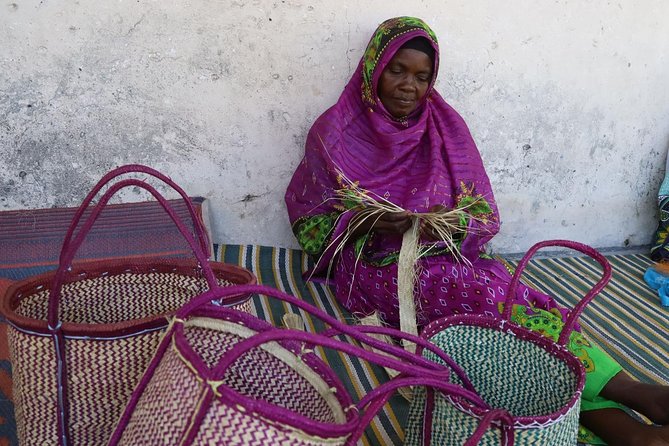
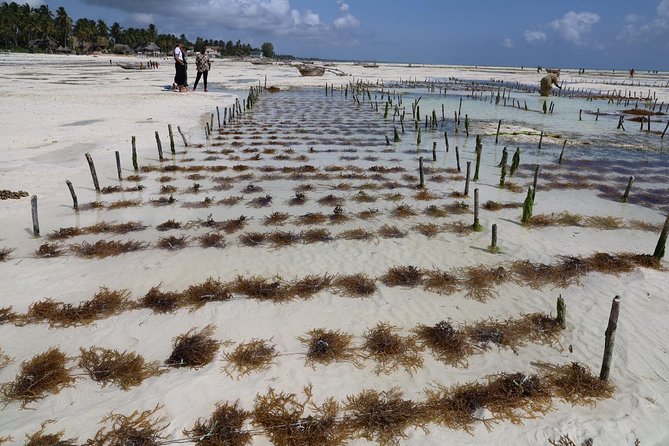
The most interesting part of this Jambiani visit is its focus on daily work rather than postcard scenery. Your local guide, Ameir, takes you into the village to meet women making coconut rope, doormats, palm-leaf goods, and traditional kofia caps. You also walk to the beach to see seaweed cultivation and collection.
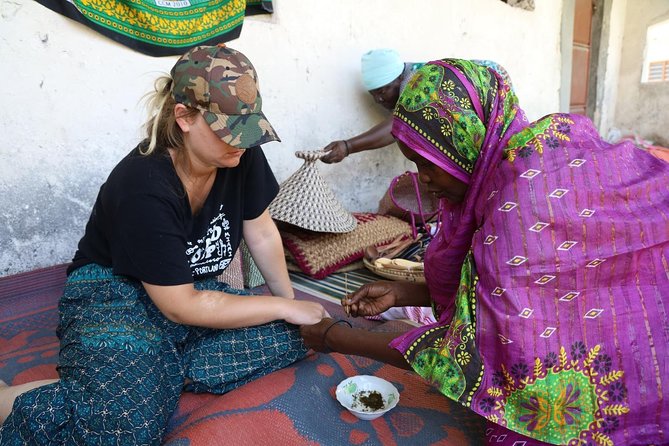
I like the small private format, which gives you room to ask questions and spend time with each craftswoman. I also like the practical side: you do not just watch. You may try weaving, learn how a kanga is worn, and receive a henna design. The main drawback is that the full three-hour timing may not always be achieved, so confirm the schedule if you are arranging transport around it.
Key points to know before you book
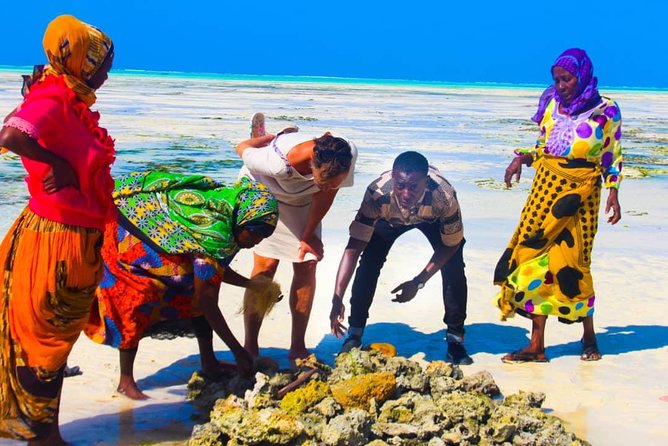
- Meet women working in their homes: See rope-making, mat weaving, palm-leaf work, sewing, and other household crafts in a real village setting.
- Walk to the beach for seaweed work: Learn how women collect and cultivate seaweed, an important part of coastal life in Jambiani.
- Ameir brings local knowledge: Your guide comes from Jambiani and can explain village life from personal experience.
- You can take part: Try coconut-fiber weaving, palm work, kanga dressing, and henna painting instead of only standing back and watching.
- Lunch is optional: A meal in one of the women’s homes can be arranged for an extra fee with at least 48 hours notice.
- Plan for walking: The tour is not recommended if you cannot walk more than 2 kilometers.
Why Jambiani is best seen through village work
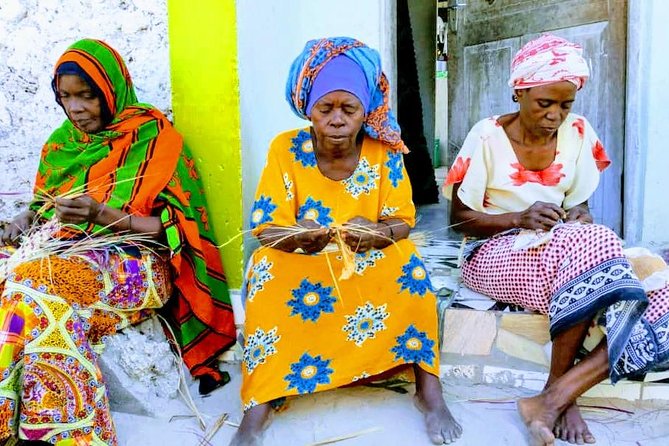
Jambiani is more than a beach stop. Along this part of Zanzibar’s coast, the sea and coconut palms shape everyday life, and women’s work often connects the two. Coconut husks become rope and doormats. Palm leaves become woven items. Seaweed is collected and cultivated along the shore.
That connection gives this tour a useful focus. Instead of moving from one attraction to the next, you follow a simple thread through the village: meet the people, see the materials, watch the work, and ask how it fits into local life.
You should come ready for an informal walking visit, not a polished museum presentation. The women’s homes and work areas are part of the experience. You may see children and ordinary household activity along the way, as well as the crafts described in the tour plan.
The private setup matters here. A large group would make a home visit awkward and would limit your chances to ask questions. With only your own group taking part, Ameir can adjust the pace and give more attention to the demonstrations that interest you most.
Other Zanzibar days people book alongside this one:
- Zanzibar: Quad Bike Adventure departing from Kendwa or Nungwi
★ 4.9 · 1,233 reviews - Zanzibar: Prison Island and Nakupenda Boat Trip with Lunch
★ 4.1 · 882 reviews - Skydive Zanzibar | Tandem Skydive
★ 5.0 · 877 reviews
Starting with Jambiani’s women artisans
The walking portion includes visits to several women who make different handicrafts. This variety is one of the strongest parts of the experience. One person may show you how coconut husks are prepared for rope or mats, while another demonstrates palm-leaf weaving or sewing.
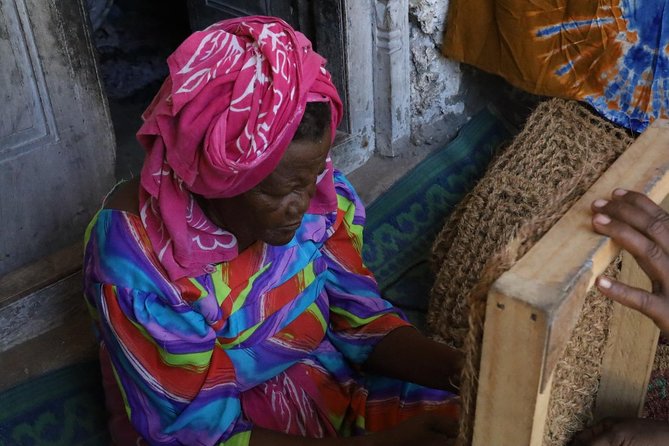
The work is practical, not decorative theater. Coconut fiber is a rough, natural material, and making it into a useful rope or doormat takes hand strength and patience. You get a better sense of that effort when you try it yourself. Do not expect to become an expert in a few minutes, but the attempt helps you understand the skill involved.
The mat-making demonstration is especially hands-on. You may be invited to handle the coconut fiber and try weaving it into shape. The same is true of palm work. These activities are simple to explain but harder to do neatly, which makes them a good way to appreciate the makers’ ability.
Sewing is another part of the visit. You can see traditional handmade kofia work, referring to the carefully sewn caps associated with East African Muslim dress. The tour does not present this as a shopping-only stop. The point is to see how local skill, clothing, and income connect.
You should still keep your expectations realistic. This is not a full craft workshop with a finished souvenir guaranteed at the end. It is a demonstration and short participation experience. If you want to buy something, ask your guide about the arrangements and prices rather than assuming every item is for sale.
Walking down to the beach for seaweed work
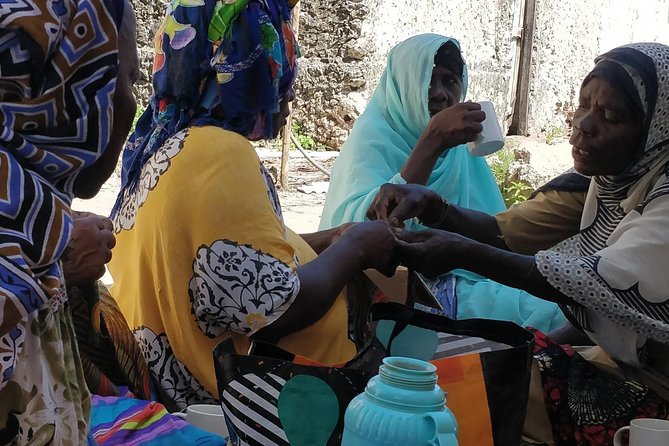
The visit to the beach changes the pace. After seeing work done with coconut husks and palm leaves, you head to the shore to learn about seaweed collection and cultivation.
The stop offers a useful reminder that the beach is a workplace as well as a place for swimming. Women collect seaweed from the shallow coastal waters, and the tour explains how it is cultivated. You see a side of Zanzibar’s coast that is easy to miss if your visit is limited to resort beaches and boat trips.
Timing can affect what you see. Seaweed work is tied to coastal conditions and the daily routine, so the exact activity may vary. The tour promises an explanation of collection and cultivation, but it cannot guarantee a particular moment of harvesting or a specific amount of work taking place during your visit.
Still, the beach stop gives the whole tour more meaning. Coconut, palm, and seaweed are not isolated cultural curiosities. They are part of the local economy and the daily tasks that support families in Jambiani.
Wear comfortable shoes and be prepared to walk between village homes and the coast. The total distance is not listed as a fixed route, but the operator advises against joining if you cannot walk more than 2 kilometers. That warning is worth taking seriously, especially in heat.
Learning the kanga and trying henna
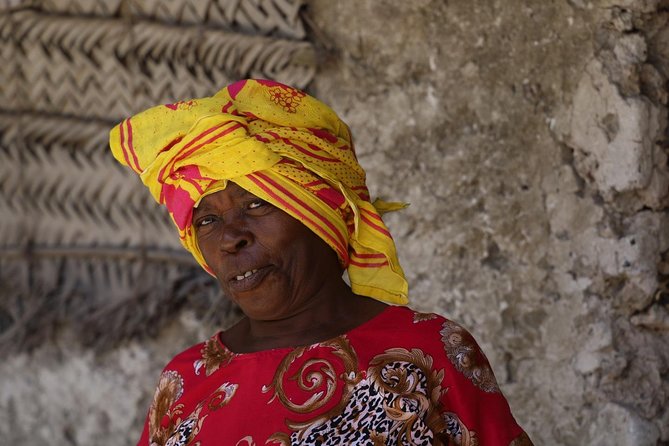
The kanga demonstration adds a cultural element beyond craft production. A kanga is a rectangular printed cloth worn widely in East Africa. During the visit, you learn how to wrap and wear it in the traditional style.
This is a small activity, but it gives you a direct way to understand clothing customs. Ask Ameir about when the garment is worn and how the wrapping style works. The demonstration is more useful if you treat it as a chance to learn, not just a quick photo opportunity.
Henna painting follows a similar pattern. You can experience a henna design as part of the visit. Since the exact design and time involved are not specified, consider it a short cultural activity rather than a full beauty appointment.
Women in your group may have more chances to try some of the activities, including the work demonstrated by local craftswomen. A supplied French-language comment specifically notes that women can test the activities, so this may be especially appealing to female visitors who want more active participation. Men and children can still learn from the demonstrations, but the hands-on opportunities may depend on the particular stop and the people present.
As always with a home and village visit, be polite about photography. Ask before taking pictures of people, homes, children, or finished work. A respectful approach helps keep the exchange personal rather than turning it into a quick collection of snapshots.
Same country, a completely different kind of safari:
- Mnemba Island: Dolphin Swim & Snorkeling with Optional Lunch
★ 4.3 · 591 reviews - Zanzibar: Prison Island & Nakupenda Boat Tour with BBQ Lunch
★ 4.4 · 554 reviews - Zanzibar; Prison Island, Nakupenda, StoneTown Tour with BBQ
★ 4.3 · 457 reviews - Zanzibar: Transparent Kayak and Drone (with Pickup Included)
★ 4.9 · 427 reviews
Lunch in a woman’s home, if you plan ahead
You can arrange lunch in one of the women’s homes, but it is not included in the $32.65 tour price. You must give at least 48 hours notice so the meal can be prepared, and you should provide any dietary requirements at the same time.
This option can add a meaningful social layer to the tour. You sit down in a local home rather than simply moving between demonstrations. It also gives the women another way to earn from hosting visitors and preparing food.
Do not leave the lunch request until the morning of the tour. The operator needs advance notice, and the meal is subject to preparation arrangements. The supplied information confirms that special diets can be considered, but it does not list particular menus or guarantee that every request can be met.
If lunch is important to your plans, ask for confirmation before you travel to Jambiani. If it is not available, you can still take the walking tour without it.
How much value do you get for $32.65?
At $32.65 per person, this is reasonably priced for a private, locally guided experience lasting around two to three hours. You are paying for access to several village visits, a beach explanation, hands-on demonstrations, and one-to-one time with a guide from Jambiani.
The value is strongest if you want context and personal contact. A short craft stop by itself might feel thin, but the combination of coconut work, palm weaving, kofia sewing, kanga dressing, henna, and seaweed cultivation creates a fuller picture of the village.
The price does not include transport. Pickup from a Stone Town hotel can be arranged for an additional charge starting at $45. That can make the total cost much higher, especially for one or two people, so compare it with your other transport options before booking.
Group discounts are available. Since this is a private activity, sharing the cost among several people may improve the value, provided everyone is comfortable with a walking tour and home visits.
One point needs clarification: the advertised duration is about three hours, but one experience lasted roughly an hour and a half, with the journey taking longer than the village visit itself. That may reflect the day, the route, or how the activities were arranged. If you are using a paid transfer, confirm the expected time in Jambiani and ask how long the actual walking portion should last.
Getting there and fitting it into a Zanzibar stay
Jambiani is on Zanzibar’s southeast coast, while Stone Town is on the opposite side of the island. The tour information offers pickup from a Stone Town hotel for an extra fee, starting at $45. The length of the drive means you should think about transport before booking.
If you are already staying in or near Jambiani, the tour is easier to fit into your day and the $32.65 price makes more sense. If you are based in Stone Town, the transfer may become the main expense and the outing will take much longer than the walking portion.
The operator provides a mobile ticket, and booking confirmation is sent within 48 hours, subject to availability. The activity is private, so only your group participates. That is useful for families, couples, and friends who want to control the pace, but it does not mean the tour is physically easy.
Good weather is required. If poor weather causes cancellation, you can choose another date or receive a full refund. The normal cancellation policy allows a full refund when you cancel at least 24 hours before the start time. Late cancellations and changes are not accepted.
Who will enjoy this Jambiani walk?
I would choose this tour if you want to meet local people and understand work in the village, not just see Zanzibar’s beaches. It suits anyone interested in handmade goods, clothing, food, and coastal livelihoods.
It is also a good fit for families, assuming everyone can manage the walking distance and behave respectfully in homes and around children. The hands-on craft activities can give younger visitors something to do, though the operator does not provide a specific children’s program.
Couples and small groups should appreciate the private format. Ameir can spend more time on the parts that catch your interest, such as seaweed work, weaving, or clothing. The private setup also makes it easier to discuss sensitive or detailed cultural questions without holding up a larger group.
I would hesitate to book it if your main goal is a long, structured three-hour excursion with a guaranteed timetable. The actual village portion can be shorter than expected, and the experience depends on the women and activities available that day.
The walk may also be uncomfortable if you have limited mobility or cannot cover more than 2 kilometers. Service animals are allowed, and most people can participate, but the route is not presented as wheelchair-accessible or suitable for anyone who needs a fully step-free plan.
Is Jambiani Village Women at Work and Play worth booking?
Book it if you want a personal look at Jambiani through the work of its women. The best parts are the local guide, the private format, and the chance to handle coconut fiber, palm leaves, a kanga, and henna rather than only watch from a distance.
Before paying, confirm three things: the expected time in the village, transport if you are coming from Stone Town, and lunch if you want it. With those details settled, this is a thoughtful, fairly priced way to add village life and local artistry to a Zanzibar holiday.
FAQ
How long does the Jambiani village tour last?
The experience is described as lasting approximately two to three hours. The actual village visit may be shorter on some days, so confirm the expected timing if transport or another activity follows.
Where does the tour take place?
The tour takes place in Jambiani Village on Zanzibar, Tanzania. It includes visits to women’s homes and work areas, plus a walk to the beach.
Is the tour private?
Yes. Only your group participates, and a private local guide leads the activity.
Who guides the experience?
The guide comes from Jambiani Village. Ameir is identified as one of the guides associated with the experience.
Is lunch included?
No. Lunch costs extra and can be arranged in one of the women’s homes if you give at least 48 hours notice.
Can special diets be accommodated?
Dietary requirements can be considered for the optional lunch, but you must provide the details at least 48 hours in advance.
Is hotel pickup included?
No. Pickup from a Stone Town hotel is available for an additional charge starting at $45.
How much walking is involved?
The operator advises that the tour is not suitable for anyone who cannot walk more than 2 kilometers. It includes walking through the village and to the beach.
Can I cancel for a refund?
You can cancel at least 24 hours before the local start time for a full refund. Cancellations or changes made less than 24 hours before the start time are not accepted, and poor weather may lead to a different date or full refund.
Just added around Zanzibar
- Zanzibar: Maasai village and Nungwi turtles experience trip★ 4.9 · 16 reviews
- Zanzibar: Mnemba Atoll, Spice farm, Jozani forest & Lunch★ 3.9 · 3 reviews
- Zanzibar: Maasai World Tour with Cultural Practices★ 4.0 · 4 reviews
- Zanzibar: Kendwa Beach Professional Photoshoot★ 5.0 · 5 reviews
- ZANZIBAR: Jozani Forest,Salaam Cave, The Rock & Blue Lagoon★ 4.8 · 8 reviews
- Zanzibar: Jozani Red Colobos Monkey & Salaam Turtle Santuary★ 4.6 · 3 reviews
- Zanzibar: Jozani Forest Walking Tour★ 5.0 · 3 reviews
- Zanzibar: Jozani Forest,Red colobus,the Rock Restaurant tour★ 4.5 · 21 reviews
Zanzibar Tours, compared.


Prison Island and Nakupenda Boat Trip with Lunch
Read our review →

Mnemba Island: Dolphin Swim & Snorkeling with Optional Lunch
Read our review →
Prison Island & Nakupenda Boat Tour with BBQ Lunch
Read our review →
Prison Island, Nakupenda, StoneTown Tour with BBQ
Read our review →
Transparent Kayak and Drone (with Pickup Included)
Read our review →