
Reviewed · 4-DAY EXPERIENCES
4 days safari
Tarangire’s elephant herds, the lion country of central Serengeti, Ngorongoro’s crowded crater floor, and Lake Manyara make this five-day northern Tanzania safari a strong first taste of the region. I like the small maximum group of six, and I like that guides such as Joel, Joseph, and Jackson are singled out for animal knowledge and good judgment around sightings.
I also like the practical value: park fees, four breakfasts, five lunches, and four dinners are included in the $1,300 price. The main consideration is the pace. You cover long distances and change parks often, with budget camping rather than polished lodge accommodation.
Key points to know before booking
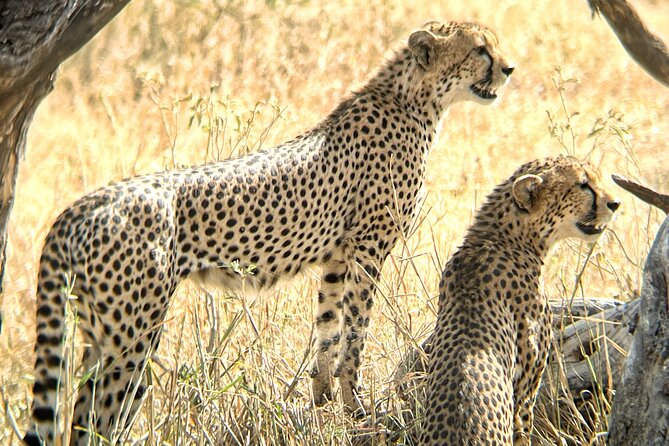
- Four major wildlife areas: Tarangire, Serengeti, Ngorongoro Conservation Area, and Lake Manyara all appear in one five-day route.
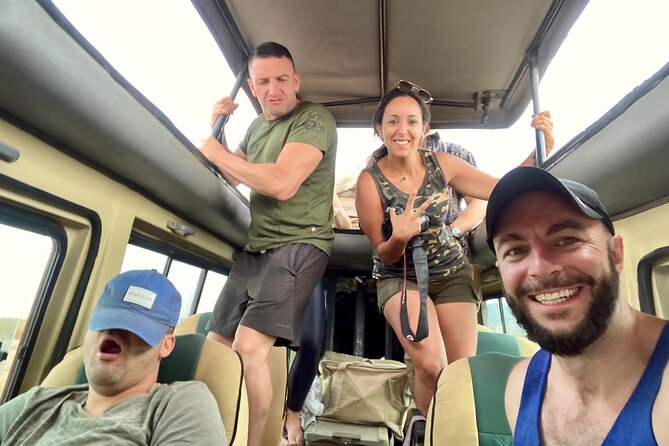
- Small group size: The safari is capped at six people, which gives you a better chance of getting guide attention and a useful window seat.
- Strong guide reports: Joel, Joseph, Jackson, and other named guides receive praise for animal knowledge, safe driving, and finding good viewing spots.
- Camping keeps the price down: Nights are listed at budget camping, Simba Campsite, and Panorama Campsite rather than full-service lodges.
- Meals are built in: Four breakfasts, five lunches, and four dinners are covered, with safari cooks such as Joachim, also called Mr. D, praised for the food.
- A demanding route: Several days are listed at about six hours, and the itinerary combines game drives with long transfers.
Four parks, one busy northern Tanzania route
This trip is designed for you if you want to see the main safari parks around Arusha without arranging separate transfers, park entries, camps, and meals. It is not a slow, single-park safari. You move from one famous area to another, giving you a broad look at northern Tanzania in a short time.
The route begins and ends around Arusha, with pickup offered from your accommodation. The stated meeting point is Shoppers Supermarket in Arusha, and the tour accepts mobile tickets. Groups are limited to six people, a useful number for a safari vehicle because you are less likely to feel lost in a crowd.
The $1,300 per-person price needs to be read alongside the camping setup. Park fees, taxes, and meals are included, which removes several large costs from the planning. Tips, visas, and personal items are extra, and the camping level means you are paying for access to remarkable parks and a working safari team rather than hotel comfort.
A few more Arusha trips to weigh up
- Balloon Safari & Bush Breakfast in Serengeti – Miracle Experience
★ 5.0 · 1,646 reviews - 4 Days Group Camping Safari
★ 5.0 · 1,101 reviews - 5 Days Group Camping Safari
★ 5.0 · 730 reviews
Day 1: Following elephants through Tarangire
Your first morning starts with pickup in Arusha before the drive to Tarangire National Park. The park is known for large elephant herds, baobab trees, tree-climbing lions, and the Tarangire River, which provides water through the year.
That year-round water source helps explain why Tarangire can be such a good opening park. Animals gather around reliable water during dry periods, while the broad park setting gives you a chance to see more than one headline species. Elephants and baobabs provide the memorable images, but the real pleasure is watching how wildlife uses the river and surrounding vegetation.
The day is listed at about six hours. That figure should not be read as six hours of nonstop game viewing. It includes the movement into the park and time spent on the game drive. You should expect a full first day, with early pickup and plenty of time in the vehicle.
Tarangire is also a good introduction to the guide’s role. A skilled driver can explain animal behavior, identify birds and plants, and position the vehicle without rushing the moment. Feedback about guides including Joel and Joseph repeatedly points to detailed explanations and efforts to find clear views for photographs.
Day 2: The long road to central Serengeti
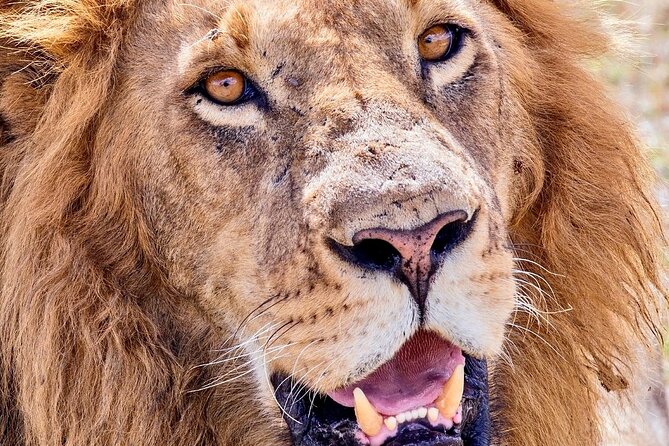
After breakfast, you head toward central Serengeti and the Seronera area. This is one of the longest and most rewarding transitions of the trip. The Serengeti is known for its resident wildlife, including lions, leopards, elephants, buffalo, and rhinos.
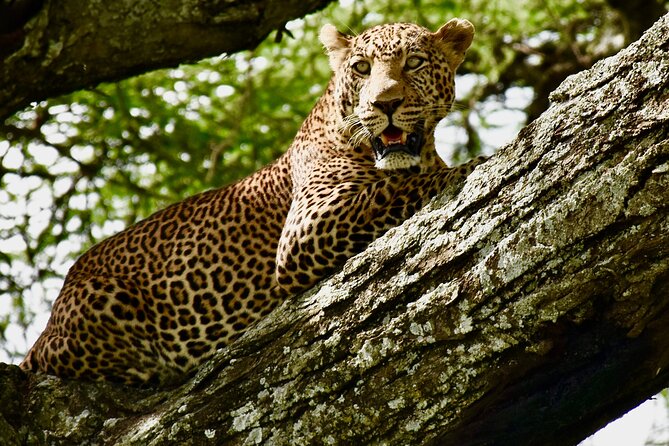
The Seronera region is especially associated with lion sightings and the chance to spot leopards. Leopards are elusive, so no guide can promise one. Your odds improve when your guide knows the area, watches the behavior of other vehicles, and takes time to scan trees and shaded ground.
The Serengeti also connects to the annual movement of wildebeest, zebras, and Thomson’s gazelles. The exact position of the herds changes with the season, so you should not book this route expecting a particular migration crossing. The broader promise is strong resident wildlife and a setting where large numbers of grazing animals support large predators.
The overnight stay is listed as budget camping. That matters. Camping places you closer to the practical side of safari life, but you should choose this trip for the parks and the wildlife, not for private bathrooms or lodge service. The included dinner and the presence of a safari cook help make the arrangement easier.
Day 3: A full game day in Seronera
The third day keeps you in Serengeti National Park, again around central Seronera. This is an important feature of the route. Instead of entering the Serengeti once and leaving almost at once, you get another opportunity to search the same broad area for predators and resident animals.
Two game days in one region can work better than a single rushed visit. Wildlife sightings are never guaranteed, and an extra morning or afternoon gives your guide more time to respond to conditions. You may also see the same area differently as light, animal movement, and vehicle positions change.
The itinerary lists the overnight stay at Simba Campsite. It also displays a six-minute duration for this day, which is clearly inconsistent with the rest of the schedule and with a full Serengeti game day. Treat the overall trip as a five-day safari with substantial driving and game-viewing time, and confirm the precise daily schedule before paying.
This is another day when your guide can make a real difference. Guides associated with the company include Joel, Joseph, Jackson, and others. The strongest praise centers on their ability to answer questions, locate animals, avoid unnecessary crowds, and position the vehicle for a good view. Those qualities are more useful than a flashy vehicle or a long species checklist.
Same country, a completely different kind of safari:
- Tanzania Classic – 7 Days
★ 5.0 · 1,151 reviews - Materuni Waterfalls, coffee tour & Kikuletwa Hot Springs
★ 5.0 · 643 reviews - 3 Days Serengeti & Ngorongoro Group Camping Safari
★ 5.0 · 574 reviews - 7-Day Premium Luxury Tanzania Safari All-Inclusive
★ 5.0 · 426 reviews
Day 4: Down into the Ngorongoro Crater
After breakfast, the route continues to the Ngorongoro Conservation Area for an early game drive. The Ngorongoro Crater is the world’s largest caldera, and the crater floor holds a high concentration of wildlife in a compact setting.
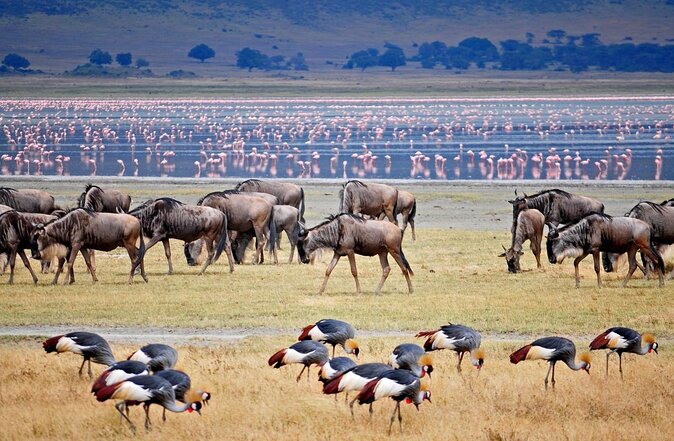
This is the most naturally dramatic part of the route. The crater walls give the day a distinct sense of place, while the open floor makes it easier to search for animals. The area is associated with about 25,000 animals, including the major African species you hope to see on safari.
A crater visit can feel different from the Serengeti. The Serengeti gives you a vast sense of open country and moving herds. Ngorongoro offers a concentrated wildlife setting, which can be especially satisfying if you have limited time. The tradeoff is that the crater is a major attraction, so the experience may feel busier than a quiet stretch of Serengeti.
The overnight stop is Panorama Campsite. Again, this is a camping-based itinerary. You get the scenery and access that make the area special, but the accommodation is aimed at keeping the trip within reach rather than providing a luxury night.
Day 5: Lake Manyara and the Maasai village visit
The final day takes you toward Lake Manyara National Park, with a visit to a Maasai village along the way. The park’s name comes from the Maasai word Manyara, connected to Euphorbia tirucalli, a plant used for livestock stockades. A specimen is found near the park entrance.
Lake Manyara also sits near the Great Rift Valley, the major fault zone stretching from Turkey toward Mozambique. That geological setting gives the final day a different character from the Serengeti and Ngorongoro. You are not simply seeing another animal park. You are moving through a region shaped by a vast geological fault.
The itinerary allows about six hours for the day and says you will be taken to a hotel in the afternoon. It does not specify the hotel or the exact length of the village visit, so ask for those details if your onward transport or accommodation depends on them.
Lake Manyara makes a good final stop because it adds variety. Still, the day may feel compressed after several demanding safari days. If your main goal is predators and the Great Migration, the Serengeti and Ngorongoro portions will likely matter more. If you want a wider introduction to northern Tanzania, Manyara and the village visit add useful range.
Why the small group matters
A six-person maximum is one of the best practical features here. On a safari, the group affects almost everything: how easily you share a view, how quickly you can leave a sighting, and how much time the guide has to answer questions.
A small group does not guarantee a private vehicle, and the supplied information does not promise private departure. It does mean the maximum is limited, which is more comfortable than being packed into a large vehicle. If you care about window access or photography, ask how seating is handled before departure.
The company’s guides receive especially strong praise for three things: explaining animal behavior, finding good viewing positions, and driving safely. Names connected with particularly positive feedback include Joel, Joseph, Jackson, and Joachim in the cooking role. Guide assignments can vary, so treat these as examples rather than a guarantee that one specific person will lead your trip.
Food, camping, and the real value of $1,300
The price looks reasonable for a five-day route through four major parks, especially because park fees and taxes are included. Four breakfasts, five lunches, and four dinners are also covered. That is important in remote areas, where buying meals separately can be awkward and costly.
The cooking is a real part of the experience rather than an afterthought. Joachim, also called Mr. D or Mr. Delicious in the feedback connected with the trip, receives repeated praise for preparing excellent meals. You should still ask about dietary needs before departure, since no specific menu or dietary policy is provided.
The accommodation is budget camping, with Simba Campsite and Panorama Campsite named in the schedule. This suits you if you are happy to trade hotel comfort for a lower price and more time in the parks. It may not suit you if you need lodge amenities, private facilities, or a quiet room after a long day on rough roads.
Tips and personal expenses are not included. Visas are also your responsibility. Build those costs into your budget rather than treating the $1,300 as the final amount.
The pace, vehicles, and daily effort
The schedule is active. Most days are listed at roughly six hours, and the drive from Arusha toward the Serengeti can feel long. You should be comfortable spending extended periods in a safari vehicle and moving between camps.
That pace is the cost of fitting Tarangire, Serengeti, Ngorongoro, and Lake Manyara into five days. The reward is variety. The downside is less time to settle into one place and more dependence on the driver’s planning.
The tour says most people can participate, but it does not provide detailed mobility information. If you have a physical limitation or need special seating, ask the operator before booking. Pickup is offered, and the listed meeting point is Shoppers Supermarket in Arusha, with operating hours shown as 8:00 a.m. to 5:00 p.m. daily during the stated booking period.
Who should choose this safari
I would point this trip toward a first-time safari visitor who wants the major northern circuit in one organized package. It is also a sensible choice if you value a small group, enjoy learning from a guide, and prefer camping to paying lodge rates.
You will probably like it if:
- You want four famous parks in five days.
- You care more about wildlife and guiding than luxury accommodation.
- You enjoy shared meals and a social camping setup.
- You want park fees and most meals handled in one price.
- You are comfortable with long drives and a full schedule.
I would look for a slower or more comfortable trip if you want several nights in one park, lodge accommodation, or a private itinerary. I would also ask direct questions about the final hotel, exact camp facilities, dietary requirements, and the day-by-day driving times before booking.
Cancellation and booking details
Free cancellation is available up to 24 hours before the experience begins, based on local time. Cancel within 24 hours and the payment is not refunded, and changes made inside that window are not accepted.
The experience requires a minimum number of participants. If the operator cancels because that minimum is not met, you are offered another date or experience, or a full refund.
FAQ
How long is the safari?
The tour summary describes the experience as approximately five days, and the itinerary runs from Day 1 through Day 5.
What parks and protected areas are visited?
The route includes Tarangire National Park, Serengeti National Park, the Ngorongoro Conservation Area, and Lake Manyara National Park.
Where does the safari start?
The listed meeting point is Shoppers Supermarket in Arusha, Tanzania. Pickup from your accommodation in Arusha is also offered.
How many people can join the tour?
The maximum group size is six travelers.
Is camping included?
The overnight stays are listed as budget camping, Simba Campsite, and Panorama Campsite. The specific facilities are not stated.
What meals are included?
The price includes four breakfasts, five lunches, and four dinners.
Are park fees and taxes included?
Yes. All fees and taxes are included in the stated price.
What costs are not included?
Personal expenses, tips and gratuities for the driver-guide and safari cook, and visas are not included.
Can I cancel for a full refund?
Yes, if you cancel at least 24 hours before the start time. Cancellations within 24 hours are not refunded.
Should you book it?
Book this safari if you want a broad, wildlife-focused introduction to northern Tanzania and are comfortable with budget camping and long driving days. The small group, included meals, four major park areas, and repeated praise for guides such as Joel and Joseph give it strong practical appeal at $1,300.
Before committing, confirm the camping facilities, guide assignment, final hotel, and the inconsistent Day 3 timing. If those details suit you, this is a good-value route for big animals, dramatic scenery, and the hands-on feel of a working safari rather than a luxury holiday.
Just added around Arusha
- 8 Days Serengeti Migration safari★ 5.0 · 11 reviews
- tarangire, ngorongoro & lake manyara park 3 days private tour★ 5.0 · 11 reviews
- tarangire & ngorongoro 2 days tour★ 5.0 · 14 reviews
- Mt. Kilimanjaro: Shira plateau to Cathedral point 3872m Day hike★ 5.0 · 7 reviews
- serengeti, ngorongoro & tarangire 4 days private tour★ 5.0 · 18 reviews
- serengeti & ngorongoro 3 days private tour★ 5.0 · 15 reviews
- 2 Days Tanzania Midrange Group Join Safari★ 5.0 · 7 reviews
- climb the KILIMANJARO via Lemosho route★ 5.0 · 4 reviews
4-Day Experiences, compared.


4 Days Join Group tour Tarangire Serengeti and Ngorongoro crater
Read our review →
4-Day Safari from Arusha: Tarangire, Serengeti and Ngorongoro
Read our review →
4 Days Tarangire, Serengeti and Ngorongoro Mid-Range Group Safari
Read our review →
4 Days Tanzania Lodge Safari With Two Nights at Serengeti
Read our review →
Browse the lists this tour appears in