Reviewed · ARUSHA TOURS
8 Days Great Migration – Grumeti River
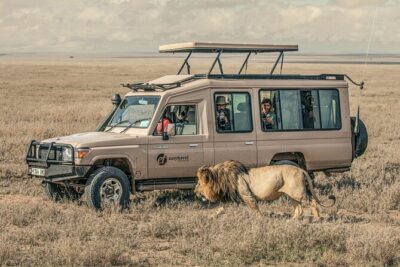
The main draw here is the chance to follow the Great Migration in the Serengeti and possibly see wildebeest face crocodiles at the Grumeti River. I like the unlimited mileage, since a patient guide can keep searching when animals are close but not quite in view, and I like the small maximum group of six, which gives you more room in the 4×4.
I also like the variety: elephants in Tarangire, a village walk in Mto wa Mbu, flamingos and hippos at Lake Manyara, several days in the Serengeti, and a final game drive in Ngorongoro Crater. The main concern is the unclear six-day versus eight-day description, along with one serious complaint about being stranded at Ngorongoro and payment handling. Confirm the exact schedule, hotels, and payment terms before you commit.
Key points to know before booking
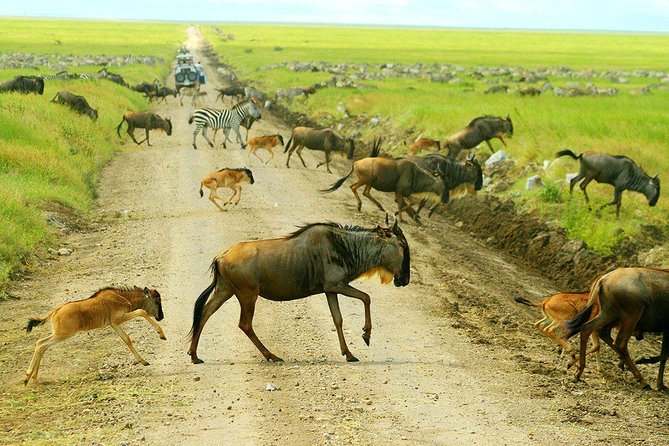
- The Grumeti River crossing is seasonal: The best stated window is May through July, and sightings can never be guaranteed.
- Unlimited mileage is included: Your driver is not given a fixed driving limit while searching for animals.
- The group is capped at six people: That matters in a safari vehicle, where window space and roof visibility make a real difference.
- Three Serengeti days give you time: You are not simply passing through the park on the way to somewhere else.
- Guide Mike receives especially warm praise: His patience, driving, organization, and effort to find wildlife are worth requesting if available.
- Check the trip length carefully: The title says eight days, but the supplied schedule lists six stops over about six days.
Following the migration from Arusha to the Serengeti
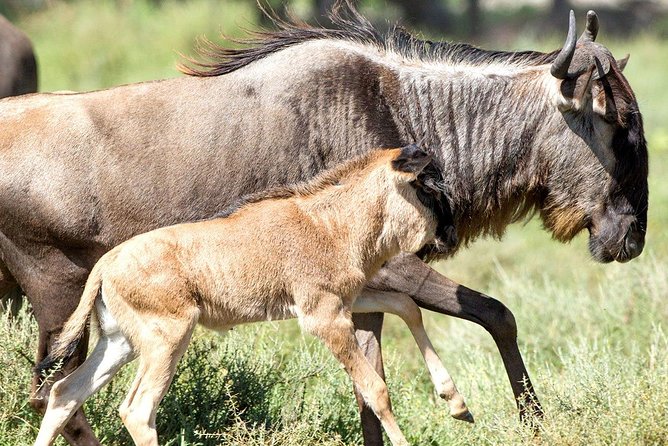
This is a safari built around movement. You leave Arusha early, head through several major northern Tanzania parks, and spend the largest part of the trip in the Serengeti. The route gives you a strong mix of famous wildlife areas rather than putting all your hopes on one park.
The price is listed at $4,984.62 per person. That is a serious outlay, but it includes the 4×4 with a pop-up roof, park entrance fees, full-board accommodation, unlimited drinking water, taxes, a professional English-speaking or other-language guide, and unlimited mileage while looking for animals. International flights, travel insurance, and tips are extra.
That package can offer fair value if the accommodations are good and the migration lines up with your dates. The weak point is that the accommodation names are not supplied. You are told that the camps and lodges are attractive, with one Serengeti camp described as a blend of old African style and elegance, but you cannot properly judge the price without knowing where you sleep each night.
The safari is listed as approximately six days, yet its name says eight days. That is not a small wording issue. Two extra nights can change the pace, the price, and the amount of time spent in the Serengeti. Ask for a day-by-day schedule with dates before paying.
Other Arusha days people book alongside this one:
- Balloon Safari & Bush Breakfast in Serengeti – Miracle Experience
★ 5.0 · 1,646 reviews - Tanzania Classic – 7 Days
★ 5.0 · 1,151 reviews - 4 Days Group Camping Safari
★ 5.0 · 1,101 reviews
Tarangire’s elephants and dry-season wildlife
Your first full safari day begins after an early breakfast with a drive to Tarangire National Park. You carry a packed lunch and spend about eight hours on a game drive before heading to your accommodation for dinner.
Tarangire is a good opening act because it offers a strong chance of seeing large elephant groups and a wide range of birds. The Tarangire River draws wildebeest, zebras, gazelles, and the predators that follow them. In the dry season, wildlife gathers around remaining water, which can make animal watching especially rewarding.
You might also find lions, cheetahs, and leopards, along with less commonly seen animals such as kudu, oryx, and gerenuk. The last three are a useful reminder that a safari is not only about ticking off the Big Five. A guide who knows animal behavior can help you notice the smaller or more unusual sightings.
The practical catch is the early start and long day. You will spend hours in the vehicle, and this is only the beginning of the route. The open roof helps you see upward and gives you a better view than a closed vehicle, but you should still expect dust, sun, and a tiring ride.
Mto wa Mbu brings the safari down to earth
The second day begins with a walking tour in Mto wa Mbu, a farming town near Lake Manyara. This is one of the more distinctive parts of the trip because it moves beyond animals and into daily life.
The town is home to more than 120 tribes from across Africa. On the walk, you visit rice and banana plantations, a local beer factory, a school, and a carving factory. You are not simply looking out from a vehicle here. You get a closer look at farming, local production, education, and craftwork.
I like this stop because it breaks up the long sequence of game drives. It also gives you a better sense of the communities near the parks, rather than treating Tanzania as a string of wildlife viewing areas.
After the walk, you continue to Lake Manyara National Park for about seven hours in total. The park is known for its soda lake, pink-hued flamingos, baboons, and strong birdlife. You might also see giraffes, elephants, hippos, and buffalo.
Lake Manyara can be a compact but rewarding stop. Its appeal comes from the contrast between lake, forest, open areas, and wildlife. The drawback is time. The itinerary has you visit the town and park on the same day, so the walking tour and game drive may both feel brief if road conditions or timing cause delays.
Entering the Serengeti by way of a Maasai village
The third day takes you toward the famous Serengeti National Park. Before entering the park, you stop at a Maasai village for an introduction to local life. This gives the route another cultural element, though the information provided does not specify how long the visit lasts or what activities are included.
You then arrive in the Serengeti, eat a picnic lunch, and continue with a game drive. The scheduled day runs about nine hours, so this is a travel day as well as a wildlife day. You should not expect to spend every hour stopping for animals.
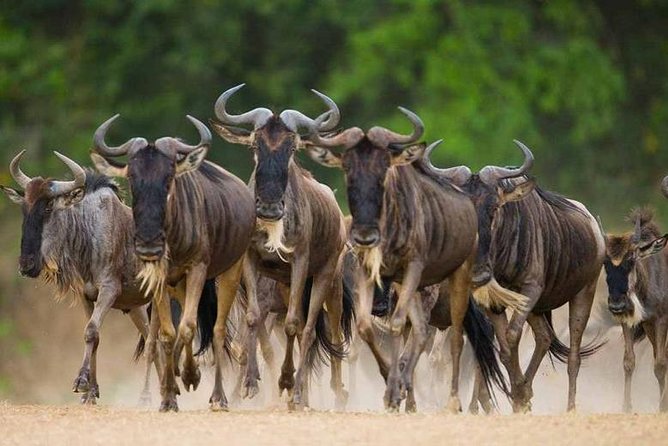
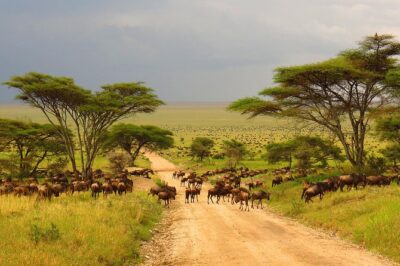
The key seasonal detail is the Grumeti River. From May through July, there is a good possibility of seeing migrating wildebeest in this part of the Serengeti. The herds must cross fast-flowing water while avoiding crocodiles, then contend with predators waiting on the far side. It is one of the most dramatic scenes in East African wildlife watching.
Still, migration timing is controlled by rain, grass, water, and animal movement, not by a tour calendar. The phrase big chance should not be read as a promise. Ask your operator where the herds are expected to be during your dates and how much time the plan allows for staying near the river.
Same country, a completely different kind of safari:
- 5 Days Group Camping Safari
★ 5.0 · 730 reviews - Materuni Waterfalls, coffee tour & Kikuletwa Hot Springs
★ 5.0 · 643 reviews - 3 Days Serengeti & Ngorongoro Group Camping Safari
★ 5.0 · 574 reviews - 7-Day Premium Luxury Tanzania Safari All-Inclusive
★ 5.0 · 426 reviews
Two full Serengeti days give you room to search
The fourth day starts early and is devoted to moving across the plains with the herds. This is one of the strongest features of the schedule. A full day in the Serengeti gives your guide more chances to follow fresh sightings, wait near active areas, and adjust the route.
The migration follows a broad clockwise circuit each year, but the animals do not march along a fixed path at a fixed hour. That is why unlimited mileage matters. If the vehicle is not restricted to a set number of miles, your guide has more freedom to keep looking.
The Serengeti is also one of the best places in the region to look for the Big Five: lion, elephant, leopard, rhino, and buffalo. Seeing all five is never assured, especially the rhino, but the park offers the right setting for a serious attempt.
On the fifth day, you explore the central Serengeti for about ten hours. This area is noted for lions and leopards, and game viewing is described as strong throughout the year. You might also see cheetahs, elephants, giraffes, hippos, ostriches, pangolins, and other wildlife.
Two cautions are worth keeping in mind. First, ten-hour game-drive days are long. Second, no amount of mileage can manufacture a sighting. The value lies in giving the guide time and flexibility, not in guaranteeing a particular animal.
The central Serengeti camp is described as comfortable, elegant, and styled with an old African feel. Since the actual accommodation name is not given, ask for it before booking, along with room details, meal arrangements, and the location relative to the day’s driving.
Ngorongoro Crater closes the safari with dense wildlife
The final stop is Ngorongoro Crater, with about seven hours set aside for the last game drive and the transfer afterward. The crater shelters close to 30,000 animals, including the Big Five, and its enclosed setting can make wildlife viewing feel concentrated compared with the wider Serengeti.
You might see zebras, buffaloes, lions, wildebeest, baboons, elephants, flamingos, ostriches, hippos, cheetahs, and the rare black rhino. The crater’s scenery is part of the appeal: strong colors, changing cloud, and steep crater walls create a dramatic setting.
For many people, Ngorongoro is an ideal final day because the range of possible sightings is broad. You may not need to cover the same vast distances as in the Serengeti to encounter animals.
The drawback is that this is also a transfer day. You are expected to leave the Serengeti, complete the crater game drive, and continue to accommodation later in the afternoon. That makes the day efficient, but it may feel rushed after several long drives.
There is also an important operational warning. One complaint describes being left stranded in Ngorongoro, while the company response apologized and said that Godfrey was only part of the company and that other people had been affected by the situation. I cannot verify the circumstances, but the allegation is serious enough to act on. Confirm who handles your transport at the end of the crater day, who you call in an emergency, and whether all transfers are included.
What the vehicle and guide setup means for you
Transport is by 4×4 with a pop-up open roof for the full safari. That design is well suited to wildlife viewing. You can stand or sit with a clearer view, look over vegetation, and take photographs without a window frame in the way.
The vehicle is shared, with a maximum of six people. A six-person group is not private, but it is small enough to be manageable. Seating position can affect your view, so ask how seats are assigned and if the group size is guaranteed for your departure.
Unlimited bottled mineral water is included, which is useful on long drives. Full-board accommodation is also included, but the wording does not spell out every meal on every transfer day. Ask whether packed lunches are supplied whenever the schedule requires them. One packed lunch is specifically noted for Tarangire, and a picnic lunch is noted on the Serengeti arrival day.
The guide is central to the experience. Mike is singled out for patience, careful driving, organization, and making a real effort to find wildlife in the central and northern Serengeti. If he is available, you can request him, but no guarantee is provided.
There is also a very different account involving Godfrey, including an allegation of a demand for full payment two months before the trip and a claim that an accountant had taken the money. The company response apologized and explained that Godfrey was part of the company, but did not remove the need for caution. Use a credit card if possible, request a written invoice, confirm the legal business name, and make sure your payment schedule is clear.
Who will get the most from this safari
This trip suits you if the migration is your main goal, you want several days in the Serengeti, and you prefer a small shared vehicle rather than a large group. It also works well if you want cultural stops in Mto wa Mbu and a Maasai village alongside traditional game drives.
It is less suitable if you need a slow pace, dislike early starts, or want a fully private safari with complete control over stops. The schedule includes several seven-to-ten-hour days, long road transfers, and multiple park changes.
Families can ask about the age policy, since the available information says most people can participate but does not give a minimum age. The same applies to mobility needs. The activity is near public transportation and pickup is offered, but no detailed accessibility information is provided.
The free cancellation policy allows a full refund if you cancel at least 24 hours before the start time. Changes or cancellations inside that 24-hour window are not accepted, and cut-off times follow local time. That is useful flexibility, but it does not replace careful checking of the operator and payment arrangements.
Should you book this Great Migration safari?
I would consider booking it for the route and wildlife time, especially if your dates fall between May and July and you want the Grumeti River as a central aim. Tarangire, Lake Manyara, three Serengeti days, and Ngorongoro make a strong northern Tanzania circuit, and unlimited mileage is a valuable inclusion.
I would not pay until the eight-day versus six-day issue is fixed in writing. Get the precise number of nights, accommodation names, pickup details, guide assignment, payment schedule, and end-of-trip transfer confirmed.
If those points are clear and you can accept the long driving days, this could be a rewarding safari at a reasonable package value. If the operator cannot give you firm answers, choose a different company. The wildlife promise is exciting, but reliable logistics matter just as much when you are far from town.
FAQ
Where does the safari start?
The experience starts in Arusha, Tanzania, with pickup offered. The stated start time is 7:30 am.
How long is the tour?
The supplied duration says approximately six days, while the tour title says eight days. Confirm the exact duration before booking.
What parks are included?
The route includes Tarangire National Park, Lake Manyara National Park, Serengeti National Park, and Ngorongoro Crater.
When might I see the Grumeti River crossing?
The itinerary identifies May through July as the period when you might see the Great Migration crossing the Grumeti River.
Is a river crossing guaranteed?
No. The information describes a good possibility during the May to July period, but it does not guarantee a sighting.
How many people can join the tour?
The maximum group size is six travelers.
Is the safari vehicle included?
Yes. Transport in a 4×4 vehicle with a pop-up open roof is included for the entire safari.
Are park entrance fees included?
Yes. Park entrance fees for the national parks are included, and the Ngorongoro Crater admission is also listed as included.
What meals and accommodation are included?
Full-board accommodation is included as described in the schedule. The accommodation names are not provided, so ask for the exact properties and meal details before booking.
What is not included in the price?
Tips, travel insurance, and international flights are not included.
Just added around Arusha
- 8 Days Serengeti Migration safari★ 5.0 · 11 reviews
- tarangire, ngorongoro & lake manyara park 3 days private tour★ 5.0 · 11 reviews
- tarangire & ngorongoro 2 days tour★ 5.0 · 14 reviews
- Mt. Kilimanjaro: Shira plateau to Cathedral point 3872m Day hike★ 5.0 · 7 reviews
- serengeti, ngorongoro & tarangire 4 days private tour★ 5.0 · 18 reviews
- serengeti & ngorongoro 3 days private tour★ 5.0 · 15 reviews
- 2 Days Tanzania Midrange Group Join Safari★ 5.0 · 7 reviews
- climb the KILIMANJARO via Lemosho route★ 5.0 · 4 reviews
Arusha Tours, compared.


Materuni Waterfalls, coffee tour & Kikuletwa Hot Springs
Read our review →
3 Days Serengeti & Ngorongoro Group Camping Safari
Read our review →
7-Day Premium Luxury Tanzania Safari All-Inclusive
Read our review →
5-Day Highlights mid-Range Crater, Serengeti, Tarangire
Read our review →