
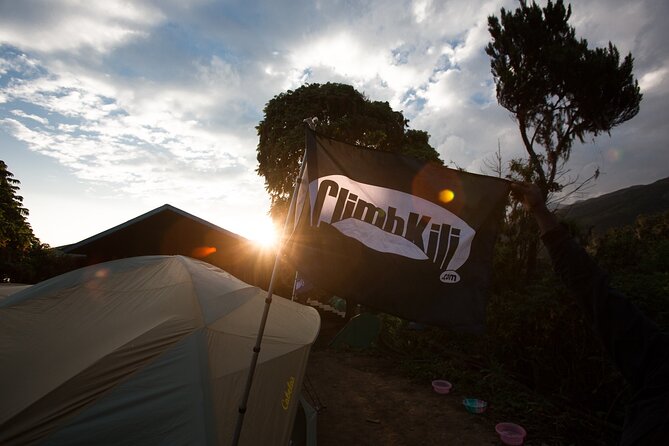
Reviewed · MACHAME ROUTE CLIMBS
6-Day Guided Tour in Machame Route Mt Kilimanjaro
The hard part of this Kilimanjaro trip is not finding the mountain. It is handling the altitude, the long summit night, and the quick six-day pace. Climb Kili takes you from the Machame Gate through five climate zones, ending at Uhuru Peak, 19,340 feet above sea level, before bringing you down through the Mweka Route.
I like the small group limit of six, which should make it easier for your guides to watch your pace and respond when someone struggles. I also like the strong camp service: the crew sets up tents before you arrive, and the cook provides three hot meals a day. The main drawback is the schedule. Six days is a serious push on Kilimanjaro, with less acclimatization time than longer routes.
Key points to know before booking
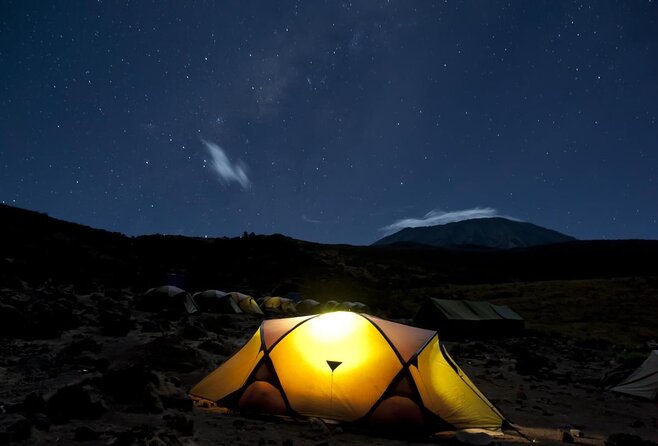
- Five climate zones in six days: You move from wet rainforest to moorland, alpine desert, arctic terrain, and the summit zone.
- A small group of up to six: This allows closer attention from the guide team and a quieter camp routine.
- A midnight summit start: You hike through the night to reach Stella Point around sunrise, then continue to Uhuru Peak.
- Lava Tower acclimatization: Day three takes you higher before dropping to Barranco Camp, an important altitude exercise.
- Strong crew support: Guides, assistant guides, porters, and cooks handle camp duties, meals, and mountain logistics.
- A six-day pace: Best for fit climbers who understand that summit success is never guaranteed, despite the advertised 98 percent rate.
What the Machame Route feels like
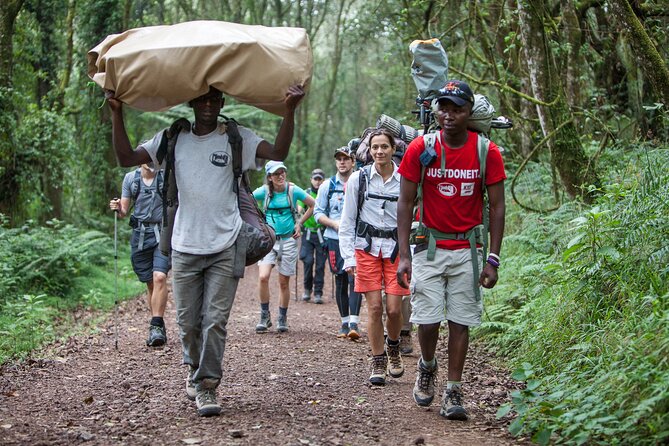
The Machame Route is often called the Whiskey Route, a name that hints at its more demanding character compared with easier walking routes. Here, you climb through changing mountain conditions instead of following a simple road to the summit.
The early days are green and enclosed. Then the forest thins into heather and moorland. By the time you reach Barranco and Karanga, the vegetation is sparse, the air is colder, and the mountain feels much bigger.
That change is one of the best features of the trip. You do not simply walk uphill for six days. You watch the mountain change around you, and your body has to adjust at the same time.
The group begins at Summit Lodge in the Sakina Raskazone area of Arusha at 8:00 a.m. Pickup is offered, and the climb starts with a vehicle transfer to Machame Gate. After the trek, the vehicle collects you at Mweka Gate and returns you to the hotel.
The group size matters here. A maximum of six people can make decisions easier than in a large expedition. If one climber needs a slower pace or extra attention, the guide team has fewer people to manage.
Climb Kili has used guides named Herment, Goodluck, Amani, Emanuel, Minja, Gabby, Florian, Godlove, Leberatos, Gabi, Omi, and Lede on recent climbs. Guide assignments can vary, so confirm your lead guide before departure. The important point is the level of personal care expected from this outfit, especially during the final ascent.
More Machame Route Climbs in Arusha
- 7-Day Machame Kilimanjaro Summit Tour from Arusha
★ 5.0 · 125 reviews - 6 Days: Hiking Kilimanjaro via Machame Route
★ 5.0 · 24 reviews - KILIMANJARO MACHAME ROUTE, (Climb 7days)
★ 5.0 · 16 reviews
Day 1: Machame Gate to the rainforest camp
The first day begins with breakfast at the hotel, a transfer to Machame Gate, and the required park entry process. From the gate, you walk into the rainforest on a winding trail that climbs along a ridge.
The elevation gain is substantial but manageable on paper: the camp is listed at about 9,400 feet, or 2,865 meters. The walking distance is about 6.8 miles, and the day takes roughly five to seven hours, though the schedule also lists four hours in one place. Expect the actual timing to depend on trail conditions and group pace.
This section is often wet. The lower trail can be muddy and slippery, so gaiters and trekking poles are practical choices, not fancy extras. Shoes that handle wet ground will make the first day much more pleasant.
The rainforest is the most enclosed part of the trip. You may spend much of the walk under thick vegetation, with the trail gradually becoming rougher and steeper. It is a good day to settle into the group rhythm: slow steps, regular water breaks, and no racing ahead.
At Machame Camp, the crew sets up the tent and organizes your personal belongings. Dinner follows, then an overnight stay in camp. This early camp support is useful because you can focus on eating, drinking, and resting instead of trying to build a campsite after a tiring hike.
Day 2: Heather, moorland, and Shira Camp
Day two leaves the rainforest behind. The path climbs across a small valley, follows a steep rocky ridge, and enters the moorland zone, where heather replaces the dense trees.
The camp sits at about 12,500 feet, or 3,810 meters. The route covers roughly 2.8 miles and takes four to six hours. The distance is short, but altitude makes short distances feel less short.
The route eventually turns west toward a dry river gorge before reaching Shira Camp. This is a good reminder that Kilimanjaro is not only a physical challenge. Even when the trail mileage seems modest, your breathing, appetite, sleep, and energy can change at altitude.
Move slowly and listen closely to the guides. The common mountain rhythm is deliberately unhurried, and this is not the place to prove how fast you can walk. Your goal is to arrive with enough energy to eat, drink, and sleep.
Shira Camp gives you a more open setting than the forest. The views should feel broader, but the weather can also feel more exposed. Conditions on the mountain shift quickly, so keep warm layers and rain protection easy to reach rather than buried in your duffel.
Day 3: Lava Tower and the descent to Barranco
Day three is the key acclimatization day. You climb toward Lava Tower, listed here at about 15,000 feet, or 4,500 meters, then descend to Barranco Camp at roughly 13,000 feet, or 3,962 meters.
The itinerary contains two different distance and timing descriptions for this day. One gives about 4.3 miles and four to six hours. Another lists about 5.6 miles and six to eight hours. Treat this as a long mountain day and ask Climb Kili to confirm the current route schedule before you go.
The climb to Lava Tower may feel uncomfortable, and that is part of its value. You gain altitude during the day, then sleep lower at Barranco. This higher walk followed by a lower overnight is designed to help your body adjust.
After resting at Lava Tower, the trail descends through a large Senecio forest. The giant plants give this section a distinctive Kilimanjaro feel. Waterfalls appear before you reach Barranco Camp, which sits beneath the massive Barranco Wall.
Barranco is one of the most memorable camps on the route. Clouds can drift up from the valley, and the wall gives the site a dramatic backdrop. It is also a useful checkpoint. If you are feeling strong here, you have made good progress. If altitude symptoms are building, this is the time to tell your guide clearly.
Do not hide a headache, dizziness, nausea, or unusual fatigue. A high summit success figure is encouraging, but it does not remove the risks of altitude. Your guide’s judgment and your honesty are more important than reaching the top at any cost.
Same country, a completely different kind of safari:
- Balloon Safari & Bush Breakfast in Serengeti – Miracle Experience
★ 5.0 · 1,646 reviews - Tanzania Classic – 7 Days
★ 5.0 · 1,151 reviews - 4 Days Group Camping Safari
★ 5.0 · 1,101 reviews - 5 Days Group Camping Safari
★ 5.0 · 730 reviews
Day 4: The Barranco Wall and Karanga Camp
Day four begins with the Barranco Wall. This is an adventurous stretch, but it is described as a trekking section rather than a technical climbing pitch. You use the trail and your hands at times, moving upward through rockier ground.
The day covers about 2.2 miles and takes four to five hours. Again, the mileage is not the whole story. The wall requires concentration, careful foot placement, and patience when the route narrows or slows.
After the wall, you continue along the South Circuit path through the Karanga Valley. The camp is at about 13,100 feet, or 3,992 meters. The short day gives you time to rest before the summit push.
This is where good guides earn their keep. The strongest praise for Climb Kili centers on the guide and porter teams, especially their care when climbers have trouble near the top. Guides such as Herment and Goodluck have been singled out for calm support, while porters are frequently credited with making the trip feel organized and encouraging.
You should still keep your own expectations realistic. The crew can carry supplies, prepare camp, and help you move safely, but it cannot remove the physical cost of altitude. Rest whenever you can, keep drinking, and make sure you eat even if your appetite fades.
Day 5: The midnight push to Uhuru Peak
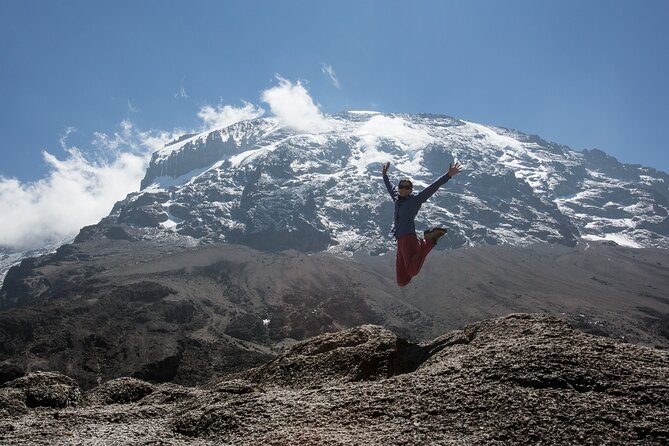
Day five is the main event, and it is a very long one. You start around midnight for the ascent to Stella Point, located on the crater rim at about 18,885 feet, though the itinerary highlights the full summit elevation of 19,340 feet.
The ascent to Stella Point takes about six to seven hours. The trail is steep, with heavy scree underfoot. You climb between the Rebmann and Ratzel glaciers, heading toward the crater rim in darkness.
This is the coldest, most mentally demanding part of the trip. The air is thin, the trail is slow, and you may be walking while most people are asleep. The aim is to reach Stella Point near sunrise, when the views can provide a powerful lift after the long night.
From Stella Point, Uhuru Peak is about another hour. The summit is the highest point in Africa, but the final hour can still feel difficult. Take it slowly. A strong guide team will help manage the pace and watch for signs that someone should stop or descend.
The route description lists about 13 miles for the full ascent and descent, with approximately 5 kilometers upward and 12 kilometers downward. It gives six to seven hours for the ascent and four to six hours for the descent, or about 11 hours total. That is a big day even for a fit person.
After reaching the summit, you descend to Mweka Camp for dinner and a celebration. Do not underestimate the descent. Many climbers feel relieved after Uhuru Peak and then discover that tired legs make the downhill trek its own challenge.
Some recent Climb Kili groups have been allowed to begin the final push about an hour ahead of other crews camped lower down. That early start is not something I would assume is included for every departure, so ask about it directly. If available, it may help you reach the summit before the busiest period.
Day 6: Mweka Camp to the gate
The final morning is a walk to Mweka Gate. The route is listed at about 6.4 miles and three to four hours, ending at an elevation of roughly 5,400 feet, or 1,645 meters.
After the stark upper mountain, the return through lower terrain can feel almost lush and easy, though your knees may disagree. You finish at Mweka Gate, where the Climb Kili vehicle transfers you back to the hotel.
This last day is more than a formality. It gives you time to process the climb while returning to a lower elevation and more comfortable conditions. Plan to welcome that shower at the hotel.
The itinerary describes the experience as six days, but the overview contains a reference to a seven-day Machame Route. That inconsistency should be cleared up before you pay. The detailed schedule is clearly organized as six days, but you want written confirmation of the exact number of nights, camps, meals, transfers, and park arrangements.
Food, tents, porters, and the human side of the climb
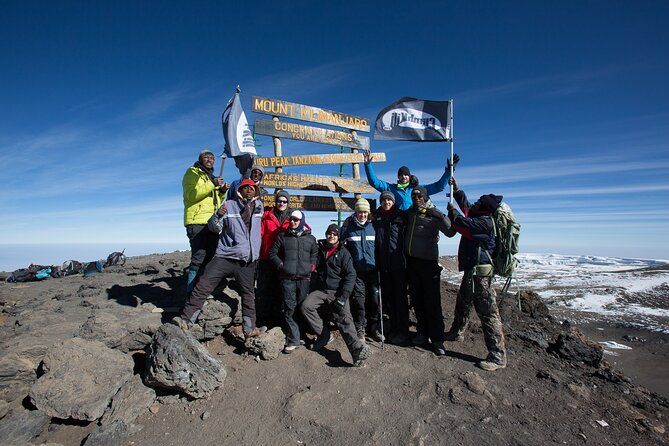
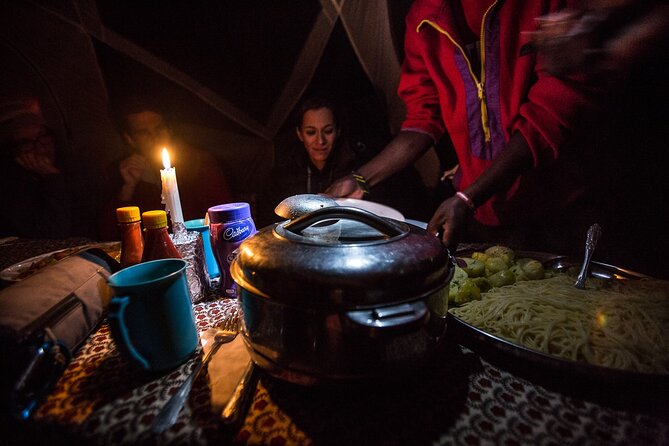
The service is a major reason to consider Climb Kili. The crew sets up camp before you arrive, prepares three hot meals each day, and handles the heavy logistical work that makes a Kilimanjaro climb possible.
Food matters more than many first-time climbers expect. At altitude, you need calories, but you may not feel hungry. Hot meals are easier to eat than cold trail food, and the cook can accommodate vegetarian requests according to the available service descriptions.
The porters are central to the operation. They move the tents and supplies, while guides manage the route and your safety. The strongest praise focuses on the warmth, hard work, and encouragement of the full mountain team, not just the lead guide.
That support also raises an ethical question you should ask before booking: how does the company handle porter welfare and pack limits? The supplied details do not spell out those policies, so request them. A professional climb should be good for the people carrying the equipment as well as the person paying for the trip.
Is $2,495 a fair price?
The listed price is $2,495 per person. That is a major expense, but Kilimanjaro is not a basic day hike. Your fee supports park access, transfers, multiple days of guiding, porters, cooks, tents, meals, and a coordinated return to Arusha.
The small group size adds value. A group capped at six can offer closer contact with the guide team than a large budget departure. The camp support and hot meals also reduce the work you must do after each hard day.
Still, price alone does not prove quality. Ask exactly what is included, particularly hotel nights, airport transfers, gear, tips, bottled or treated water, and any medical or evacuation arrangements. Those items are not fully detailed here.
The advertised 98 percent summit success rate is impressive, but treat it as a company figure rather than a promise. Success depends on weather, altitude response, fitness, route pace, and medical judgment. A responsible guide should turn you around if continuing becomes unsafe.
Who should choose this six-day climb?
This trip suits you if you are physically fit, comfortable camping, and ready for long days at altitude. The operator specifically requires a strong physical fitness level, and that should be taken seriously.
It can work for a first-time high-altitude trekker because the guide and support structure are substantial. Several family groups and climbers across different age ranges have completed the route with the crew. But beginner-friendly does not mean easy. You still need to prepare for a midnight start, steep scree, cold conditions, and a full day of walking.
The six-day version is best for someone who has limited time and wants the Machame scenery without committing to a longer schedule. If you have never been at high altitude, a longer Kilimanjaro itinerary may offer a gentler adjustment, though this specific product is only described as six days.
The trip is also a good fit for solo climbers who want company without joining a huge group. The small-group limit and repeated praise for personal support are reassuring, especially for someone concerned about managing the mountain alone.
Practical questions to settle before departure
Confirmation arrives within 48 hours, subject to availability. The meeting point is Summit Lodge, Sakina Raskazone, Arusha, and the listed start time is 8:00 a.m.
Free cancellation is available if you cancel at least 24 hours before the local start time. Cancellations made later are not refunded, and changes within that period are not accepted.
Before booking, I would ask Climb Kili to confirm:
- The apparent six-day versus seven-day wording
- The exact accommodation and meal plan
- The name of your lead guide
- The current daily distances and times for day three
- The early summit-start permit
- Porter welfare and luggage limits
- What happens if you must descend for altitude or illness
These are simple questions, but clear answers help you compare this trip with other Kilimanjaro operators.
Should you book Climb Kili?
I would choose this climb if you want a small, well-supported Machame Route trek and you are ready for a demanding six-day schedule. The strongest reasons are the attentive guide and porter service, tents prepared before arrival, hot meals, and the chance to experience Kilimanjaro’s five climate zones in one compact trip.
I would pause if you are unsure about altitude, want a slower acclimatization plan, or dislike overnight hiking. The summit day is steep, cold, and long, and the six-day format leaves little room for an easy pace.
For a fit first-time climber with limited time, this can be a practical and memorable way to attempt Africa’s highest peak. Confirm the schedule details and inclusions first, then book with realistic expectations: the crew can support your climb, but you still have to earn every step to Uhuru Peak.
FAQ
Where does the Kilimanjaro tour start?
The tour starts at Summit Lodge in the Sakina Raskazone area of Arusha, Tanzania. The listed start time is 8:00 a.m., and pickup is offered.
How long is the Machame Route tour?
The detailed schedule covers six days. The general description also refers to a seven-day Machame Route, so confirm the exact duration with Climb Kili before booking.
What is the largest group size?
The maximum group size is six climbers.
How fit do I need to be?
You should have a strong physical fitness level. The route includes several long hiking days, a steep ascent to Stella Point, and a summit night lasting about six to seven hours before the final push to Uhuru Peak.
Does the tour reach Uhuru Peak?
Yes. The itinerary includes an ascent to Uhuru Peak, listed at 19,340 feet, or 5,895 meters, followed by a descent to Mweka Camp.
What is the cancellation policy?
You can cancel for a full refund if you do so at least 24 hours before the experience start time. Cancellations or changes made less than 24 hours before the local start time are not accepted for a refund.
More 6-Day Experiences in Arusha
- Tanzania Wildlife Encounters – 6 Days
★ 5.0 · 277 reviews - Private 6-Day Tarangire Manyara Crater and Serengeti with Mid-Range Lodges
★ 5.0 · 238 reviews - 6 Days Private Budget Safari
★ 5.0 · 163 reviews - 6 Days Tanzania Budget Camping Safari
★ 5.0 · 145 reviews
Just added around Arusha
- 8 Days Serengeti Migration safari★ 5.0 · 11 reviews
- tarangire, ngorongoro & lake manyara park 3 days private tour★ 5.0 · 11 reviews
- tarangire & ngorongoro 2 days tour★ 5.0 · 14 reviews
- serengeti & ngorongoro 3 days private tour★ 5.0 · 15 reviews
- Mt. Kilimanjaro: Shira plateau to Cathedral point 3872m Day hike★ 5.0 · 7 reviews
- serengeti, ngorongoro & tarangire 4 days private tour★ 5.0 · 18 reviews
- 2 Days Tanzania Midrange Group Join Safari★ 5.0 · 7 reviews
- climb the KILIMANJARO via Lemosho route★ 5.0 · 4 reviews
Machame Route Climbs, compared.



Climbing Kilimanjaro through 7 days Machame Route
Read our review →
7-Day Machame Kilimanjaro Summit Tour from Arusha
Read our review →
7 Days Kilimanjaro via Machame route affordable price
Read our review →
#1. Best Kilimanjaro Day hike Tour-Machame Route-ISMANI
Read our review →

The Best of Machame Route in 6 Days: Your World’s Summit Guide
Read our review →Browse the lists this tour appears in