
Reviewed · SERENGETI SAFARIS
8 Days Safari (Lake Manyara /Tarangire/Serengeti/Ngorongoro)
The big draw here is the range of Tanzania’s northern safari circuit packed into eight days: elephant country in Tarangire, tree-climbing lions at Lake Manyara, the wildlife-filled Ngorongoro Crater, and several days in the Serengeti chasing the moving wildebeest herds. You also get Arusha National Park, a quieter opener with colobus monkeys and Ngurdoto Crater.
I like the generous Serengeti allocation, especially the chance to spend time in both central and northern areas. I also like the practical setup: airport transfers, Arusha hotel nights, a pop-up-roof 4×4, unlimited drinking water, and meals prepared throughout the safari. The main drawback is the pace. Long drives, early starts, basic camping, and a migration route that depends on animal movement and season are part of the bargain.
Key points to know before booking
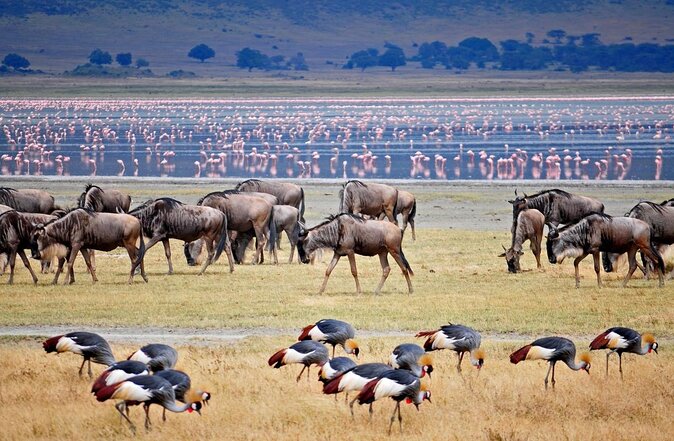
- Four Serengeti days give you a better chance of seeing predators, plains wildlife, and the wildebeest movement than a quick one-night visit.
- Tarangire is more than a stopover, with elephants, baobabs, lions, leopards, and the park’s namesake river.
- Ngorongoro Crater offers one of the strongest chances for concentrated wildlife, including black rhino and the Big Five.
- Camping keeps the price down, but you should be ready for early mornings, long road days, and fewer comforts than a lodge safari.
- The Mara River timing is seasonal, with July through October described as the strongest period for northern Serengeti crossings.
- A village walk and Maasai boma visit add human and cultural context to a trip otherwise focused on wildlife.
What this eight-day safari is really designed to do
This is a wildlife-first safari with a broad route. You are not staying in one park and waiting for animals to come to you. Instead, you move from Arusha through Tarangire, the Serengeti, Ngorongoro, and Lake Manyara, with a short cultural visit near Mto wa Mbu.
That variety is the main value. Each park has a different feel and a different reason to be there. Tarangire is known for elephants and baobabs. The Serengeti gives you huge open plains and the possibility of following the wildebeest migration. Ngorongoro puts a high concentration of animals inside an old volcanic crater. Lake Manyara brings forest, lake views, flamingos, hot springs, and the possibility of lions resting in trees.
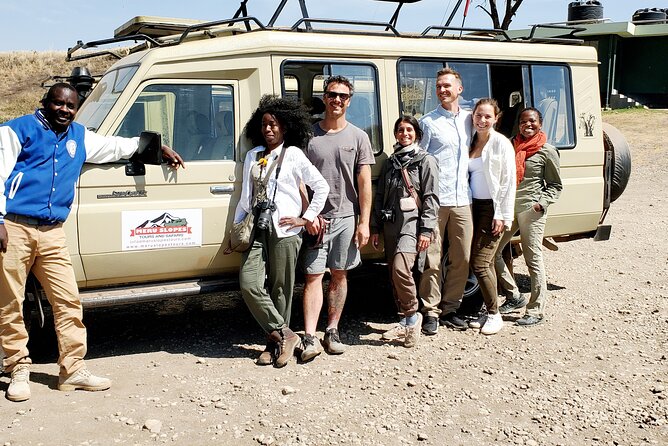
The trip uses an extended 4×4 safari vehicle with a pop-up roof. That matters. You can stand or sit higher for a better view, and the open roof is useful for watching animals and taking photographs. The vehicle is also your main home during long transfers, so comfort and patience matter as much as the seats.
The itinerary is described in one place as a joining group camping safari, but the additional information also calls it a private activity for your group alone. I would ask the operator to clarify this before paying. The difference affects privacy, flexibility, and how quickly the vehicle can move during long drives.
More Lake Manyara Safaris in Arusha
- Private 6-Day Tarangire Manyara Crater and Serengeti with Mid-Range Lodges
★ 5.0 · 238 reviews - 3 Days Tarangire, Ngorongoro & Lake Manyara Group Camping Safari
★ 5.0 · 102 reviews - 3 Days Private Safari – manyara, Ngorongoro & Tarangire
★ 5.0 · 94 reviews
Day 1: Arusha National Park starts with forest and crater scenery
After breakfast, pickup is scheduled around 8 a.m. for the roughly 40-minute drive from Arusha to Arusha National Park. This is a smart first day because it avoids starting the trip with a punishing transfer and gives you an early look at Tanzania’s plant and animal life.
The entrance route passes through montane forest. Blue monkeys are a regular highlight here, and the park is one of the northern circuit’s better places to see black-and-white colobus monkeys. Colorful turacos and trogons add interest for anyone who enjoys birds, even if your main goal is lions and elephants.
The park’s major sight is Ngurdoto Crater. Steep rocky sides enclose a marshy floor where buffalo and warthog may be seen. The setting is different from the open Serengeti, and that contrast makes the first day worthwhile.
The listed duration is about eight hours, so this is a full park day rather than a short orientation stop. Admission is listed as free within the itinerary, while the general inclusions say all fees and taxes are covered. I would treat the included-fees statement as the useful planning point and confirm any exceptions directly.
Day 2: Tarangire brings elephants and giant baobabs
The drive from Arusha to Tarangire takes about three hours, followed by a full-day game drive. Tarangire covers about 2,800 square kilometers, and the Tarangire River is the park’s central water source and namesake.
This is one of the most rewarding stops for elephants. You may also see lions, leopards, pythons, and other plains animals. The baobab trees give Tarangire a strong sense of place, especially when an elephant herd passes beneath them.
The description also points to tree-climbing pythons, an unusual sight compared with the more familiar lion and zebra sightings. Wildlife gathers around water, so the river can be important during dry periods. Still, animal sightings are never guaranteed, and a full day in a park does not mean constant action. Some of the best moments may be quiet ones, watching elephants feed or scanning the trees for a cat.
Dinner and overnight accommodation are listed at Jambo Lodge after the game drive. One itinerary line says eight minutes for this day, which is clearly inconsistent with the three-hour drive and full-day safari. Plan on a full day, and ask the operator to confirm the exact lodging and timing.
Days 3 to 6: four days in the Serengeti
The Serengeti gets the most time on this route, and that is sensible. The park is too large to understand through a single game drive. Four days allow you to cover central areas, reach the north when conditions permit, and use different parts of the day for wildlife viewing.
More Serengeti Safaris in Arusha
- Balloon Safari & Bush Breakfast in Serengeti – Miracle Experience
★ 5.0 · 1,646 reviews - 3 Days Serengeti & Ngorongoro Group Camping Safari
★ 5.0 · 574 reviews - 5-Day Highlights mid-Range Crater, Serengeti, Tarangire
★ 5.0 · 296 reviews - 3-Day Classic Serengeti Safari
★ 5.0 · 263 reviews
Day 3: Entering central Serengeti
You leave after breakfast with luggage packed into the vehicle and lunch carried along. The route includes views of the Great Rift Valley and Ngorongoro Crater before reaching the Serengeti around 3 p.m.
An evening drive in central Serengeti brings the first major look at the open plains. Sunset can be especially appealing here because the broad horizon gives the sky room to change color. The overnight stop is Seronera campsite inside the park.
Central Serengeti is useful for its access to a wide range of wildlife. You may find lions, cheetahs, leopards, elephants, giraffes, and large herds, though the exact sightings depend on the day and the guide’s choices. The Serengeti’s scale also means you will spend time driving. That is not wasted time, but it can feel tiring after the road from Ngorongoro.
Day 4: Heading north toward the Mara River
This is one of the most migration-focused days. After breakfast, the vehicle heads toward northern Serengeti and the areas around Kogatende and the Mara River.
The timing matters greatly. River crossings are most associated with July through October, when the herds reach the northern Serengeti. The animals can cross back and forth, and even in the strongest months, no guide can promise that a crossing will happen while you are watching.
The best advice is to view this as a chance to see the migration in motion, not as a guaranteed river spectacle. You may see wildebeest gathering, moving, stopping, and reacting to crocodile-filled water or waiting animals. Sometimes the waiting is the story. It can also be frustrating if many vehicles gather around a possible crossing.
The route is long, but the extra time in the park improves your odds of finding the herds. A guide who communicates clearly and makes sensible decisions is especially important here. The company’s guides associated with past trips include Nuru, Jacob, Samwel, Benson, Douglas, Mohamed, and Iddy. You should ask who is assigned to your departure and whether you can request a particular guide, but no specific guide is guaranteed by the tour details.
Day 5: A second full migration day
Another full day in the Serengeti gives you more than a second chance at wildebeest. The park is also a strong place to watch predator behavior. Lions may be resting, hunting, feeding, or moving with cubs. Cheetahs and leopards are possible, but sightings vary.
The migration changes from year to year. The strongest general period for seeing the great movement is given as June through September, while calving takes place from January through March. That makes this safari flexible in concept, but you need to choose your travel month for the sight you care about most.
If you want river crossings, July through September is the sensible target. If you prefer newborn animals and green scenery, January through March may be better. This is not a simple calendar event that arrives on the same date every year. Rainfall and grazing conditions influence the route.
Day 6: Sunrise, more wildlife, and a long transfer
The day begins around 5:45 a.m. with breakfast, followed by an early morning game drive until about 11:30. Early hours are valuable because animals are often more active before the heat of the day, and the sunrise over the plains can be memorable.
After a hot lunch at camp, you pack the vehicle and continue with a game drive toward Ngorongoro. Dinner and overnight accommodation are at Simba Campsite.
This is a ten-hour day on paper, so expect fatigue. You will be combining a sunrise drive, packing, lunch, more wildlife viewing, and a transfer. I would bring a small day bag with sunscreen, a warm layer, a camera battery, and anything you need before reaching camp. Keep the rest of your luggage packed and easy to access.
Day 7: Descending into the Ngorongoro Crater
The early start continues, with breakfast around 5:30 a.m. You then descend into Ngorongoro Crater for six to seven hours of game viewing on the crater floor.
Ngorongoro is often called the Garden of Eden because wildlife is concentrated within the crater’s enclosed setting. You may see buffalo, lions, elephants, rhino, hippos, and many bird species. The itinerary specifically highlights the chance to see the Big Five and black rhino, though sightings are never certain.
Lunch is taken inside the crater while you continue watching the natural activity around you. Flamingos may gather near the water, and the combination of open grassland, woodland, and wetlands gives you a good range of habitats in one day.
The crater is a high point for anyone who wants many species without covering vast distances. The tradeoff is that it can feel busy, particularly at popular wildlife stops. Your guide’s judgment helps here. You want enough time at good sightings without spending the entire day in traffic.
After ascending, the route includes a walking tour in Mto wa Mbu village. You can see banana plantations, learn about local daily life, and taste local food. This is a welcome change of pace after several days sitting in a vehicle. It also gives you a closer look at the communities around the parks, rather than reducing Tanzania to wildlife alone.
Dinner and overnight accommodation are listed at Jambo Lodge.
Day 8: Lake Manyara’s forest, flamingos, and tree-climbing lions
The final park day takes you to Lake Manyara for a full-day game drive before returning to Arusha. Lake Manyara National Park is smaller and greener in feel than the Serengeti, with the lake, forest, and hot springs providing a different setting.
The park is famous for lions that climb trees. Seeing one is never guaranteed, but the possibility gives the game drive a clear purpose. Flamingos may gather on the lake where algae provide food, and other waterbirds add interest for birdwatchers.
A visit to a hot spring is also included. The itinerary then adds a Maasai boma visit, where you can learn about Maasai traditions and daily life. This cultural stop is useful, but it is worth approaching with respect. Listen carefully, ask before taking photographs, and remember that this is a community visit, not a staged wildlife show.
The day ends with a drive back to Arusha for dinner and overnight accommodation. The inclusions specify two Arusha hotel nights, one before and one after the safari, which is convenient if you are flying in and out of the city. Confirm the exact final-night plan because the day description combines dinner and overnight arrangements with the return drive.
Camping, meals, and the value of the package
The price is shown as $0 per person, which is not a usable selling price. Treat it as a display error or placeholder and request the real quote before making any decision. Safari pricing can change with dates, park fees, vehicle size, camping arrangements, and the number of people sharing the vehicle.
At the right confirmed price, the package has solid practical value. It includes airport transfers in both directions, two nights in Arusha, the 4×4 vehicle, an English-speaking guide, unlimited drinking water, and breakfast, lunch, and dinner throughout the listed schedule. It also includes taxes and fees according to the package details.
Camping is the budget-friendly choice, but it is not the same as staying in a lodge. You should be comfortable with early alarms, packed days, and basic camp routines. The food setup appears to be a strength. Specific cooks named in company trip feedback include Dula and Eric, and past itineraries describe three home-cooked meals per day. Ask whether a cook is assigned to your departure, especially if food allergies or dietary needs matter.
Tips, personal spending, drinks other than the supplied water, laundry, telephone use, and the Tanzania visa are extra. Tipping your guide and cook is also not included. Build those costs into your budget instead of treating the advertised package as the final amount.
Who will enjoy this route most
I would choose this safari if you want a broad first visit to northern Tanzania and care more about wildlife variety than hotel luxury. Families, couples, photographers, and first-time safari visitors can all find something here, provided they are comfortable with long drives and camping.
The route is also a good match for someone focused on the wildebeest migration but unwilling to spend the entire trip in one region. The four Serengeti days give the migration a fair share of the schedule, while Tarangire, Ngorongoro, and Manyara prevent the trip from becoming repetitive.
I would hesitate if you want slow mornings, upscale rooms, or short transfers. The Ngorongoro to Serengeti and Serengeti to crater sections involve substantial driving, and several days begin before sunrise. The itinerary is active by design.
Practical questions to settle before you pay
Ask for the actual per-person price, the number of people in the vehicle, and whether the trip is private or shared. Those details are not minor. They affect comfort, personal space, and the ability to adjust the day.
Ask which guide and cook will accompany you. The company has used guides including Nuru, Jacob, Samwel, Benson, Douglas, Mohamed, and Iddy on different trips, but the supplied details do not assign one to this specific departure.
Also ask for the exact overnight locations. The schedule names Seronera campsite, Simba Campsite, and Jambo Lodge, while the opening and final Arusha nights are covered separately. Confirm the camping standard, toilet arrangements, and what happens if the migration is far from the planned route.
Free cancellation is available if you cancel at least 24 hours before the local start time. Changes made inside that window are not accepted, and poor weather may lead to a new date or a full refund.
Should you book this safari?
I would book it after confirming the real price, group arrangement, guide, cook, and campsite details. The route covers the northern circuit’s major names, gives the Serengeti enough time to matter, and adds two worthwhile cultural stops.
You should choose it if you want a full, active wildlife trip with strong migration potential and can accept basic camping. Look elsewhere if comfort, guaranteed private space, or a relaxed schedule matters more than covering five parks in eight days. The plan is ambitious, but its ambition is also its appeal.
More Tarangire National Park Safaris in Arusha
- 4 Days Tarangire Serengeti Ngorongoro Crater
★ 5.0 · 117 reviews - Tarangire Day Tour
★ 5.0 · 95 reviews - 5 Days Tanzania Group Joining Safari, Tarangire/Serengeti/Ngorongoro Crater
★ 5.0 · 85 reviews - 4 Days Tarangire, Serengeti and Ngorongoro Mid-Range Group Safari
★ 5.0 · 84 reviews
More Ngorongoro Crater Tours in Arusha
- 5 Days Camping Tarangire, Serengeti & Ngorongoro crater & Visiting Maasai
★ 5.0 · 229 reviews - 4 Days Join Group tour Tarangire Serengeti and Ngorongoro crater
★ 5.0 · 219 reviews - 4-Day Safari from Arusha: Tarangire, Serengeti and Ngorongoro
★ 5.0 · 173 reviews - 2 Days Tarangire and Ngorongoro Group Camping Safari
★ 5.0 · 146 reviews
Just added around Arusha
- 8 Days Serengeti Migration safari★ 5.0 · 11 reviews
- tarangire, ngorongoro & lake manyara park 3 days private tour★ 5.0 · 11 reviews
- tarangire & ngorongoro 2 days tour★ 5.0 · 14 reviews
- Mt. Kilimanjaro: Shira plateau to Cathedral point 3872m Day hike★ 5.0 · 7 reviews
- serengeti, ngorongoro & tarangire 4 days private tour★ 5.0 · 18 reviews
- serengeti & ngorongoro 3 days private tour★ 5.0 · 15 reviews
- climb the KILIMANJARO via Lemosho route★ 5.0 · 4 reviews
- 2 Days Tanzania Midrange Group Join Safari★ 5.0 · 7 reviews
Serengeti Safaris, compared.

Serengeti Balloon Safari and authentic bush breakfast
Read our review →
3 Days Serengeti & Ngorongoro Group Camping Safari
Read our review →
5-Day Highlights mid-Range Crater, Serengeti, Tarangire
Read our review →


Private 6-Day Tarangire Manyara Crater and Serengeti with Mid-Range Lodges
Read our review →
5 Days Camping Tarangire, Serengeti & Ngorongoro crater & Visiting Maasai
Read our review →
4 Days Join Group tour Tarangire Serengeti and Ngorongoro crater
Read our review →Browse the lists this tour appears in