
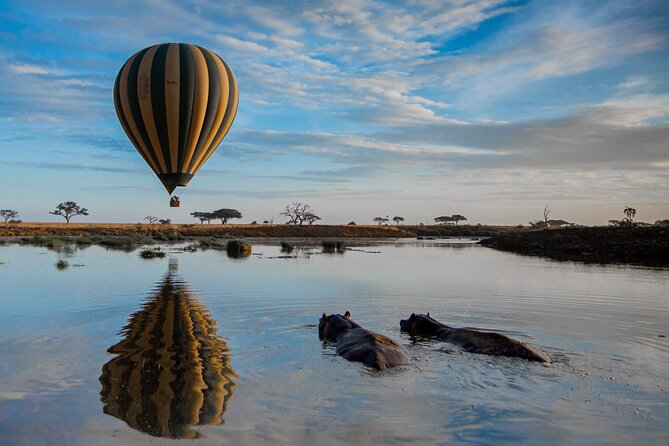
Reviewed · SERENGETI SAFARIS
6 Days Tarangire, Serengeti, Ngorongoro & Manyara Joining Tour
The heart of this safari is the three-day Serengeti stay, which gives you time to follow wildlife instead of rushing through for a single afternoon. You also get the famous northern circuit in one trip: Tarangire’s elephants and baobabs, Ngorongoro Crater’s packed animal sightings, and Lake Manyara’s flamingoes and hippos.
I like the small maximum group of seven and the practical setup, with a custom safari jeep, camping gear, a chef, park fees, and daily meals included. I also like the mix of camping and lodge accommodation, which gives you the real safari feel without asking you to sleep under canvas every night.
The main trade-off is the amount of driving. Some days involve several hours on rough park roads or long transfers, and the schedule is active from early morning until evening. Tree-climbing lions and black rhinos are possible highlights, not guaranteed sightings.
Key points to know before booking
- Three Serengeti days: You have enough time to search several parts of the park and follow changing animal movements.
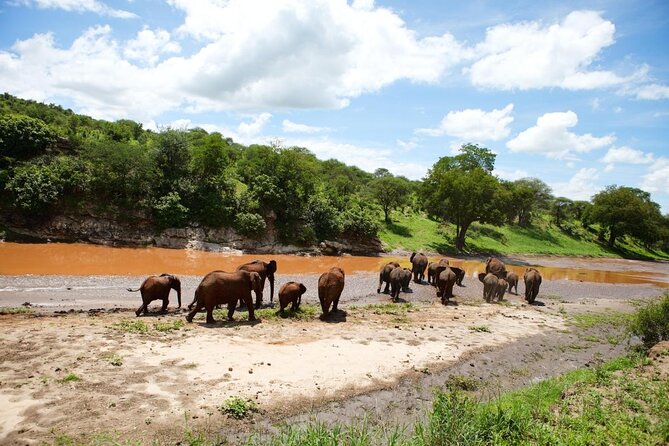
- Elephant country: Tarangire is known for large elephant families and ancient baobab trees.
- Crater-floor safari: Ngorongoro makes animal spotting easier in many areas because wildlife gathers on the enclosed crater floor.
- Camping with support: A chef prepares breakfast, lunch, and dinner, while sleeping bags and mattresses are supplied.
- Small shared group: The vehicle holds no more than seven people, useful for viewing and keeping the group manageable.
- All major park costs included: The $1,600 price covers park entrances, taxes, camping equipment, soft drinks, water, and meals.
Why the three Serengeti days matter
Many northern Tanzania safaris include the Serengeti as a quick stop. This one gives you three days in the park, which is its strongest feature. The Serengeti is vast, and animals do not arrange themselves beside the road according to a timetable. More time gives your guide a better chance to respond to current wildlife movements.
The park is famous for the annual movement of more than a million wildebeest, along with large numbers of zebras. The exact location of the herds changes by season, so this itinerary does not promise a particular migration scene. Instead, it gives you several game-drive periods in which to look for wildebeest, zebras, giraffes, lions, cheetahs, leopards, and other animals.
You will leave camp early on Day 3 and search areas of the Serengeti according to where wildlife has recently been seen. After lunch, the game drive continues into the evening. On Day 4, you go out again before heading toward Ngorongoro, combining more wildlife viewing with the journey out of the park.
That extra time is valuable for photographers. The pop-up roof allows you to watch from the vehicle and take pictures with a clear view above the sides. The safari is not a private photographic workshop, so you will share the vehicle and follow the group’s schedule, but the long Serengeti stay gives you more chances to wait, watch, and try again.
A small warning: Serengeti days can feel long. You may spend hours on rough roads, and sightings can be separated by quiet stretches. That is part of a real safari, but you should be comfortable with early starts, heat, dust, and long periods in a vehicle.
More Lake Manyara Safaris in Arusha
- Private 6-Day Tarangire Manyara Crater and Serengeti with Mid-Range Lodges
★ 5.0 · 238 reviews - 3 Days Tarangire, Ngorongoro & Lake Manyara Group Camping Safari
★ 5.0 · 102 reviews - 3 Days Private Safari – manyara, Ngorongoro & Tarangire
★ 5.0 · 94 reviews
Tarangire begins with elephants and baobabs
Pickup is scheduled for 7:30 a.m. from your hotel in Arusha. After meeting the guide, chef, and other people in the vehicle, you drive for about two hours to Tarangire National Park.
Tarangire is a strong first park because it offers a clear introduction to northern Tanzania’s wildlife. The park is especially known for its large elephant population and its old baobab trees. You may see elephant families moving together, feeding, or interacting near the vehicle. Giraffes, wildebeest, zebras, and other herbivores are also common sights in the park.
The guide will adjust the game drive based on reported animal sightings. That matters most when searching for predators. Lions may be found resting or moving through the park, while cheetahs and leopards are harder to spot. The guide’s ability to respond to recent sightings can make a real difference, though no guide can promise a leopard or cheetah.
You spend roughly six hours on the day’s park activity. Tarangire is not just a warm-up stop. Its elephant viewing can be among the most memorable parts of the trip, especially if you enjoy watching animal behavior rather than simply collecting species from a list.
The long road to Serengeti through Ngorongoro
Day 2 is mainly a transfer day. After breakfast, you drive from the Mto wa Mbu area toward the Serengeti. The journey takes about six hours, including stops, and passes through the Ngorongoro area.
The first stop is a brief visit to the Ngorongoro viewpoint. You get about 20 minutes to look across the crater and take in the huge bowl below. This is a short stop, not the crater safari itself, but it gives you an early sense of the terrain you will explore properly on Day 5.
An optional Maasai village visit is also offered, lasting about 20 to 45 minutes. You can use this time to learn about Maasai culture and traditions. The visit is not required, and many people choose not to include it, so make your preference clear to the guide.
After the stops, the road continues toward the Serengeti. This is one of the less glamorous parts of the tour, but it connects several major parks without requiring a separate flight. You should think of Day 2 as a travel and transition day, with a scenic crater viewpoint and optional cultural stop along the way.
Camp life and the practical side of safari
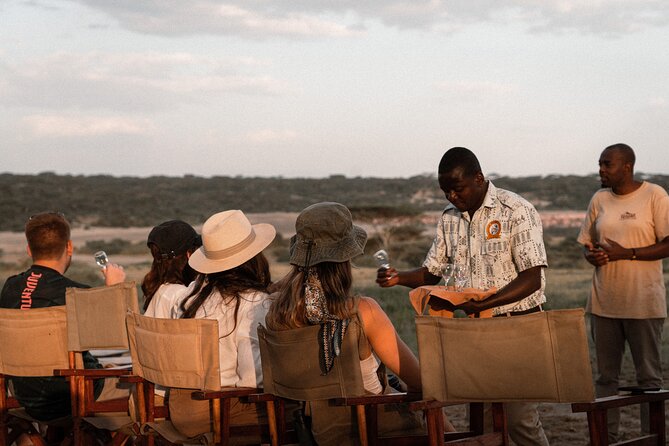
This is a camping and lodge safari, not a fully luxury trip. Camping equipment includes a sleeping bag and mattress, and a chef prepares the meals. Breakfast, lunch, and dinner are included according to the stated plan, with five dinners listed for the six-day schedule. Soft drinks and at least three liters of bottled water per day are also included.
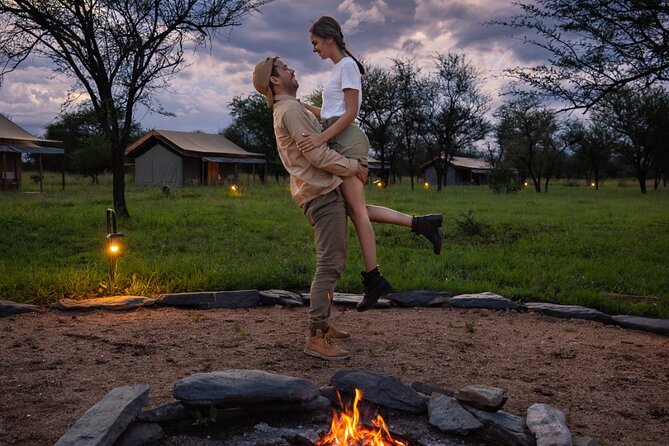
That arrangement keeps the trip simple. You do not need to organize food for long park days, and you can return to camp knowing dinner is part of the setup. Camping also places you closer to the sounds and rhythms of the parks. Animals may even be seen around campsites, although the provided information does not promise a particular species or a specific campsite sighting.
The itinerary names Simba campsite near the Ngorongoro rim and Fig Big Tree Lodge and campsite near Lake Manyara. The mix of campsite and lodge accommodation is useful if you want some comfort without giving up the basic safari atmosphere.
You should pack with changing conditions in mind. The tour supplies sleeping equipment, but your own clothing, personal items, and any camera gear are not included. Water is provided, yet you may still want to manage your daily supply carefully during long drives.
The maximum group size is seven. That is small enough to keep conversation and coordination manageable, while still being a shared safari rather than a guaranteed private trip. One supplied account describes a shared vehicle, while another describes a private tour, so the exact arrangement may depend on your booking. Confirm this before paying if having the jeep to yourself is important.
More Serengeti Safaris in Arusha
- Balloon Safari & Bush Breakfast in Serengeti – Miracle Experience
★ 5.0 · 1,646 reviews - 3 Days Serengeti & Ngorongoro Group Camping Safari
★ 5.0 · 574 reviews - 5-Day Highlights mid-Range Crater, Serengeti, Tarangire
★ 5.0 · 296 reviews - 3-Day Classic Serengeti Safari
★ 5.0 · 263 reviews
Three days of Serengeti game drives
Day 3 is the fullest wildlife day. You leave after an early breakfast, drive into parts of the Serengeti where animals have been reported, stop for lunch, and continue until evening before returning to camp.
The itinerary allows the guide to choose among the north, south, east, or west of the park. This flexibility is useful because wildlife movement changes. It also means your day will not follow a fixed sightseeing route with guaranteed stops.
You might see large herbivore herds, giraffes, zebras, wildebeest, buffaloes, and other plains animals. Predators are a major reason people come here, but sightings vary. Lions are more likely than leopards, while cheetahs can require patience and favorable conditions.
Day 4 begins with another early game drive. Around the afternoon, you return to camp for lunch and packing, then continue with a game drive as you leave the Serengeti. The journey to Simba campsite near the Ngorongoro rim takes about two hours.
This arrangement gives you another chance to see wildlife during the exit rather than ending the Serengeti portion at the park gate. It also places you near the crater for an early start the next morning. The drawback is that packing and driving are combined with game viewing, so the day can feel busy.
Ngorongoro Crater and the search for black rhino
Day 5 starts early with a descent into Ngorongoro Crater. This is one of the trip’s major highlights. The crater’s enclosed floor makes it easier in many places to spot animals, and the scenery changes quickly as you move through the area.
Black rhino is a particular target. Rhinos are among the hardest animals to see in the crater, so treat this as a hopeful search rather than a promise. Even without a rhino sighting, the crater offers concentrated wildlife viewing and striking views from the rim and floor.
After lunch, you continue the game drive before ascending from the crater. You then pack and travel toward Fig Big Tree Lodge and campsite near Lake Manyara. Swimming may be available there if you are interested, though the information does not specify the pool’s facilities or opening conditions.
This is another long day with an early start, wildlife viewing, a climb out of the crater, packing, and a transfer. Still, the schedule makes good use of your limited time by connecting the crater with the final park instead of sending you back to Arusha between stops.
Lake Manyara closes the safari with birds and hippos
The final park day takes you to Lake Manyara after breakfast. The park is known for its flamingoes, birdlife, hippo pool, hot spring, and tree-climbing lions.
Flamingoes are one of the visual draws, but their numbers and location can vary. The tree-climbing lions are famous and rarely seen, so you should not judge the day by that one sighting. A guide may search likely areas, but wildlife remains unpredictable.
The game drive can also include buffaloes, wildebeest, warthogs, vultures, eagles, monkeys, and other animals. The hippo pool offers a closer look at hippos from the designated viewing area, while the hot spring adds a different kind of stop to the morning.
Lake Manyara is smaller in scale than the Serengeti and Tarangire. That makes it a sensible final park after several demanding days. You still get a full wildlife outing, but the day can feel less overwhelming than another long Serengeti search.
What $1,600 includes and what it does not
At $1,600 per person, this tour is not a bare-bones park transfer. The price includes all park entrances and taxes, which can make a major difference on a multi-park safari. It also includes the guide and driver arrangement, chef support, sleeping bag, mattress, soft drinks, bottled water, six lunches, six breakfasts, and five dinners.
The value is strongest if you want one organized package covering four well-known parks. You are paying for access, transport, food, camping support, and a six-day route that would be complicated to arrange independently.
The price does not include tips, flights, or a visa. Budget for those separately. You should also ask for the final accommodation details and confirm how many nights are camping versus lodge stays, since the trip is described as a mix rather than a fixed hotel schedule.
The tour is booked, on average, 74 days ahead. That suggests you should not leave planning until the last minute, especially if your dates are fixed. Pickup is offered, the start time is 7:30 a.m., and confirmation is provided when you book.
Who will enjoy this safari most
I would recommend this trip to someone who wants a serious wildlife itinerary and accepts that safari days are demanding. The route is especially suitable if you want the Serengeti to receive more attention than a quick overnight stop.
It also suits photographers and wildlife enthusiasts. The long game drives, pop-up roof, flexible Serengeti route, and chance to see animals near campsites create more opportunities for observation and pictures.
You may want another style of trip if you prefer slow mornings, soft beds every night, or short transfers. The schedule includes early breakfasts, several six-hour days, packing, and long drives between parks. Camping is part of the attraction, but it is not a minor detail.
The small group size helps. A maximum of seven people means fewer voices in the vehicle and a better chance of having a clear view from the roof. If you need a completely private jeep, confirm that arrangement in advance rather than assuming the group will be private.
Should you book the six-day route?
Book it if your priority is wildlife variety and time in the Serengeti. The route is well chosen: Tarangire gives you elephants, Serengeti supplies the main safari hours, Ngorongoro offers concentrated animal viewing, and Lake Manyara adds birds, hippos, hot springs, and a chance at tree-climbing lions.
Skip it if you dislike long drives or want a polished lodge-only holiday. This is an active camping and lodge safari, with early starts and a full schedule.
For the right person, $1,600 buys a lot: four famous parks, meals, water, park fees, equipment, and a small group. Confirm the shared or private vehicle setup, the exact lodging mix, and the final dinner count before booking. If those details suit you, this is a strong choice for a first northern Tanzania safari.
FAQ
Where does the safari start?
The safari starts in Arusha, Tanzania, with hotel pickup offered. The scheduled start time is 7:30 a.m.
How long does the safari last?
The tour lasts approximately six days.
What parks are included?
The route includes Tarangire National Park, Serengeti National Park, Ngorongoro Conservation Area and Crater, and Lake Manyara National Park.
How many days are spent in the Serengeti?
The itinerary gives you three days in the Serengeti area, including the travel day into the park and further game-drive days.
What vehicle is used?
You travel in a custom safari jeep with a pop-up roof.
How large is the group?
The activity has a maximum of seven people.
Are meals included?
Yes. The package includes six breakfasts, six lunches, and five dinners.
Is camping equipment supplied?
Yes. A sleeping bag and sleeping mattress are included.
Is bottled water included?
Yes. The package includes bottled water, with at least three liters or more per day, as well as soft drinks.
Are park entrance fees included?
Yes. All park entrances and taxes are included. Tips, flights, and visas are not included.
Can I cancel for a full refund?
You can cancel at least 24 hours before the local start time for a full refund. Cancellations or changes made less than 24 hours before the start are not accepted for a refund.
More Tarangire National Park Safaris in Arusha
- 4 Days Tarangire Serengeti Ngorongoro Crater
★ 5.0 · 117 reviews - Tarangire Day Tour
★ 5.0 · 95 reviews - 5 Days Tanzania Group Joining Safari, Tarangire/Serengeti/Ngorongoro Crater
★ 5.0 · 85 reviews - 4 Days Tarangire, Serengeti and Ngorongoro Mid-Range Group Safari
★ 5.0 · 84 reviews
More Ngorongoro Crater Tours in Arusha
- 5 Days Camping Tarangire, Serengeti & Ngorongoro crater & Visiting Maasai
★ 5.0 · 229 reviews - 4 Days Join Group tour Tarangire Serengeti and Ngorongoro crater
★ 5.0 · 219 reviews - 4-Day Safari from Arusha: Tarangire, Serengeti and Ngorongoro
★ 5.0 · 173 reviews - 2 Days Tarangire and Ngorongoro Group Camping Safari
★ 5.0 · 146 reviews
Just added around Arusha
- 8 Days Serengeti Migration safari★ 5.0 · 11 reviews
- tarangire, ngorongoro & lake manyara park 3 days private tour★ 5.0 · 11 reviews
- tarangire & ngorongoro 2 days tour★ 5.0 · 14 reviews
- Mt. Kilimanjaro: Shira plateau to Cathedral point 3872m Day hike★ 5.0 · 7 reviews
- serengeti, ngorongoro & tarangire 4 days private tour★ 5.0 · 18 reviews
- serengeti & ngorongoro 3 days private tour★ 5.0 · 15 reviews
- 2 Days Tanzania Midrange Group Join Safari★ 5.0 · 7 reviews
- climb the KILIMANJARO via Lemosho route★ 5.0 · 4 reviews
Serengeti Safaris, compared.

Serengeti Balloon Safari and authentic bush breakfast
Read our review →
3 Days Serengeti & Ngorongoro Group Camping Safari
Read our review →
5-Day Highlights mid-Range Crater, Serengeti, Tarangire
Read our review →


Private 6-Day Tarangire Manyara Crater and Serengeti with Mid-Range Lodges
Read our review →
5 Days Camping Tarangire, Serengeti & Ngorongoro crater & Visiting Maasai
Read our review →