
Reviewed · SERENGETI SAFARIS
6 Days lodge &camping tour Serengeti ,Tarangire ,Ngorongoro Crater and Manyara
The great appeal here is variety: in six days, you move from Tarangire’s giant baobabs and elephants to the open plains of the Serengeti, then down into the wildlife-packed Ngorongoro Crater and on to Lake Manyara’s forests, cliffs, and flamingos. This is a full northern Tanzania safari, not a single-park sampler.
I like the small maximum group of six, which gives you more room in the vehicle and makes it easier to stop for wildlife. I also like the mix of camping and lodge accommodation, plus the early game drives that give you a better chance of seeing predators before the heat of the day. The main drawback is the pace: long drives and several early starts leave little time for rest.
Key points to know before booking
- Four major wildlife areas in six days: Tarangire, Serengeti, Ngorongoro, and Lake Manyara are all included.
- Small-group format: The maximum group size is six, a useful advantage on long safari drives.
- Strong guide feedback: Elias is repeatedly praised for his driving, patience, and personal care, while Sam and Hassan are also named as capable guides.
- Camping plus lodge stays: You get a closer-to-nature safari feel, with two nights described as lodge accommodation.
- Early starts matter: Several days begin around 6:30 a.m., with packed breakfast and lunch used to protect game-viewing time.
- Good value for a classic route: At $1,600 per person, the price is attractive for a six-day northern Tanzania itinerary, though you should confirm exactly what accommodation and meals are included.
Four parks, one demanding northern Tanzania route
This safari is designed for you if your first visit to Tanzania must include the country’s famous northern circuit. Tarangire, Serengeti, Ngorongoro Crater, and Lake Manyara each have a different feel, so the reward is not only the animal count. You also see big baobabs, volcanic scenery, open grassland, woodland, swamps, and a large soda lake.
The route begins and ends around Arusha, with pickup offered. You will spend a good deal of time on the road. That is normal for this part of Tanzania, but it is worth accepting before you book. The Serengeti is far from Arusha, and the route crosses the Ngorongoro Conservation Area to reach it.
The tour is capped at six people. That is a practical sweet spot. You avoid the crowding of a large minibus, but you still share the cost of the vehicle and guide. A smaller group can also make it easier to agree on how long to watch a lion, where to stop for lunch, or when to move on.
More Lake Manyara Safaris in Arusha
- Private 6-Day Tarangire Manyara Crater and Serengeti with Mid-Range Lodges
★ 5.0 · 238 reviews - 3 Days Tarangire, Ngorongoro & Lake Manyara Group Camping Safari
★ 5.0 · 102 reviews - 3 Days Private Safari – manyara, Ngorongoro & Tarangire
★ 5.0 · 94 reviews
Day 1: Tarangire’s elephants and baobabs
After breakfast, you head from Arusha toward Tarangire National Park. There is a stop at a supermarket in Arusha for last-minute purchases, which is a small but useful touch. It gives you a chance to pick up personal snacks or other items before the long road days begin.
The drive follows the Great Northern Highway through villages and the Masai Steppe. This is not wasted time. You get a look at daily life outside the parks, with farmland, settlements, and changing scenery before the wildlife portion begins.
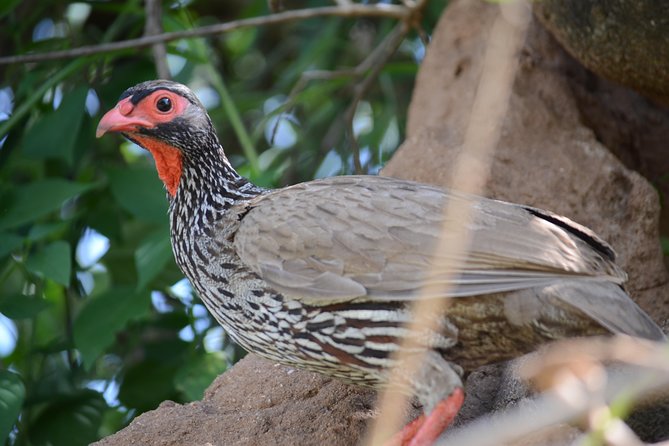
Tarangire is especially good for elephants and large old baobab trees. You may also see wildebeest, buffalo, zebra, giraffe, hippos, baboons, and several kinds of antelope. The park has recorded more than 400 bird species, so I would bring binoculars even if your main goal is the big five.
The itinerary allows about six hours here. That gives you a useful first game drive, though Tarangire is only the opening act. The day also includes driving from Arusha, so you should expect a long first day rather than a leisurely arrival.
Tarangire can be a strong choice for elephant sightings and birdlife. It also breaks up the route nicely before the bigger Serengeti section. If you prefer a safari with plenty of time at one lodge, this schedule will feel busy. If you want to see several famous parks, the variety is the point.
Day 2: Crossing Ngorongoro to the Serengeti
Day two is one of the most scenic transfers. After breakfast at camp, you drive through the high farmland around Karatu and into the Ngorongoro Conservation Area. You stop at the Ngorongoro gate for entry formalities, then continue toward the crater rim.
The crater viewpoint gives you a first look at the floor far below. It is a short stop, but an important one. From above, you can understand the shape of this ancient volcanic basin before eventually visiting the floor on day five.
You then follow the crater rim, cross the Malanja Depression, and continue toward Serengeti National Park. The scenery changes again as the route opens into the famous rolling plains. At Naabi Hill Gate, you may eat your packed lunch before continuing toward Seronera, the central Serengeti area.
This is roughly a six-hour activity day, but the stated time should not be confused with a simple point-to-point transfer. Gate procedures, photo stops, lunch, and wildlife sightings all affect the schedule. Keep your camera ready during the drive. The journey itself is part of the safari.
Seronera is a practical base because it sits in central Serengeti, an area known for frequent wildlife activity. You are positioned well for the following morning, when the safari starts early. That overnight location saves you from spending the first hours of day three simply driving into the action.
Day 3: A full Serengeti game-drive day
This is the safari’s biggest wildlife day. The start is around 6:30 a.m., with packed breakfast and lunch. The early departure is worthwhile because cats may still be active after the night, and the morning light is often better for photographs.
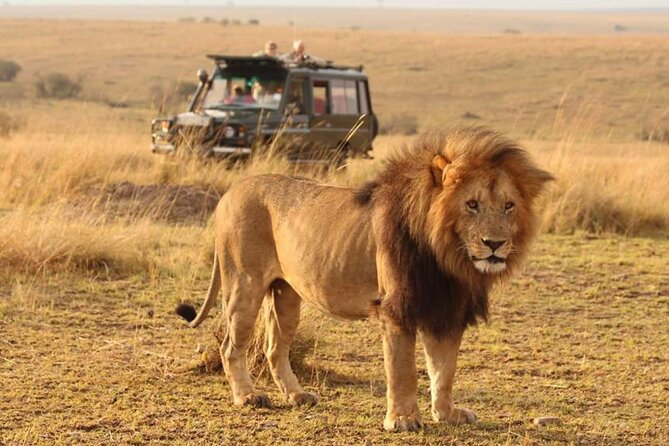
You might see lions organizing a hunt, predators returning from a night of activity, or cats resting near the road. None of these sightings can be promised, but the timing gives you a better chance than a late morning start. You stop for breakfast in the bush, then continue across the plains.
The Serengeti is also the setting for the Great Wildebeest Migration, although the exact location of the herds depends on the time of year. The itinerary allows up to ten hours for this day, so you have time to follow animal movement instead of rushing from one checklist sighting to the next.
This is where your guide matters most. Elias is repeatedly singled out for careful driving, friendliness, patience, and a willingness to shape the day around the group. Sam and Hassan are also named in connection with well-run Tanzania safaris. Guide quality can change the feel of a safari, particularly when animal behavior is subtle or several vehicles are watching the same sighting.
The tradeoff is simple: ten hours in a safari vehicle is tiring. Roads can be rough, and you will spend much of the day seated. Still, if you have only one full day in the Serengeti, this is the right place to spend it. Bring water, sun protection, and patience.
More Serengeti Safaris in Arusha
- Balloon Safari & Bush Breakfast in Serengeti – Miracle Experience
★ 5.0 · 1,646 reviews - 3 Days Serengeti & Ngorongoro Group Camping Safari
★ 5.0 · 574 reviews - 5-Day Highlights mid-Range Crater, Serengeti, Tarangire
★ 5.0 · 296 reviews - 3-Day Classic Serengeti Safari
★ 5.0 · 263 reviews
Day 4: Leaving the plains for the crater rim
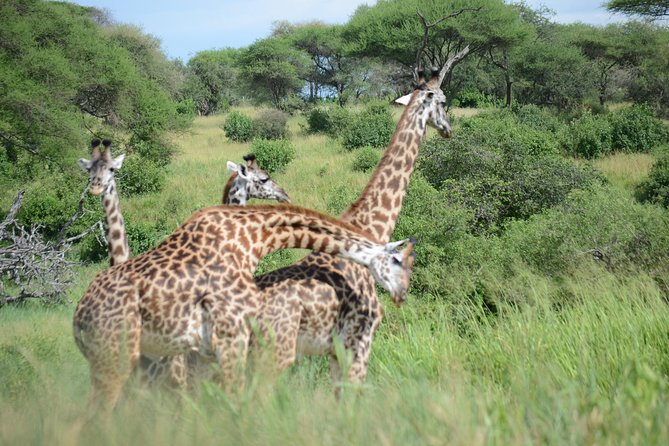
Day four begins with another early breakfast and game drive in the Serengeti. You continue watching wildlife until the afternoon, then return to camp for lunch and packing before making your way out of the park.
The drive toward Simba Campsite near the Ngorongoro rim takes about two hours once you are leaving the Serengeti area. This day has about six hours of activity, but it is best understood as a transition day with another chance for wildlife sightings.
The change in scenery is part of the pleasure. The broad Serengeti plains give way to higher ground and the Ngorongoro area. By staying near the crater rim, you are placed well for the early descent the following morning.
Camping can feel more basic than a lodge, and you should make sure the final accommodation plan is clear before paying. The tour description refers to a camping safari with two nights in lodges, while the itinerary names campsites on several nights. Ask which nights are in tents, which are in lodges, and what facilities are available at each stop.
Day 5: Down into Ngorongoro Crater
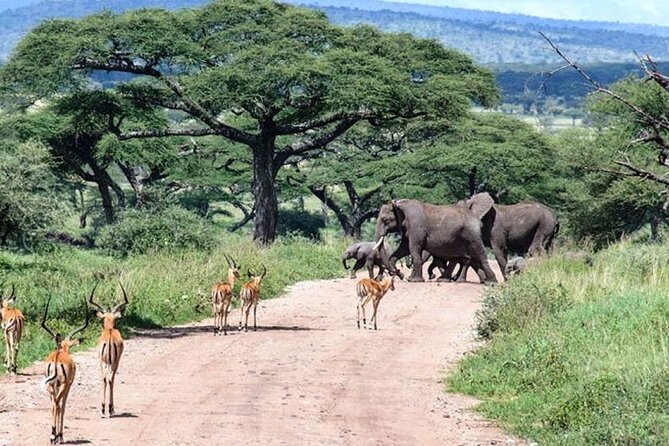
At about 6:30 a.m., you descend more than 600 meters from the crater rim to the floor. The descent is one of the most memorable parts of the route. You move from a high viewpoint into a natural basin with grassland, water, and habitat that supports a large range of animals.
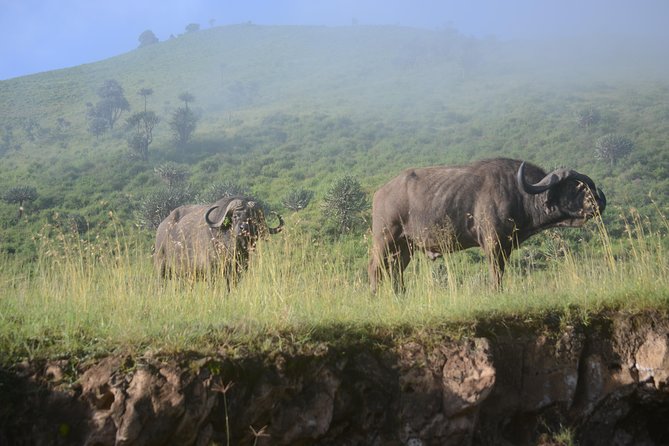
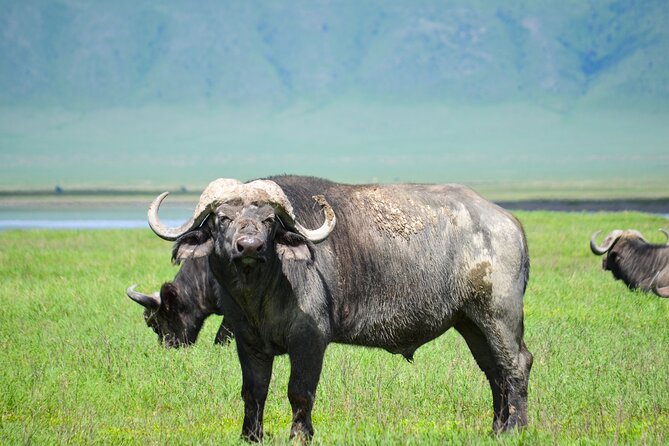
The crater is home to buffalo, zebra, wildebeest, eland, topi, warthog, hippos, and elephants. It is also known for a high concentration of predators. You might find lions and other cats here, but wildlife remains wild and sightings depend on the day.
The crater’s walls and enclosed setting make it feel different from Serengeti. In the Serengeti, you search across wide plains. In Ngorongoro, the animals are concentrated within a smaller area, so you can often spend less time covering empty ground. That does not guarantee every desired sighting, but it makes the crater a strong choice for a short safari.
The day includes about six hours of game viewing. You should expect an early start and a busy morning. The crater can feel crowded at popular sightings, especially when several vehicles gather. The advantage is that the wildlife payoff can be excellent in a relatively compact area.
After the crater visit, the route continues toward Lake Manyara for the final park day. That keeps the itinerary moving, but it also means day five is not a quiet recovery day. Plan to rest when you can.
Day 6: Lake Manyara’s forest, lake, and birdlife
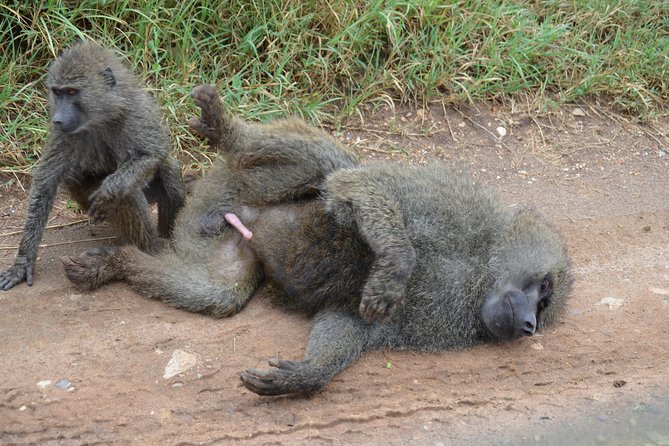
The final park is Lake Manyara National Park, reached by a short drive after breakfast. The park packs several habitats into a small area: groundwater forest, acacia woodland, swamps, baobab-covered cliffs, hot springs, and the lake itself.
This variety gives Lake Manyara a different character from the Serengeti. You may see baboons, elephants, giraffe, buffalo, and other animals moving through woodland rather than open grassland. The park is also noted for its birdlife, including large flocks of flamingos.
Tree-climbing lions are one of the park’s most famous attractions. They are not guaranteed, but the possibility adds a special goal to the game drive. Lake Manyara’s baboon population is another highlight, and the mix of forest and water can make the final day feel fresh after several days on open plains.
The stated activity time is about six hours. That is enough for a useful game drive, though the day still involves the onward trip after the park. Lake Manyara works well as a final stop because it provides different scenery and wildlife instead of repeating the Serengeti experience.
What $1,600 per person gets you in practical terms
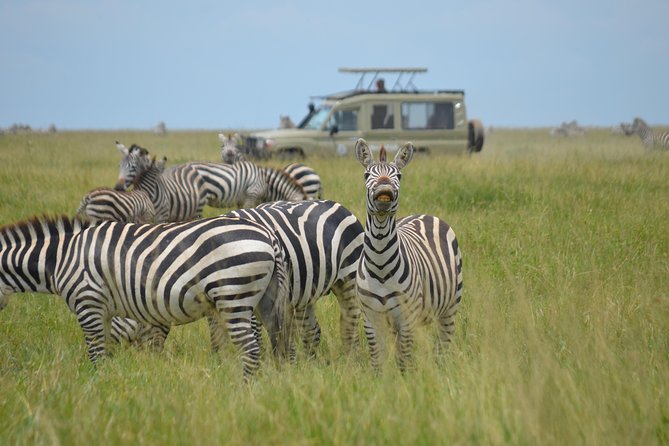
At $1,600 per person, this is an appealing price for six days across four headline parks. The value comes from the route itself: park access, long game drives, a small group, and the chance to visit both Serengeti and Ngorongoro without arranging separate transport between them.
The price looks especially competitive for people who want a classic Tanzania safari but do not need high-end lodge accommodation every night. Camping can keep costs down while putting you closer to the outdoor rhythm of the parks. The lodge nights add some comfort, but the exact arrangement should be confirmed.
I would ask these questions before booking:
- Which two nights are in lodges?
- Which nights are in campsites?
- Are meals included throughout the six days?
- Is the $1,600 price fixed for the selected departure?
- Is pickup from your Arusha accommodation included?
- What happens if the group has fewer than six people?
The description states that the price is cheap and guaranteed, but the supplied details do not spell out every inclusion. A clear list of accommodation, meals, park fees, and transport will help you compare this safari fairly with other operators.
The guide can shape the whole experience
A safari vehicle takes you into the parks, but the guide determines how the day feels. The strongest praise here centers on Elias, who is described as a good driver, friendly companion, patient helper, and someone who made an effort to respond to the group’s wishes.
That matters in several ways. You want a driver who handles long roads sensibly, watches the animals rather than rushing past them, and explains what you are seeing. You also want someone who communicates clearly when plans change, since wildlife and park conditions do not follow a timetable.
Sam and Hassan are also associated with positive safari experiences under this operator. You cannot choose a specific guide from the information provided, so ask who is likely to lead your departure and whether the guide speaks your preferred language.
The strongest service comments also point to responsive trip planning by David and Faith. That is useful if you have dietary needs, family concerns, or a tight schedule before or after the safari. The tour itself is fixed around six days, but the operator appears to handle broader Tanzania planning as well.
Camping, comfort, and the rhythm of the days
This is not a soft-paced holiday. Several days begin early, and day three can run for ten hours. You will have packed meals on the longest Serengeti day, which helps keep more time for wildlife rather than returning to camp for lunch.
The camping element is part of the appeal if you want a closer connection to the parks. It is less suitable if you need a polished room and a slow breakfast every morning. Since the wording refers to both camping and lodges, do not assume the same comfort level each night.
The maximum group size of six helps. You have a better chance of getting a window seat and less need to compromise on every stop. Still, long drives remain long drives, and the route covers substantial ground.
Most people can participate, according to the supplied details, but the safari includes rough-road driving, early starts, and extended time in a vehicle. If you have mobility concerns or a medical condition affected by bumpy roads, discuss it with the operator before booking.
Should you book this six-day safari?
Book it if you want the famous northern Tanzania circuit in one compact trip, value a small group, and are comfortable mixing camping with lodge accommodation. The route gives you elephants at Tarangire, open plains and possible migration action in the Serengeti, concentrated wildlife in Ngorongoro Crater, and forest and flamingos at Lake Manyara.
I would be more cautious if your priority is luxury, slow mornings, or spending several nights in one place. This itinerary covers a lot of ground, and the best wildlife days start early.
For the price, the tour offers a strong range of parks and a sensible small-group format. Confirm the accommodation split and inclusions, then book at least 24 hours before departure if you want the stated full-refund option. If poor weather cancels the experience, you are offered another date or a full refund. Within 24 hours, cancellations and changes are not accepted.
FAQ
Where does the safari start?
The tour is based in Arusha, Tanzania, and pickup is offered.
How long is the safari?
The experience lasts six days, approximately.
Which national parks and conservation areas are included?
The route includes Tarangire National Park, Serengeti National Park, Ngorongoro Conservation Area and Crater, and Lake Manyara National Park.
What is the maximum group size?
The tour accepts a maximum of six travelers.
Is accommodation camping or lodging?
It is described as a camping tour with lodge accommodation for two nights. The exact nights and accommodation locations should be confirmed before booking.
Are the park admissions included?
Admission is listed as included for the Ngorongoro Crater day. The other itinerary stops show admission ticket free in the supplied details, so you should confirm the full list of included fees with the operator.
Can most people participate?
Yes. The supplied information says most travelers can participate.
What is the cancellation policy?
You can cancel at least 24 hours before the start time for a full refund. Cancellations or changes made less than 24 hours before the start time are not accepted and are not refunded. If poor weather causes cancellation, you are offered a different date or a full refund.
More Tarangire National Park Safaris in Arusha
- 4 Days Tarangire Serengeti Ngorongoro Crater
★ 5.0 · 117 reviews - Tarangire Day Tour
★ 5.0 · 95 reviews - 5 Days Tanzania Group Joining Safari, Tarangire/Serengeti/Ngorongoro Crater
★ 5.0 · 85 reviews - 4 Days Tarangire, Serengeti and Ngorongoro Mid-Range Group Safari
★ 5.0 · 84 reviews
More Ngorongoro Crater Tours in Arusha
- 5 Days Camping Tarangire, Serengeti & Ngorongoro crater & Visiting Maasai
★ 5.0 · 229 reviews - 4 Days Join Group tour Tarangire Serengeti and Ngorongoro crater
★ 5.0 · 219 reviews - 4-Day Safari from Arusha: Tarangire, Serengeti and Ngorongoro
★ 5.0 · 173 reviews - 2 Days Tarangire and Ngorongoro Group Camping Safari
★ 5.0 · 146 reviews
Just added around Arusha
- 8 Days Serengeti Migration safari★ 5.0 · 11 reviews
- tarangire, ngorongoro & lake manyara park 3 days private tour★ 5.0 · 11 reviews
- tarangire & ngorongoro 2 days tour★ 5.0 · 14 reviews
- serengeti & ngorongoro 3 days private tour★ 5.0 · 15 reviews
- Mt. Kilimanjaro: Shira plateau to Cathedral point 3872m Day hike★ 5.0 · 7 reviews
- serengeti, ngorongoro & tarangire 4 days private tour★ 5.0 · 18 reviews
- 2 Days Tanzania Midrange Group Join Safari★ 5.0 · 7 reviews
- climb the KILIMANJARO via Lemosho route★ 5.0 · 4 reviews
Serengeti Safaris, compared.

Serengeti Balloon Safari and authentic bush breakfast
Read our review →
3 Days Serengeti & Ngorongoro Group Camping Safari
Read our review →
5-Day Highlights mid-Range Crater, Serengeti, Tarangire
Read our review →


Private 6-Day Tarangire Manyara Crater and Serengeti with Mid-Range Lodges
Read our review →
5 Days Camping Tarangire, Serengeti & Ngorongoro crater & Visiting Maasai
Read our review →