Reviewed · ARUSHA TOURS
5 Days_Haking_Mount_Kilimanjaro by_Using_Marangu Route
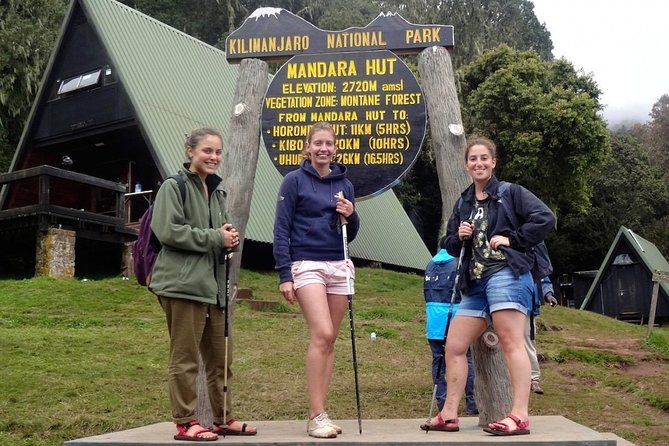
The unusual appeal of this Kilimanjaro climb is simple: you sleep in communal huts, not tents, all the way up. Mandara and Kibo Huts have 60 beds each, while Horombo has 120, with bunk beds, sponge mattresses, and pillows. That makes the Marangu Route the most straightforward choice for hikers who prefer a roof and a bed.
I like the route’s changing scenery, from eucalyptus forest and colobus monkeys to giant lobelias, bare moorland, and the stark saddle between Kibo and Mawenzi. I also like the practical package: park and rescue fees, guides, food, purified water, transfers, and hotel accommodation are included. The main catch is the five-day schedule. It is short for a high-altitude climb, so altitude adjustment may be your biggest challenge, not the trail itself.
Key points to know before booking
- Hut sleeping instead of camping: You get a bunk, mattress, and pillow at each mountain camp, though rooms are communal.
- A direct summit schedule: The climb to Uhuru Peak begins around 2:00am from Kibo Hut.
- A short five-day plan: You reach Horombo on Day 2 and Kibo on Day 3, leaving limited time to adapt.
- A useful side trip: Maundi Crater offers views toward northern Tanzania and Kenya near Mandara Hut.
- Meals and water are included: Breakfast, lunch, dinner, and clean purified drinking water are part of the package.
- Expect a shared mountain community: Dining huts bring together climbing groups from several countries, with drinks sometimes sold at higher prices.
Why the Marangu Route feels different
Kilimanjaro has several routes, but Marangu is the only one in this package with sleeping huts at every camp. That changes the daily rhythm. At the end of a hard climb, you can put your pack down, find your bunk, and enter a dining hut rather than helping set up a tent.
The tradeoff is privacy. The huts are communal, and the bunks are arranged for many people. Mandara and Kibo each hold 60 people, while Horombo holds 120. You should expect a social, shared setting rather than a quiet room. Solar lights are provided, but the facilities become more basic as you gain height.
At Mandara and Horombo, bathrooms and running water are available. At Kibo, the facilities are much simpler, with basic men’s and ladies’ latrines. This is not a comfort trek in the usual sense. It is a mountain climb with one useful comfort: a fixed bed each night.
The route is often called the Coca Cola or tourist route. That nickname reflects its popularity and its hut system, not a lack of effort. The trail may be considered the easiest and shortest route to the summit, but Uhuru Peak is still at 5,895 meters. The thin air is serious, and a short schedule gives your body less time to adjust.
Other Arusha days people book alongside this one:
- Balloon Safari & Bush Breakfast in Serengeti – Miracle Experience
★ 5.0 · 1,646 reviews - Tanzania Classic – 7 Days
★ 5.0 · 1,151 reviews - 4 Days Group Camping Safari
★ 5.0 · 1,101 reviews
Day 1: Marangu Gate to Mandara Hut
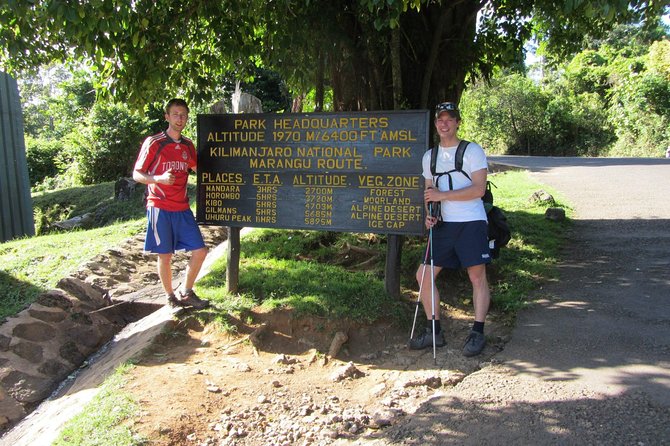
After breakfast and a briefing, you drive for about 45 minutes to the Kilimanjaro park gate. Registration comes first. Then you begin walking through the rainforest toward Mandara campsite, at about 2,740 meters.
This is a pleasant opening day because the forest provides shade and plenty to look at. Keep an eye out for tall eucalyptus trees, birds, and black-and-white colobus monkeys. The trail feels green and enclosed at first, a sharp contrast to the exposed upper mountain you will see later.
Mandara Hut is the first overnight stop. If you still have energy, the side trip to Maundi Crater is worth considering. It offers a broader view of the surrounding area, including northern Tanzania and Kenya. It is a small addition to the day, but it helps you understand where you are before the forest gives way to open high country.
The first night also introduces you to the hut routine. Beds are shared, meals are served in a common dining area, and other climbing groups may be present. That can create a lively atmosphere, but it also means you should bring patience, earplugs if you use them, and a willingness to share space.
Day 2: The moorland walk to Horombo Hut
Day 2 takes about five hours and leads from the rainforest into open moorland. The route climbs steadily, and the change in vegetation is one of the most satisfying parts of the trip.
You will see views of Mawenzi and Kibo, the two major peaks of Kilimanjaro. Giant lobelias and grounsels appear along the trail, giving the high slopes a strange, almost prehistoric look. This is also where you may begin to notice altitude effects. Headache, breathlessness, poor sleep, or a reduced appetite can appear even though the walking pace feels manageable.
Horombo Hut sits at about 3,720 meters. It is larger than the other huts, with 120 beds, and can feel busy. The size is useful because it provides a central place to eat and rest, but it also means more noise and movement.
The supplied schedule allows an extra day at Horombo for rest or a hike toward Mawenzi. That extra night is important enough to consider seriously. The published five-day plan moves quickly, and an additional acclimatization day can make the climb more comfortable and may improve your chance of reaching the summit. It is not part of the stated five-day duration, so ask the operator about the cost and availability before booking.
Day 3: Across the saddle to Kibo Hut
The walk to Kibo Hut takes about six hours. You pass the last water point and continue across the broad saddle between Mawenzi and Kibo. This is a major change from the plant life around Horombo.
The upper heath gives way to a bare, moonlike stretch of ground. There is little shelter, and the open terrain can make the height feel more real. You are now preparing for the most demanding section of the climb.
Kibo Hut is the staging point for the summit attempt. Dinner comes before an early rest, with the climb scheduled to begin around 2:00am. Try to treat this afternoon as recovery time. The summit night will ask for steady effort, warm clothing, water, snacks, and mental patience.
Soft drinks, bottled water, and beer may be sold at the huts, but prices rise with elevation. Carry small Tanzanian bills if you want to buy anything. Do not rely on these sales for basic supplies. Bring the drinks and snacks you need for the summit attempt yourself.
Same country, a completely different kind of safari:
- 5 Days Group Camping Safari
★ 5.0 · 730 reviews - Materuni Waterfalls, coffee tour & Kikuletwa Hot Springs
★ 5.0 · 643 reviews - 3 Days Serengeti & Ngorongoro Group Camping Safari
★ 5.0 · 574 reviews - 7-Day Premium Luxury Tanzania Safari All-Inclusive
★ 5.0 · 426 reviews
Day 4: The long push to Uhuru Peak
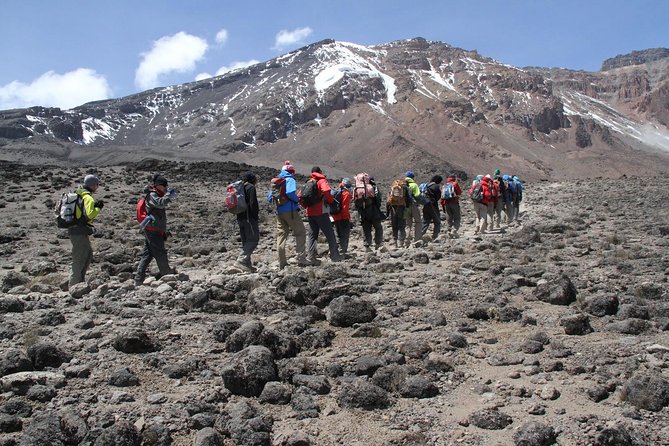
Summit day is the heart of the experience and the hardest part by far. You start around 2:00am and climb steep scree or snow toward Gilman’s Point, on the crater rim at about 5,681 meters. The ascent can take four to seven hours.
The early start has a practical purpose. It gives you a chance to reach the crater rim around sunrise and continue to Uhuru Peak while the day is still young. It also means you will climb in darkness at first, often focusing on the next few steps rather than the full distance ahead.
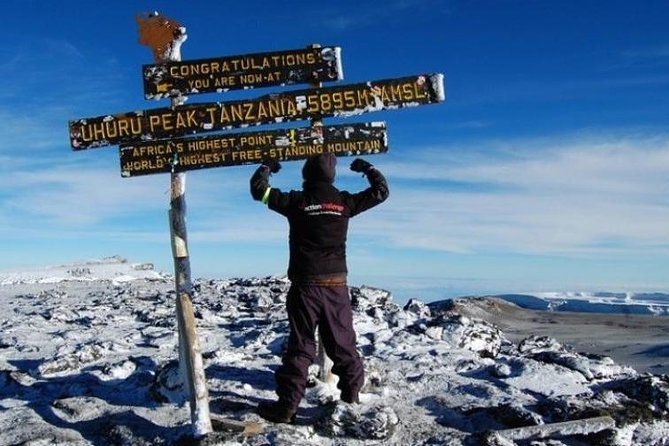
From Gilman’s Point, the route continues for another one to two hours toward Uhuru Peak, at 5,895 meters, the highest point in Africa. The views are described as exceptional, but reaching the summit is not guaranteed. Altitude, cold, exhaustion, and weather can all affect the result.
The safest approach is to follow the guide’s pace and instructions. The operation has been associated with guides and staff named Gabriel and Rafael, but your assigned guide may differ. The available feedback repeatedly points to patience, positive support, good food, and strong help on summit day. Those are exactly the qualities you want when the trail becomes slow and uncomfortable.
After photographs at the summit, you descend to Kibo Hut for lunch and a rest. Then you continue down to Horombo for dinner and the night. This is a very long day even though the stated walking time is about six hours. The summit ascent and descent are physically demanding, and the return to Horombo adds another major section. You should expect to finish exhausted.
Day 5: Down through the forest to Marangu
The final day begins with breakfast and a steady descent through moorland to Mandara Hut, around 2,700 meters. From there, the trail returns through the lush forest to the Marangu park gate at about 1,830 meters.
The lower trail can be wet and muddy. Gaiters and trekking poles are useful here, even if you have not needed them higher up. Shorts and a T-shirt may be comfortable at the bottom, but keep rain gear and warmer layers within reach because mountain weather can shift.
A vehicle meets you at Marangu village and takes you back to your hotel in Moshi or Arusha. The package also includes arrival and departure transfers, which is useful after a demanding descent. You will likely want a proper shower, a large meal, and a quiet bed.
The final detail is tipping. Tips are not included, and you should budget for guides and porters separately. Carry enough Tanzanian cash and ask the operator about its preferred tipping practice before you start. A respectful tip is an important part of the mountain economy, but it should not be treated as an unexpected last-minute charge.
What the $1,809.50 price covers
At $1,809.50 per person, the value depends on what you would otherwise arrange yourself. The package includes park fees, rescue fees, professional mountain guides, arrival and departure transfers, meals, purified drinking water, and two nights of hotel accommodation. Breakfast, lunch, and dinner are listed for the five-day experience.
International flights and tips are not included. You will also want to confirm exactly how the two hotel nights fit around the mountain portion, since the climb itself uses huts at Mandara, Horombo, and Kibo. The price is easier to judge once you know your airport transfers, hotel nights, food, water, and mountain fees are handled together.
The hut system can also save you from buying or carrying camping equipment. You still need suitable clothing and personal gear, but you do not need to plan for a tent-based route under this arrangement. For someone who values simpler logistics, that is a real benefit.
The five-day length is the main value question. You get a faster, more affordable climb, but less time for altitude adjustment than on a longer schedule. If reaching the summit matters more than keeping the trip short, ask about adding a rest day at Horombo before you pay.
Food, water, and hut life
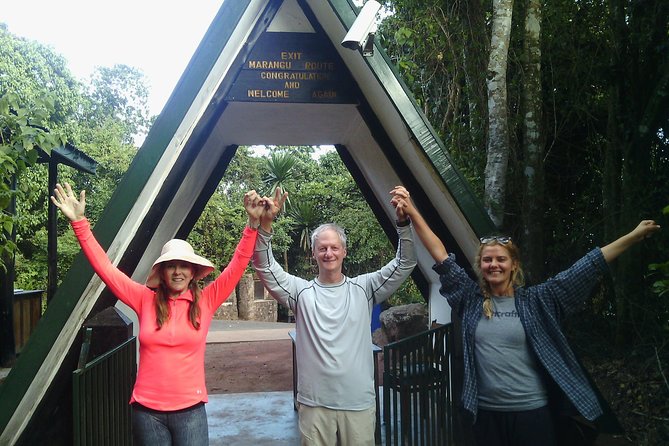
Meals are included, and the available feedback gives particular praise to the amount and quality of the food. That matters on Kilimanjaro. You need regular meals to keep walking, and a hot dinner is one of the few reliable pleasures after a cold, tiring day.
Clean, purified drinking water is also included. Carry a reusable bottle or hydration system, and keep a backup bottle accessible during the day. The supplied information does not specify the meal menu, so tell the operator about dietary needs before departure rather than assuming the dining huts will provide alternatives.
The communal dining rooms are part of the experience. Groups from different countries eat together, creating a friendly, energetic setting. Soft drinks, bottled water, and beer may be available for purchase, but the cost increases with altitude and payment requires small Tanzanian notes.
Who should choose this climb
This trip suits you if you want a private activity for your own group and prefer huts to tents. It also suits hikers who want a direct route, included meals, and organized transfers rather than piecing together park fees, guides, accommodation, and transport.
You should have a moderate level of physical fitness. The trail is not a casual walk, especially on summit night, and the altitude makes every step harder. The five-day schedule is best for someone who understands that the short format brings a greater acclimatization challenge.
The route is less suitable if you need private sleeping quarters, modern bathrooms throughout, or a relaxed ascent. It is also not ideal if your main goal is a slow, carefully paced altitude program. In that case, ask for the extra Horombo night or compare this plan with a longer route.
The positive staff comments are worth noting without treating them as a guarantee. Gabriel is named for summit support, Rafael for a kind and effective team, and Mary for a warm airport welcome. Staff assignments can change, but these names give you useful points to ask about when confirming your booking.
Booking details and cancellation terms
Pickup is offered, and the activity uses mobile tickets. Confirmation is provided at booking, and the tour is private, meaning only your own group participates.
Cancellation is free up to 24 hours before the local start time for a full refund. Inside 24 hours, the amount paid is not refunded, and changes made during that period are not accepted. Build a little room into your plans, especially if you are connecting from an international flight.
Should you book this Marangu Route climb?
Book it if hut accommodation, included mountain costs, organized transfers, and a short route matter most to you. The forest, moorland, saddle, summit push, and communal dining huts give you a clear sense of Kilimanjaro without the extra work of camping.
Before paying, I would ask three direct questions: Can you add a Horombo acclimatization night, which hotel nights are included and when, and what tipping guidance does the company provide? If the answers suit you, the package offers solid practical value.
Choose a longer climb instead if you are concerned about altitude or want a gentler pace. The five-day Marangu Route is accessible in terms of logistics, but not easy in the physical sense. Its best feature is the hut system. Its biggest weakness is the compressed schedule.
FAQ
Is pickup included?
Yes. Pickup is offered, and arrival and departure transfers are included in the package.
How long is the climb?
The experience lasts approximately five days.
Does the tour use tents?
No. The Marangu Route uses communal sleeping huts at each mountain camp. Bunks have sponge mattresses and pillows.
How many beds are in the huts?
Mandara and Kibo Huts each have 60 beds. Horombo Hut has 120 beds.
Are bathrooms and running water available?
Bathrooms and running water are available at the two lower huts. At the last camp, only very basic men’s and ladies’ latrines are available.
What time does the summit climb begin?
The summit attempt begins at approximately 2:00am on Day 4.
Is Uhuru Peak included in the route?
Yes. The route continues from Gilman’s Point to Uhuru Peak, which is listed at 5,895 meters and is the highest point in Africa.
Are tips and international flights included?
No. Tips and international flights are not included.
Can I cancel for a full refund?
Yes, if you cancel at least 24 hours before the experience start time. Cancellations within 24 hours are not refunded.
Just added around Arusha
- 8 Days Serengeti Migration safari★ 5.0 · 11 reviews
- tarangire, ngorongoro & lake manyara park 3 days private tour★ 5.0 · 11 reviews
- tarangire & ngorongoro 2 days tour★ 5.0 · 14 reviews
- Mt. Kilimanjaro: Shira plateau to Cathedral point 3872m Day hike★ 5.0 · 7 reviews
- serengeti, ngorongoro & tarangire 4 days private tour★ 5.0 · 18 reviews
- serengeti & ngorongoro 3 days private tour★ 5.0 · 15 reviews
- 2 Days Tanzania Midrange Group Join Safari★ 5.0 · 7 reviews
- climb the KILIMANJARO via Lemosho route★ 5.0 · 4 reviews
Arusha Tours, compared.


Materuni Waterfalls, coffee tour & Kikuletwa Hot Springs
Read our review →
3 Days Serengeti & Ngorongoro Group Camping Safari
Read our review →
7-Day Premium Luxury Tanzania Safari All-Inclusive
Read our review →
5-Day Highlights mid-Range Crater, Serengeti, Tarangire
Read our review →