
Reviewed · SERENGETI SAFARIS
5 Days Tarangire ,Serengeti.Ngorongoro and Lake manyara
The biggest appeal here is the range. In five days, you visit four famous northern Tanzania parks, from elephant country in Tarangire to the open plains of the Serengeti and the wildlife-filled Ngorongoro Crater. I like that camping gear, meals, transport, and game drives are handled in one price, and I like the small maximum of six people, which should make it easier to ask questions and get a good view from the vehicle.
The trade-off is a busy schedule. Long drives connect the parks, and several days include packing, camp changes, and early starts. This is a strong choice if you want maximum wildlife value for your money, but less so if you want slow mornings, private rooms, or plenty of time at each camp.
Key points
- Four major parks in five days: Tarangire, Serengeti, Ngorongoro, and Lake Manyara are all included.
- Camping keeps the price down: Gear, camping accommodation, meals, transport, and game drives are covered.
- A group of no more than six: Small numbers help the safari feel more personal.
- The Serengeti gets serious time: Day two takes you into the park, followed by a full morning game drive on day three.
- Ngorongoro offers a rhino chance: The early crater descent is planned around finding the hard-to-spot black rhino.
- Guide quality matters: The operator has worked with guides including Elias, Champion, and Fredy, all praised for animal spotting, driving, and good humor.
Four national parks, one budget safari
This safari is built for people who want the classic Northern Circuit without paying lodge prices each night. At $1,270 per person, it is not a bare-bones day trip, but it gives you a lot for the money: round-trip pickup from Arusha, a safari vehicle, camping equipment, meals, game drives, and visits to four major wildlife areas.
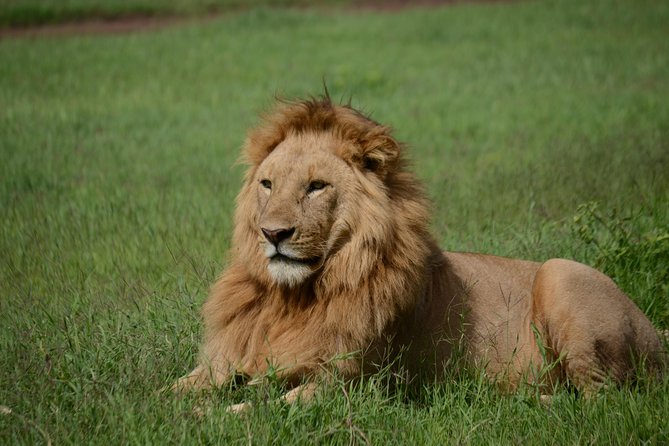
I see the value in the route. Tarangire gives you elephants and baobabs. The Serengeti brings the best chance of dramatic predator sightings. Ngorongoro concentrates animals inside a remarkable crater. Lake Manyara adds birds, monkeys, hippos, and a chance, though not a promise, of seeing tree-climbing lions.
The price works best for you if wildlife matters more than comfort. Camping means you should expect simpler living conditions than you would find at a lodge. One useful point is that the camping equipment is supplied, so you do not need to arrive with a complete safari camp in your luggage.
The group limit of six is another plus. You will still share the experience, but a six-person vehicle is easier to manage than a large coach. It also gives you a better chance of asking the guide to pause, explain animal behavior, or adjust the viewing position when conditions allow.
More Lake Manyara Safaris in Arusha
- Private 6-Day Tarangire Manyara Crater and Serengeti with Mid-Range Lodges
★ 5.0 · 238 reviews - 3 Days Tarangire, Ngorongoro & Lake Manyara Group Camping Safari
★ 5.0 · 102 reviews - 3 Days Private Safari – manyara, Ngorongoro & Tarangire
★ 5.0 · 94 reviews
Day one: elephants and baobabs in Tarangire
Pickup is scheduled for 7:30 a.m. from your Arusha hotel. After meeting the guide, chef, and other members of the group, you drive for about two hours to Tarangire National Park.
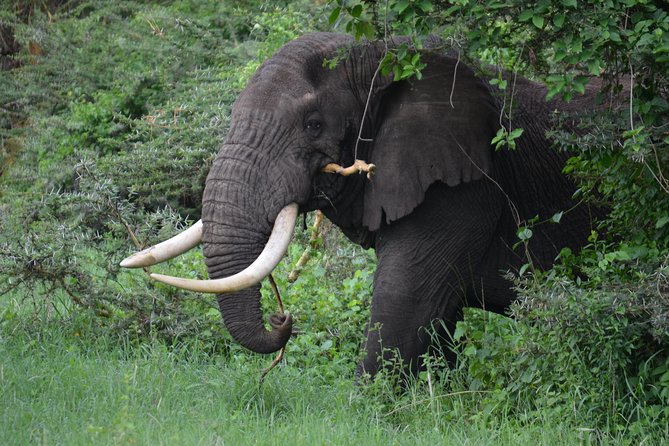
Tarangire is a fine first stop because it looks and feels different from the parks that follow. Its ancient baobabs give the park a strong sense of place, while large elephant families are one of its main attractions. The park is known for having one of Tanzania’s highest concentrations of elephants, so this is where you may spend time watching social behavior rather than simply ticking elephants off a list.
The game drive follows current animal reports when possible. Herbivores such as giraffes, wildebeest, and zebras are common sights, while lions, cheetahs, and leopards require more patience and luck. That distinction matters. A guide can help locate animals, but no honest safari can promise a particular predator.
You should allow around six hours for the park portion. Since this is your first day, Tarangire also gives you a gentler introduction to the rhythm of a camping safari: several hours in the vehicle, stops for wildlife, and time spent watching rather than rushing from one attraction to another.
Day two: the long road to the Serengeti
After breakfast near Mto wa Mbu, the route to the Serengeti takes about six hours, including stops. This is one of the less glamorous parts of the trip, but it is also part of what makes the safari possible at this price.
The road passes through the Ngorongoro Conservation Area. A brief stop at the Ngorongoro Crater viewpoint gives you a look over the huge crater before you continue toward the Serengeti. The planned viewpoint stop lasts about 20 minutes, so treat it as a quick scenic break, not a full crater visit.
There is also an optional Maasai village visit. If you choose it, you get time with Maasai culture and a look at traditions connected with warriors, livestock, and village life. The description also notes that some older practices, such as lion hunting and drinking animal blood, are largely things of the past, with exceptions. Ask about the cost and exact timing before adding the visit, since it is optional and can affect an already long day.
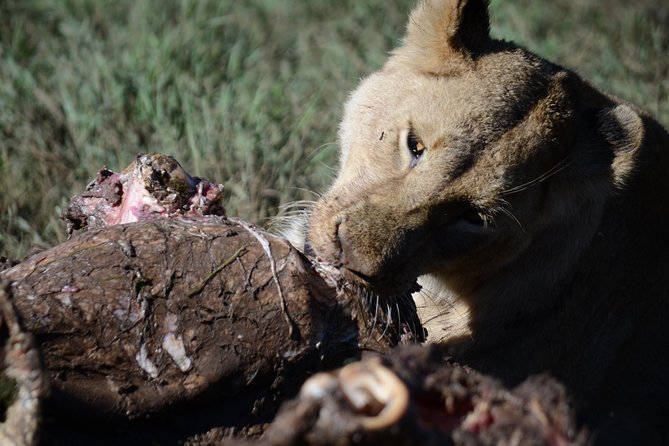
The payoff is entering the Serengeti. This park is the centerpiece of the route, and your first drive can begin the search for lions, cheetahs, leopards, hyenas, and large grazing animals. The word Serengeti often brings to mind endless plains, but the real pleasure is the movement of life across them: a herd changing direction, a predator watched by nervous prey, or a lone giraffe rising above the grass.
Day three: an early Serengeti game drive
Day three begins with an early breakfast and an early game drive in the Seronera area. This is one of the strongest parts of the schedule because cooler morning hours can be a good time for animal activity, and the light is often better for viewing and photographs.
You continue until the afternoon, then return to camp for lunch, packing, and a change of direction. The day is not over after lunch. You continue the game drive while leaving the Serengeti, with roughly two hours of driving toward Simba Campsite near the Ngorongoro Crater rim.
That combination gives you a useful final look at the Serengeti rather than cutting straight from breakfast to the road. It also makes for a long day. You will spend many hours in the vehicle, so this schedule suits you if you would rather use every available hour for wildlife than protect your rest time.
The camp setting can add a memorable edge to the safari. Animals may sometimes be spotted near campsites, so listen to the camp team and guide about safe movement and local rules. Do not treat a campsite as a place to wander freely. The wildlife is the reason you are there, but it is still wild.
More Serengeti Safaris in Arusha
- Balloon Safari & Bush Breakfast in Serengeti – Miracle Experience
★ 5.0 · 1,646 reviews - 3 Days Serengeti & Ngorongoro Group Camping Safari
★ 5.0 · 574 reviews - 5-Day Highlights mid-Range Crater, Serengeti, Tarangire
★ 5.0 · 296 reviews - 3-Day Classic Serengeti Safari
★ 5.0 · 263 reviews
Day four: inside the Ngorongoro Crater
The early start comes again on day four. At about 6:15 a.m., you descend into Ngorongoro Crater to look for black rhino.
The crater floor is well suited to wildlife viewing because many animals are concentrated within a relatively enclosed area. You may find it easier to see a range of species here, but the black rhino remains the difficult target. A sighting is possible, not guaranteed, and the guide’s patience and ability to read distant movement matter a great deal.
After lunch and more game viewing, you ascend from the crater and return to camp to pack. The next transfer takes you toward Sunbright Lodge and Campsite near Lake Manyara National Park. Swimming may be available there for those interested, but the supplied details do not give further information about pool facilities, so confirm the arrangements before you count on it.
This is another full day with an early start, wildlife viewing, a climb out of the crater, packing, and a transfer. I would not choose this route if you want a relaxed afternoon every day. I would choose it if the chance to see Ngorongoro’s concentrated wildlife is worth a demanding pace.
Day five: birds, hippos, and Lake Manyara
After breakfast, you enter Lake Manyara National Park for the final game drive. The park is associated with large numbers of flamingos on the lake and with tree-climbing lions, though the lions are rarely seen. That wording is important: enjoy the possibility, but do not make the trip depend on it.
The day can include a stop at the hippo pool, where you get a closer look at hippos from a designated viewing area. You may also see buffaloes, wildebeest, warthogs, monkeys, vultures, eagles, and other birds. The hot spring is another listed stop during the drive.
Lake Manyara works well as a final park because it changes the focus from the large open plains. Birdlife becomes more prominent, and the mix of forest, lake, and open areas can produce a different set of sightings from Tarangire and the Serengeti.
The park portion is planned for about six hours. As with every wildlife drive, conditions vary. Flamingos may not be gathered exactly where you expect, and tree-climbing lions are a rare bonus rather than a scheduled event.
What the guides add to the experience
A safari vehicle and park access do not create a good safari by themselves. The guide shapes the day, from choosing roads to explaining animal behavior and handling rough sections of track.
The operator’s guide team includes Elias, Champion, and Fredy. Elias is described as especially strong at spotting animals, driving, and keeping the mood light. Champion is praised for energy, determination, friendliness, and effort. Fredy is noted for handling rough terrain and finding wildlife.
You should not assume that one particular guide will be assigned to your departure unless the company confirms it. Still, these names give you a useful idea of the qualities to ask about before booking: animal spotting, careful driving, clear communication, and flexibility.
A guide who can find animals is valuable, but I also care about how the guide manages time. On this route, you want someone who can balance a good sighting with the need to reach camp, complete a park exit, or make an early crater descent the next morning.
Camping, meals, and the comfort question
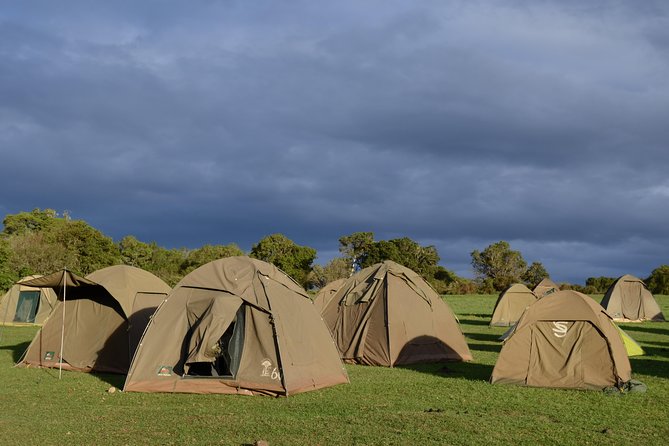
Camping is the main reason this safari costs less than a lodge-based trip. The necessary camping equipment is included, along with camping accommodation and meals prepared by the safari chef.
Food has been a strong part of the operator’s service, with meals described as a highlight. That matters on a route with long drives and early breakfasts. You need filling food and dependable meal timing when the vehicle leaves camp before sunrise or returns after a long game drive.
Comfort, however, is relative. One of the clearest practical points is that the lower price means living conditions are not top notch. You should be ready for basic camp life rather than hotel-style service. Pack with that in mind and make sure you are comfortable sharing simple facilities and sleeping in a tented setting.
The overnight plan includes Simba Campsite near Ngorongoro and Sunbright Lodge and Campsite near Lake Manyara, while the exact camping locations for every night should be confirmed before departure. The supplied description calls the experience a five-day safari, while also referring to five nights in its general overview, so ask the operator to clarify the exact number of nights and where each night is spent.
The pace, vehicle time, and small-group setup
The route covers a lot of ground. Day two includes six hours from Mto wa Mbu to the Serengeti. Day three combines a morning drive, lunch and packing, more wildlife viewing, and a roughly two-hour transfer. Day four adds an early crater descent, a crater ascent, packing, and a move toward Manyara.
I would call the pace ambitious but logical. Each park contributes something different, and cutting one would reduce the variety. The cost is that you will spend less time resting and more time moving between camps.
Pickup from Arusha removes one major planning task. The tour is designed for a maximum of six people, which is a good middle ground for solo visitors, couples, and small family groups who want company without a large crowd.
Most people can participate, according to the supplied information. Still, the long drives, rough park roads, early starts, and camping conditions are worth considering if you have mobility, sleep, or comfort concerns.
Is $1,270 good value?
For a five-day Northern Circuit safari, the value comes from what is bundled together. You are paying for transport from Arusha, camping equipment, accommodation, meals, game drives, and access to four major parks within one organized trip.
The price is particularly attractive if you already prefer camping or would otherwise need to rent gear. It also gives you a full route without the added cost of lodge rooms each night.
The value is weaker if you expect private rooms, a slow schedule, or a luxury vehicle and camp service. This is a budget camping safari, not a lodge holiday with occasional wildlife viewing.
I would compare the exact inclusions before paying. Confirm park fees, the number of nights, the type of camping equipment, the accommodation near Lake Manyara, and any extra charge for the Maasai village visit. The information supplied specifically lists admission as included for Ngorongoro on day four, while other days show admission as free in the schedule, so ask the company to explain all park and conservation fees in writing.
Who should book this safari?
I would recommend this trip to you if you want a broad introduction to Tanzania’s Northern Circuit and care more about wildlife access than room comfort. It suits first-time safari visitors, budget-conscious couples, small groups, and anyone who wants to see several famous parks in one compact journey.
It is also a good fit if you enjoy the social side of a small group. The crew is described as warm and open, and a chef travels with the safari team, giving the trip a shared camp atmosphere rather than a series of separate lodge stays.
I would hesitate if you dislike long drives, early breakfasts, packing every day, or uncertain wildlife sightings. The route cannot promise a leopard, cheetah, rhino, flamingo gathering, or tree-climbing lion. It can put you in the right places and give a capable guide time to search.
Free cancellation is available if you cancel at least 24 hours before the start time. Cancellations within 24 hours are not refunded, and poor weather may lead to another date or a full refund.
Should you book the five-day route?
Book it if your priority is maximum park variety at a controlled price. Tarangire, Serengeti, Ngorongoro, and Lake Manyara each bring a different wildlife setting, and the small group limit makes the camping format more appealing.
Before booking, confirm the guide, the exact overnight plan, all included fees, and the optional Maasai village visit. If you accept basic camping and a packed schedule, this is a practical way to see the Northern Circuit without paying lodge rates. If you want comfort and unhurried mornings, spend more on a slower lodge-based safari instead.
FAQ
What parks are included in the five-day safari?
The route includes Tarangire National Park, Serengeti National Park, Ngorongoro Crater, and Lake Manyara National Park.
Where does pickup take place?
Pickup is offered from your hotel in Arusha, with the first-day departure scheduled for 7:30 a.m.
How many people can join the tour?
The maximum group size is six travelers.
Is camping equipment included?
Yes. Camping equipment, camping accommodation, meals, transportation, and game drives are included in the tour arrangement.
Is the Maasai village visit included?
The Maasai village visit is optional. Confirm any extra cost and timing with the tour provider before adding it.
What is the cancellation policy?
You can receive a full refund if you cancel at least 24 hours before the experience starts. Cancellations or changes made within 24 hours are not accepted for a refund. If poor weather causes the tour to be canceled, you will be offered another date or a full refund.
More Tarangire National Park Safaris in Arusha
- 4 Days Tarangire Serengeti Ngorongoro Crater
★ 5.0 · 117 reviews - Tarangire Day Tour
★ 5.0 · 95 reviews - 5 Days Tanzania Group Joining Safari, Tarangire/Serengeti/Ngorongoro Crater
★ 5.0 · 85 reviews - 4 Days Tarangire, Serengeti and Ngorongoro Mid-Range Group Safari
★ 5.0 · 84 reviews
More Ngorongoro Crater Tours in Arusha
- 5 Days Camping Tarangire, Serengeti & Ngorongoro crater & Visiting Maasai
★ 5.0 · 229 reviews - 4 Days Join Group tour Tarangire Serengeti and Ngorongoro crater
★ 5.0 · 219 reviews - 4-Day Safari from Arusha: Tarangire, Serengeti and Ngorongoro
★ 5.0 · 173 reviews - 2 Days Tarangire and Ngorongoro Group Camping Safari
★ 5.0 · 146 reviews
Just added around Arusha
- 8 Days Serengeti Migration safari★ 5.0 · 11 reviews
- tarangire, ngorongoro & lake manyara park 3 days private tour★ 5.0 · 11 reviews
- tarangire & ngorongoro 2 days tour★ 5.0 · 14 reviews
- Mt. Kilimanjaro: Shira plateau to Cathedral point 3872m Day hike★ 5.0 · 7 reviews
- serengeti, ngorongoro & tarangire 4 days private tour★ 5.0 · 18 reviews
- serengeti & ngorongoro 3 days private tour★ 5.0 · 15 reviews
- climb the KILIMANJARO via Lemosho route★ 5.0 · 4 reviews
- 2 Days Tanzania Midrange Group Join Safari★ 5.0 · 7 reviews
Serengeti Safaris, compared.

Serengeti Balloon Safari and authentic bush breakfast
Read our review →
3 Days Serengeti & Ngorongoro Group Camping Safari
Read our review →
5-Day Highlights mid-Range Crater, Serengeti, Tarangire
Read our review →


Private 6-Day Tarangire Manyara Crater and Serengeti with Mid-Range Lodges
Read our review →
5 Days Camping Tarangire, Serengeti & Ngorongoro crater & Visiting Maasai
Read our review →