
Reviewed · SERENGETI SAFARIS
4-Day Safari to Tarangire ,Serengeti and Ngorongoro crater from Arusha
The main draw is the route: Tarangire’s elephant herds, the Serengeti’s great plains, and Ngorongoro’s wildlife-filled crater in only four days. I like that the trip gives the Serengeti two nights, rather than treating Tanzania’s most famous park as a quick stop. I also like the early game drives, when predators and other animals are often more active.
The package is practical, too. Pickup, airport transfers, meals, drinking water, camping equipment, and accommodation before and after the safari are included. Guides such as Omar, Maliaki, Aaron, Joseph, and David Simba have been praised for spotting animals and explaining what you see.
The tradeoff is time. You will cover long distances between parks, rise early, and spend much of each day in a safari vehicle. The published schedule also places early wildlife drives on both Day 3 and Day 4, so confirm the exact overnight location and morning plan before departure.
Key Points for Choosing This Four-Day Safari
- Three major wildlife areas in one route: Tarangire, Serengeti, and Ngorongoro all offer a different kind of safari.
- Two nights connected with the Serengeti: This gives you more time in the park than a single-night visit.
- Excellent timing from January to April: The southern Serengeti can be important for wildebeest calving during these months.
- Private group format: Only your own group participates, which allows more room for questions and schedule discussion.
- Camping keeps the price in check: At $1,515 per person, the package includes many costly basics, but it is not a luxury lodge safari.
- Early starts are part of the deal: Sunrise drives can bring strong wildlife viewing, but this is not a sleep-in holiday.
Why This Route Works in Four Days
This safari packs three of northern Tanzania’s best-known wildlife areas into a short trip from Arusha. That makes it useful if you have limited time, but it also means the road miles matter.
Tarangire gives you a first taste of open savanna and elephant country. Serengeti then takes up the heart of the trip, with two nights connected to the park and a full day of game viewing. Ngorongoro finishes the route with a crater drive where animals are concentrated in a relatively compact area.
I like this order because each park has a different feel. Tarangire is shaped by the Tarangire River and seasonal swamps. Serengeti is broad and open, with wildlife moving across huge distances. Ngorongoro offers a dramatic crater setting and the possibility of seeing rare black rhino.
You should also understand the pace. The daily activities are listed at about six hours, but the road journeys between parks make the full days feel longer. This is a safari for people who would rather see several important places than spend four quiet days at one camp.
More Serengeti Safaris in Arusha
- Balloon Safari & Bush Breakfast in Serengeti – Miracle Experience
★ 5.0 · 1,646 reviews - 3 Days Serengeti & Ngorongoro Group Camping Safari
★ 5.0 · 574 reviews - 5-Day Highlights mid-Range Crater, Serengeti, Tarangire
★ 5.0 · 296 reviews
Day 1: Elephants and Baobab Country in Tarangire
The first morning begins with pickup from your hotel after breakfast, with a listed start time of 7:30 am. You then drive to Tarangire National Park for a full day of wildlife viewing.
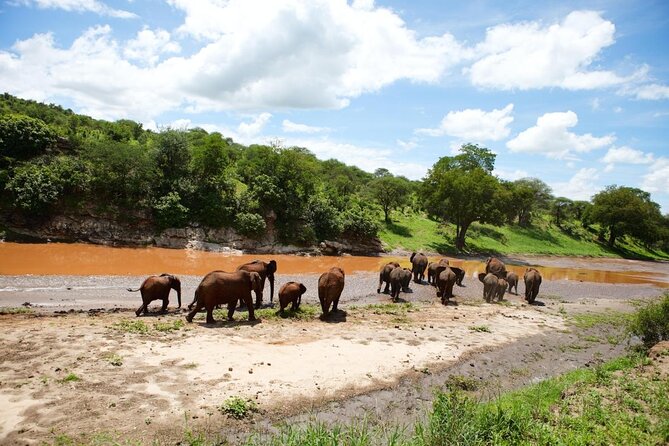
Tarangire is especially associated with elephants, and that is the park’s clearest appeal. From the open-roof vehicle, you look across seasonal swamps, savanna, and the Tarangire River while searching for elephant, zebra, wildebeest, buffalo, and giraffe.
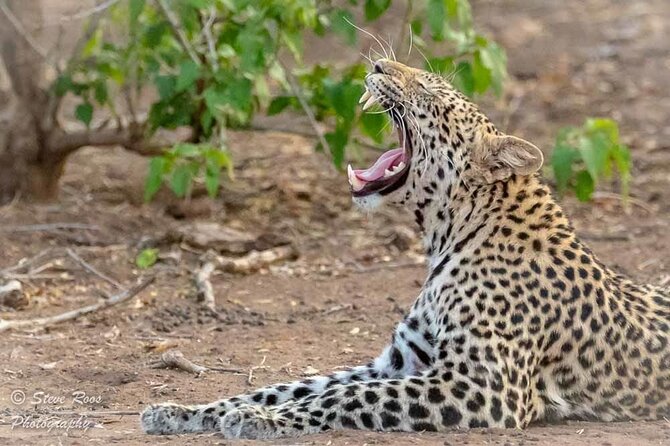
The scenery changes with water levels and the time of year. Animals gather near dependable water, so the river and wetlands give your guide useful places to search. Lions may be seen stalking prey, while leopards can be harder to spot when resting in trees.
That contrast matters. Tarangire is not simply a checklist of large animals. It gives you a chance to watch how wildlife uses water, shade, grassland, and woodland. Your guide’s ability to notice movement in the trees or explain animal behavior can make a major difference.
After the park, the published plan takes you to Fig Big Tree Lodge for dinner and the night. The inclusions also describe camping equipment and park campsite stays, so ask for a clear accommodation plan before you leave. The supplied details use both lodge and campsite wording, and you should know exactly where you will sleep each night.
Day 2: Crossing the Crater Rim Toward the Serengeti
Day 2 takes you through the crater highlands toward Serengeti National Park. One of the day’s best scenic moments comes at the Ngorongoro Crater rim, where you stop for a view across the enormous volcanic bowl.
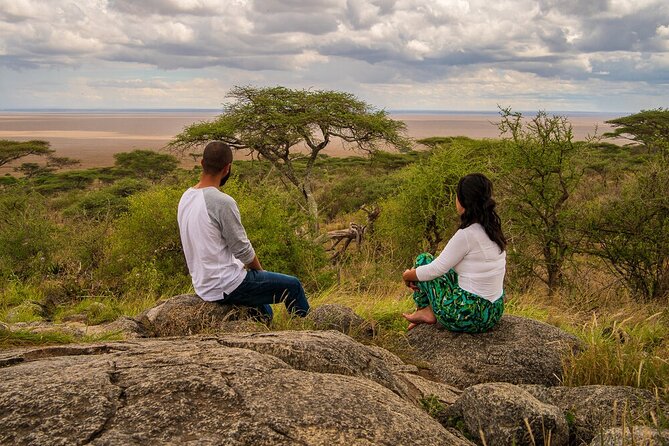
From there, the route continues toward the Serengeti. The park covers about 6,900 square miles, or 18,000 square kilometers, so the phrase endless plain is easy to understand once the horizon opens up.
The Serengeti is the centerpiece of this safari. More than two million wildebeest are associated with the wider ecosystem, along with huge numbers of zebra and Thomson’s gazelle. The exact animals you see depend on season, rainfall, and their location on the day of your drive.
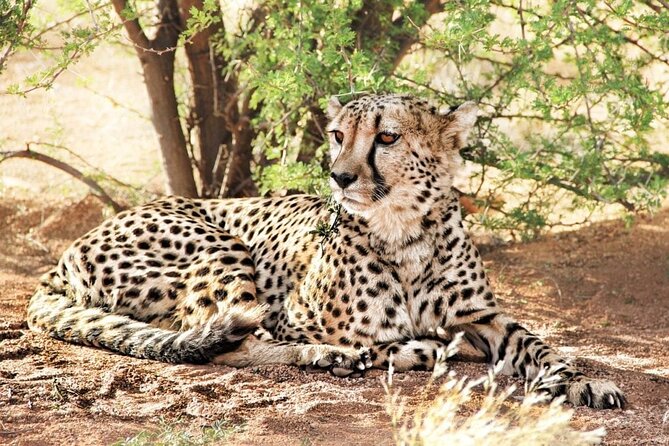
January through April can be especially appealing if you want to see the calving season. Wildebeest give birth during this period, and the young animals bring predators into the same area. Lions, cheetahs, and hyenas follow the available prey, creating some of the most dramatic wildlife viewing in Tanzania.
This is also where patience helps. A safari vehicle does not operate on a fixed theater schedule. You may find a lion quickly, then spend time waiting for a distant movement or following fresh tracks. One useful piece of advice is to avoid rushing your expectations. The animals decide the timetable.
Smaller creatures add variety. Rock hyraxes, bat-eared foxes, and other less famous species can reward careful looking between the headline sightings. Ask your guide about the birds and smaller mammals, not only the Big Five.
Day 3: Sunrise Wildlife Viewing and a Second Serengeti Chance
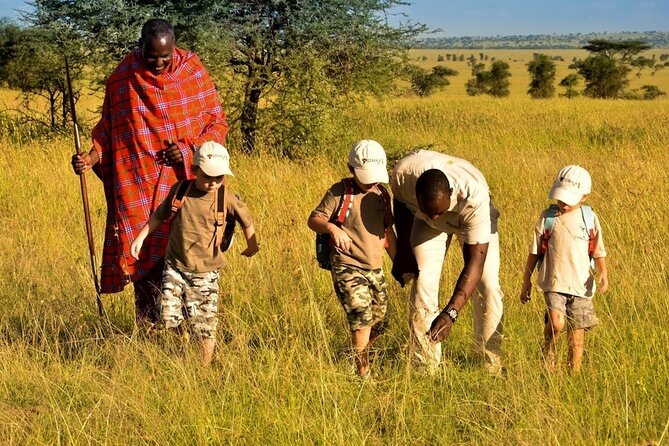
Day 3 begins very early with a sunrise game drive. That early alarm is not a minor detail. Morning light can transform the plains, and the cooler hours may offer active wildlife before the heat of the day.
The scheduled plan brings you back to the campsite or rest house around noon for brunch or lunch. You then continue with an afternoon game drive before traveling to Simba Campsite in the Ngorongoro area for the night.
I like the decision to place another Serengeti drive here. Two nights connected with the park give you a better chance to see changing animal behavior and different parts of the park. It also reduces the feeling that you have crossed the Serengeti only to leave after one rushed drive.
The drawback is the transfer after the afternoon drive. Depending on the exact route and conditions, traveling from the Serengeti toward Simba Campsite can make this a long day. Keep your expectations practical: the safari vehicle is your transport, viewing platform, and much of your daily living space.
The overnight camping arrangement is aimed at people who want a closer connection to the park environment and do not need hotel-style comfort. Camping equipment is included, as are meals and drinking water. The package lists four breakfasts, four lunches, and three dinners, so dinner on the final night is not part of the stated meal plan.
Same country, a completely different kind of safari:
- Tanzania Classic – 7 Days
★ 5.0 · 1,151 reviews - 4 Days Group Camping Safari
★ 5.0 · 1,101 reviews - 5 Days Group Camping Safari
★ 5.0 · 730 reviews - Materuni Waterfalls, coffee tour & Kikuletwa Hot Springs
★ 5.0 · 643 reviews
Day 4: Ngorongoro Crater at Sunrise
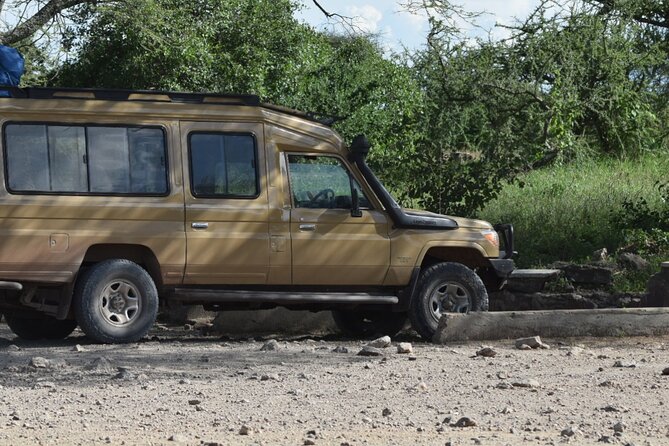
The final day is built around another early start. You leave before breakfast for morning wildlife viewing and sunrise, then continue to Ngorongoro Crater.
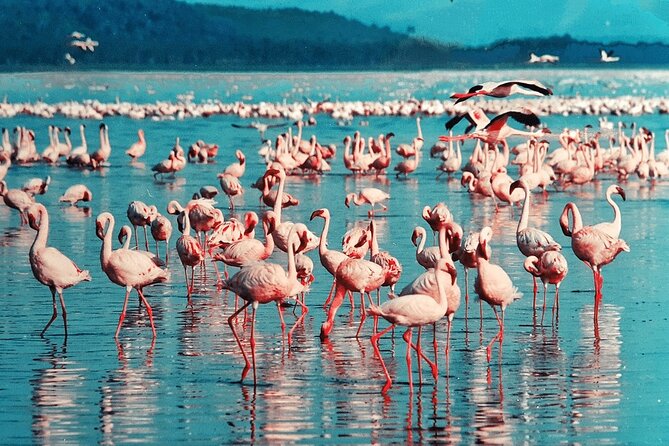
The crater is one of the strongest scenic finishes available on a northern Tanzania safari. From above, you can see a setting that includes open plains, forest, swamps, a river, and a soda lake. Flamingos may gather at the lake, adding color to the wide view.
Ngorongoro is known for a high concentration of wildlife. The crater supports many species found in East Africa, and the itinerary specifically highlights the rare black rhino. You might also find large bull elephants, lions, buffalo, zebra, and other plains animals during the drive.
The crater’s shape makes it different from Serengeti. In the Serengeti, animals may be spread across vast distances. In Ngorongoro, the enclosed setting can make sightings feel more concentrated, although no wildlife encounter is guaranteed.
There is one scheduling point to settle before booking. Day 3 is described as an early Serengeti drive followed by a move to Simba Campsite, while Day 4 is also described as an early safari before the crater visit. That may be perfectly workable, but the wording leaves the exact sequence unclear. Ask the operator where you sleep on Day 3, when you enter the crater, and where the safari ends on Day 4.
Guides, Vehicle Time, and the Private Format
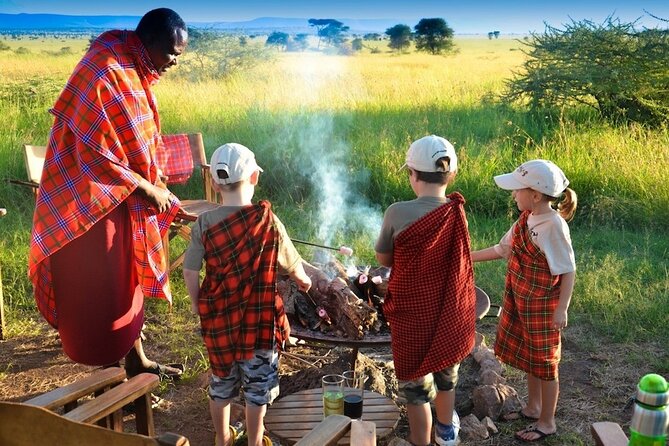
The driver-guide is central to the quality of this experience. A good guide does more than drive between sightings. You want someone who can read the terrain, spot animals at a distance, explain behavior, and adjust the pace when something interesting appears.
The people connected with this safari include Omar, Maliaki, Aaron, Simon, Joseph, David Simba, Assad, Innocent, and Asanté. Specific guide assignments can change, but the repeated praise for animal spotting, organization, warmth, and safe driving gives you useful clues about the service style to expect.
Maliaki was praised for finding animals and locating a rhino. Omar was credited with making a strong effort to find the Big Five. Joseph was praised for explaining the wildlife and making the drives enjoyable. Aaron was singled out for helping with Big Five sightings, while David Simba became a memorable part of a first safari for one group.
Because this is a private activity, only your group participates. That is valuable for families and small groups. You can ask questions without feeling rushed by strangers, and you may have more say in how long you watch an animal. The exact flexibility still depends on park rules, driving conditions, and the guide.
Camping, Meals, and What the Price Really Covers
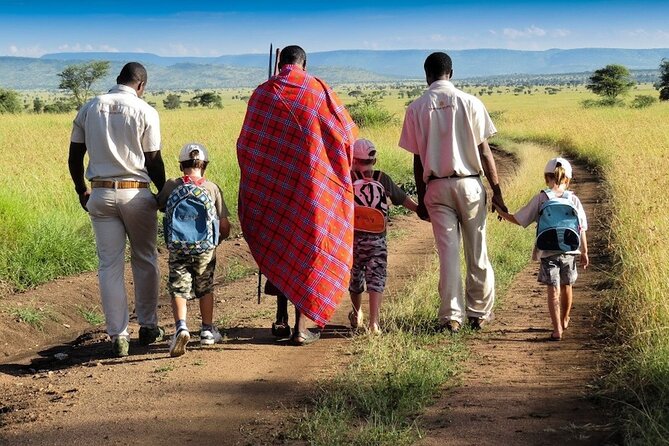
The listed price is $1,515 per person. That is not a bare park-entry price. It includes fees and taxes, a professional guide, camping equipment, drinking water on all days, meals specified in the schedule, activities, airport pickup and drop-off, and free accommodation before and after the safari.
That bundle gives the price real value, particularly if you need help with the first and last nights around Arusha. It also removes several common costs from the planning process. You do not need to arrange separate airport transfers or carry your own camping kit.
Still, read the comfort level correctly. The experience is described around park campsites, while one night is named as Fig Big Tree Lodge. That is different from a lodge-based luxury safari, even though one large family group described its own arrangements as luxurious and praised the food and lodging.
I would ask these questions before paying:
- Which nights are at campsites, and which are at a lodge?
- Is the vehicle open-roof throughout the safari?
- What exact meals are served on each day?
- Is the final drop-off at an airport or hotel?
- Which guide and vehicle are assigned to your group?
These questions are not complaints. They help match the advertised package to your comfort needs.
Who Will Get the Most From This Safari
This trip suits a first-time safari visitor who wants the classic northern Tanzania route in a short window. You get elephants, the Serengeti, crater scenery, possible Big Five sightings, and a chance at wildebeest calving if you travel from January to April.
It also suits families and small private groups. A family with a three-year-old completed the trip as a major adventure, and the private format can make family pacing easier. Even so, the early starts and long vehicle days may test very young children, so discuss your group’s needs with the operator.
You should choose it if you are comfortable with camping, changing accommodation, rougher road travel, and early mornings. You may prefer a longer or more lodge-focused safari if you want fewer transfers, more rest, or a slower look at each park.
The cancellation terms are simple: cancel at least 24 hours before the local start time for a full refund. Changes or cancellations within 24 hours are not accepted for a refund.
Should You Book It?
I would choose this safari if your priority is seeing three major northern Tanzania wildlife areas with the Serengeti given the most attention. The strongest reasons are the two Serengeti nights, the early drives, the private group setup, and the broad package of included services.
I would hesitate only if you dislike camping or want a relaxed holiday. Before booking, confirm the accommodation, the Day 3 and Day 4 sequence, and the final drop-off details. If those points suit you, $1,515 buys a full and ambitious introduction to Tanzania’s wildlife, with enough time in the Serengeti to make the journey worthwhile.
FAQ
Where does the safari start?
The safari starts in Arusha, Tanzania, with hotel pickup offered. The listed start time is 7:30 am.
How long does the safari last?
The experience lasts approximately four days.
Which parks and conservation areas are included?
The route includes Tarangire National Park, Serengeti National Park, and the Ngorongoro Conservation Area, including Ngorongoro Crater.
Is this a private tour?
Yes. Only your own group participates in the activity.
Are airport transfers included?
Yes. Free airport pickup and drop-off are included.
Are meals included?
Yes. The package lists breakfast, lunch, and dinner as specified in the schedule. It includes four breakfasts, four lunches, and three dinners.
Is drinking water provided?
Yes. Drinking water is provided on all days.
What is not included in the price?
Tips for the safari guide and cook, international and domestic flights, souvenirs, travel insurance, visa fees, and other personal items are not included.
More Tarangire National Park Safaris in Arusha
- Private 6-Day Tarangire Manyara Crater and Serengeti with Mid-Range Lodges
★ 5.0 · 238 reviews - 4 Days Tarangire Serengeti Ngorongoro Crater
★ 5.0 · 117 reviews - 3 Days Tarangire, Ngorongoro & Lake Manyara Group Camping Safari
★ 5.0 · 102 reviews - Tarangire Day Tour
★ 5.0 · 95 reviews
More Ngorongoro Crater Tours in Arusha
- 5 Days Camping Tarangire, Serengeti & Ngorongoro crater & Visiting Maasai
★ 5.0 · 229 reviews - 4 Days Join Group tour Tarangire Serengeti and Ngorongoro crater
★ 5.0 · 219 reviews - 4-Day Safari from Arusha: Tarangire, Serengeti and Ngorongoro
★ 5.0 · 173 reviews - 2 Days Tarangire and Ngorongoro Group Camping Safari
★ 5.0 · 146 reviews
Just added around Arusha
- 8 Days Serengeti Migration safari★ 5.0 · 11 reviews
- tarangire, ngorongoro & lake manyara park 3 days private tour★ 5.0 · 11 reviews
- tarangire & ngorongoro 2 days tour★ 5.0 · 14 reviews
- serengeti, ngorongoro & tarangire 4 days private tour★ 5.0 · 18 reviews
- serengeti & ngorongoro 3 days private tour★ 5.0 · 15 reviews
- Mt. Kilimanjaro: Shira plateau to Cathedral point 3872m Day hike★ 5.0 · 7 reviews
- 2 Days Tanzania Midrange Group Join Safari★ 5.0 · 7 reviews
- climb the KILIMANJARO via Lemosho route★ 5.0 · 4 reviews
Serengeti Safaris, compared.

Serengeti Balloon Safari and authentic bush breakfast
Read our review →
3 Days Serengeti & Ngorongoro Group Camping Safari
Read our review →
5-Day Highlights mid-Range Crater, Serengeti, Tarangire
Read our review →


Private 6-Day Tarangire Manyara Crater and Serengeti with Mid-Range Lodges
Read our review →
5 Days Camping Tarangire, Serengeti & Ngorongoro crater & Visiting Maasai
Read our review →
4 Days Join Group tour Tarangire Serengeti and Ngorongoro crater
Read our review →Browse the lists this tour appears in