
Reviewed · 2-DAY EXPERIENCES
2 Days Tanzania Safaris
Tarangire is the surprise of this short safari. While Ngorongoro gets the famous name, Tarangire gives you wide-open game viewing, excellent birding, and fewer visitors during its best months. The two parks feel different enough to make the two-day route worthwhile.
I like the Arusha hotel pickup and the fact that meals are included, since both save time and extra planning. I also like the small-group format, with a maximum of 15 people and some departures reported with only six guests.
The main drawback is the pace. Day one lasts about 10 hours and day two about eight, so you spend much of the trip on the road or in the safari vehicle. The non-refundable booking policy also calls for care when choosing your dates.
Key points to know before booking
- Tarangire comes first: Expect a full game-viewing day in a park known for birding and strong wildlife numbers from July through October.
- Ngorongoro is the grand finale: The UNESCO-listed crater packs a great deal of wildlife into a striking volcanic setting.
- One tented night is included: You sleep in a tent camp between the two park visits, though the accommodation’s exact location and style should be confirmed before booking.
- Arusha transfers are covered: Pickup and return transport from your Arusha hotel are part of the arrangement.
- The group can be personal: The maximum is 15 people, and some departures have run with six or fewer.
- Budget $600 per person: The price covers a two-day safari with park visits, meals, transport, guiding, and camping, making the package easier to compare with stripped-down alternatives.
Why this two-day route works
If you have only two days, this pairing makes good sense. Tarangire and Ngorongoro offer different kinds of safari, so the trip does not feel like the same game drive repeated twice.
Tarangire is spacious and relatively quiet in comparison with the Northern Circuit’s most famous stops. Ngorongoro is more concentrated and dramatic. On the first day, you look for animals across a broad park with strong birdlife. On the second, you enter a volcanic caldera where wildlife is gathered in a smaller area.
That contrast matters. A short safari cannot show you every part of northern Tanzania, but this route gives you two distinct settings and a reasonable sense of the region. You also avoid trying to cram a third major park into the schedule, which would make the trip even more hurried.
The tour begins at about 8:30 a.m. with pickup from your Arusha hotel. Your guide gives you a briefing before the journey to Tarangire. Since the first day is listed at about 10 hours, you should treat it as a full outing rather than a quick morning excursion.
A few more Arusha trips to weigh up
- 2 Days Tarangire and Ngorongoro Group Camping Safari
★ 5.0 · 146 reviews - 2 Days Group Joining Camping Safari Tarangire Park and Ngorongoro Crater
★ 4.5 · 28 reviews - 2 days Mid Range Safari in Ngorongoro and Tarangire Big 5 Parks
★ 5.0 · 27 reviews
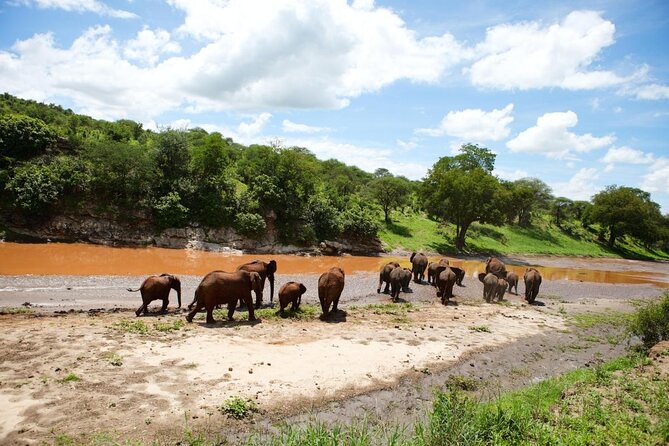
Tarangire: a full day among elephants and birds
Tarangire often gets less attention than Serengeti and Ngorongoro, but that is part of its appeal. The park is described as a strong surprise on Tanzania’s Northern Circuit, especially during the peak period from July through October.
At that time, game concentrations can be excellent while visitor numbers remain lower than in the region’s best-known parks. That does not mean every drive will produce rare sightings, but it does give the day a calmer feel and more room for the guide to work.
Tarangire is also known as one of Tanzania’s best birding areas. If you enjoy birds, bring patience and keep your eyes open between the larger sightings. The park is not only about checking off big mammals. Its birdlife gives the day another layer, particularly for anyone willing to watch carefully.
The park’s more unusual prizes include dwarf mongoose, oryx, and gerenuk. These animals are rare sightings, so you should not book this safari expecting all three. Their presence is a reminder that Tarangire rewards luck and careful searching, not just a quick circuit of the most popular tracks.
You can expect your guide to play an important role here. The strongest part of the experience, based on the information available, is the guiding and animal spotting. Guides are described as professional, experienced, and good at finding animals that are easy to miss. One private departure even located a leopard, along with other less obvious wildlife.
That does not guarantee a leopard on your trip. It does suggest that the guide is more than a driver who points out animals when they happen to cross the road. Ask questions during the briefing, especially if you care more about birds, predators, or unusual species than about simply seeing the largest animals.
The tented camp between the parks
After Tarangire, you spend the night in a tented camp. This is a useful middle ground for a short safari. You get a night outdoors rather than returning to Arusha, and you are better placed for the next morning’s journey to Ngorongoro.
The word tented can cover a range of accommodation, so do not assume a luxury tent with a private bathroom unless the operator confirms it. The supplied details establish that a tent camp is included, but they do not give the camp’s name, room setup, bathroom arrangements, or exact location.
Meals are included on both days, and the second morning begins with breakfast before departure for the crater. That is practical on a tightly scheduled trip. You do not need to arrange separate meals while moving between parks, though it is still sensible to confirm what is included at the camp and how special dietary needs are handled.
The overnight stop also breaks up the driving. Without it, Tarangire and Ngorongoro would be a demanding pair to connect in such a short time. You should still expect early starts and long hours, but the camp keeps the trip from becoming two separate day trips from Arusha.
Ngorongoro Crater: wildlife in a volcanic bowl
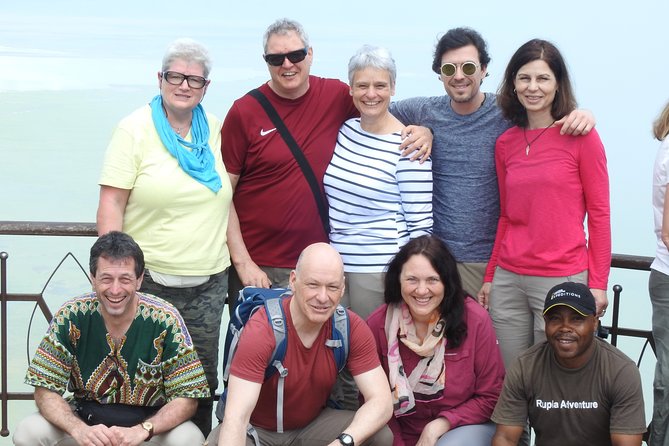
Day two takes you to Ngorongoro Crater, a UNESCO World Heritage site and one of northern Tanzania’s major highlights. The crater is the world’s largest intact volcanic caldera, and its enclosed shape helps create a remarkable concentration of wildlife.
The setting is the main event. Volcanic craters and highland scenery form the backdrop, while fertile grazing areas below support many animals. You are not simply watching wildlife on a flat plain. You are looking across a huge natural bowl with steep sides and a strong sense of place.
The crater is especially useful on a short safari because wildlife can be concentrated in a relatively compact area. That improves your chances of seeing a range of animals during an eight-hour day, though nature never works to a fixed schedule.
Your guide’s route choices matter here. The available information points to guides who try to avoid crowded routes when possible. That is not a promise of an empty crater. Ngorongoro is popular for good reason, and some busy moments are unavoidable. Still, a guide who watches traffic and chooses routes with care can make the day more comfortable.
The crater is also connected with Maasai communities in the surrounding region. The tour description presents the area as a place where you may interact with Maasai people, but the exact nature of that interaction is not specified. Do not assume a village visit or cultural program is included unless you receive confirmation.
The second day is shorter than the first, but eight hours in and around the crater is still substantial. You will want water, sun protection, and enough camera storage. Keep your schedule after the safari flexible, since the return journey and park timing can vary.
Same country, a completely different kind of safari:
- Balloon Safari & Bush Breakfast in Serengeti – Miracle Experience
★ 5.0 · 1,646 reviews - Tanzania Classic – 7 Days
★ 5.0 · 1,151 reviews - 4 Days Group Camping Safari
★ 5.0 · 1,101 reviews - 5 Days Group Camping Safari
★ 5.0 · 730 reviews
What the guiding adds to the trip
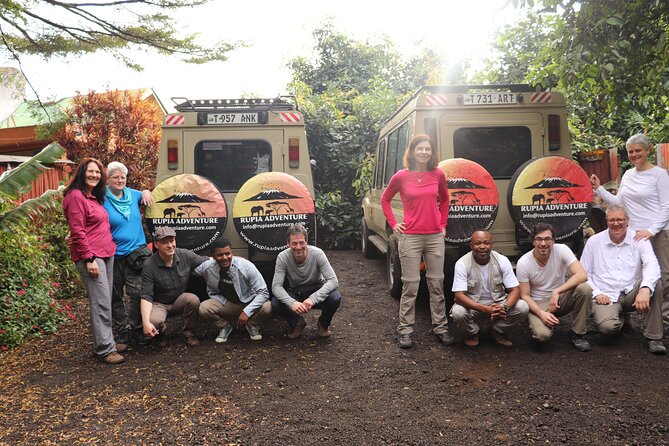
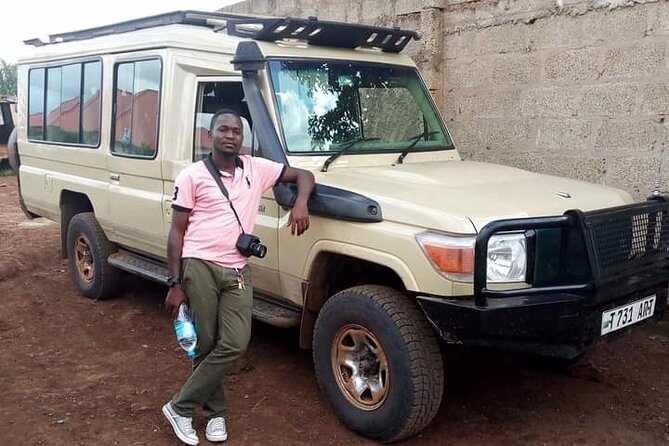
The operator is Rupia Adventure, and the strongest pattern in the available feedback is praise for the guides’ professionalism, animal spotting, and clear answers to questions. One guide was described as having 20 years of experience. Another was credited with finding a leopard and several harder-to-see animals.
The guide’s role is especially important on a two-day safari. You have little spare time, so an experienced guide can help you use each game drive well. Good spotting also improves the trip for people who are new to safari and may not yet know where to look.
Some departures have been private, while another had six people in total. The stated maximum is 15. That range is worth noting because the feel of the trip depends heavily on the final group size. Six people in a safari vehicle gives you more room and makes it easier to ask questions. Fifteen is still a manageable small group by tour standards, but it can feel less personal.
Ask about the final group size if that point matters to you. Also ask whether the departure is private or shared. The public description promises a small group, not a private vehicle for every booking.
Is $600 per person good value?
At $600 per person, this is not a casual budget outing, but the price covers several costly parts of a Tanzania safari. You receive round-trip hotel transfers from Arusha, park admission for Tarangire and Ngorongoro, guiding, transport, meals on both days, and one night in a tented camp.
That bundled price makes comparison easier. A cheaper-looking safari may leave out park fees, meals, accommodation, or hotel transport. Once you add those costs, the gap may shrink.
The value is strongest if you want a ready-to-go introduction to northern Tanzania and have only two days available. You do not have to arrange separate transfers or find a place to stay between the parks. The inclusion of meals also helps keep the trip simple.
The value is weaker if you dislike long road days or want a slower safari with more time at each stop. Two days is enough for a taste of Tarangire and Ngorongoro, not enough for a relaxed survey of northern Tanzania. You are paying for access to two important parks in a compact format, not for a leisurely camp-based holiday.
The price also needs to be considered alongside the cancellation terms. This experience is non-refundable and cannot be changed for any reason after booking. If bad weather causes cancellation, you are offered another date or a full refund. If the minimum number of participants is not reached, you are offered another date or experience, or a full refund.
Because of that rule, book only when your dates are firm. Confirmation is sent at booking, and mobile tickets are offered, but neither changes the strict cancellation policy.
Who should choose this safari?
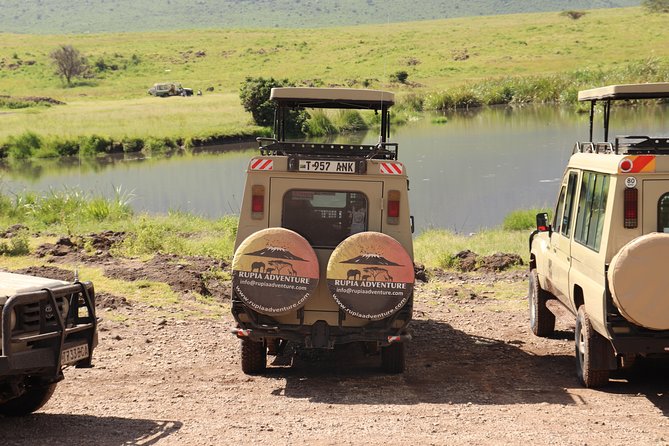
I would point this trip toward first-time safari visitors who are based in Arusha and want two major parks without building a complex itinerary. It also suits people who value a guide’s animal-spotting skills and prefer a package with transport, meals, and camping handled together.
Bird lovers should give Tarangire serious thought. Its birding reputation is one of the most distinctive parts of the route, and the park offers more than the usual search for large mammals.
This is also a reasonable fit for couples, friends, and solo visitors who are comfortable sharing a vehicle. The maximum group size is 15, and smaller departures are possible. If you need a private experience, confirm that before paying.
I would be more cautious about recommending it to anyone who needs a slow pace, dislikes early or long days, or expects high-end accommodation. The available details do not promise luxury camping, and the itinerary is clearly active.
Most people can take part, according to the booking information, but the tour still involves long safari days and substantial time in a vehicle. If you have mobility concerns or other needs, ask the operator for precise details before booking rather than relying on the general participation statement.
Practical ways to prepare
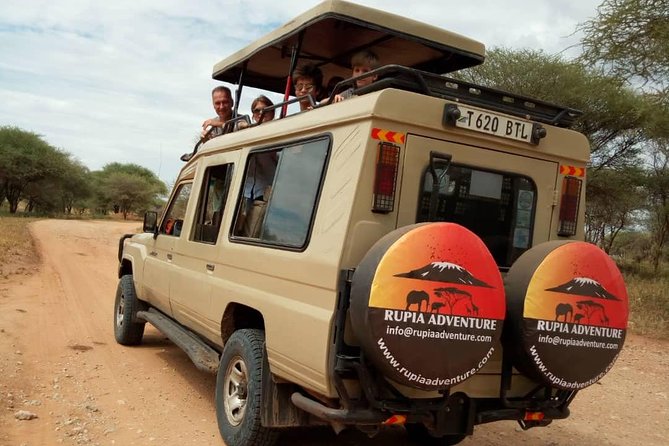
Wear comfortable clothing that works across a long day. Bring sun protection, water, a camera, and binoculars if birds are a priority. You will spend many hours outside, so simple preparation makes a real difference.
Keep your first day open from the 8:30 a.m. pickup through the listed 10-hour program. The second day is listed at about eight hours, beginning after breakfast and continuing through the Ngorongoro visit.
Use the briefing to tell the guide what interests you most. If your priority is birding, say so. If you hope to see predators or unusual animals such as gerenuk, explain that too, while keeping expectations realistic.
Finally, check the tented camp details, final group size, and whether your departure is private or shared. Those points are not fully specified, yet they can shape your comfort as much as the parks themselves.
Should you book the two-day Tanzania safari?
Book it if you want an efficient introduction to Tarangire and Ngorongoro, with Arusha pickup, meals, camping, and a guide included in one price. The strongest reasons are the contrast between the two parks, Tarangire’s excellent birding, and the reported skill of the guides at finding wildlife.
Think twice if you want luxury accommodation, short driving days, or flexible cancellation. At $600, the trip offers solid value for a tightly planned two-day safari, but you should confirm the camp standard and group size before committing. For a first taste of northern Tanzania, this is a practical route with a good chance of memorable wildlife encounters.
FAQ
Where does the safari start?
The safari starts with pickup from your hotel in Arusha. The stated start time is 8:30 a.m.
Which parks are included?
The tour includes Tarangire National Park on day one and Ngorongoro Crater on day two. Admission tickets for both visits are included.
How long is each safari day?
The Tarangire portion lasts about 10 hours. The Ngorongoro Crater portion lasts about eight hours.
Is accommodation included?
Yes. You spend one night in a tented camp. The available details do not specify the camp’s exact location, facilities, or level of comfort.
Are meals included?
Yes. Meals are included on both days, and breakfast is provided before the departure to Ngorongoro Crater on day two.
How large is the group?
The maximum group size is 15 people. Some departures have operated with six people or as private safaris, so confirm the arrangement for your date if group size matters.
Can I cancel or change the booking?
No. The experience is non-refundable and cannot be changed for any reason. If poor weather causes cancellation, you are offered another date or a full refund. If the minimum number of participants is not reached, you are offered another date or experience, or a full refund.
Just added around Arusha
- 8 Days Serengeti Migration safari★ 5.0 · 11 reviews
- tarangire, ngorongoro & lake manyara park 3 days private tour★ 5.0 · 11 reviews
- tarangire & ngorongoro 2 days tour★ 5.0 · 14 reviews
- serengeti, ngorongoro & tarangire 4 days private tour★ 5.0 · 18 reviews
- serengeti & ngorongoro 3 days private tour★ 5.0 · 15 reviews
- Mt. Kilimanjaro: Shira plateau to Cathedral point 3872m Day hike★ 5.0 · 7 reviews
- 2 Days Tanzania Midrange Group Join Safari★ 5.0 · 7 reviews
- climb the KILIMANJARO via Lemosho route★ 5.0 · 4 reviews
2-Day Experiences, compared.
2 Day Serengeti Safari Experience from Mwanza
Read our review →
2 Days Tarangire and Ngorongoro Group Camping Safari
Read our review →
2 Days 1 Night Mikumi National Park from Dar es salaam
Read our review →
2 Day Safari To Mikumi National Park + transfers from Dar Es Salam
Read our review →
2-Day Private Mikumi National Park Tour with Pickup
Read our review →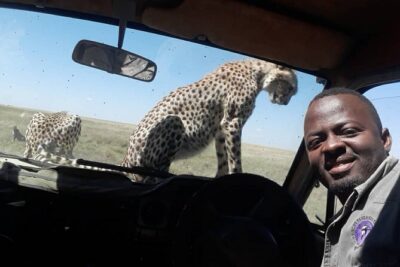
2 Days Group Joining Camping Safari Tarangire Park and Ngorongoro Crater
Read our review →Browse the lists this tour appears in