Reviewed · SAFARI
12 Days Safari Tour around Mt Kilimanjaro off the beaten
The most unusual part of this safari is its route. Instead of rushing straight from Arusha to the famous northern parks, you spend time in Enduimet and Mkomazi, quieter areas near Mount Kilimanjaro where walking, remote scenery, and African wild dogs share the billing with classic game drives. I like the chance to see Kilimanjaro from the southern Amboseli area, and I like the small group, capped at seven people.
I also like the mix of experiences: guided walks with an armed ranger, a Maasai-led walk at Lake Natron, forest wildlife at Lake Manyara, and big-cat country in the Serengeti. The main drawback is the amount of driving. Several days run six to ten hours, and the itinerary includes a return to Arusha before heading west toward Manyara, Natron, and the Serengeti.
Key points of this Kilimanjaro-area safari
- Mount Kilimanjaro views from Enduimet: Enjoy game drives and a ranger-guided walk with views toward the world’s highest free-standing mountain.
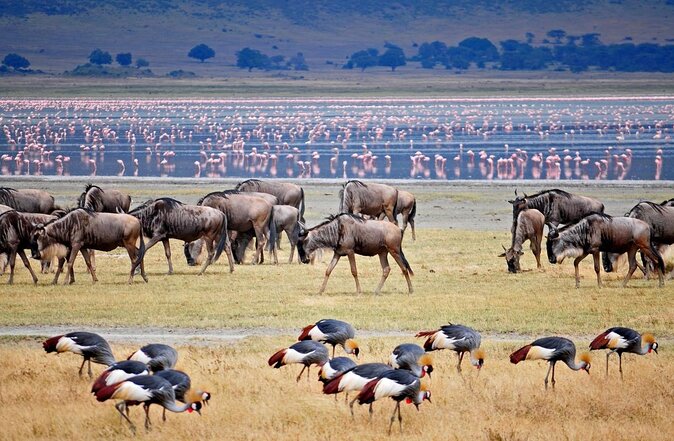
- Two full days in Mkomazi: Search for black rhinos, elephants, giraffes, oryx, wild dogs, and more than 400 bird species.
- A real walking element: Arusha National Park and Enduimet add guided walks to the usual safari routine.
- Lake Natron by foot: Visit Engare Sero Gorge and waterfalls, then walk with a Maasai guide to the lake shore for bird watching.
- Classic northern Tanzania finale: Spend two days in the Serengeti, then descend into Ngorongoro Crater, one of the best places on the route for a concentrated wildlife outing.
- Small-group transport: The open-roof Land Cruiser carries no more than seven people and includes a two-way radio, fridge, and binoculars.
Why this 12-day route is different
Most first-time safari routes in northern Tanzania focus on Tarangire, Manyara, Serengeti, and Ngorongoro. This trip takes a less direct path, adding Enduimet Wildlife Management Area, Mkomazi National Park, and Lake Natron.
That choice matters if you want more than a parade of large animals viewed from a vehicle. You get two guided walks early in the trip, a chance to see a more remote national park, and time around communities and conservation areas that receive less attention than the Serengeti.
The trade-off is simple: you cover a lot of ground. This is not a stay-put safari with three nights at every camp. It is a moving circuit, and you should be comfortable with long road days. The payoff is variety, but your best wildlife moments will be mixed with hours in the vehicle.
The group limit of seven is helpful. In an open-roof 4×4, a smaller group makes it easier to see around one another and gives you a better chance of getting a useful position when something interesting appears. The vehicle includes a two-way radio, a fridge, and binoculars, while drinking water is supplied at 1.5 liters per person per day.
A few more Arusha trips to weigh up
- Balloon Safari & Bush Breakfast in Serengeti – Miracle Experience
★ 5.0 · 1,646 reviews - 4 Days Group Camping Safari
★ 5.0 · 1,101 reviews - 5 Days Group Camping Safari
★ 5.0 · 730 reviews
Arrival in Arusha and meeting the local team
The safari begins with arrival at Kilimanjaro International Airport. A representative meets you and transfers you to your hotel in Arusha for the first night.
The company uses local Tanzanian driver-guides, and the supplied information says its guides have more than ten years of experience. Names associated with the operation include Ann, who handles trip arrangements, and guides called Tuma and Abu. Your assigned guide may be different, so confirm that before booking if a particular guide matters to you.
This first day is intentionally light. That is useful after an international flight, since you are not being sent straight into a full game drive. The stated meeting point is African View Lodge on Momella Road in Arusha, so confirm the exact airport pickup and first-night hotel details in advance.
Arusha National Park: walking below Mount Meru
After breakfast, you head to Arusha National Park for a guided walk with an armed ranger. Later, you take a game drive around the park, including the Great and Small Momella Lakes and the forests around Ngurdoto Crater.
The walking portion is a strong start. It lets you notice smaller details and experience the park at a slower pace than a vehicle-only safari. The ranger is there for safety, and the walk is followed by a more familiar game drive, giving you both formats in one day.
Arusha National Park covers only about 137 square kilometers, so the day feels more focused than a long crossing of the Serengeti. You might see giraffes, buffaloes, and baboon groups, along with birds and other forest species.
You should not treat the park’s smaller size as a guarantee of more animals. Wildlife sightings are never promised, and the main value here is the combination of forest, crater, lakes, and walking. It is also a good introduction to the rhythm of a Tanzanian safari without immediately tackling the longest drives.
Enduimet and the best Kilimanjaro views
Day three takes you toward Enduimet Wildlife Management Area, described as the southern Amboseli area. You have a game drive and a ranger-guided walk, with views toward Mount Kilimanjaro.
This is one of the trip’s most appealing ideas. Kilimanjaro is not simply a distant backdrop here. The area’s position gives you a chance to combine wildlife viewing with photographs of the mountain, which is the highest free-standing mountain in the world.
The drive is listed at about ten hours, so this is a demanding day. You leave after breakfast and arrive at the lodge before nightfall, with activities along the way. Pack essentials where you can reach them, including water, sun protection, and anything you need for the walk.
Because the mountain is weather dependent, a clear view is never certain. Still, the setting gives this part of the safari a character you will not get from a standard central Serengeti route.
Same country, a completely different kind of safari:
- Tanzania Classic – 7 Days
★ 5.0 · 1,151 reviews - Materuni Waterfalls, coffee tour & Kikuletwa Hot Springs
★ 5.0 · 643 reviews - 3 Days Serengeti & Ngorongoro Group Camping Safari
★ 5.0 · 574 reviews - 7-Day Premium Luxury Tanzania Safari All-Inclusive
★ 5.0 · 426 reviews
Mkomazi National Park and African wild dogs
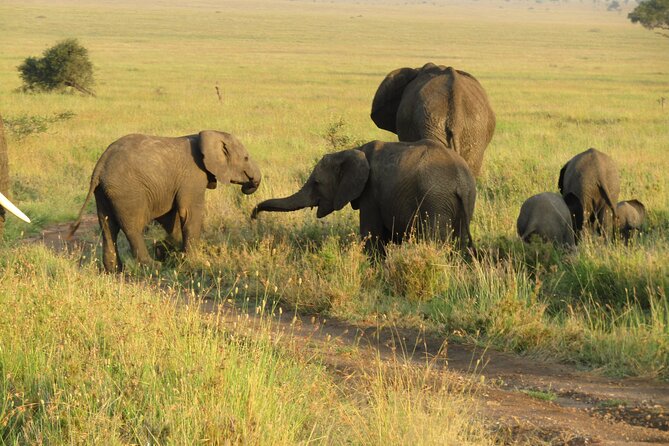
You reach Mkomazi National Park on day four by the Kilimanjaro North scenic route. An evening game drive follows, with a visit focused on African wild dogs, before you head to camp before dark.
Mkomazi is a major reason to choose this itinerary. The park covers roughly 3,500 square kilometers and is home to black rhinos, elephants, giraffes, oryx, impalas, elands, dik-dik, and African wild dogs. It also has more than 400 bird species.
African wild dogs are not an animal you can count on seeing, but making them a specific focus adds purpose to the game drive. Mkomazi also gives you two days in one park, rather than a quick pass through. That improves your chances of seeing different species and experiencing the park at different times of day.
Day five begins with an early morning game drive, followed by hot lunch at camp and a later evening drive. Early and late outings are worthwhile because the light changes and animals may be more active than during the middle of the day.
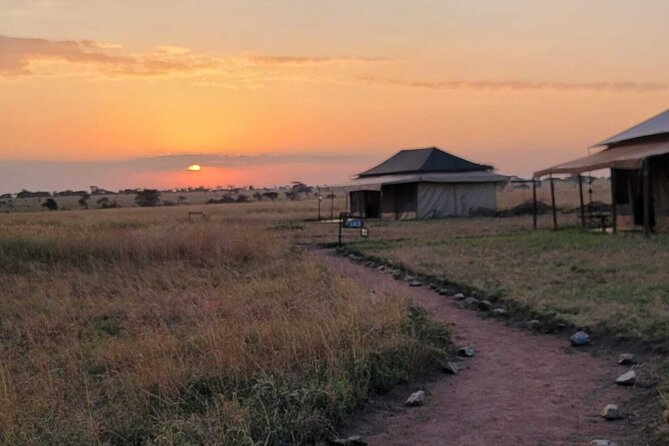
The accommodation is described generally as camp or lodge accommodation according to the program. Ask for the exact names and facilities before paying, especially if you have firm expectations about private bathrooms, electricity, or tent style.
The return to Arusha and a long road day
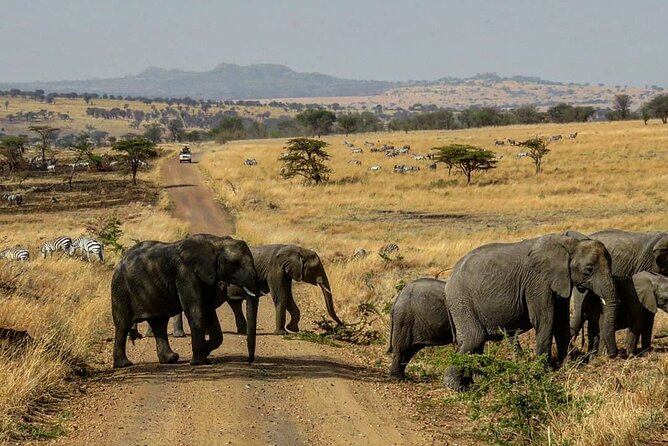
Day six takes you back to Arusha through Moshi. There may be a barbecue stop if possible, but that depends on timing and local conditions.
This is the least exciting day on paper, yet it serves a practical purpose. The route resets you for the western part of the safari, which continues to Lake Manyara, Lake Natron, Serengeti, and Ngorongoro.
The drive is listed at six hours. You will want a relaxed attitude toward road travel, since the tour’s appeal depends partly on reaching places that are far apart. A flexible barbecue stop is a pleasant extra, but it should not be treated as a guaranteed activity.
Lake Manyara’s forest and birdlife
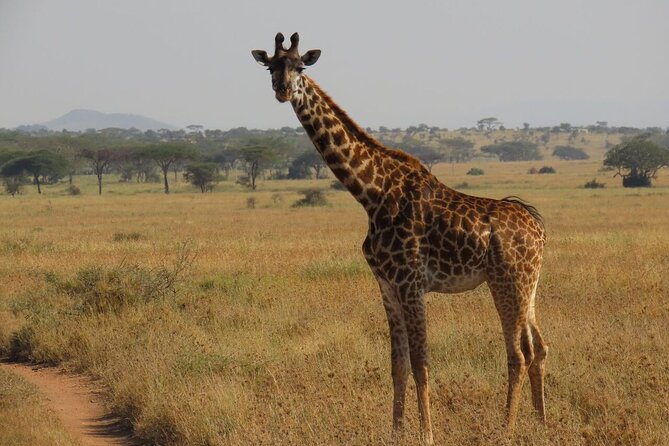
After breakfast on day seven, you drive to Lake Manyara National Park for a game drive. The route passes through a forest where baboons, blue monkeys, elephants, and many bird species are among the main attractions.
Lake Manyara offers a useful change of scenery after the drier open areas around Mkomazi and Enduimet. The forest setting can make animal watching feel close and lively, especially when monkeys and baboons are moving through the trees.
The day is listed at about eight hours, including the drive and game viewing, followed by the overnight stay at your hotel. The itinerary does not include Tarangire, although one past trip connected with this company included it. Do not assume Tarangire is part of this particular 12-day route unless the operator confirms a change.
Lake Natron, Engare Sero, and a Maasai-led walk
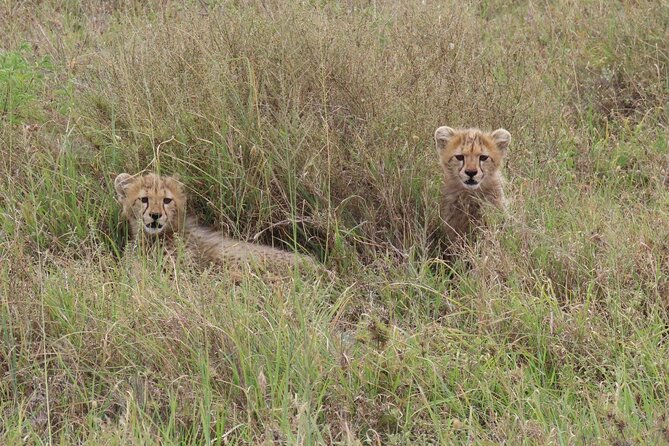
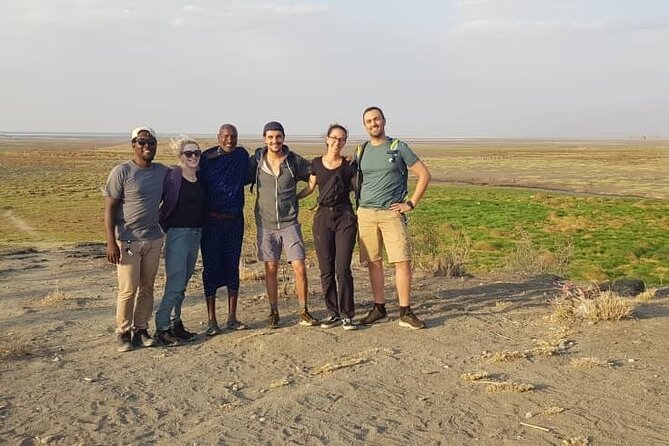
Day eight heads to Lake Natron, one of the more remote salt lakes in Tanzania. You arrive in the afternoon, visit Engare Sero Gorge and its waterfalls, then walk with a Maasai tribesman to the lake shore for bird watching.
This is another strong point for anyone who wants time outside the vehicle. The gorge and waterfalls add a walking excursion, while the lake provides a very different setting from the forest and savanna parks.
Lake Natron is especially known for its flamingo breeding grounds. You may see flamingos and other birds, but conditions and seasonal movements affect sightings. The bird-watching walk is the point here, so bring suitable shoes, sun protection, and water.
The drive is listed at about seven hours. That makes for a full day even before the gorge walk and lake visit. You should think of Natron as an unusual stop that rewards curiosity, not as a quick photo break between major parks.
Entering the Serengeti through the eastern route
On day nine, you drive toward Serengeti National Park through Klens Gate on the eastern side. The route crosses the escarpment forming the eastern branch of the Rift Valley, with views around Waso and Ololosokwan before you reach the park around midday.
The Serengeti is the point where this safari shifts into classic big-game territory. It is famous for large populations of big cats and for the Great Wildebeest Migration. Your arrival around midday allows for a game drive on the way to camp, followed by another full day in the park.
The eastern approach gives you a scenic entry rather than treating the Serengeti as a simple destination reached by the shortest road. Still, the day is listed at eight hours, and wildlife viewing begins after a long drive. Keep your expectations flexible and save some energy for the next day.
Day ten offers more Serengeti time, with about seven hours scheduled for game viewing and the same Waso and Ololosokwan area mentioned in the route. Two days are much better than a single rushed crossing. You have more room for changing locations, searching for cats, and enjoying the setting without treating every sighting as a race against the clock.
The Great Wildebeest Migration moves through different parts of the ecosystem at different times. The tour does not specify travel dates or promise a particular migration sighting, so ask the operator where the route is expected to be during your dates.
Ngorongoro Crater and the final wildlife concentration
On day eleven, you head to Ngorongoro and descend to the crater floor. The crater formed when a volcano collapsed, creating a contained ecosystem with a very high concentration of predators.
This is one of the most efficient wildlife days of the trip. The crater floor brings many species into a relatively compact area, and you may have the chance to see the Big Five in one afternoon. That is an opportunity, not a guarantee, but the setting makes a concentrated game drive possible.
The crater scenery is striking, with open grassland and the enclosing walls visible around you. After the game drive, you ascend to your hotel in Karatu for the night.
The eight-hour day includes the drive, descent, game viewing, and ascent to Karatu. It is another early-to-late outing, so pace yourself. Ngorongoro is not just a box to tick. Give yourself time to look beyond the animals and notice how the crater’s shape controls the feel of the day.
What the $4,810 price covers
At $4,810 per person, this is a substantial safari purchase. The value depends on how much you want the less common northern route, rather than simply counting the number of parks.
The price includes accommodation according to the program, dinner, 12 breakfasts, a Land Cruiser 4×4 with an open roof, a two-way radio, fridge, and binoculars. It also includes an English-speaking driver-guide, parking fees, airport or departure tax, and 1.5 liters of drinking water per person per day.
That package reduces several day-to-day costs, but you still need to budget for international and domestic flights, visa fees if applicable, travel insurance, and drinks. The itinerary describes lunches at Mkomazi and a possible barbecue stop, but you should confirm exactly which meals are included beyond the stated breakfasts and dinners.
The open-roof vehicle is a real advantage for photography and visibility. The fridge is useful in a hot climate, and the radio helps the guide coordinate during game drives. A maximum of seven people keeps the price from being based on a private vehicle while avoiding a large safari group.
Who will enjoy this safari most
I would recommend this trip to you if you want:
- A small-group safari with no more than seven people
- Time on foot, not only vehicle-based game drives
- Mount Kilimanjaro views combined with wildlife
- A less standard route through Mkomazi and Lake Natron
- Classic Serengeti and Ngorongoro wildlife at the end
- A locally operated trip with an English-speaking Tanzanian guide
I would be more cautious if you dislike long drives, want luxury accommodation with clearly specified room details, or prefer to spend several nights in each location. The schedule is active, and several days run from six to ten hours.
The strongest praise associated with this operation centers on organization, support, flexibility, and guides. Ann is described as responsive and accommodating during planning, while Tuma and Abu are names connected with particularly positive guide experiences. Since the assigned guide is not guaranteed in the details provided, ask who will lead your trip and how changes are handled.
You can cancel for a full refund up to six full days before the start time. A cancellation two to six full days ahead receives a 50 percent refund, while cancellation less than two full days before the start time is nonrefundable. The stated operating hours are daily from 7:00 AM to 5:30 PM for the listed booking period.
Should you book the off-the-beaten-path route?
Book this safari if your ideal Tanzania trip includes variety, walking, and remote parks, not just the most famous wildlife circuit. Enduimet, Mkomazi, and Lake Natron give the journey a distinct identity, while the Serengeti and Ngorongoro provide the classic finish.
Skip it if you want a slower itinerary or dislike long transfers. At $4,810, I would ask for the exact accommodation list, confirm the pickup location, check which guide is assigned, and clarify meal arrangements before booking.
For the right kind of safari, this is a thoughtful route: part mountain-view journey, part conservation-area expedition, and part classic northern Tanzania wildlife tour.
FAQ
How long is the safari?
The experience lasts approximately 12 days, beginning with airport arrival and ending with transfer to Kilimanjaro Airport for your international flight home.
Where does the safari begin?
The stated meeting point is African View Lodge on Momella Road in Arusha, Tanzania. Arrival day includes a representative meeting you at Kilimanjaro Airport and transferring you to your hotel.
How large is the group?
The tour has a maximum of seven travelers.
What type of vehicle is provided?
You travel in a Land Cruiser 4×4 with an open roof, two-way radio, fridge, and a pair of binoculars.
Is drinking water included?
Yes. The package includes 1.5 liters of drinking water per person per day.
Are guided walks part of the experience?
Yes. You take a guided walk with an armed ranger in Arusha National Park and another ranger-guided walk in Enduimet. At Lake Natron, a Maasai tribesman leads the walk to the lake shore for bird watching.
Which meals are included?
Dinner and 12 breakfasts are included. Drinks are not included. The information also mentions a hot lunch at the Mkomazi camp and a possible barbecue stop near Moshi, so confirm those meal details before departure.
What is the cancellation policy?
You receive a full refund if you cancel at least six full days before the start time. Cancellations two to six full days ahead receive a 50 percent refund. Cancellations less than two full days before the start time are not refunded.
Just added around Arusha
- 8 Days Serengeti Migration safari★ 5.0 · 11 reviews
- tarangire, ngorongoro & lake manyara park 3 days private tour★ 5.0 · 11 reviews
- tarangire & ngorongoro 2 days tour★ 5.0 · 14 reviews
- Mt. Kilimanjaro: Shira plateau to Cathedral point 3872m Day hike★ 5.0 · 7 reviews
- serengeti, ngorongoro & tarangire 4 days private tour★ 5.0 · 18 reviews
- serengeti & ngorongoro 3 days private tour★ 5.0 · 15 reviews
- 2 Days Tanzania Midrange Group Join Safari★ 5.0 · 7 reviews
- climb the KILIMANJARO via Lemosho route★ 5.0 · 4 reviews
Safari, compared.

Serengeti Balloon Safari and authentic bush breakfast
Read our review →
Mikumi Safari Day Trip with Flights and Meal
Read our review →


3 Days Serengeti & Ngorongoro Group Camping Safari
Read our review →
7-Day Premium Luxury Tanzania Safari All-Inclusive
Read our review →